
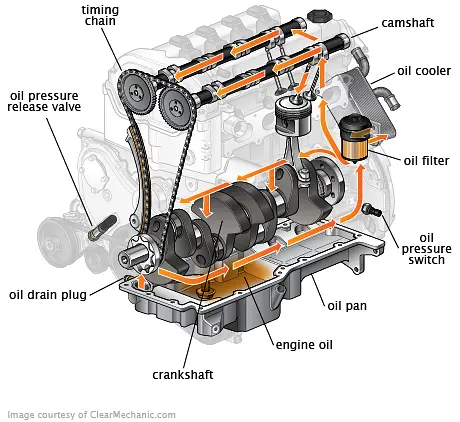
The most common Buick Enclave oil leak is from the valve cover gaskets, especially on 2008-2017 models with the 3.6L V6 engine. This issue is often misdiagnosed by dealers as a full engine rebuild costing $5,000+ when a $200 DIY gasket replacement fixes it.
Buick Enclave oil leak symptoms: How to spot them before it’s too late
Oil leaks in your Buick Enclave often start subtle but escalate quickly, leaving oily residue under the hood or on your driveway.
Look for dark spots under the front passenger side, a burning oil smell during drives, or low oil levels between changes.
Catching these leaks early prevents sludge buildup and major engine damage that shops love to upsell.
Owners report the leak worsening in hot weather as seals expand, or after short trips where oil doesn’t fully circulate.
Check your dipstick weekly. If levels drop fast without smoke from the exhaust, it’s likely an external leak rather than internal burning.
Use a flashlight and paper towels to wipe engine components clean, then run the engine for 10 minutes to inspect for fresh drips.
Key visual signs of Buick Enclave oil leaks
- 🔍 Messy valve covers: Oil pooled on top or streaking down the sides, common on high-mileage 3.6L engines.
- 🔍 Oil cooler lines dripping: Wet spots near the radiator, especially if plastic lines have degraded.
- 🔍 Rear main seal evidence: Oil on the bellhousing or exhaust, noticeable during oil changes when you spot residue on the oil pan.
- 🔍 Low pressure warning: Dashboard light paired with leaks, as oil loss drops system pressure.
Diagnostic tools every Enclave owner needs
- Grab a UV dye kit ($20 at auto parts stores)—add to oil, run engine, and use a blacklight to trace the glow.
- Use an OBD2 scanner for codes like P0521 (oil pressure sensor), which sometimes flags alongside leaks.
- Clean the engine bay thoroughly with brake cleaner, then pressure wash lightly to baseline before testing.
Common Buick Enclave oil leak locations and why they fail
The Buick Enclave’s 3.6L LY7/LFX High Feature V6 is prone to leaks at five hotspots due to OEM plastic components and cork-style gaskets.
Dealerships often overlook these during “inspections” and quote high valve job prices instead.
Valve covers leak first because GM used minimal RTV sealant at the factory, which bakes off by 80,000 miles.
Oil cooler lines fail from ethanol-blended fuel softening the plastic connectors over time.
Rear mains weep due to excessive crankcase pressure from clogged PCV systems.
Front covers and oil filter housings round out the list, all of which are fixable for under $500 if you DIY.
Valve cover gasket leaks: The #1 culprit on 2008-2017 Enclaves
These gaskets crack from constant 200°F+ oil temps, leaking onto exhaust manifolds and causing telltale smoke.
Dealers claim “warped covers” needing $1,800, but gaskets alone solve 80% of cases.
Oil cooler line leaks: Plastic nightmare on 2018+ models
Updated lines still use brittle plastic connectors that split under pressure, spraying oil forward.
Quick connect fittings often pop off, mimicking cooler failures that shops want to replace for $1,200.
Rear main seal leaks: Tricky diagnosis on all Enclaves
Oil trails down the block onto the starter or exhaust, making it hard to see without lifting the vehicle.
This is often caused by high crankcase pressure pushing past the seal, rather than simple wear.
Other spots: Oil filter housing and front cover
- Oil filter housing O-rings shrink, which is common if they are torqued incorrectly during changes.
- Timing chain cover weeps at corners from poor factory sealant, often mixing with coolant.
- Oil pan gaskets can shift on uneven surfaces, leading to leaks during cold starts.
How to diagnose Buick Enclave oil leak step by step
Skip the shop’s $150 “leak test” fee and do it yourself in your driveway with basic tools.
Start with a cold engine to avoid burns, and always wear gloves as hot oil can cause injury.
Park on cardboard overnight to capture drips and note their location.
Warm the engine to operating temp, shut it off, and inspect while components are hot and expanded.
DIY leak down test procedure
- Prep: Clean the bay with degreaser. Add 1 oz UV dye to oil and drive 50 miles.
- Inspect: Use a blacklight at night to trace the glowing oil back to its source.
- Pressure test: Remove the PCV valve and check for bubbles at seals using compressed air.
- UV scan hotspots: Focus on valve covers, lines, pan edges, and the bellhousing.
- Confirm: Wipe the area clean, idle for 20 minutes, and recheck for fresh oil.
Tools list for accurate diagnosis
| Tool | Why Needed | Cost |
|---|---|---|
| UV dye kit + blacklight | Traces invisible leaks | $25 |
| OBD2 scanner | Checks pressure codes | $30 |
| Engine degreaser | Cleans for inspection | $10 |
| Jack stands + flashlight | Undercarriage access | $50 |
Buick Enclave valve cover gasket replacement: DIY guide
Replace both sides in one weekend. Parts run $50-100, saving you over $1,000 compared to the dealer.
GM’s cork gaskets fail predictably; use Fel-Pro or Victor Reinz silicone for longevity.
Work on a cold engine and disconnect the battery first to eliminate spark risks.
Expect this job to take 2-4 hours per side for first-timers.
Step-by-step valve cover removal and install
- Disconnect electrics: Battery negative, coil packs (label wires), and PCV hose.
- Remove covers: Loosen 10mm bolts in a crisscross pattern. Pry gently with a plastic tool.
- Clean surfaces: Scrape old gasket residue with a razor blade and wipe with brake cleaner.
- Install new: Apply a thin RTV bead at corners. Torque bolts to 8-10 ft-lbs from the center out.
- Reassemble: Reconnect all components, refill oil, and idle for 5 minutes to check.
Fixing Buick Enclave oil cooler line leaks
Plastic lines often crack at the flares, leaking about 1 quart per 1,000 miles.
Instead of the $1,500 dealer assembly, upgrade to Dorman stainless kits for $150.
Jack the front end securely and drain the coolant partially.
Applying a little heat can help shrink the plastic for easier removal of stubborn lines.
Replacement steps for plastic lines
- Drain the oil via the pan plug and the coolant from the radiator petcock.
- Squeeze quick connect tabs with pliers and twist the lines free.
- Route stainless lines along the same path and torque banjo bolts to 25 ft-lbs.
- Refill with 6 quarts of 5W-30 Dexos and 2 gallons of Dex-Cool.
Rear main seal leak repair: Buick Enclave 2008+
No full engine pull is needed; you can drop the transmission for a $300 DIY fix.
High PCV pressure often causes this failure, so ensure you fix the PCV system first.
This job requires a transmission jack and roughly 8-10 hours of labor.
It is highly recommended to replace the oil pan gasket while the transmission is down.
Preventing oil leaks in your Buick Enclave
Use Dexos-approved synthetic oil and change it every 5,000 miles to keep seals pliable.
Clean the PCV quarterly and inspect the lines yearly to avoid pressure buildup.
Common Parts & Costs
| Leak Source | Part # | DIY Cost | Shop Cost |
|---|---|---|---|
| Valve Cover Gasket | 12628477 | $80 | $1,200 |
| Oil Cooler Lines | 84568378 | $150 | $1,500 |
| Rear Main Seal | 12672354 | $30 | $2,500 |
FAQ
Is a Buick Enclave oil leak dangerous to drive with?
Small leaks are okay short-term but risk fire from exhaust drips or engine seizure. Monitor levels daily and fix within 500 miles.
Can I use stop-leak additives?
Avoid them. They can clog oil passages in the 3.6L V6, causing worse mechanical issues over time.
Conclusion
Buick Enclave oil leaks are a rite of passage for 3.6L owners.
Armed with these diagnostics, you can sidestep rip-off repairs and keep your SUV running past 200,000 miles.
Prioritize valve covers first, upgrade weak plastics, and maintain your PCV system religiously.
Tackle it now before a small puddle turns into a full engine rebuild.
Leave a Reply