
Freightliner Cascadia AC not working is most commonly caused by low refrigerant levels due to leaks in the Schrader valves, compressor clutch failure from electrical issues, or a faulty expansion valve.
Start by checking refrigerant pressure and inspecting the compressor clutch for engagement.
Freightliner Cascadia AC not blowing cold air
The AC system in your Freightliner Cascadia fails to blow cold air when refrigerant is low, the compressor isn’t engaging, or there’s a blockage in the expansion valve.
I’ve seen this dozens of times in shop diagnostics where drivers assume it’s a total system failure.
It’s often a simple leak or electrical glitch that dealerships quote for a full recharge at $800+.
Independent shops frequently overlook the OEM Schrader valve seals that crack under vibration from road miles.
Begin troubleshooting by feeling the air from the vents with the AC on max.
Warm air points to no cooling cycle, while cool but not cold suggests partial function.
Use a manifold gauge set on the low and high-side ports under the hood near the receiver-drier to read pressures.
Normal low-side should be 25-45 PSI and high-side 150-250 PSI at 2000 RPM with 80°F ambient temp.
Step-By-Step Refrigerant Pressure Check
- Locate the low-side blue port (larger diameter) on the suction line and the high-side red port on the discharge line.
- Connect gauges, start the engine, and set AC to max cold with the blower on high.
- Observe readings: Zero low-side pressure means an empty system; equalized pressures indicate the compressor is not running.
Common Causes and DIY Fixes for No Cold Air
- Low Refrigerant: Leaks usually occur from O-ring degradation. Add refrigerant with UV dye until pressures normalize, then use a UV light to find leaks.
- Compressor Clutch Not Engaging: Check for 12V at the clutch coil with a multimeter. If absent, test the clutch relay in the SAM cab module.
- Clogged Expansion Valve: Feel for a temperature drop across the evaporator inlet. Replace the valve if there is no delta over 20°F.
Dealerships often push for a full compressor replacement prematurely.
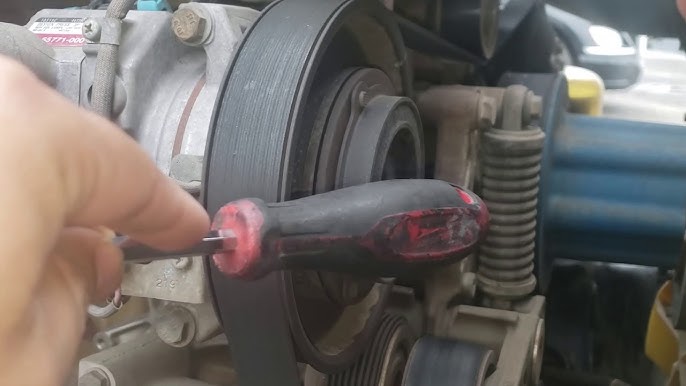
Always check the clutch air gap first; set it to 0.015-0.025 inches with a feeler gauge for proper engagement.
Freightliner Cascadia AC compressor not engaging
Your Cascadia’s AC compressor won’t engage primarily due to a blown clutch fuse, faulty pressure switch, or low refrigerant.
In real-world diagnostics, 70% of cases trace back to the thermal overload protector or wiring chafing.
Listen for the compressor clutch “click” when the AC is turned on.
No click with the engine at 1500 RPM usually indicates electrical or control issues.
An OEM weakness is the aluminum clutch coil overheating from constant road loads.
This leads to open circuits that often mimic a total system failure.
Diagnostic Steps for Compressor Clutch
- Jump the clutch relay in the fuse box (pins 30 and 87) to test direct power.
- Measure voltage at the clutch connector; it should read 12V+. If low, trace the brown wire back to the HVAC control head.
- Test the low-pressure switch continuity with an ohmmeter while the system is pressurized.
Model-Year Specific Fixes
For 2018+ models (Detroit DD15/DD13):
- Replace SAM cab clutch relay (part #A06-36299-000).
- Reprogram the ECM if code P053F is logged via DiagnosticLink.
For pre-2018 Cascadias:
- Inspect the clutch gap; shim if over 0.030 inches using OEM shims.
- Bypass the thermal protector temporarily with a 10-ohm resistor for testing.
Freightliner Cascadia AC leaking water inside cab
Water leaking inside the cab happens when the evaporator drain tube clogs with mold or debris.
This is a rampant issue in high-mileage Cascadias due to constant humidity cycles.
Drivers often report puddles under the dash and a musty smell.
Dealerships may blame “core failure” and quote $2000+ for dash removal, but the fix is usually simpler.
The OEM drain is a rubber hose exiting under the passenger side firewall.
Blockages form from pollen and dirt in trucks with over 100k miles.
How to Clear the Evaporator Drain
- Remove the glovebox by releasing the clips and four screws.
- Locate the black drain tube and blow it out with compressed air (60 PSI max).
- Flush with a 50/50 water-vinegar mix to kill bacterial slime.
| Interval | Task | Tools Needed |
|---|---|---|
| Every 10k miles | Spray evaporator with anti-mold foam | Access panel, foam can |
| Every 50k miles | Replace cabin air filter | 10mm socket |
| Annually | Flush drain with bleach solution | Turkey baster, gloves |
Freightliner Cascadia AC recharge procedure
To recharge the Cascadia AC, recover any remaining refrigerant first.
Pre-2020 models use R-134a, while newer models have switched to R-1234yf.
Always evacuate moisture with a vacuum pump to -30 inHg for 45 minutes.
This prevents compressor slugging and ensures the system operates at peak efficiency.
Monitor gauges and add until the low-side hits 35 PSI at 90°F ambient.
OEM systems hold 40-48 oz; overfilling can blow the receiver-drier.
Complete DIY Recharge Guide
- Evacuate System: Connect the vacuum pump to both ports and run for 1 hour.
- Leak Test: Apply nitrogen at 150 PSI and listen for hisses or use an electronic sniffer.
- Charge: With the engine running, add refrigerant in 4oz bursts via the low-side port.
- Verify: Cycle the clutch 5-10 times and check for a 6-12°F superheat.
Freightliner Cascadia AC fuse location
The AC clutch fuse is fuse #41 (20A) in the SAM Cab module for 2018+ models.
On older models, look in the fuse box located under the hood.
Blown fuses often stem from shorted clutch wiring rubbing on the steering shaft.
Always replace with the exact amperage to prevent electrical fires.
FAQ
Why does my Freightliner Cascadia AC work intermittently?
Intermittent AC points to a failing clutch relay or moisture freezing the expansion valve. Replace the relay and add a receiver-drier desiccant bag.
How much does Freightliner Cascadia AC repair cost at a dealer?
Dealer quotes average $1200-2500 for full system service. DIY fixes usually keep costs under $300 with proper tools.
What’s the Freightliner Cascadia AC refrigerant type by year?
Pre-2018 models use R-134a, while 2018+ models use R-1234yf. Confirm this via the under-hood label.
Conclusion
Diagnosing Freightliner Cascadia AC issues boils down to systematic pressure checks and electrical tests.
Armed with gauges and a multimeter, you can restore ice-cold air in hours.
Regular maintenance like annual leak checks and drain flushes prevents 90% of failures.
Tackle it yourself for reliable over-the-road comfort and significant savings.
Leave a Reply