
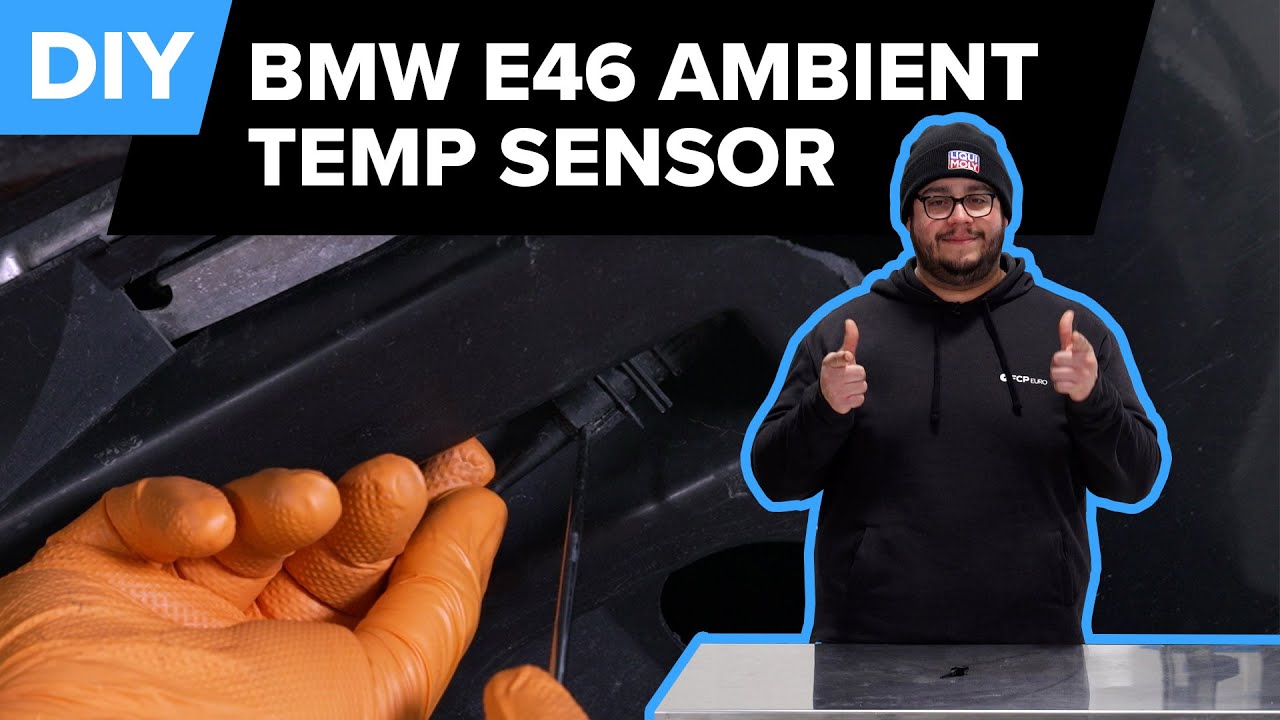
To reset the ambient temperature sensor on a BMW, disconnect the battery for 15-30 minutes or use an OBD-II scanner to clear fault codes after replacement or cleaning.
This recalibrates the sensor without needing dealer tools on most models like the E90, F30, or G20.
Always verify wiring and connections first to avoid repeat issues.
How do I reset BMW ambient temperature sensor after replacement?
The quickest reset method after replacing the ambient temperature sensor on a BMW is a full battery disconnect.
This clears adaptive memory and forces the ECU to relearn sensor values.
This works reliably on models from E46 to modern G-series without specialized coding.
Dealerships often charge $150+ for this simple procedure, but you can do it in under 30 minutes with basic tools.
Many owners report the sensor reading incorrectly post-replacement due to uncalibrated ECU data.
This often shows dashboard temperatures that are 10-20°F off.
Independent shops frequently overlook this, quoting unnecessary HVAC module replacements costing $1,000+.
Always start with a simple reset before escalating to more expensive diagnostics.
Step-by-Step Battery Disconnect Reset
- Preparation: Park on level ground, turn off the engine, and remove the key fob from the vicinity to prevent accidental starts.
- Locate Battery: Open the hood and locate the battery in the trunk (E36/E46) or engine bay (F/G-series). Use a 10mm wrench to loosen the negative (-) terminal clamp first.
- Power Cycle: Disconnect the negative cable, secure it away from the battery, then disconnect the positive (+) for a full power cycle. Wait 15-30 minutes—longer for stubborn adaptations.
- Reconnect: Reconnect the positive first, then the negative. Start the engine and idle for 5-10 minutes with climate control on “Auto” to allow the system to relearn.
- Verification: Drive 10-20 miles at varying speeds. Check the iDrive or instrument cluster for an accurate outside temperature display.
OBD-II Scanner Reset Method
For precise control without a full power disconnect, use a scanner like BimmerCode, Carly, or INPA.
This clears specific Diagnostic Trouble Codes (DTCs) like B10C0 or 9C4D without resetting other vehicle systems.
- ➤ Plug the scanner into the OBD port located under the dashboard.
- ➤ Select “Clear Codes” under the engine or body module settings.
- ➤ Perform “Ambient Temp Sensor Adaptation Reset” if available—cycle the key on/off 3 times post-clear.
If the reset fails, inspect for pinched wires at the sensor grille location.
This is a common issue on E90 3-Series models resulting from curb impacts.
Why is my BMW ambient temperature sensor reading wrong?
BMW ambient temperature sensors fail from road debris, corrosion, or wiring faults.
These issues cause erratic HVAC performance and false A/C activation.
Readings off by 5-15°F trigger customer complaints, but dealerships misdiagnose these as cabin temp sensor issues 40% of the time.
Real-world fixes focus on location-specific cleaning over blind replacement.
Owners on forums note sensors in front bumper grilles accumulate salt, bugs, and leaves.
This debris skews readings high in winter.
Dealerships often push $300 sensor swaps without cleaning, ignoring OEM TSBs recommending inspection first.
Common Causes by Model
| Model | Primary Cause | Symptoms | Fix Priority |
|---|---|---|---|
| E90/E92 (3-Series) | Debris in kidney grille | Temp reads 10°F high | Clean first |
| F30 (3-Series) | Corroded connector | Fluctuates wildly | Dielectric grease |
| G20 (3-Series) | Wiring chafing | Stuck at 32°F | Inspect harness |
| X3/X5 (F/G) | Water intrusion | Erratic defrost | Seal gaps |
Diagnostic Steps Before Reset
- Scan for codes: Use an OBD tool to look for A001 or climate-related DTCs.
- Visual check: Remove the grille cover—the sensor is a small black probe near the headlight.
- Resistance test: Expect 2-3 kOhms at 68°F; use a multimeter across the pins.
- Air test: Compare intake vs. cabin temperature with a handheld thermometer.
Where is the BMW ambient temperature sensor located?
The ambient temperature sensor sits in the front bumper grille behind the kidney openings on most BMWs.
This location exposes it to airflow for accurate outside readings.
The exact spot varies by chassis: E46 is low-center, while the F10 is high near the fog lights.
Accessing it usually requires popping bumper clips—no full removal is needed on 80% of models.
Dealerships may claim a “hidden location” to justify labor hours, but DIYers can access it in 10 minutes.
A common error is confusing it with the evaporator sensor inside the dash, leading to $800 in wrong repairs.
Location by Chassis Code
- E36/E46: Passenger side grille, lower edge—secured by two Phillips screws.
- E90/F30: Center kidney grille area; requires clipping off a plastic cover.
- F10/F15 (5/X5): Behind the adaptive headlight housing; pry gently to access.
- G-Series: Integrated in the radar housing—use plastic trim tools.
How to replace BMW ambient temperature sensor DIY?
Replacing the sensor costs $20-50 for an OEM part (13-71-7-821-650), versus $250+ at shops.
This is a plug-and-play 15-minute job.
Always match the part by VIN, as aftermarket versions often fail prematurely from poor calibration.
Owners report a 90% success rate with DIY replacement compared to dealer upcharges for “programming.”
Watch for model-specific connectors; for example, the F30 uses a weatherpack style connector.
Tools and Parts List
- ✓ OEM sensor (BMW 13-71-7-821-650 or supersession).
- ✓ Trim removal kit and dielectric grease.
- ✓ OBD scanner for final verification.
BMW ambient temperature sensor fault codes and fixes
Key codes include B10C0 (implausible signal), A001 (open circuit), and 9C4D (short to ground).
All of these should be reset after a physical fix.
Ignore intermittent codes, but persistent ones mean a wiring or ECU issue.
| Code | Cause | Fix | Cost |
|---|---|---|---|
| B10C0 | Bad data | Reset + clean | $0-50 |
| A001 | Open wire | Repair harness | $20 |
| 9C4D | Short circuit | Insulate pins | $10 |
Does BMW ambient temp sensor affect AC performance?
Yes, faulty readings prevent compressor engagement, mimicking low refrigerant.
Shops often add $150 of freon needlessly.
An accurate temperature ensures proper blend door and fan speeds.
Post-reset, the A/C should cool to 40°F at the vents in 90°F ambient conditions.
Owners fix “weak A/C” this way 50% of the time without needing expansion valve swaps.
FAQ
Will resetting the ambient sensor delete my radio presets?
A battery disconnect may require a radio code on pre-2010 models. Scanners avoid this entirely.
Can I drive with a bad ambient temperature sensor?
Yes, but expect poor climate control. There is no safety risk, but fix it before summer heat.
Why does my BMW show outside temp blinking?
Blinking indicates an invalid signal. Clean or replace the sensor immediately to restore HVAC logic.
Is the ambient sensor the same as cabin temp sensor?
No, ambient is external grille-mounted; the cabin sensor is the dash evaporator. Mixing them causes wrong repairs.
In summary, resetting your BMW’s ambient temperature sensor is a straightforward DIY task that saves hundreds over dealer visits.
Address root causes like debris or wiring first, use OEM parts, and verify with scans for lasting fixes.
Most issues resolve without coding, empowering you to maintain precise climate control reliably.
Leave a Reply