
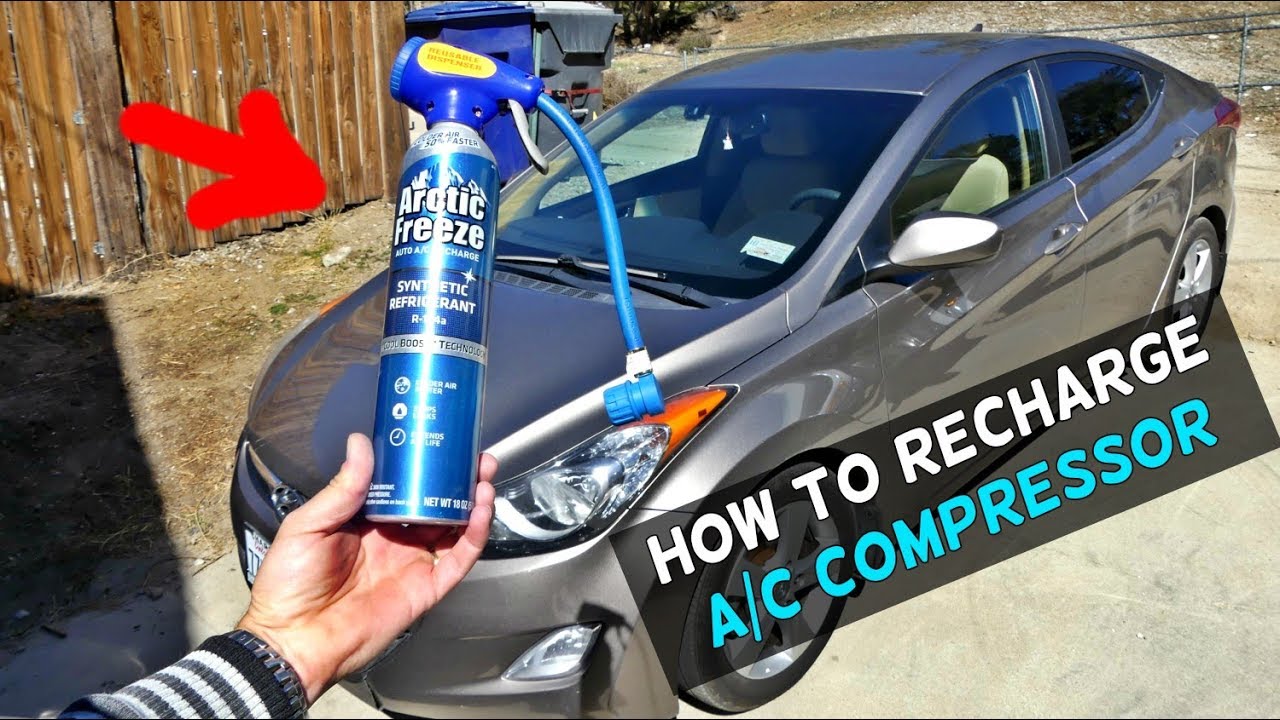
Hyundai Elantra AC recharge requires 14-16 oz of R-134a refrigerant for most models (2011-2020).
First, diagnose low pressure causes like leaks or compressor failure before adding refrigerant. This prevents wasting money on unnecessary refills.
How to Recharge AC on Hyundai Elantra Step by Step
The quickest way to recharge your Hyundai Elantra AC is with a DIY kit using R-134a refrigerant and a gauge set. This process usually takes about 20-30 minutes in a shaded area.
Always check pressures first to confirm low refrigerant is the actual issue. This ensures you aren’t ignoring a failing compressor or a clogged expansion valve.
Dealerships often skip deep diagnostics and just top off the system. This frequently leads to repeated visits and unnecessary costs.
Tools and Materials Needed for Elantra AC Recharge
- ★ R-134a refrigerant can: Includes a hose and low-pressure gauge (DIY kits cost $30-50).
- ★ Manifold gauge set: This is optional but highly recommended for better accuracy ($20-40).
- ★ Safety gear: Use glasses and gloves to protect yourself from refrigerant burns.
- ★ Thermometer: Needed to measure both ambient and vent temperatures.
- ★ Leak detector: Use spray or a UV dye kit for post-recharge checks.
Safe Recharge Procedure for 2011-2016 Hyundai Elantra
Park on level ground with the engine off and the hood up. Locate the low-pressure port on the AC line near the firewall or accumulator.
It is usually the larger aluminum cap marked with an “L”. Ensure the area is clean before removing the cap.
- Preparation: Wear safety gear and start the engine. Set the AC to max cold, fan to high, and keep the doors open.
- Connection: Attach the recharge hose to the low-pressure port. Never use the high-pressure side, as there is a risk of explosion.
- Charging: Shake the refrigerant can, hold it upright, and open the valve slowly. Monitor the gauge, aiming for 25-45 psi at 80°F ambient temperature.
- Monitoring: Add in 2-3 oz bursts and wait 30 seconds between each. Stop when the gauge hits 40 psi or vents blow 40-50°F colder than the outside air.
- Completion: Disconnect the hose and replace the cap. Run the AC for 5 minutes to check for leaks and listen for any hissing sounds.
Warning: Overcharging causes high pressure and compressor damage. If the low side exceeds 55 psi, stop immediately and vent the excess safely.
Recharge Steps for 2017-2023 Hyundai Elantra (R-1234yf Models)
Newer Elantras use R-1234yf refrigerant rather than R-134a. Always check your under-hood sticker to confirm the type.
DIY kits for these models are pricier, ranging from $50-80 per can. The ports also differ, utilizing specific quick-connect fittings.
- Confirm the refrigerant type; R-1234yf ports are smaller and often color-coded.
- Follow the same process but target a 30-50 psi low side using a YF-specific gauge.
- Add UV dye if it is not already included to help with leak hunting later.
Hyundai Elantra AC Recharge Kit: What to Buy and Avoid
Buy a kit with a built-in gauge, trigger dispenser, and sealant for minor leaks. This is best for 2007-2020 Elantras.
Avoid no-name brands. Arctic Freeze or EZ Chill from major auto parts stores work reliably according to owner tests.
Skip “stop-leak” heavy kits unless you are desperate. These products can gum up the internal AC system over the long term.
| Kit Type | Best For | Price | Pros/Cons |
|---|---|---|---|
| Basic R-134a (18 oz) | 2011-2016 Elantra | $25-35 | Cheap, easy; no dye. |
| R-134a + UV Dye | All R-134a models | $40-50 | Leak detection; pricier. |
| R-1234yf Kit | 2017+ Elantra | $60-90 | Required for new; expensive. |
| Manifold Gauge Set | Pros | $30 | Accurate; reusable. |
Owners report that kits with reusable gauges last for years and prevent common overcharge mistakes. After recharging, vent temperatures should drop 30-40°F below the ambient temperature.
Hyundai Elantra AC Not Cold After Recharge: Common Fixes
If the AC blows warm after a recharge, it is likely not a refrigerant issue. You may have a leak, a bad compressor clutch, or a clogged orifice tube.
I have seen many cases where shops quoted $1,500 for compressor swaps that were actually $20 orifice fixes. Always perform a pressure test first.
Check AC Pressures Before Recharging Elantra
- Low side 25-45 psi, high 150-250 psi at 80°F = System is good.
- Low side 0-10 psi: Indicates a major leak or an empty system.
- Low 50+ psi, high low: Suggests an overcharge or a blockage.
- Both sides equal: The compressor is not engaging.
Fix Leaking AC Schrader Valves on Elantra
Elantras (especially 2013-2018) often leak at the blue plastic Schrader cores on the low port. Replace these with brass-core valves for about $10.
To fix this, depressurize the system, unscrew the core with a valve tool, install the new one, and then recharge.
Hyundai Elantra AC Leaks: Locations and DIY Repairs
Most Elantra AC leaks occur at evaporator core drains, compressor seals, or O-rings. OEM rubber tends to degrade quickly in hot climates.
Forums are full of reports of 100k-mile models losing their charge annually. Using UV dye will light up these leaks within 24 hours of a recharge.
Evaporator Leak Fixes for 2007-2012 Elantra
- Remove the glovebox and inspect the drain tube for green oil; clean any clogs first.
- Feel for a wet carpet under the dash on the passenger side.
- For a DIY seal, inject Big Blu sealant via the low port before recharging ($25).
- A professional job requires dash removal and costs $800-1200; avoid this unless it’s a total loss.
Compressor and Hose Leaks on 2013-2020 Elantra
Front compressor seals often leak due to dry PAG oil; ensure you add oil during the recharge. Hoses also crack at the bends.
Replace cracked hoses with reinforced aftermarket versions for $100. Test the system by pressurizing with nitrogen and spraying soapy water on joints.
Model-Specific Leak Hotspots
- 2011-2016: Accumulator O-rings (replace these with every recharge).
- 2017-2020: Condenser plastic tanks often crack (use epoxy or buy new for $200).
- 2021+ Hybrid: Electric compressor seals; these usually require dealer intervention.
Hyundai Elantra AC Compressor Not Engaging: Diagnosis and Reset
If the compressor clutch won’t spin, check for 12V at the clutch wire. Low refrigerant often trips the pressure safety switch.
You can cycle the key off and on three times or jump the low-pressure switch temporarily to test it. A bad clutch gap is common on high-mileage Elantras.
DIY Clutch Engagement Test
- With the engine running and AC on, listen for a “click” at the compressor in the engine bay.
- Bridge the pressure switch pins with a paperclip for 5 seconds max. If it engages, recharge or replace the switch.
- Measure the voltage; 11V+ is good. You may need to shim the clutch if the gap is too wide.
Cost of Hyundai Elantra AC Recharge: DIY vs Shop
A DIY recharge costs about $40 and lasts if there are no major leaks. Shops typically charge $150-250 for just 15 minutes of work.
Full repair quotes can hit $1,200 for unnecessary system flushes. I have cut bills by 70% by simply diagnosing the issue first.
| Service | DIY Cost | Shop Cost | Time Saved |
|---|---|---|---|
| Recharge Only | $30-50 | $150-250 | 1 hour |
| Leak Repair + Recharge | $50-100 | $400-700 | 4 hours |
| Compressor Replace | $300 (used) | $1,200-1,800 | 8 hours |
Hyundai Elantra AC Recharge Near Me: When to Go Pro
DIY is fine if pressures read low/normal and there are no dash leaks. Take it to an indie shop for evacuation and vacuum if major work is needed.
Dealers often overcharge for “system flush” fluff, so always get a second quote. Note that hybrid models require specialized tools.
FAQ
Can I recharge Hyundai Elantra AC with engine off?
No. The compressor must cycle to circulate the refrigerant. Keeping the engine on and AC at max ensures even distribution.
How much freon does a 2015 Elantra AC hold?
It holds exactly 14.1 oz of R-134a. Overfilling by even 2 oz can cause performance issues. Check your VIN sticker to be sure.
Why does my Elantra AC work sometimes but not always?
This is often caused by intermittent low pressure from tiny leaks or a weak clutch. Monitor the system over a week before deciding to recharge.
Is AC recharge covered under Hyundai warranty?
Only if it’s a factory defect within 5yr/60k miles. Most leaks are considered wear items. Document everything if you plan to make a claim.
What if pressures are good but AC not cold?
You likely have a clogged expansion valve, orifice tube, or a faulty blend door actuator. Test vent temperatures side-to-side to diagnose.
In summary, mastering the Hyundai Elantra AC recharge saves owners thousands by spotting dealer upsells early. Diagnose pressures and leaks first, use quality kits, and maintain your system yearly. Your AC will run cold for years without professional intervention.
Leave a Reply