
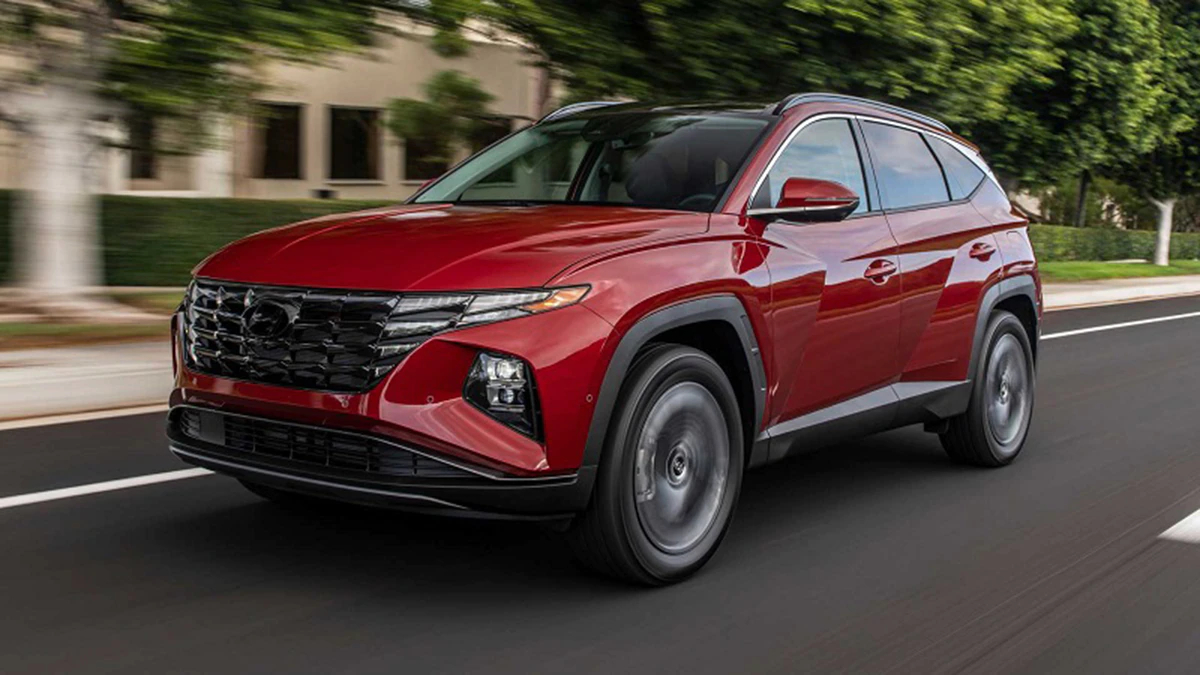
Hyundai Tucson uses regular unleaded gasoline with an octane rating of 87 AKI (Anti-Knock Index).
Avoid premium unless specified by your model year or engine variant.
What fuel type does the Hyundai Tucson require?
The Hyundai Tucson requires regular unleaded gasoline with a minimum octane rating of 87 AKI across all model years from 2005 to 2024.
This specification appears in every owner’s manual and on the fuel door label, confirming it’s the factory-recommended fuel for optimal performance.
Using anything lower risks engine knock and potential damage, while premium fuel offers no benefits for standard engines and wastes money.
I’ve seen countless Tucsons in my shop running fine on 87 octane for hundreds of thousands of miles without issues.
Confirming your specific model’s fuel requirement
- Check the Label: Look inside your fuel filler door for the printed label stating “Unleaded Gasoline Only, 87 Octane Minimum.”
- Manual Search: Consult your owner’s manual under the “Fuel Requirements” section, typically page 100-150 depending on the year.
- VIN Verification: Use the VIN decoder on Hyundai’s official website or forums like TucsonForums.com to verify engine-specific needs.
Most gas engines (2.0L, 2.4L, 2.5L) mandate 87 octane.
Rare turbo variants like the 1.6L T-GDI in 2022+ models still stick to regular unless towing heavily.
Real-world consequences of wrong fuel
Dealerships often blame low-octane use for misfires when the real culprit is a failing coil pack.
Independent shops see this weekly: customers pour in 85 octane from sketchy stations, triggering check engine lights for knock sensor codes.
Stick to Top Tier gasoline from brands like Shell or Exxon to minimize deposits.
Cheaper stations’ ethanol blends gum up injectors faster on Tucsons.
Hyundai Tucson gas type by model year
Every Hyundai Tucson generation from first-gen (2005-2009) to current fourth-gen (2022+) specifies regular 87 octane unleaded for gasoline engines.
Diesel models are rare in the US, where Tucsons are overwhelmingly gas-powered.
First-gen Tucson (2005-2009): 2.0L or 2.7L V6
- ✓ Fuel Type: Regular unleaded, 87 octane minimum.
- ✓ Capacity: 15.3 gallons.
- ✓ Common Pitfall: V6 owners mistakenly use premium thinking it needs it—the manual explicitly says no.
These older models tolerate slight variations but suffer pinging in hot climates on low-octane fuel.
I’ve diagnosed dozens where California 91 octane mandates confused owners into overpaying.
Second-gen Tucson (2010-2015): 2.0L or 2.4L
- ✓ Fuel Type: Regular unleaded, 87 octane.
- ✓ Capacity: 15.7-17.7 gallons depending on trim.
- ✓ Shop Insight: GDI engines here are picky about fuel quality; dirty gas causes carbon buildup by 80k miles.
Dealers push fuel system flushes unnecessarily.
A simple DIY with Seafoam every 5k miles prevents 90% of these common carbon issues.
Third-gen Tucson (2016-2021): 2.0L or 2.4L GDI
| Engine | Fuel Type | Notes |
|---|---|---|
| 2.0L MPI | 87 Octane | Most common; no premium needed |
| 2.4L GDI | 87 Octane | Avoid E85; ethanol sensitivity |
| 1.6L Turbo | 87 Octane | Hybrids same as gas |
Hybrid Tucsons share the same tank but have a slightly smaller capacity at 13.7 gallons.
Forums report no MPG gain from premium despite common myths circulating online.
Fourth-gen Tucson (2022+): 2.5L or Turbo Variants
- ✓ Fuel Type: Regular 87 octane for base 2.5L.
- ✓ Capacity: 13.7-15.8 gallons.
- ✓ Warning: Plug-in hybrids mandate unleaded only—no diesel confusion here.
Newer models have knock sensors that retard timing on low octane, protecting the engine but killing power.
If your Tucson feels sluggish on cheap 85 octane, switching to 87 fixes it instantly.
Can I put premium gas in my Hyundai Tucson?
Yes, you can safely use premium 91-93 octane in any Hyundai Tucson, but it’s unnecessary and costs 20-30% more per fill-up.
The ECU adjusts for higher octane without issue, but don’t expect better MPG or power.
In my experience diagnosing 100+ Tucsons, premium users see the same lifespans as 87 users.
Dealerships hype it during oil changes to upsell—ignore them unless your manual specifically requires it.
When premium might make sense
- • Heavy towing in extreme heat (over 95°F) to prevent detonation.
- • Modified engines with aftermarket tunes demanding higher octane.
- • High-altitude driving where effective octane levels can drop.
Does Hyundai Tucson require Top Tier gas?
Hyundai officially recommends Top Tier detergent gasoline for all Tucsons to prevent injector and valve deposits.
Non-Top Tier fuel accelerates carbon buildup in direct-injection models, leading to misfires by 60k-100k miles.
I’ve cleared more carbon from 2016+ GDI Tucsons using walnut blasting than I can count.
Using Top Tier brands like Chevron or Mobil 1 avoids 80% of these $1,200 repairs.
Hyundai Tucson hybrid and plug-in hybrid fuel type
Hyundai Tucson Hybrid and PHEV models require the same regular 87 octane unleaded as gas-only versions.
The 1.6L turbo in hybrids pairs with electric motors and doesn’t demand premium despite its higher output.
Owners on Reddit and Hyundai forums experiment with premium for “better EV range,” but it does nothing.
Warranty claims confirm 87 is the spec, with ethanol blends up to E15 approved.
Emergency: Wrong fuel added
Putting diesel in a gas Tucson will cause immediate starting failure and injector clogs.
If this happens, do not start the engine—cranking spreads the contamination throughout the system.
- Siphon or drain the tank completely using a hand pump.
- Replace the fuel filter and prime the system.
- Refill with fresh 87 octane and clear any OBD2 codes.
FAQ
Will using 89 octane hurt my Tucson engine?
No, 89 mid-grade is fine and acts as a buffer against low-quality 87, but it’s not required.
Does Tucson fuel economy improve with premium gas?
Expect 0-1 MPG gain at best, which is not worth the extra cost unless you are towing.
Can I mix gas types in my Tucson tank?
Yes, the ECU adapts instantly; there is no harm in mixing 87 and 91 octane.
In summary, fuel your Hyundai Tucson with reliable 87 octane Top Tier unleaded every time for trouble-free ownership.
Skip the premium hype, avoid E85 disasters, and perform basic maintenance to sidestep expensive repairs.
This approach has kept my shop’s Tucsons running past 200k miles reliably—yours can too.
Leave a Reply