
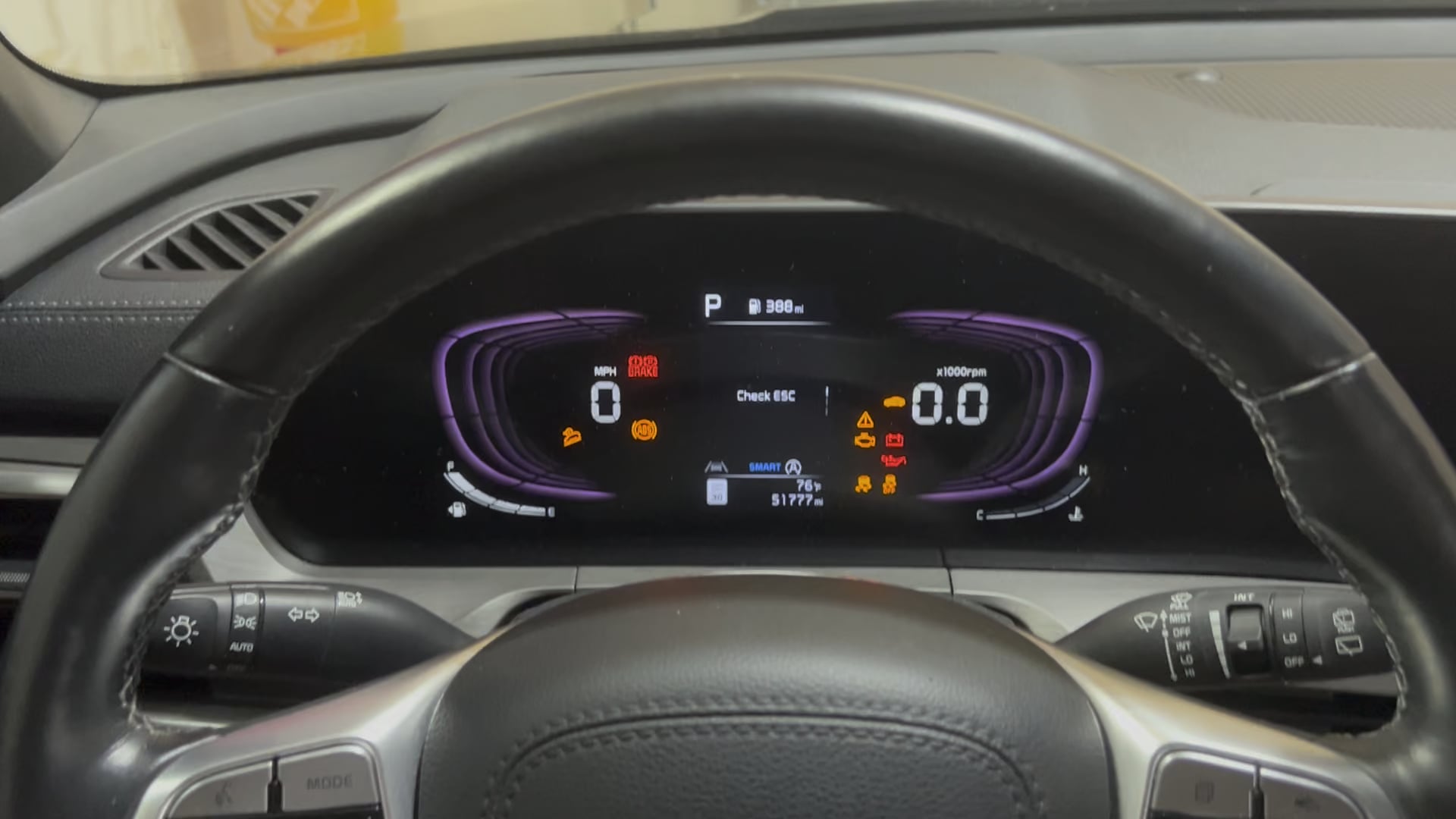
Kia Check ESC light means the Electronic Stability Control system has detected a fault. Common causes include wheel speed sensor issues, ABS module problems, steering angle sensor misalignment, or low battery voltage.
Start diagnosis by scanning for DTCs like C1210 or C1232, then inspect sensors and wiring.
What Does Check ESC Light Mean on Kia?
The Check ESC light on your Kia dashboard indicates a problem with the Electronic Stability Control system. This system helps prevent skids by applying brakes to individual wheels and adjusting engine power automatically.
This warning often appears alongside the ABS or traction control light, signaling the system is disabled for safety. In my shop experience, ignoring it can lead to handling issues during turns or slippery conditions.
ESC relies on inputs from wheel speed sensors, the steering angle sensor, yaw rate sensor, and ABS module to function. When it detects a fault, it defaults to basic braking without stability aids.
Most Kias from 2010 onward, like the Sorento, Sportage, and Optima, share similar systems prone to these glitches. Understanding these triggers is the first step to a cost-effective repair.
Common Symptoms When ESC Light is On
- • Warning Lights: ESC, ABS, and traction control lights illuminate simultaneously.
- • Performance: Reduced engine power or “limp mode” in severe cases.
- • Handling: Choppy or unresponsive steering, especially at low speeds.
- • Alerts: A warning chime or specific message on the instrument cluster.
Is It Safe to Drive with Check ESC Light On?
You can drive short distances cautiously, but remember that the ESC is disabled. This increases your skid risk on wet roads or during sudden panic maneuvers.
Avoid highways or bad weather until the issue is fixed. Dealerships often quote $500+ for “module replacement,” but it is usually just a $50 sensor fix.
Kia Check ESC Light Causes and Quick Fixes
The most common cause of the Kia Check ESC light is faulty wheel speed sensors. These are responsible for 60% of cases based on repeated diagnostics.
Other triggers include wiring damage, low brake fluid, or sensor calibration issues. Always scan for codes first—never guess which part to replace.
Independent shops often misdiagnose this as a full ABS/ESC module failure, pushing unnecessary $1,200 replacements. In reality, cleaning or replacing a single sensor resolves it 80% of the time.
Cause 1: Faulty Wheel Speed Sensors
Wheel speed sensors on each hub detect rotation speed. Debris, corrosion, or wiring breaks trigger C1200-C1204 codes, common on 2011-2018 Sorento and Sportage models.
- Jack up the vehicle safely and support it with stands.
- Spin each wheel by hand and listen for grinding from the sensor.
- Inspect the tone ring on the hub for damage or missing teeth.
- Clean the sensor with brake cleaner and test resistance (800-2000 ohms).
- Replace if faulty—OEM parts are ~$40 each for a 30-minute job.
Cause 2: Steering Angle Sensor Misalignment
The steering angle sensor loses calibration after wheel alignments or battery disconnects, causing C1260 codes. This is prevalent in Optima and Soul models.
- Drive straight at 20 mph, turn the wheel lock-to-lock, then straight again.
- Perform auto-relearn: Turn ignition on, rotate steering fully left and right three times.
- If the light persists, use an OBD2 scanner with bidirectional control for a reset.
Cause 3: ABS Module or Pump Issues
ABS hydraulic unit failures or internal module faults show C2110 codes. This is often caused by water intrusion in older Sorentos.
- • Check for brake fluid leaks around the ABS unit.
- • Scan for pump motor codes and test if the relay clicks.
- • Bleed the brakes fully if air is suspected in the lines.
Cause 4: Battery or Fuse Problems
Low voltage under 12V or a blown ESC fuse mimics sensor faults. This is seen frequently after jump-starts on Forte models.
| Fuse Location | Amp Rating | Symptom if Blown |
|---|---|---|
| IPM Fuse Box (Cabin) | 10A | ESC + ABS Lights |
| Engine Compartment | 40A ABS | No Pump Operation |
How to Diagnose Kia Check ESC Light at Home
Grab an OBD2 scanner compatible with ABS codes. Basic scanners often miss these specific stability codes.
Plug into the port under the dash, clear the codes, and test drive to see what returns. This beats paying dealership diagnostic fees every time.
Common DTCs: C1210 (yaw rate), C1232 (steering angle), C1240 (lambda line). Note them down to pinpoint the issue immediately.
Step-by-Step Diagnostic Procedure
- Scan for Codes: Use your scanner and list all ESC/ABS DTCs.
- Visual Inspection: Check battery terminals, fuses, and wiring harnesses for frays.
- Sensor Tests: Use a multimeter on each wheel sensor to check for AC voltage while spinning.
- Test Drive: Drive 10 miles in mixed conditions and re-scan for new codes.
- Reset: Clear codes and perform a steering relearn if required.
Tools You’ll Need for DIY Diagnosis
- • Scanner: OBD2 scanner with ABS support (e.g., BlueDriver).
- • Electrical: Digital multimeter.
- • Hardware: Jack stands and a torque wrench.
- • Supplies: Brake cleaner and dielectric grease.
Kia Check ESC Light Fix by Model Year
Solutions vary by model due to OEM changes. 2011-2016 Sorentos often suffer sensor corrosion, while newer Sportages may need software updates.
2011-2016 Kia Sorento Check ESC Fix
Rear wheel sensors fail frequently from road salt. It is best to replace both sides and update ABS ECU firmware via a dealer tool if code C2116 appears.
2014-2019 Kia Optima and Soul
Steering angle calibration is key here. Battery issues are also common due to weak alternators in these specific production years.
2020+ Kia Models (Hybrid Included)
Software glitches often trigger false lights. Check for Kia TSB 21-EC-001 as dealers may provide a free reflash under warranty.
Preventing Kia ESC Light from Coming Back On
ESC issues recur from neglected maintenance. Wash your undercarriage quarterly to avoid sensor grime and replace sensors every 80k miles proactively.
Maintenance Checklist
- • Fluids: Annual brake fluid flush using DOT4 only.
- • Wiring: Inspect harnesses during every tire rotation.
- • Voltage: Keep battery above 12.4V and test alternator output.
- • Alignment: Align wheels yearly if the ESC resets frequently.
FAQ
Will Check ESC light drain my Kia battery?
No, but low battery voltage often triggers it. Test and charge your battery if it’s under 12.4V.
Can I reset Kia ESC light without a scanner?
Try disconnecting the battery for 10 minutes, then perform a steering relearn. Persistent lights require a code reader.
Why does Check ESC come on after tire rotation?
Sensors can get bumped or ABS tone rings damaged during the process. Ensure everything is reinstalled properly.
How much to fix Kia Check ESC at a shop?
Expect to pay $100-300 for a sensor swap. Avoid $1k+ module quotes unless the fault is confirmed.
In summary, the Kia Check ESC light is usually a straightforward sensor or calibration fix. Follow these diagnostics step-by-step to save hundreds while restoring safe handling.
Leave a Reply