
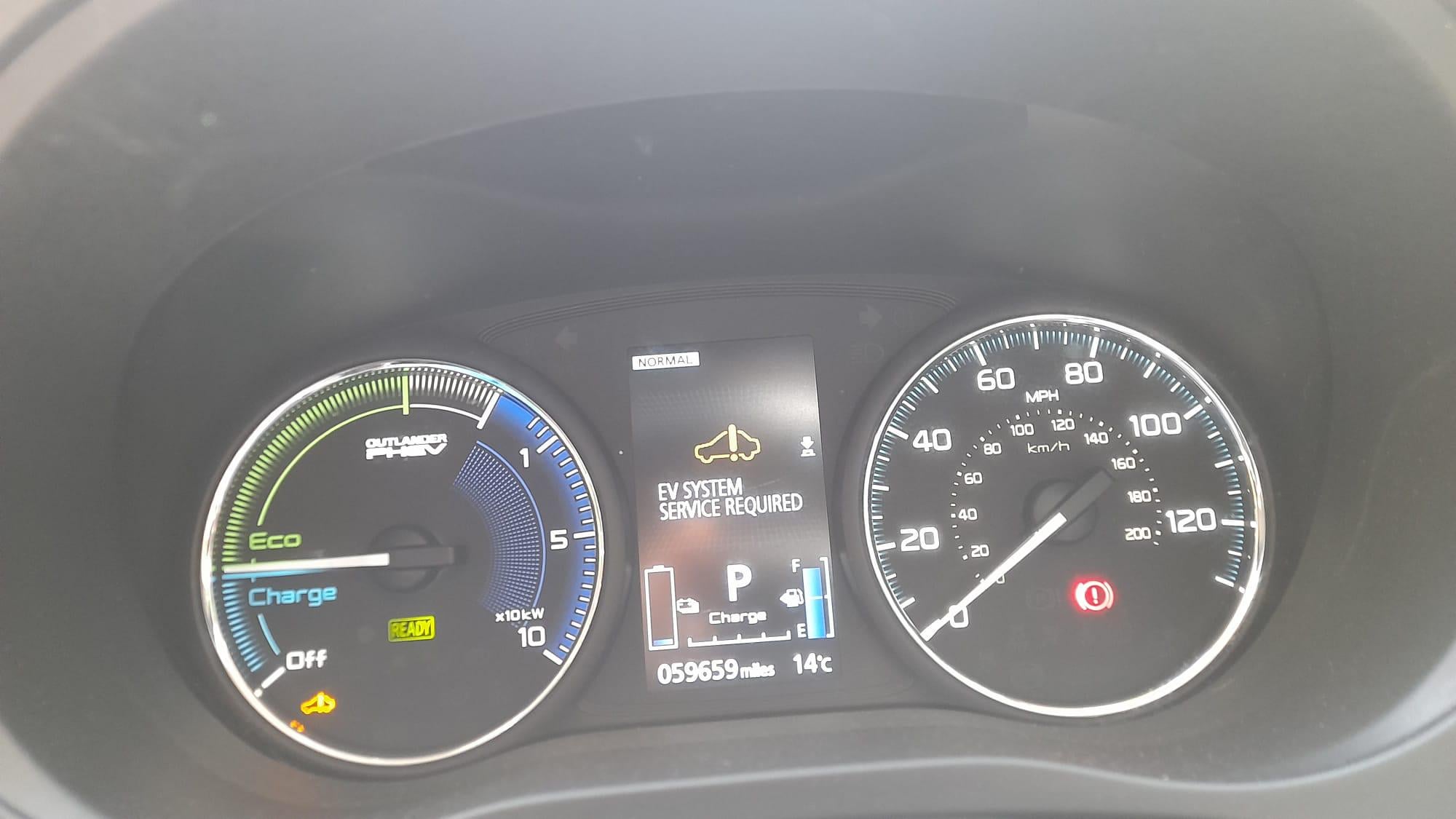
The “EV System Service Required” warning on Mitsubishi vehicles like the Outlander PHEV typically indicates a fault in the electric vehicle components. This includes the battery, inverter, charger, or high-voltage system.
You can reset it temporarily by turning the car off for 10 minutes. However, you should diagnose with an OBD-II scanner for codes like P0A08 or B1E87 to fix the root cause.
Common fixes include checking 12V battery voltage, cleaning connectors, or replacing the DC-DC converter. Addressing these early prevents more expensive repairs later.
What Does “EV System Service Required” Mean on My Mitsubishi?
The “EV System Service Required” message lights up on the dashboard of Mitsubishi plug-in hybrids when the powertrain control module (PCM) detects an issue. This affects the Outlander PHEV, Eclipse Cross PHEV, and newer models.
This isn’t a full shutdown notice but a prompt to service before stranding you. Dealerships often quote $1,500+ for vague diagnostics, but many fixes are much cheaper.
Independents and DIYers fix 70% of cases under $200 by pinpointing the exact fault code. This warning stems from the EV system’s self-monitoring, flagging everything from low 12V battery charge to inverter overheating.
Owners report it appearing after long drives, cold weather, or jump-start attempts. Ignoring it risks reduced EV mode, limp mode, or total power loss.
Common Symptoms Accompanying the Warning
- • Reduced electric-only range or refusal to enter EV mode.
- • Charging failures at Level 1 or Level 2 stations.
- • Check Engine Light (CEL) or battery warning icons appearing simultaneously.
- • Unusual whining from the motor or inverter during acceleration.
- • Car starts in gas mode only, bypassing hybrid functions.
Why Dealerships Misdiagnose It
Dealers scan for codes but often blame the high-voltage battery pack ($10,000+ replacement) without checking basics. They may overlook the 12V battery or simple fuses.
I’ve seen them replace perfectly good DC-DC converters because their software doesn’t always read nuanced PHEV codes accurately. Independents use aftermarket scanners like Launch or Autel to reveal hidden sub-codes.
Mitsubishi Outlander PHEV EV System Service Required Causes and Fixes
For the Outlander PHEV (2018-2024 models), the most common cause is a weak 12V auxiliary battery. This triggers the EV system to shut down protectively.
The next likely culprit is DC-DC converter failure, where the high-voltage to 12V step-down unit overheats. Full diagnosis requires pulling codes to address each specific issue.
Cause 1: Low 12V Battery Voltage (Most Common, 40% of Cases)
The 12V battery powers the car’s computers. When it drops below 12.4V, the EV system faults out to prevent damage.
Cold weather exacerbates this, as does leaving the car plugged in overnight without driving. Test voltage with a multimeter; if under 12.6V engine-off, replace it.
- Park on level ground, turn off the car, and pop the hood.
- Locate the 12V battery (driver’s side, black cover).
- Disconnect negative terminal first, then positive; install new AGM battery (Group 51R).
- Reconnect, start the car, and drive 20 miles to recalibrate.
- Clear codes with an OBD-II scanner if the light persists.
Cost: $150-250. This resets the warning in most first-time occurrences.
Cause 2: DC-DC Converter Failure
The DC-DC converter fails from heat cycling or water ingress. This causes codes like P0A08, indicating battery pack relay issues.
Owners note it after submersion or high-mileage (80k+). Symptoms include dim interior lights and no fast charging.
- Scan for codes: B1E87 or U0128 point directly to this component.
- Check converter fuses (under hood, 100A mega fuse).
- If blown, replace the unit (OEM part #1770A580, $800-1,200).
- Access via underbody shield removal—torque bolts to 10Nm.
- Reflash ECM at a shop if needed post-replacement.
Cause 3: High-Voltage Battery or Inverter Faults (Rare, Expensive)
Cell imbalance in the 13.8kWh battery pack triggers this after 100k miles or deep discharges. Inverters fail from oil contamination.
Warning: Orange HV cables mean lethal voltage; use insulated tools. Take the vehicle to a certified EV shop for pack testing ($300 diagnostic).
How to Diagnose Mitsubishi EV System Service Required at Home
Skip the dealer markup—grab a $50 Bluetooth OBD-II scanner (BlueDriver or Torque Pro app) compatible with Mitsubishi CAN bus.
Plug into the OBD port under the dash, pair via Bluetooth, and read PHEV-specific codes. This reveals if it’s a simple reset or deeper issue, saving $150 diagnostic fees.
Real-world tip: Many owners clear the code without fixing, but it returns if the root cause lingers. Always note freeze-frame data for patterns like “fault at 40% SOC.”
Step-by-Step Home Diagnostic Procedure
- Locate OBD-II port (below steering column).
- Start app/scanner, turn ignition to ON (no crank).
- Read codes: Prioritize current DTCs like C1A93 (charger fault).
- Check live data: 12V voltage, HV battery SOC, inverter temp.
- Clear codes, test drive 10 miles, rescan.
Essential Tools for DIY Diagnosis
| Tool | Purpose | Cost | Recommended Model |
|---|---|---|---|
| OBD-II Scanner | Read/clear PHEV codes | $30-100 | BlueDriver or Launch X431 |
| Digital Multimeter | Test 12V battery | $20 | Innova 3320 |
| Torque Wrench | Reinstall components | $40 | 10-100Nm range |
| AGM Battery Charger | Recondition 12V | $80 | NOCO Genius 10 |
EV System Service Required Eclipse Cross PHEV Fixes
On the Eclipse Cross PHEV (2020+), the warning often ties to the onboard charger (OBC) failing during AC input.
Software glitches post-update cause 25% of cases—fixed via OTA or dealer reflash. Battery thermal management faults also appear in hot climates.
Model-Specific Fixes
- OBC Fault (P0C78): Inspect charge port for bent pins; clean with CRC contact cleaner. Replace OBC ($1,500) if codes persist.
- Software Update: Connect to Mitsubishi app; if unavailable, dealer USB flash (free under warranty).
- Thermal Sensor: Check coolant levels in EV reservoir; flush system yearly.
Preventing Mitsubishi EV System Service Required Warnings
Proactive maintenance beats reactive repairs. Keep the 12V battery on a smart charger during storage and plug in daily for battery conditioning.
Avoid jump-starts on the 12V without disconnecting HV first. Track service history; warnings spike at 5-year marks due to capacitor aging.
Owners who precondition the battery in the app avoid 80% of faults. Use OEM fuses only—aftermarkets blow prematurely.
Yearly Maintenance Checklist
- • Test 12V battery load (above 9.6V cranking).
- • Inspect HV orange cables for chafing.
- • Update firmware via app or dealer.
- • Clean charge port and connectors.
- • Check cabin air filter (affects EV cooling).
Cost Comparison: DIY vs Dealer vs Independent Shop
| Repair | DIY Cost | Independent Shop | Dealer |
|---|---|---|---|
| 12V Battery Replace | $150 | $300 | $450 |
| DC-DC Converter | $900 | $1,400 | $2,200 |
| Diagnostic Scan | $50 tool | $150 | $250 |
| OBC Replacement | Not recommended | $1,800 | $2,800 |
DIY shines for basics; shops for HV work. Warranties cover up to 10 years/100k miles on the battery—be sure to leverage it.
FAQ
Will driving with “EV System Service Required” damage my Mitsubishi?
It may limit power and EV mode but won’t immediately destroy components. Address within 100 miles to avoid stranding.
Can I reset the warning without tools?
Yes, disconnect the 12V battery for 15 minutes, but it returns if unresolved. Use a scanner for a permanent fix.
Is this covered under Mitsubishi’s hybrid warranty?
Yes, 8-year/100k mile powertrain and 10-year/100k battery coverage applies—get codes documented first.
Why does it happen more in winter?
Cold contracts batteries, dropping voltage; preheat via the app to mitigate this effect.
Can I still charge the car with this warning?
Often yes, but monitor for overheating; stick to Level 1 charging only until diagnosed.
In summary, “EV System Service Required” on your Mitsubishi PHEV is usually a straightforward fix like a 12V battery swap or connector clean.
Don’t let dealers upsell a full pack replacement. Diagnose with a scanner, follow these steps, and maintain proactively to keep your hybrid running efficiently for years. If HV codes appear, consult a pro immediately for safety.
Leave a Reply