
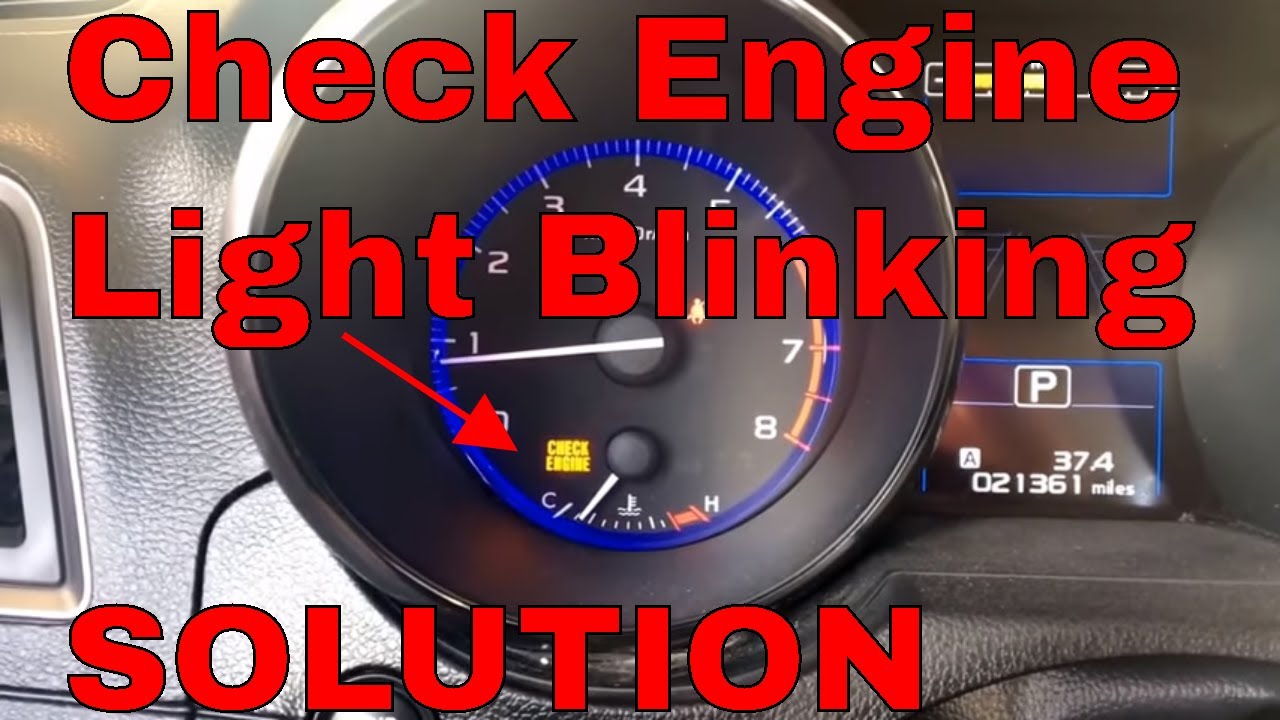
A blinking check engine light on your Subaru means the engine control module has detected a severe misfire that’s damaging the catalytic converter.
Stop driving immediately to prevent costly repairs—pull over safely, shut off the engine, and have it towed to a shop for diagnosis.
Why is my Subaru check engine light blinking?
A blinking check engine light signals an active cylinder misfire in Subaru engines, distinguishing it from a steady light which indicates less urgent issues.
This flashing warns of unburned fuel entering the exhaust, overheating and destroying the catalytic converter.
In real-world diagnostics, I’ve seen this repeatedly on models like the Forester, Outback, Impreza, and WRX. It often starts intermittently before becoming constant.
Subaru’s boxer engines are prone to misfires due to inherent design weaknesses like thin cylinder walls and sensitive ignition systems.
Dealerships often quote $2,000+ for cat replacements without addressing the root cause, while independents might overlook vacuum leaks.
Understanding the triggers helps owners avoid these pitfalls and perform targeted fixes.
Common Triggers for Blinking CEL in Subarus
- ➔ Ignition system failures: Worn spark plugs or coils cause incomplete combustion, especially under load.
- ➔ Fuel delivery problems: Clogged injectors or weak pumps lead to lean conditions in one or more cylinders.
- ➔ Sensor malfunctions: Faulty camshaft/crankshaft position sensors disrupt timing signals.
- ➔ Mechanical issues: Low compression from ring wear or head gasket leaks, notorious in EJ-series engines.
- ➔ Exhaust restrictions: Cracked cats or O2 sensor failures exacerbate the misfire detection.
Model-Specific Patterns I’ve Diagnosed
| Model/Year | Common Cause | Failure Rate Insight |
|---|---|---|
| 2005-2009 Forester 2.5i | Ignition coils | High—coils crack internally after 100k miles |
| 2010-2014 Outback 3.6R | Spark plugs fouling | Common in H6 engines from oil consumption |
| 2008-2014 WRX/STI | Fuel pump failure | Turbo models starve under boost |
| 2015+ Impreza 2.0L | Cam/crank sensors | FB engines sensitive to heat cycling |
How to diagnose Subaru blinking check engine light at home
Start with an OBD-II scanner to pull codes. P0301 through P0304 indicate specific cylinder misfires on 4-cylinder Subarus, while P0300 is random.
Resetting the light without fixing the issue will make it return immediately, confirming an active problem.
This DIY approach has saved countless owners from $150 dealer diag fees. Visually inspect under the hood for obvious issues like cracked wires or loose plugs before scanning.
Use a noid light or multimeter for deeper checks—dealers skip these, jumping to cat quotes. Follow this sequence to pinpoint the culprit accurately.
Step-by-Step Diagnostic Process
- Gather tools: OBD-II scanner (BlueDriver or Innova recommended), spark plug socket, multimeter, torque wrench, and Subaru-specific service manual.
- Scan for codes: Plug in scanner, note misfire codes (e.g., P0302 = cylinder 2), and check freeze frame data for RPM/load when it occurred.
- Swap test coils/plugs: Move suspect coil to another cylinder; if misfire follows, replace it. Torque plugs to 13-15 ft-lbs.
- Compression test: Remove plugs, disable fuel/ignition, crank engine—healthy Subaru cylinders read 140-180 PSI, variance under 10%.
- Check sensors: Test crank sensor resistance (800-1200 ohms cold), inspect wiring for chafing near exhaust.
- Monitor live data: Scanner should show consistent cam/crank correlation; glitches point to timing issues.
Tools Table for Accurate Diagnosis
| Tool | Purpose | Cost Range |
|---|---|---|
| OBD-II Scanner | Read P030X codes, live data | $20-100 |
| Spark Plug Socket (16mm) | NGK plug removal | $10 |
| Compression Tester | Cylinder health | $30-50 |
| Multimeter | Sensor/coil tests | $15 |
Subaru blinking check engine light fix: Ignition system causes and solutions
The most common fix is replacing spark plugs and ignition coils, resolving 60-70% of cases without touching the catalytic converter.
OEM NGK plugs foul quickly in Subarus due to oil blow-by; aftermarket coppers fail faster. Always replace in full sets to avoid new misfires.
Coils fail from heat cycling in boxer engines—symptoms include rough idle only on cold starts. DIY costs under $200 compared to dealer prices.
FIX 1: Spark Plugs Replacement (All Models)
- Park on level ground, let engine cool completely to avoid burns.
- Disconnect battery negative terminal for safety.
- Remove engine cover, unplug each coil, and unscrew with 16mm socket.
- Gap new NGK ILFR6B to 0.030-0.035 inches, torque to 13 ft-lbs.
- Reassemble, clear codes, and test drive monitoring for blinks.
FIX 2: Ignition Coils (EJ25/FB20 Engines)
- Identify bad coil via swap test or resistance check (primary 0.4-0.6 ohms).
- Source OEM Denso/Subaru coils (avoid cheap eBay)—$50-80 each.
- Unplug, twist-pull coil, and install new with dielectric grease on boot.
- Full set replacement recommended every 60k miles.
Fuel system causing Subaru check engine light blinking
Fuel-related misfires occur when injectors clog or pumps weaken, starving cylinders under acceleration.
Symptoms include hesitation before blinking starts. Shops often overlook this, blaming cats immediately.
FIX 3: Fuel Injector Cleaning (2.5L Models)
- ➔ Seafoam method: Add to fuel tank, idle 15 mins with vacuum line disconnected.
- ➔ Direct clean: Remove rail, ultrasonic bath or carb cleaner soak overnight.
- ➔ Maintenance: Replace o-rings ($20 kit) and flow test if possible.
FIX 4: Fuel Pump Replacement (WRX/High-Mileage)
- Drop fuel tank and disconnect lines with flare nut wrench.
- Bench test old pump and install Walbro 255 or OEM.
- Prime system 10x before cranking—critical to avoid dry starts.
Mechanical misfires: Compression and sensor fixes
Low compression from worn rings or head gaskets causes persistent blinking, especially in 1999-2004 EJ25s.
Sensors fail from oil contamination or heat. These require compression/leakdown tests—skipped by rushed techs.
FIX 5: Crank/Cam Sensors (2015+ FB Engines)
- Locate sensors on the passenger side and test resistance.
- Replace with OEM (Denso) and apply thread sealant if specified.
- Clear adaptive values with scanner for smooth relearn.
FIX 6: Head Gasket/Compression Repair
DIY only for experienced owners—requires engine pull. Signs include milky oil and overheating with misfire.
What to do if catalytic converter is already damaged
If the misfire is ignored, the cat melts and P0420 accompanies the blinking. Prevention is key; replace upstream O2 if contaminated.
- Confirm with backpressure test (<2 PSI at 2500 RPM).
- Cut out old cat and weld in Magnaflow universal (CARB-approved).
- Monitor O2 voltages post-install.
Subaru check engine light blinking no codes
Intermittent blinks without stored codes point to wiring or ECU glitches. Inspect the harness near headers for melts.
Reset the ECU by disconnecting the battery for 30 mins, but always scan live data first to catch the glitch in real-time.
FAQ
Can I drive with a blinking check engine light on Subaru?
No—limit to 5 miles max at idle speeds. Continued driving destroys the cat, costing $1,500+.
How much does it cost to fix Subaru blinking CEL?
$100-400 DIY for plugs/coils; $800-2,500 at shops if cat involved. Early fix keeps it cheap.
Why does my Subaru blink only when accelerating?
Load-dependent misfire from weak coils, fuel pump, or vacuum leaks. Scan under load to confirm.
In summary, a blinking check engine light demands immediate action to safeguard your Subaru’s engine and wallet.
Prioritize ignition and fuel diagnostics with the steps outlined—most fixes are DIY-friendly and far cheaper than dealer overhauls.
Regular maintenance like 30k-mile plug swaps prevents recurrence; drive smart and scan often.
Leave a Reply