
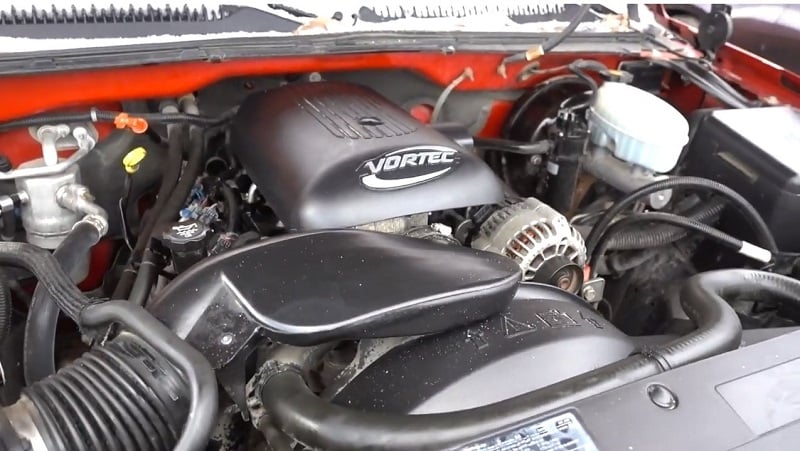
The 4.8 Vortec engine most often fails due to AFM lifter collapse, excessive oil consumption through piston rings, and intake manifold gasket leaks that allow coolant into the combustion chamber.
4.8 Vortec lifter failure causes and diagnosis
The 4.8 Vortec lifter failure stems primarily from the active fuel management system that deactivates cylinders under light load.
This design leaves lifters starved for oil when the engine switches modes repeatedly.
Mechanics see collapsed lifters most often between 80,000 and 120,000 miles on trucks that spend time in highway cruising.
The resulting flat cam lobes create a distinct ticking that worsens when the engine reaches operating temperature.
Step-by-step lifter inspection process
- 01. Remove the valve covers and rotate the engine by hand while watching each lifter for movement.
- 02. Use a borescope through the spark plug hole to check for scoring on the cylinder walls caused by dropped valves.
- 03. Measure oil pressure at the oil filter housing with a mechanical gauge; anything below 25 psi at hot idle points to a failing oil pump.
- 04. Inspect the AFM solenoid screen for metal debris before deciding whether a full AFM delete is required.
Why 4.8 Vortec engines burn excessive oil
Oil consumption in the 4.8 Vortec occurs when piston rings fail to seal properly against cylinder walls that have become polished from extended highway use.
The PCV system also pulls oil vapor into the intake at a higher rate than later GM designs.
Owners typically report losing one quart every 800 to 1,500 miles once the engine passes 90,000 miles.
This consumption accelerates if the vehicle tows heavy loads regularly without frequent oil changes.
Oil consumption diagnosis and correction steps
- ✔ Perform a compression test on all eight cylinders; readings below 140 psi indicate ring wear.
- ✔ Check for blue smoke on deceleration, which confirms oil entering the combustion chamber past the rings.
- ✔ Replace the factory PCV valve with an aftermarket baffled unit and install a catch can to reduce vapor ingestion.
- ✔ Consider a piston ring replacement using the updated GM rings introduced after 2010 if consumption exceeds one quart per 700 miles.
4.8 Vortec intake manifold gasket leaks explained
The composite intake manifold gaskets on early 4.8 Vortec engines shrink and crack from repeated heat cycles.
This allows coolant to seep into the intake ports, often triggering misfire codes and a sweet smell from the exhaust.
Dealerships sometimes misdiagnose these leaks as head gasket failures and quote expensive cylinder head work.
Independent shops familiar with these engines catch the issue during a simple pressure test of the cooling system.
Intake manifold gasket replacement procedure
- Drain the coolant and remove the upper intake manifold bolts in a crisscross pattern to avoid warping the plastic manifold.
- Clean all old gasket material from both the heads and manifold using plastic scrapers only.
- Apply GM gasket adhesive to the new gaskets and torque the lower intake bolts to 89 inch-pounds.
- Refill with a 50/50 Dex-Cool mixture and pressure test the system for 30 minutes before starting.
Exhaust manifold bolt breakage on 4.8 Vortec engines
Exhaust manifold bolts break because the original equipment bolts lack sufficient thread engagement and stretch under thermal expansion.
The broken studs allow exhaust leaks that trigger oxygen sensor codes and loud ticking at idle.
Many shops attempt extraction with easy-outs that snap off inside the head, leading to expensive cylinder head removal.
Proper repair requires drilling and thread repair with time-serts or heli-coils.
Broken exhaust manifold bolt repair method
- Soak the remaining stud with penetrating oil for 24 hours before attempting removal.
- Use a left-hand drill bit and reverse the drill to back the stud out without pushing it deeper.
- If the stud breaks flush, drill to the next size and install a time-sert insert rated for exhaust temperatures.
- Replace all eight bolts with upgraded ARP studs and copper washers to prevent future failures.
4.8 Vortec knock sensor and wiring issues
Knock sensors on the 4.8 Vortec fail when oil from valve cover leaks soaks the wiring harness connectors.
The resulting false knock signals cause the PCM to retard timing and create a noticeable power loss under acceleration.
Technicians often replace the sensors without addressing the oil leak, leading to repeated failures within months.
Always inspect the harness for oil intrusion before installing new sensors.
Thermostat housing coolant leaks
The plastic thermostat housing cracks at the coolant outlet neck on engines that have overheated even once.
Coolant drips onto the exhaust manifold and creates steam that drivers mistake for a head gasket problem.
Replacement requires only basic hand tools and takes under 45 minutes.
Use the updated aluminum housing instead of the factory plastic unit for improved durability.
FAQ
How often should I change the oil in a 4.8 Vortec to avoid lifter problems?
Change the oil every 5,000 miles using 5W-30 synthetic and replace the filter with a high-efficiency unit that captures particles below 20 microns. This interval prevents varnish buildup in the AFM passages that starves lifters.
Can I disable AFM on my 4.8 Vortec without a tune?
Disabling AFM requires both a range selector plug and a custom PCM calibration to prevent the engine from entering cylinder deactivation mode. Without the tune the check engine light will illuminate and fuel trims will suffer.
What is the typical repair cost for 4.8 Vortec lifter replacement at an independent shop?
Independent shops usually quote between $2,800 and $3,600 for a full lifter and camshaft replacement including parts and labor. This cost drops significantly if the owner supplies the AFM delete kit and non-AFM lifters.
Does the 4.8 Vortec require premium fuel to prevent detonation?
Regular 87-octane fuel is sufficient when knock sensors and wiring remain in good condition. Using premium fuel only masks underlying issues such as carbon buildup or incorrect spark plug gaps.
How do I check for a cracked cylinder head on a 4.8 Vortec?
Perform a chemical block test on the coolant and inspect for combustion gases in the expansion tank. A cracked head will also show inconsistent compression readings between adjacent cylinders.
Conclusion
Addressing 4.8 Vortec problems early prevents cascading failures that turn a $3,000 repair into a full engine replacement.
Focus on oil maintenance, AFM system health, and prompt gasket replacement to keep these engines reliable past 200,000 miles.
Leave a Reply