
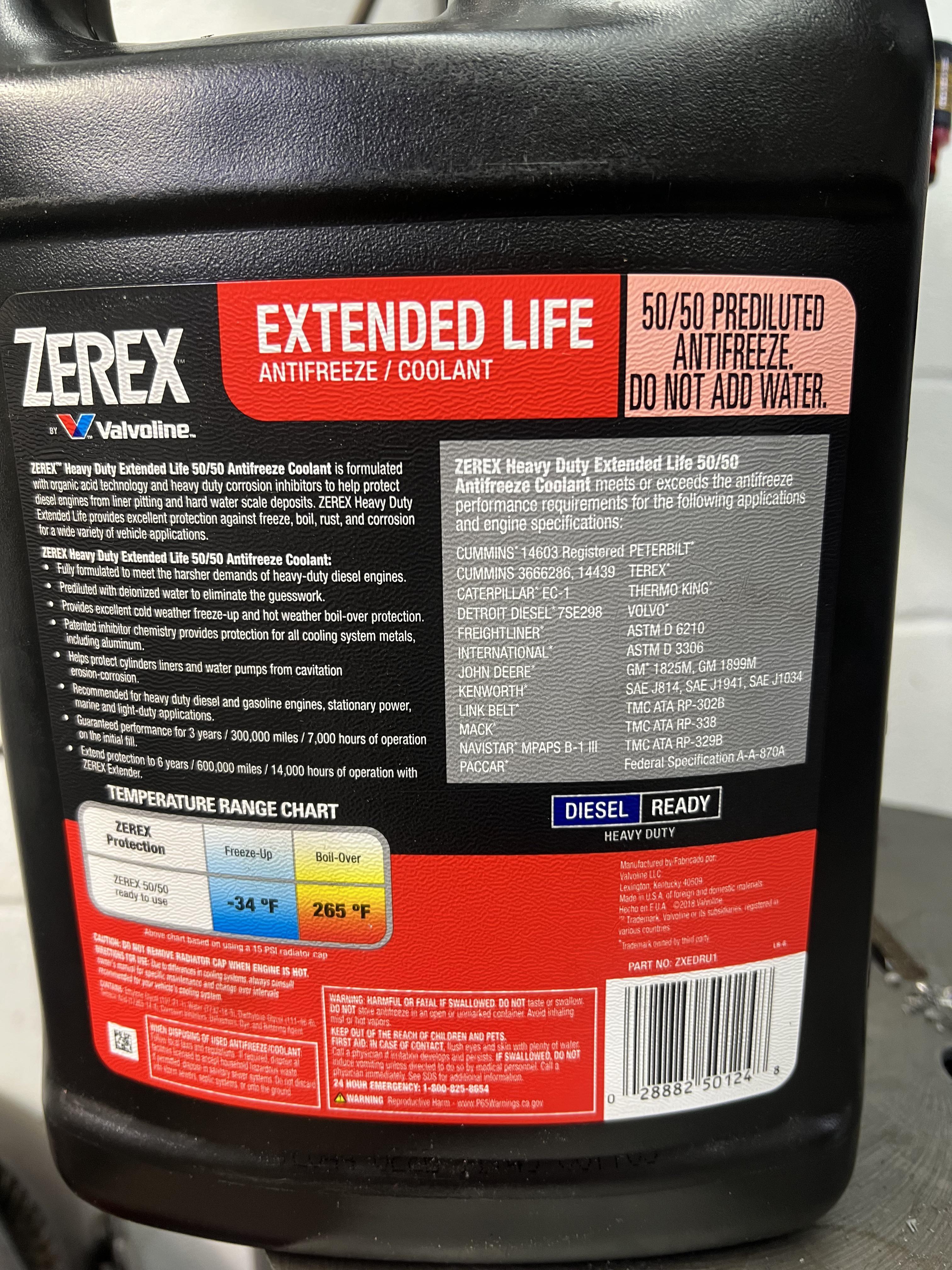
The correct coolant type for a 6.0L Powerstroke diesel is Motorcraft VC-3-B (Gold) or equivalent meeting Ford WSS-M97B44-D specification. Never use orange or green coolant in these engines, as it leads to immediate gelling and catastrophic failure.
What Coolant Does the 6.0 Powerstroke Require?
The 6.0L Powerstroke, found in 2003-2007 Ford Super Duty trucks and Excursions, demands Motorcraft Premium Gold Coolant VC-3-B or a direct Fleetguard ES Compleat OAT equivalent certified to Ford spec WSS-M97B44-D.
This is a nitrite-free, phosphate-free Organic Acid Technology (OAT) coolant dyed yellow/gold, designed specifically for heavy-duty diesels to prevent cavitation in the EGR cooler and oil cooler.
Using the wrong coolant triggers a chemical reaction forming silicate gels that clog narrow passages in the oil cooler and EGR system, leading to overheating and $5,000+ repairs.
I’ve seen countless trucks towed in after owners topped off with generic store-bought coolants—dealerships then quote full EGR/oil cooler deletes as the “fix,” ignoring the root cause.
Always verify your coolant by checking the reservoir cap or underhood label; early 2003 models might have VC-1 (older spec), but all transitioned to VC-3 by mid-year.
Mixing even small amounts of non-compatible coolant accelerates degradation—flush completely if in doubt.
Why Ford Chose Gold Coolant for 6.0 Powerstroke
The 6.0’s high-pressure oil system and EGR setup create extreme cavitation risks, where cylinder liners pit from vapor bubbles collapsing.
Gold coolant contains unique organic inhibitors that form a protective film on iron and aluminum surfaces without silicates or nitrites, which precipitate in hard water common in truck use.
Independent shops often misdiagnose bubbling reservoirs as head gasket failure, when it’s just incompatible coolant eating the oil cooler core.
Real-world testing shows VC-3 lasts 100,000 miles with proper maintenance, versus 30,000 for watered-down generics.
6.0 Powerstroke Coolant Capacity and Mixture Ratio
A stock 6.0 Powerstroke holds 30.9 quarts (7.75 gallons) of 50/50 premixed coolant in the entire system.
If buying concentrate, mix exactly 50% Motorcraft VC-3 with 50% distilled water—tap water introduces minerals that gel the coolant prematurely.
Overfilled systems spit coolant out the degas bottle under load, mimicking EGR cooler leaks.
Underfilled setups starve the turbo and heads, causing hot spots—always bleed air properly after service to hit the cold fill line marked on the reservoir.
Model-Year Specific Capacities
- 2003-2005 F-250/F-350/Excursion: 30.9 quarts total (21.5 quarts engine + 9.4 quarts intercooler/radiator).
- 2006-2007 F-250/F-350: Same 30.9 quarts, but secondary radiator adds 1-2 quarts if equipped.
- Bulletproofed Engines: Up to 35 quarts with larger radiators and oil coolers.
Expect to lose 1-2 quarts during a full flush due to residual trapping in block passages—top off after a heat cycle and pressure test.
How to Flush 6.0 Powerstroke Coolant System Step by Step
Flush every 60,000 miles or immediately if contaminated to avoid $10,000 head gasket jobs misdiagnosed by dealers.
Use a flush kit or distilled water triple-flush method; chemical flushes like VC-9 only if heavy rust is present.
Dealerships charge $400-600 for this basic service, often skipping full block evacuation, leading to repeat failures.
DIY it in your driveway with basic tools—takes 3-4 hours and saves hundreds.
Tools and Materials Needed
- Drain pan (10+ gallon capacity)
- Turkey baster or fluid evacuator for reservoir
- Flush tee kit (Stant or OEM-style for heater hose)
- 30+ quarts Motorcraft VC-3 50/50 premix
- 2 gallons distilled water
- Funnel, rags, zip ties
- VC-9 flush additive (optional for rusty systems)
Step-by-Step Flush Procedure
- Prep: Park on level ground, let engine cool completely. Remove degas bottle cap, siphon all coolant with evacuator.
- Drain Low Points: Open radiator petcock (driver’s side lower), remove block plug above starter (13mm wrench). Expect 5-7 gallons initial drain.
- Install Flush Tee: Cut upper radiator hose, insert tee with shutoff valve, reconnect. This allows backflushing without full disassembly.
- Triple Flush: Fill with distilled water, run engine to thermostat open (195°F), circulate 10 mins with heater on max. Drain hot, repeat twice until water runs clear.
- Add VC-9 (If Needed): For contaminated systems, add one bottle VC-9 to water, idle 10 mins, drain immediately.
- Refill and Bleed: Pour 50/50 VC-3 to cold fill line. Start engine, top off every 2 mins as air burps out. Rev to 2,000 RPM in neutral bursts to purge air from oil cooler.
- Pressure Test: Cap system, pressurize to 15 PSI, check for leaks over 30 mins. Heat cycle twice, recheck levels.
Common mistake: Skipping block plug drain leaves old coolant trapped, contaminating new fluid.
Monitor for 500 miles post-flush—top off as needed.
6.0 Powerstroke Coolant Gelling Symptoms and Fixes
Gelling appears as slimy yellow/orange chunks in the degas bottle, overheating above 210°F, or white exhaust smoke from coolant loss.
Caused 90% by mixing orange Dex-Cool or green with gold coolant—silicates react instantly.
Shops push EGR deletes ($2,500) without addressing the gel; flush first, or it recurs.
I’ve cleared gels from trucks that ran fine after proper flush, avoiding unnecessary surgery.
Confirming Coolant Gelling
- Milky oil on dipstick (coolant in oil cooler)
- Gelatinous residue on reservoir walls
- Oil cooler delta-P sensor code P2185 (overheating)
- Low coolant with no visible leaks
Fixing Gelled Coolant by Severity
Mild Gelling (Early Stage)
- Flush as above with VC-9 additive.
- Replace oil cooler filter (blue Motorcraft).
- Inspect EGR cooler for partial clog—flush if accessible.
Severe Gelling (Clogged Passages)
- Remove and acid-flush oil cooler (bulletproof kits recommended).
- Replace EGR cooler and oil cooler assembly ($1,200 DIY).
- Upgrade to larger aftermarket oil cooler during repair.
Post-fix, add Water Wetter for extra cavitation protection if towing heavy.
Best Coolant Alternatives for 6.0 Powerstroke
Stick to OEM VC-3-B (WSS-M97B44-D certified)—avoid ELC universals lacking exact inhibitors.
Top alternatives: Fleetguard Compleat ES (55 gallons drum for fleets), Zerex G-05 (but only if labeled Ford diesel spec), or Peak Final Charge equivalent.
Dealers mark up VC-3 300%; buy online or NAPA house brand equivalent for $25/gallon.
Never use Cat ELC (pink)—it lacks Ford’s anti-cavitation package.
Approved Equivalents Comparison Table
| Brand | Part Number | Premixed? | Cost per Gallon | Notes |
|---|---|---|---|---|
| Motorcraft VC-3-B | VC-3-B-50 | Yes | $28 | OEM Gold Standard |
| Fleetguard Compleat | CC2632 | Yes | $22 | Exact Spec Match |
| Zerex G-05 | ZWG051 | Concentrate | $18 | Ford Diesel Approved |
Cross-check spec on bottle—WSS-M97B44-D ensures compatibility.
Common 6.0 Powerstroke Coolant Leaks and DIY Repairs
Leaks mimic low coolant warnings: weep hole at water pump ($300 DIY), cracked degas bottle ($50), or oil cooler o-rings ($150).
Dealerships quote $1,800 water pump jobs without checking basics.
Pressure test isolates real leaks—fix cheap ones first before blaming EGR.
Top Leak Sources and Fixes
- Oil Cooler O-Rings: Remove intake, pry cooler, replace with updated Ford kit. Torque to spec (18 ft-lbs).
- Degas Bottle: Unbolt, swap with Motorcraft VC-19, transfer sensor.
- Thermostat Housing: Drain, replace housing/gaskets, use anaerobic sealant on studs.
- Turbo Coolant Lines: Brass compression fittings crack—upgrade to stainless lines.
After repair, always burp system twice to prevent air pockets detonating components.
6.0 Powerstroke Coolant Maintenance Schedule
Change coolant every 60,000 miles or 5 years; inspect degas yearly for debris.
Replace oil cooler filter every oil change (blue filter, not orange).
Neglect leads to cavitation erosion—check pH annually (should be 7.6-8.5 with test strips).
Quick Maintenance Checklist
- Monthly: Check cold level, look for oil contamination.
- Yearly: Test freeze point (-34°F for 50/50), SCA add if needed.
- Every 30k: Replace degas cap (15 PSI).
- Every 60k: Full flush, thermostat check (192°F opening).
FAQ
Can I mix VC-3 Gold with yellow universal coolant?
No—universals lack Ford-specific inhibitors and gel within months. Flush fully before any switch.
What if my 6.0 Powerstroke reservoir is foaming?
Combustion gases from head gasket or EGR cooler failure. Pressure test and do CO2 sniff test before assuming coolant issue.
Is it safe to run straight VC-3 concentrate temporarily?
Emergency only—no freeze protection and reduced heat transfer. Dilute ASAP to avoid pump seal damage.
How do I know if my coolant is original VC-3?
Clear yellow-gold color, no particulates, Ford logo on bottle remnants. Test spec with Ford literature match.
Does bulletproof kit require different coolant?
No—same VC-3, but larger capacity means more volume needed during flush.
In summary, sticking to spec VC-3 Gold coolant and rigorous flush protocols keeps your 6.0 Powerstroke running strong past 300,000 miles.
Avoid shortcuts with generics— the engine’s tight tolerances punish mistakes harshly.
Regular maintenance sidesteps the dealership horror stories I’ve fixed countless times.
Leave a Reply