
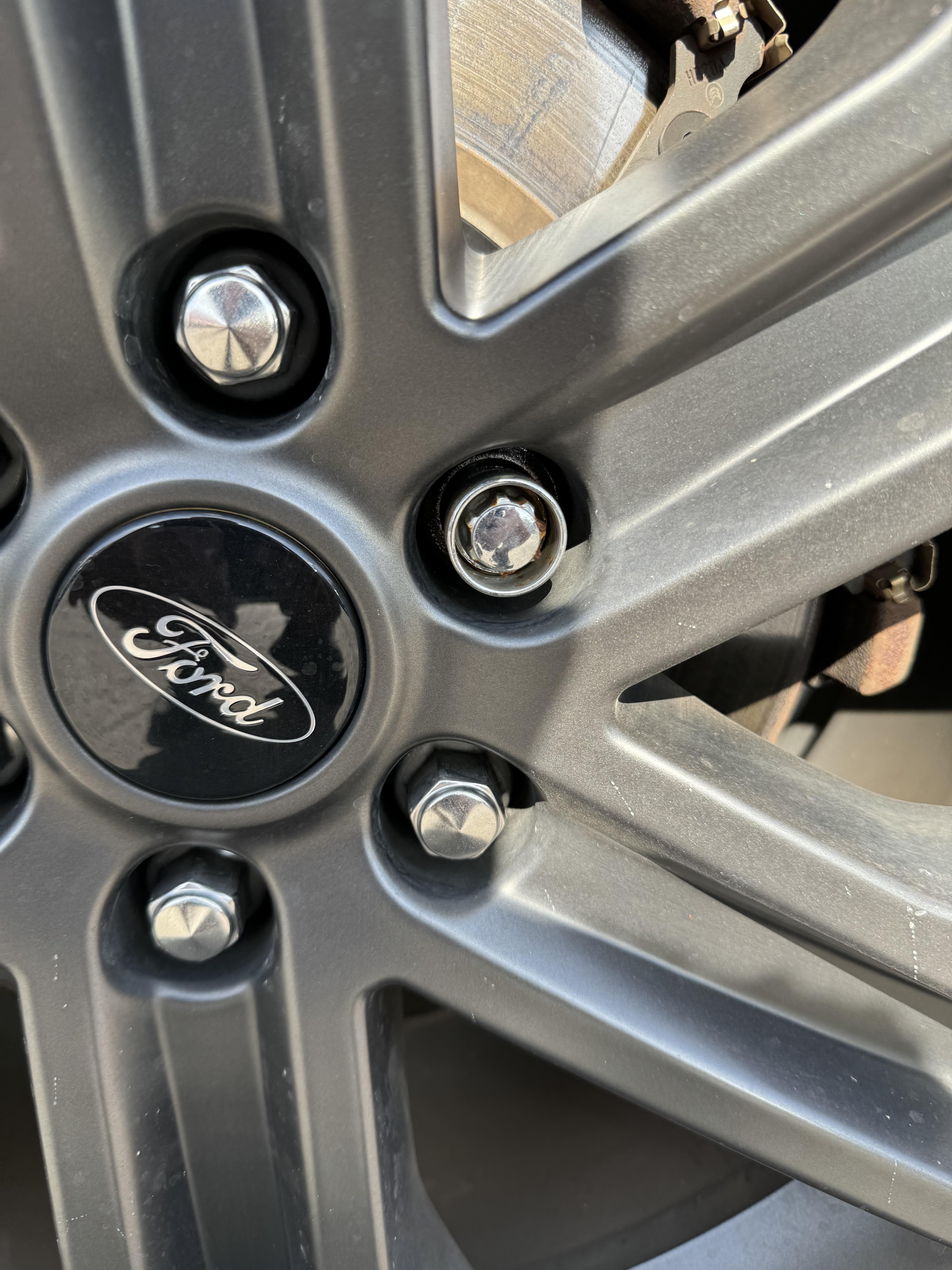
Wheel locks are worth it if you have expensive alloy wheels or live in an area with high wheel theft, but standard locking lug nuts only stop opportunistic thieves—determined ones can remove them in under 10 minutes with universal removal tools. For maximum protection, invest in spline-drive or rotating-collar style locks from brands like McGard or Gorilla rather than the cheap OEM sets dealerships sell at markup.
Are wheel locks worth the money for everyday drivers?
For most people driving factory steel wheels or basic alloys on a Honda Civic or Toyota Corolla, wheel locks are a waste of money. Wheel thieves target expensive wheels—think 20-inch forged rims, OEM chrome packages, or high-end aftermarket sets worth over $1,000 per set.
If your wheels are worth less than $400 total, no thief is spending time on them.
However, if you drive a truck with upgraded wheels, a luxury vehicle, or anything sitting on premium rims, wheel locks become a smart investment. The cost of replacing stolen wheels—including tires, TPMS sensors, and potential body damage from the vehicle falling—far outweighs the $20 to $80 for a quality set.
When wheel locks are absolutely worth buying
- You have OEM or aftermarket wheels worth more than $600 per set
- You park on the street, in public garages, or in apartment complex lots overnight
- You live in or near a metro area with documented wheel theft incidents
- Your vehicle sits on the ground with no garage and limited lighting
- You own a popular theft-target vehicle like a Toyota Camry, Honda Accord, Dodge Charger, or Ford F-150
When wheel locks are a waste of your money
- You drive base-model steelies with hubcaps
- You park in a secured garage every night
- Your wheels are curb-rashed, damaged, or low-value aftermarket
- You live in a low-crime rural area with minimal theft reports
Do wheel locks actually prevent wheel theft or can they be removed?
Standard wheel locks slow down theft—they do not prevent it. Every major locking lug nut brand, including the OEM McGard sets sold at dealerships, can be defeated with a universal wheel lock removal tool that costs about $15 online. Thieves hammer a reverse-thread socket onto the lock and spin it right off.
That said, wheel locks still serve a real purpose. Most wheel theft is opportunistic, and criminals carry basic tools.
When they see locking lug nuts, many will simply move to the next car. The goal is to make your vehicle a harder target, not an impossible one.
Types of wheel locks ranked by security level
How thieves actually remove wheel locks
Knowing how thieves work helps you choose the right protection. The most common method involves hammering a slightly undersized 12-point socket onto the locking lug nut head.
Once it grips, a breaker bar spins the lock out. This works on most standard OEM locks within 30 seconds per lug.
The second method uses a dedicated wheel lock removal tool—a hardened reverse-thread extractor sold openly at auto parts stores. Legitimate mechanics use these when customers lose their keys, but thieves use them too. Rotating-collar locks defeat both methods because the outer shell spins freely, preventing the socket from getting a grip.
Are the wheel locks from the dealership worth the price or should you buy aftermarket?
Dealership wheel locks are almost never worth what they charge. Most dealerships sell McGard or equivalent locking lug nut sets for $60 to $120, often included in dealer-added packages like “protection packages” or “appearance packages.” You can buy the exact same McGard part number on Amazon or direct for $20 to $40.
The dealership markup on wheel locks runs between 200% and 400%. Some dealers even package wheel locks into the financing, which means you are paying interest on a $120 set of locking lug nuts for 60 to 72 months. That is absurd.
Best aftermarket wheel locks worth buying
- McGard 24157 (Spline Drive): Compact design, small key socket, difficult to hammer a socket onto. Great for most passenger cars and SUVs. Around $25–$35 for a set of four.
- McGard 24210 (Ultra): Rotating collar design that spins freely. The gold standard for wheel security. Around $50–$70 for a set of four.
- Gorilla Automotive 73631N: Spline-drive with a unique narrow pattern. Good balance of price and security. Around $20–$30.
- Advanced Wheel Locks: Custom CNC-machined patterns with no universal key. Higher price but significantly harder to defeat. Around $80–$120.
Can you replace wheel locks if you lost the key?
Yes, you can replace wheel locks if you lost the key, and this happens more often than you would think. Most people lose their wheel lock key in the glovebox shuffle or leave it at a tire shop after a rotation. Do not panic—you have several options.
Steps to remove and replace a lost wheel lock key
- Check your spare tire area and glovebox thoroughly. Many OEM wheel lock kits are stored near the spare tire or jack. Pull everything out and look carefully.
- Contact the dealership with your VIN. If you have OEM wheel locks, the dealership can look up the key code by your vehicle identification number and order a replacement key. This costs $10 to $25 and takes 2 to 5 business days.
- Use a wheel lock removal kit. Available at any auto parts store for $15 to $40. These are the same reverse-thread extractors that work on most standard locks. Use a breaker bar and go slowly.
- Have a tire shop extract them. Any competent tire shop has done this hundreds of times. Expect to pay $10 to $25 per wheel for extraction.
- Replace with a new set immediately. Once extracted, buy a fresh set and keep the key in a secure, consistent spot.
What happens when a tire shop loses your wheel lock key or damages your locks?
This is an extremely common complaint on owner forums. Tire shops regularly lose wheel lock keys, strip the pattern, or cross-thread locking lug nuts back on.
When this happens, the shop should cover the cost of replacement—period. Do not accept any excuse.
How to protect yourself at the tire shop
- Photograph your wheel locks before dropping off the vehicle. This documents their condition and confirms they were present.
- Hand the key directly to the service writer and ask them to note it on the work order. Do not leave it in the car hoping they will find it.
- Inspect the locks when you pick up the car. Check that they are properly torqued and not cross-threaded. Run your finger around the base—cross-threaded lugs will feel uneven or raised.
- Torque spec matters. Over-torqued wheel locks can crack or round out, making future removal a nightmare. Most passenger cars require 80 to 100 ft-lbs.
Are wheel locks necessary if you have TPMS sensors or expensive tires?
Wheel locks protect the entire wheel assembly—rim, tire, and TPMS sensor together. Thieves do not just steal wheels for the metal; they want the complete package.
A set of factory 20-inch wheels with decent tires and working TPMS sensors can fetch $1,000 to $3,000 on the used market. That makes your truck or SUV a high-value target regardless of the tire brand.
If you have invested in premium tires like Michelin Pilot Sport or BFGoodrich All-Terrains, the combined value of wheels and tires makes locking lug nuts a no-brainer. The cost of one quality wheel lock set is less than 2% of the replacement cost of everything on the ground.
Frequently Asked Questions
Do wheel locks void my vehicle warranty?
No, wheel locks do not void any part of your factory warranty. They are considered a bolt-on accessory and have no impact on drivetrain, suspension, or body coverage under the Magnuson-Moss Warranty Act.
How many wheel locks do I need per wheel?
One locking lug nut per wheel is the standard recommendation. Replacing all five lug nuts per wheel with locks creates a headache when you lose the key, and the added security of multiple locks per wheel is negligible compared to the hassle.
Can I rotate my tires with wheel locks installed?
Yes, absolutely. Any tire shop or dealership can rotate your tires with wheel locks as long as you provide the key. Include the key with your service instructions every time to avoid lost-key incidents.
Do wheel locks affect wheel balancing or cause vibration?
Quality wheel locks from McGard, Gorilla, or equivalent brands are manufactured to the same weight tolerance as standard lug nuts. They will not cause vibration or imbalance. Cheap, no-name locks from Amazon marketplace sellers sometimes have weight inconsistencies that can cause minor vibration at highway speeds.
Should I use wheel locks on all four wheels or just the front?
Use them on all four wheels. Thieves take all four—they are not picky about front or rear. Skipping one axle defeats the entire purpose of installing them in the first place.
The Bottom Line: Protect Your Investment the Smart Way
Wheel locks are a cheap insurance policy for anyone sitting on wheels worth stealing. Skip the dealership markup, buy a reputable brand like McGard Ultra or Gorilla spline-drive online, and keep your key in a consistent location—not rolling around in your trunk.
One $30 set of quality locking lug nuts can save you a $2,000 headache, a towing bill, and a ruined weekend. That trade-off is not even close.
Leave a Reply