
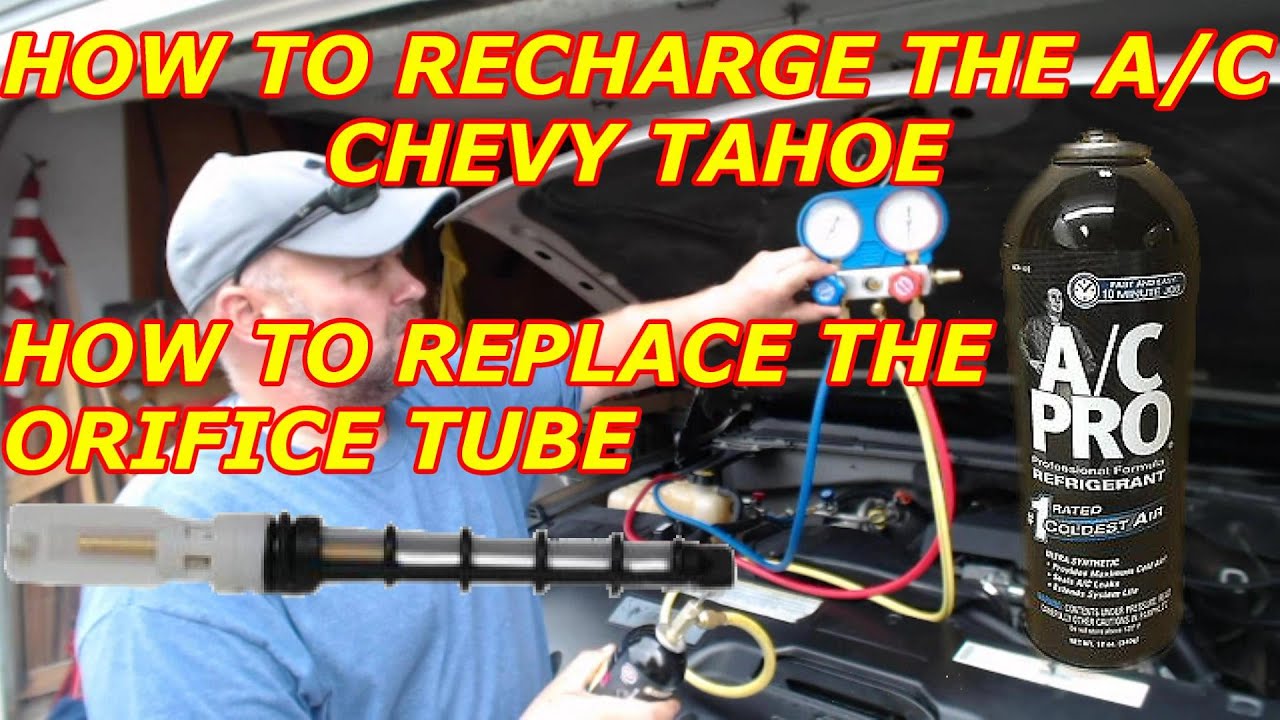
Recharging a Chevy Tahoe AC system requires first locating and repairing any leaks, then properly evacuating and refilling with the exact factory-specified amount of refrigerant and oil.
How do I know if my Chevy Tahoe AC needs recharging?
Warm air from the vents combined with low side pressures below 25 psi on a 75-degree day usually means the system is low on refrigerant.
Owners frequently report the AC blowing cold only for the first ten minutes of driving before gradually warming up. This pattern points to a slow leak rather than a sudden compressor failure.
Pay attention to whether the compressor clutch engages and disengages rapidly. This is another common sign the system is undercharged.
Year-specific symptom differences
- ➤ 2007-2014 Tahoes: Often show oily residue around the compressor shaft seal and condenser inlet.
- ➤ 2015-2020 models: More commonly leak at the evaporator case drain or rear AC lines if equipped with dual-zone systems.
What causes low refrigerant in a Chevy Tahoe?
The most frequent causes are leaking O-rings at the compressor manifold, pinholes in the condenser from road debris, and cracked Schrader valves.
GM used a thinner aluminum alloy in the condensers on many 2010-2013 Tahoes that corrodes faster when exposed to road salt. Independent shops sometimes misdiagnose this as a bad compressor because they skip a full nitrogen pressure test.
Dealerships occasionally quote a full system replacement when only the condenser and a few seals are needed.
Common leak locations by model year
- 2000-2006: Compressor front seal and discharge hose at the firewall.
- 2007-2014: Condenser bottom tubes and liquid line at the expansion valve.
- 2015-2020: Evaporator case seals and rear line quick-connect fittings.
How much refrigerant does a Chevy Tahoe require?
Most 2007-2014 Tahoes call for 1.6 pounds of R-134a while 2015-2020 models need between 1.8 and 2.0 pounds depending on whether rear AC is present.
| Model Year Range | Refrigerant Type | Standard Capacity |
|---|---|---|
| 2007-2014 | R-134a | 1.6 lbs |
| 2015-2020 (Single AC) | R-134a | 1.8 lbs |
| 2015-2020 (Rear AC) | R-134a | 2.0 lbs |
Always verify the exact capacity on the underhood label because aftermarket condensers or line replacements can change the total.
Adding too much refrigerant is just as damaging as running low and often leads to high-side pressures over 350 psi on hot days.
Tools required for an accurate Tahoe AC recharge
A two-stage vacuum pump, manifold gauge set rated for R-134a or R-1234yf, electronic scale, and UV dye are essential for a lasting repair.
Skip the cheap DIY recharge kits with built-in gauges. They cannot pull a proper vacuum or measure oil return accurately.
Professional shops use nitrogen to pressure test at 300 psi for 30 minutes before introducing refrigerant.
Step-by-step diagnostic process
- Connect manifold gauges with the engine off and record static pressure.
- Start the engine, set AC to max cold, and monitor both high and low side pressures at 1500 rpm.
- Perform a UV dye inspection under the hood and under the vehicle after running the system for ten minutes.
- If no obvious leaks appear, pressurize the system with nitrogen and listen for escaping gas.
Step-by-step guide to recharging a Chevy Tahoe AC
After all leaks are repaired, the correct procedure is to vacuum the system for at least 45 minutes, hold vacuum for 30 minutes, then add the precise amount of oil and refrigerant by weight.
Begin by recovering any remaining refrigerant with a recovery machine. Remove the old orifice tube or expansion valve and inspect it for debris that indicates compressor wear.
Replace the accumulator or receiver-drier whenever the system has been open.
Detailed recharge sequence
- Install new seals lubricated with PAG oil compatible with your refrigerant type.
- Connect the vacuum pump and pull down to 29 inches of mercury for 45-60 minutes.
- Close the valves and monitor the gauges for 30 minutes to confirm no leaks remain.
- Add the manufacturer-specified amount of PAG oil through the low side port.
- Introduce refrigerant by weight while the engine runs at 1500 rpm and the AC is on max.
- Check vent temperature at the center duct; it should reach 38-45 degrees Fahrenheit once fully charged.
DIY recharge mistakes that lead to repeat failures
Topping off without fixing the leak or skipping the vacuum step almost always results in moisture contamination and acid formation inside the compressor.
Many owners add refrigerant until the vents feel cold, then stop, leaving the system 4-6 ounces under the required amount.
This causes the compressor to cycle excessively and shortens its life. Always replace the accumulator when the system has been low for an extended period.
When to skip DIY and visit a shop
If your Tahoe has rear AC, variable displacement compressor, or has already been converted to R-1234yf, professional equipment is required for accurate charging.
Shops that only use pressure readings instead of scale measurements frequently over or under charge dual-zone systems.
Ask any shop if they perform a nitrogen leak test and measure refrigerant by weight before agreeing to service.
Frequently Asked Questions
Can I use refrigerant with stop-leak additive in my Tahoe?
Stop-leak products can clog the expansion valve and damage the variable displacement compressor found on later models. They are not recommended by GM.
How often should I recharge the AC on a Tahoe?
A properly sealed system should not need recharging for five years or more. Needing a recharge every season indicates an active leak that must be located and repaired.
Is R-134a still available for older Tahoes?
Yes, R-134a remains widely available. Newer 2021 and later Tahoes may require R-1234yf, which needs special recovery equipment and is significantly more expensive.
Why does my AC work in the morning but blow warm later?
This usually means the system is low enough that the expansion valve or orifice tube begins to ice over once the vehicle reaches operating temperature, restricting refrigerant flow.
Conclusion
Proper AC recharging on a Chevy Tahoe always starts with accurate leak detection and repair rather than simply adding refrigerant.
Following the vacuum and weight-based charging procedure prevents repeat failures and protects the compressor.
Owners who take the time to diagnose before recharging typically see the system perform reliably for multiple seasons.
Leave a Reply