
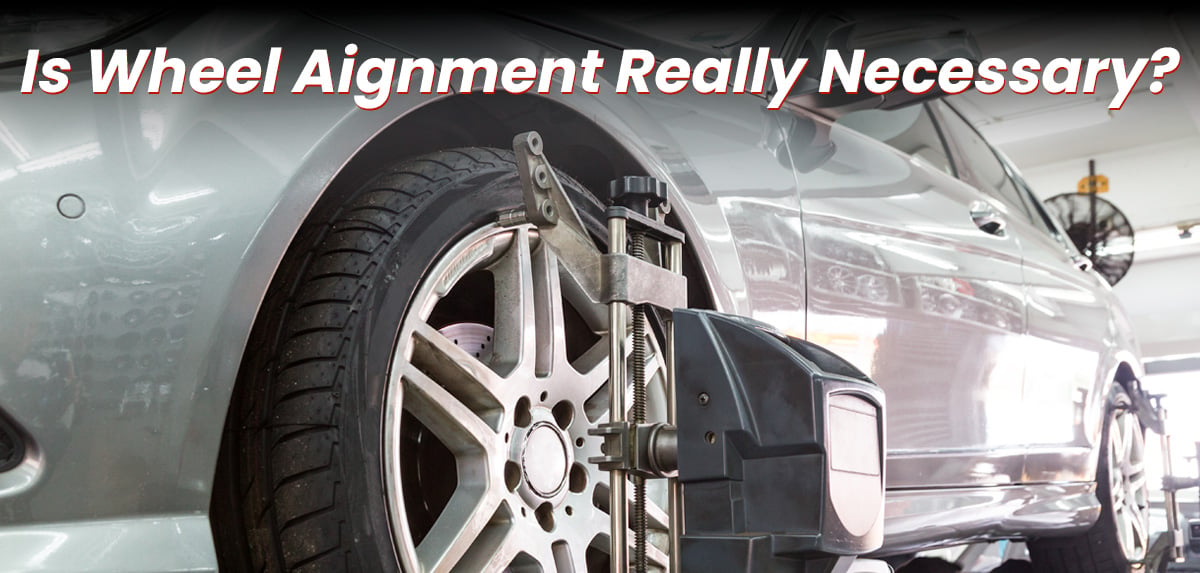
Yes, you should get a wheel alignment with new tires. A proper alignment ensures your new tires wear evenly from day one, prevents premature tread wear, and protects your investment. Skipping alignment after a tire purchase is one of the most expensive mistakes a vehicle owner can make—because you will burn through a $600–$1,000 set of tires in half their expected lifespan.
Should I Get an Alignment When I Buy New Tires?
Absolutely—every time you install new tires, get a four-wheel alignment. New tires arrive with a full tread depth, and even a slight misalignment will cause uneven wear patterns that cannot be reversed once they start.
Think of it this way: alignment is cheap insurance. A standard alignment costs between $75 and $150.
A quality set of tires costs $500 to $1,200 installed. Running new rubber on an out-of-spec suspension is like pouring premium fuel into a leaking tank.
Most tire shops will offer a discounted or even free alignment bundled with a tire purchase. If yours does not, ask. If they still will not, pay for it separately at an alignment shop you trust.
What Happens If You Don’t Get an Alignment After New Tires?
Skipping alignment after new tires leads to rapid, uneven tread wear that shortens tire life by 20,000 miles or more. You will also experience pulling, vibration, and poor fuel economy long before you notice the tread damage visually.
1. Premature and Uneven Tread Wear
The most common outcome is a scalloped, feathered, or one-sided wear pattern. By the time you visually notice the wear, significant tread life is already gone.
- Camber wear: The inside or outside edge of the tire wears faster due to excessive positive or negative camber angle.
- Toe wear: Both front tires develop a sawtooth or feathered pattern across the tread face because the tires are constantly being dragged sideways.
- Cupping: Diagonal scallops appear around the tread circumference, often misdiagnosed as a bad shock absorber when the real cause is misaligned suspension geometry.
2. Vehicle Pulling and Steering Wheel Off-Center
An unaligned vehicle will drift to one side or hold the steering wheel at an angle when driving straight. This creates driver fatigue and masks other developing suspension problems.
3. Decreased Fuel Economy
When wheels point in slightly different directions, the tires scrub against the road surface instead of rolling freely. This rolling resistance forces the engine to work harder, costing you fuel money with every mile.
How Long Can You Drive on New Tires Without an Alignment?
You can physically drive on misaligned new tires for thousands of miles—but every mile degrades your investment. Most alignment-related wear begins within the first 500 to 1,000 miles and accelerates from there.
Some owners believe they can “wait and see” if the car pulls. That is a flawed strategy. Not all misalignment causes an obvious pull.
A vehicle can be significantly out of specification on toe or camber and still track straight—while quietly destroying the inner tread edges.
Pro tip from the shop floor: If your previous set of tires showed uneven wear on even one tire, your alignment was off. Do not install new tires without correcting the geometry first.
How Much Does a Wheel Alignment Cost With New Tires?
A standard four-wheel alignment costs between $75 and $150 at most shops. Luxury, lifted, or performance vehicles may cost $150 to $250 due to additional adjustments and technician time.
As you can see, alignment is always a fraction of the tire cost. There is no financial argument for skipping it.
When Is a Wheel Alignment Not Necessary With New Tires?
Alignment may not be strictly necessary if your current tires wore perfectly even across all four positions and the vehicle has not hit any potholes, curbs, or speed bumps hard since the last alignment. Even then, a quick check is still worth doing.
- Your existing tires wore evenly across the full tread width on all four corners after 40,000+ miles.
- You had an alignment within the last 12 months and have not driven over rough roads, potholes, or curbs.
- No suspension components were replaced recently—tie rods, ball joints, struts, control arms, or bushings.
- The vehicle does not pull and the steering wheel is perfectly centered when driving straight.
If even one of those conditions is not met, get the alignment. Period.
DIY Alignment Check: How to Tell If Your Car Needs Alignment
Before spending money at a shop, you can perform a basic assessment at home. This will not replace a laser alignment machine, but it identifies obvious problems.
Step 1: The Steering Wheel Test
Drive on a flat, straight road at 30 to 40 mph. Hold the wheel loosely. If the steering wheel is off-center or the car drifts left or right, your alignment needs attention.
Step 2: The Tread Wear Inspection
Crouch down and look across the tread face of each tire from the front. Run your hand across the tread in both directions.
If the tread feels smooth one way and rough the other (feathering), toe alignment is off. If the inner or outer edge is noticeably more worn than the center, camber is wrong.
Step 3: The Tape Measure Toe Check
With the car on level ground and the steering wheel centered, measure the distance between the front of the front tires at hub height, then measure the same point at the rear of the tires. The difference is your toe measurement.
If the front measurement differs from the rear by more than 1/8 inch, toe is out of specification.
Can New Tires Cause Alignment Problems?
New tires do not cause alignment problems, but they can expose existing ones. Worn tires develop a wear pattern that masks pull or drift.
When fresh rubber is installed with a uniform tread, the vehicle suddenly reveals misalignment that was hidden by the old tires’ compensating wear.
This is why many owners report that their car “started pulling” right after getting new tires. The problem was already there—the old tires were just absorbing it.
Front-End Alignment vs. Four-Wheel Alignment: Which Do You Need?
Always request a four-wheel alignment. Many modern vehicles—including all-wheel-drive SUVs and most sedans with independent rear suspension—have adjustable rear alignment angles. A front-end-only alignment ignores half the equation.
A four-wheel alignment ensures all four tires track in the same direction. Rear toe and camber adjustments are critical for preventing dog-tracking (where the rear of the car sits slightly offset from the front) and for maximizing tire life across all four positions.
Frequently Asked Questions
Does tire rotation affect alignment?
No, tire rotation does not change alignment angles. Rotation simply moves tires to different positions to promote even wear. However, rotation is an excellent time to visually inspect tread wear patterns that reveal alignment issues.
Should I align before or after installing new tires?
Always align after installing new tires. The alignment is set to the tire contact patch and suspension geometry under load. Aligning before installation means the tech is working with old tire wear profiles.
How often should I get a wheel alignment?
Have your alignment checked once a year or every 12,000 to 15,000 miles. If you drive on rough roads, pothole-heavy routes, or gravel, check it every 6,000 miles or whenever you notice uneven wear or pulling.
Will a bad alignment void my tire warranty?
Yes—most tire manufacturers explicitly state that uneven wear caused by misalignment is not covered under warranty. If you bring in a prematurely worn tire and the shop sees cupping or one-sided wear, they will deny the claim.
Can I drive straight to the alignment shop on new tires?
Yes. Driving a few miles to an alignment shop on new tires will not cause measurable damage. Just avoid highway speeds or long distances if you already know your alignment is significantly off.
The Bottom Line: Protect Your Tire Investment
Getting a wheel alignment with new tires is not an upsell—it is a fundamental part of the tire installation process. The cost of alignment is insignificant compared to the premature tire wear, wasted fuel, and compromised safety you accept by skipping it.
Every seasoned mechanic, tire installer, and suspension specialist will tell you the same thing: align your car every time you put on fresh rubber. Your wallet and your tires will thank you.
Leave a Reply