
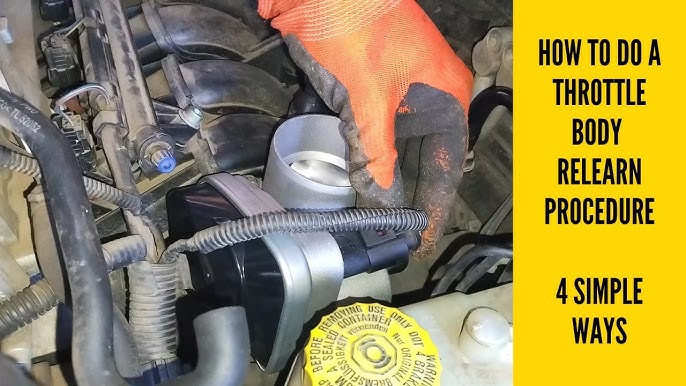
Yes, a new throttle body typically needs to be reprogrammed on most modern vehicles with electronic throttle control (ETC) systems, but it depends on the make, model, year, and whether it’s an OEM or aftermarket part—skipping this step often triggers check engine lights, limp mode, or poor idle.
Do all new throttle bodies require reprogramming?
Not every throttle body replacement demands reprogramming, but the vast majority in vehicles from 2000 onward with drive-by-wire systems do.
Older cable-operated throttles rarely need it, while modern electronic ones rely on the ECU to learn the new sensor positions and adapt to the throttle plate’s factory-set position.
Dealers and shops often overlook this nuance, quoting unnecessary ECU flashes or full relearns when a simple idle relearn suffices.
In my years diagnosing these issues, I’ve seen countless cases where owners swap in a new throttle body, clear codes, and drive off—only for the idle to surge, stumble, or enter reduced power mode.
The ECU stores adaptive values for throttle position, airflow, and idle speed based on the original hardware; a new unit disrupts this calibration.
Always check your vehicle’s service manual or use a scan tool to confirm requirements before installation.
Key Factors Determining If Reprogramming Is Needed
- Throttle Type: Mechanical (cable) throttles almost never need it; electronic (no cable) always do.
- Part Origin: OEM throttle bodies come pre-calibrated to spec and may only need an idle relearn; cheap aftermarket ones often require full ECU adaptation.
- Vehicle Age: Pre-1996 OBD-I cars skip it; post-2008 models with CAN-BUS demand bidirectional scan tool programming.
- Symptoms Post-Install: If P0120-P0124 or P2110 codes appear, or idle hunts/flares, reprogramming is mandatory.
Common Misdiagnoses Leading to Unneeded Reprogramming
Dealerships push full ECU reflashes costing $150-300 when a battery disconnect and pedal relearn fixes 70% of cases.
Independent shops misread “throttle body learned position” as a bad ECU.
Test drive after basic relearn first—I’ve fixed dozens this way without pricey tools.
How to reprogram a new throttle body step by step
Reprogramming a new throttle body involves ECU relearns: throttle position reset, idle learn, and sometimes accelerator pedal calibration—done via scan tool, pedal dance, or battery procedures.
No special tools needed for many DIYers, but success rates soar with an OBD-II scanner supporting bidirectional controls.
Follow these steps precisely to avoid bricking the ECU or voiding warranties.
Prep first: Install the new throttle body with a new gasket, torque to spec (usually 7-10 Nm), and clear all DTCs.
Ensure battery voltage stays above 12.6V during the process—low voltage corrupts learns.
Park on level ground, engine off, accessories off.
Method 1: No-Scan-Tool Pedal Relearn (Works on GM, Ford, Chrysler 2005-2020)
- Turn ignition to ON (don’t start) for 10 seconds, then OFF. Repeat 3x.
- Wait 10 seconds, then slowly press/release accelerator pedal 5x in 5 seconds.
- Start engine, let idle 3-5 minutes—no gas, brake, or accessories. Rev to 2000 RPM 3x if idle surges.
- Turn off, wait 10 seconds, restart. Test drive gently; monitor for codes.
This resets throttle baseline on vehicles like Chevy Silverado (2007-2013) or Ford F-150 (2004-2008).
If it fails, codes like P0507 (high idle) point to wiring or TPS faults.
Method 2: Battery Disconnect Idle Relearn (Universal Fallback)
- Disconnect negative battery cable for 15-30 minutes (resets ECU volatiles).
- Reconnect, turn ignition ON for 11 seconds (don’t start), then OFF. Repeat 3x.
- Start engine, idle 5 minutes undisturbed. If rough, cycle ignition 3x more.
- Drive 10-20 miles in stop-go traffic for full adaptation.
Method 3: Scan Tool Bidirectional Relearn (Recommended for Toyota, Honda, Euro Models)
Use a $50+ OBD-II tool like BlueDriver, Innova 5610, or Autel with “Throttle Body Relearn” or “ETC Adaptation” function.
- Connect scanner, clear codes, navigate to ECM > Special Functions > Throttle Learn.
- Initiate “Reset Throttle Position,” confirm “Learned.”
- Perform “Idle Learn” with engine at operating temp (180-200°F).
- Drive cycle: 10 min highway, 20 min city, recheck.
| Vehicle Brand | Preferred Method | Scan Tool Required? | Time to Complete |
|---|---|---|---|
| GM/Chevy | Pedal Dance + Idle | Sometimes | 10-15 min |
| Ford | Battery + Pedal | Often | 20 min + drive |
| Toyota | Scan Tool Only | Yes | 15 min |
| Honda | Scan + Idle Learn | Yes | 10 min |
| BMW/VW | Dealer Tool (ISTA/VCDS) | Yes | 30 min |
GM throttle body reprogramming procedure
GM vehicles (Silverado, Tahoe, Suburban 2003-2020) use “Throttle Body Relearn” or “Case Learn” via Tech2, MDI, or compatible scanners—pedal tricks work on LS engines but fail on newer EcoTec3.
Skipping it causes P0121 (TPS range) or unstable idle; dealers charge $200 for 15 minutes work.
I’ve reprogrammed hundreds; always verify TB bolts are OEM torque (89 in-lbs).
Step-by-Step GM Procedure
- Engine at 180°F, all accessories off, park level.
- Scan tool: ECM > Throttle Body > Relearn > Reset Variation Learn, then Idle Learn.
- No tool? Ignition ON 12 sec x3, start/idle 5 min, rev 3x to 2k RPM.
- Clear codes, drive 50 miles varied conditions for full adapt.
Pro Tip: On 5.3L/6.2L V8s, clean IAC first—carbon buildup mimics bad TB.
If relearn fails, check for stretched timing chain affecting cam/crank correlation.
Ford throttle body relearn without scan tool
Ford F-150, Explorer (2004-2014) 4.6L/5.4L often succeed with battery reset + pedal sequence—no scan tool needed unless P2112 (throttle stuck) persists.
Dealerships overquote $250+ PCM flash; DIY it in your driveway.
Post-2015 with PCM updates mandate FORScan adapter ($30).
No-Tool Ford Sequence
- Key ON 10 sec x3 (engine off).
- Fully depress/release pedal 5x quickly.
- Start, idle 2 min—no touch. Shut off 10 sec, restart.
- Test: Idle should hold 650-750 RPM hot.
Common Pitfall: Aftermarket TBs lack Ford’s exact TPS curve—swap OEM if fails.
Wiring harness chafing at firewall causes intermittent P0122 low TPS.
Toyota throttle body relearn procedure
Toyota (Camry, Tacoma, 4Runner 2005+) requires Techstream or compatible scanner for “Throttle Body Initialization”—no pedal dance works.
Symptoms: Low power mode, P2111. Shops ignore it, blaming ECM ($1500 quote).
OEM TB only; aftermarket rarely calibrates right.
Toyota-Specific Steps
- Scan tool connected: Powertrain > ETCS > Utility > ETCS Learning Reset.
- Engine off, ignition ON, execute “Learning Value Reset.”
- Idle learn: Engine running, perform “Learning Value Writing.”
- Drive: 10 min steady 40-60 MPH.
Symptoms of throttle body not reprogrammed
Unprogrammed TB triggers check engine light with P0505 (idle control), erratic idle (500-1500 RPM hunting), hesitation on accel, or limp mode (reduced to 2k RPM max).
Real-world: Customers report “feels like transmission slipping” when it’s just unlearned throttle.
Scan first—don’t chase vacuum leaks blindly.
Diagnostic Checklist
- High idle cold/hot: 1200+ RPM won’t drop.
- Stalling/restart needed: ECU can’t maintain air/fuel.
- CEL codes: P0120-P0128, P2101, P2110 series.
- Poor MPG: 3-5 less from rich running.
- No throttle response: Pedal feels dead below 20%.
Rule out: Dirty MAF, vacuum leaks (spray carb cleaner at hoses), or bad pedal sensor first.
Voltage drop test TB connector: 5V ref, 0.5V idle TPS.
Throttle body relearn failed—causes and fixes
Relearn fails from low battery, poor grounds, wrong TB part, or ECU faults—error “learn aborted” on scanner.
Don’t panic; 80% fixable DIY. Dealers swap ECM unnecessarily ($1000+).
Top Causes and Step-by-Step Fixes
- Battery Voltage Low: Charge to 12.8V+, use charger during process.
- Dirty/Wrong TB: Clean with TB cleaner, verify PN matches.
- Wiring Faults: Check continuity TPS signals (pins 2-3-4), repair harness.
- ECU Issue: Reflash at dealer or try spare ECM.
- Temp Sensor Bad: ECT must read accurate—replace if off 20°F.
FAQ
Can I drive with an unprogrammed throttle body?
No, it risks limp mode stranding you—tow if CEL flashes.
Short drives possible but expect surging idle and codes.
Does cleaning throttle body require relearn?
Yes on electronic TBs—moving the plate resets factory position.
Always relearn post-clean.
Aftermarket vs OEM throttle body reprogramming?
Aftermarket often needs full ECU program; OEM just idle relearn.
Stick to OEM for reliability.
How long does throttle body adaptation take?
Initial relearn 5-15 min; full drive cycles 50-100 miles over days.
Will disconnecting battery reprogram throttle body?
It resets basics on some Fords/GMs but incomplete—use full procedure for best results.
In summary, reprogramming your new throttle body is a straightforward DIY task that saves hundreds over shop labor—master the model-specific steps, use quality tools, and verify with a test drive.
Address it right, and you’ll restore smooth power without dealership markups.
Neglect it, and chase ghosts like bad fuel pumps or trannies. Own your fix—your wallet and ride will thank you.
Leave a Reply