
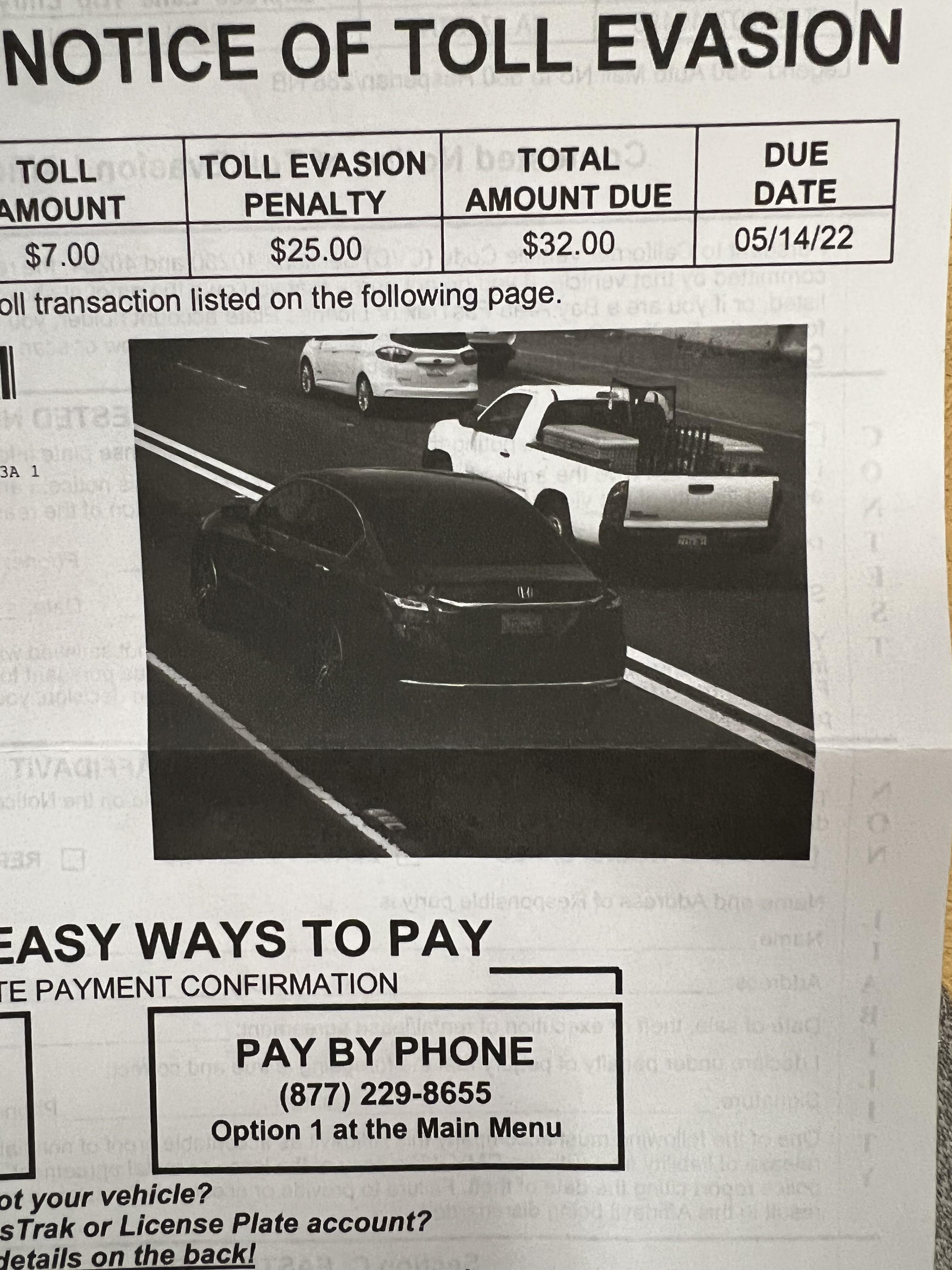
The standard penalty for a Fastrak toll evasion violation in California starts at a $25 fine for a first offense, but this can escalate significantly if unpaid, potentially resulting in a hold on your vehicle registration and additional penalties that can exceed $200.
How much is the penalty for a Fastrak toll violation?
The base penalty for a first-time toll evasion violation is a $25 fine plus the original unpaid toll amount. However, this is just the starting point.
Failure to respond or pay within the 30-day deadline typically triggers a second notice, adding another $25 penalty. The potential for the total debt to be sent to collections or reported to the DMV, which can block your vehicle registration renewal, is very real.
The fine structure is designed to escalate quickly. A second violation within 18 months will incur a $50 penalty on top of the toll.
Repeat offenders or those who ignore notices can face penalties that dwarf the original few-dollar toll.
Penalty Escalation Timeline
- Violation Notice Mailed: You have 30 days to pay the toll + $25 penalty.
- Second Notice (Past Due): An additional $25 penalty is added. The total is now toll + $50.
- Collection/DMV Referral: The unpaid debt, now including tolls and penalties, may be reported to a collection agency and/or the California DMV. A hold is placed on your vehicle registration, preventing renewal until the debt is paid in full, often with additional collection fees.
Can you get a Fastrak toll violation penalty waived?
Yes, it is possible to get the penalty waived, but only under specific, provable circumstances. The Bay Area FasTrak agency (or other regional agencies like the 91 Express Lanes) considers waivers for documented system errors, such as a malfunctioning transponder that you can prove was in good working order.
You must formally contest the violation by the deadline on your notice. Simply not paying will not lead to a waiver; it will lead to escalation.
Legitimate reasons include the vehicle being sold or stolen before the violation date, documented transponder failure, or emergency circumstances.
Steps to Contest a Violation
- Review the Violation Notice Carefully: Note the deadline to contest. It’s usually shorter than the payment deadline.
- Gather Evidence: For transponder issues, you may need a receipt showing recent purchase or a test result from a customer service center. For stolen vehicles, you need the police report.
- Submit a Formal Contest: Use the agency’s online portal or the instructions on the notice to submit a written dispute with your evidence. Do not just call and argue; you need a paper trail.
- Consider a “One-Time Courtesy” Dismissal: Some agencies will dismiss a first-time penalty as a courtesy if you open a new FasTrak account and add the violation vehicle to it. This is not guaranteed but is a common resolution path for forgetful customers.
What happens if you ignore Fastrak toll violations?
Ignoring a Fastrak toll violation is a costly mistake. The debt will not disappear; it will follow your vehicle.
The most immediate consequence is a hold placed on your vehicle registration by the California DMV. You will not be able to renew your tags until the toll debt and all accumulated penalties are paid in full.
The account will be sent to a third-party collection agency. This can negatively impact your credit score and result in aggressive collection calls.
The total amount owed can easily balloon to over $200 for what started as a $5 missed toll. Law enforcement can also identify vehicles with past-due toll violations during traffic stops.
How does Fastrak toll violation detection work?
FasTrak lanes use overhead antennas and high-speed cameras. If you drive through a toll point without a valid transponder and without paying cash (in lanes that accept it), the system takes a clear photo of your rear license plate.
This image and your plate number are then used to generate the violation notice.
Common failures that lead to violations are dead transponder batteries, a transponder not properly mounted on the windshield (it must be visible), or using a transponder registered to a different vehicle without updating your account.
Rental cars are a frequent source of violations if the renter assumes tolls are automatically covered.
Are there different penalties for different toll roads?
Yes, while the core penalty structure is similar (toll + penalty), the administering agency and specific rules can vary. The Bay Area FasTrak covers bridges and express lanes in the Bay Area. The 91 Express Lanes in Orange County has its own violation processing.
Southern California agencies like the Toll Roads (TCA) in Orange County and the San Bernardino County Transportation Authority (SBCTA) also enforce violations independently.
| Agency / Toll Facility | First-Offense Penalty | Key Contact |
|---|---|---|
| Bay Area FasTrak (Bridges & Express Lanes) | $25 + Toll | bayareafastrak.org |
| 91 Express Lanes (Orange County) | $25 + Toll | 91expresslanes.com |
| The Toll Roads (TCA – OC) | $57.50 + Toll (for “First Notice”) | thetollroads.com |
| SBCTA (I-10 & I-15 Express Lanes) | $25 + Toll | sbrta.org |
Frequently Asked Questions (FAQ)
Can a Fastrak toll violation affect my credit score?
Yes, if the unpaid debt is sent to a third-party collection agency and reported to credit bureaus, it can negatively impact your credit score. Paying the debt in full after it’s in collections may not immediately remove the negative mark from your report.
I sold my car but got a violation for it. What do I do?
You must submit a Transfer of Liability form to the tolling agency with proof of sale (like the signed title or bill of sale). This can shift the violation responsibility to the new owner. Do this immediately upon receiving the notice.
I have a rental car Fastrak violation. Who is responsible?
Legally, the registered owner of the vehicle (the rental company) is initially responsible. However, your rental agreement almost certainly includes a clause that makes you liable for all tolls and violation fees.
The rental company will pay the toll and then bill you with a significant administrative fee, often $15-$50 on top of the toll and penalty.
How can I check if I have outstanding Fastrak violations?
You can check your status by visiting the website of the relevant tolling agency and using their violation lookup tool with your license plate number. You can also contact the California DMV to see if a hold has been placed on your registration due to unpaid toll debt.
Final Advice: Don’t Let a $5 Toll Become a $200 Problem
The key to avoiding FasTrak penalties is proactive account management. Regularly check your account balance, ensure your transponder has a fresh battery (typically lasts 3-5 years), and always make sure your license plate is correctly registered to your account.
If you receive a violation, treat it with urgency. The cost of ignoring it multiplies rapidly, and the administrative hold on your registration is a major inconvenience.
When in doubt, call the agency’s customer service line to clarify your options before the deadline passes.
Leave a Reply