
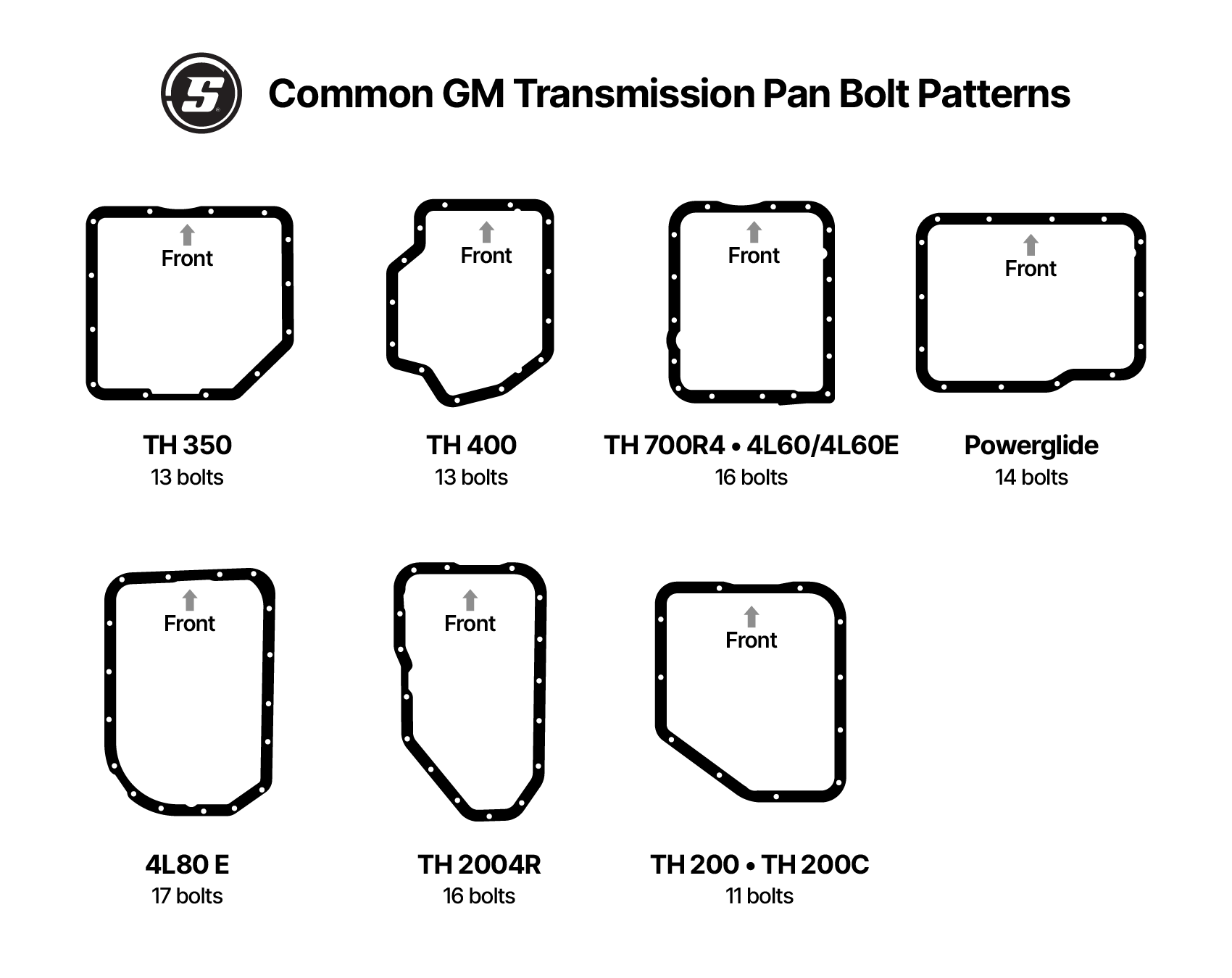
GM transmission identification starts with decoding the VIN for RPO codes, followed by inspecting the pan shape, bolt count, and external case markings on the unit itself.
How do I identify a GM transmission using the VIN?
The eighth digit of the VIN combined with the RPO sticker in the glovebox gives the exact transmission code for most GM vehicles built after 1995.
Enter the full VIN into an OEM-level decoder to pull the plant code and build date, which narrows the possible units when multiple transmissions were offered in the same model year.
Dealership parts departments often misread the eighth digit alone and quote the wrong overhaul kit.
Cross-check the RPO list printed on the service parts identification sticker; codes such as M30 for the 4L60E or MYC for the 6L80 appear directly there and eliminate guesswork.
Step-by-step VIN decoding process
- Locate the VIN on the dashboard or driver door jamb.
- Write down the eighth character and any RPO codes beginning with M.
- Use a GM-specific decoder that accepts the full seventeen digits rather than generic online tools.
- Compare the decoded transmission against the physical unit under the vehicle before ordering parts.
What does the transmission pan shape tell me about my GM unit?
Pan geometry is one of the fastest field identifications because each GM family uses a distinct bolt pattern and sump contour.
Count the pan bolts and note whether the rear edge is square, rounded, or has a notch; these details separate 4L60E, 4L80E, 6L80, and 8L90 units without removing the transmission.
Independent shops frequently confuse the 4L60E and 4L65E because both share the same external pan.
The 4L65E pan carries an extra rib on the passenger side and requires a deeper filter; missing this detail leads to incorrect filter kits and repeat leaks.
Pan identification reference
- 4L60E/4L65E: 16 bolts, rectangular with one corner notch, 2.25-inch depth.
- 4L80E/4L85E: 17 bolts, squared rear edge, deeper sump with drain plug centered.
- 6L80/6L90: 18 bolts, pronounced rear bulge, no notch, integrated thermal bypass valve housing.
- 8L90: 19 bolts, trapezoid shape with offset drain plug, visible casting ribs on the front face.
How can I tell GM transmissions apart by external case markings?
Cast numbers on the passenger-side case and the stamped ID tag on the tailhousing provide definitive model confirmation.
The 4L60E carries “242” or “2420” prefixes while the 6L80 shows “6L” followed by the plant code and Julian date.
Look for the three-digit code cast into the bellhousing face just above the starter opening.
This code matches the RPO and rules out swapped units from salvage vehicles that share the same pan shape.
Common case markings by model
| Transmission | Case Prefix | Location |
|---|---|---|
| 4L60E | 242, 2420 | Passenger side above servo cover |
| 4L80E | 2424, 2425 | Driver side bellhousing flange |
| 6L80 | 6L80, 6L90 | Rear of case near output seal |
| 8L90 | 8L90 | Driver side mid-case rib |
What fluid type and dipstick confirm the transmission family?
Dexron VI is required for all post-2006 GM automatics, but the dipstick length and handle color differ between families.
A short black-handled dipstick indicates 6L80 while a longer red-handled unit points to 4L60E or 4L80E.
Never rely on fluid color alone; a 6L80 that has been overheated can look identical to Dexron III in a 4L60E.
Check the dipstick tube stamping near the fill cap for the transmission model abbreviation.
Why do shops misidentify GM transmissions and how do I avoid it?
Most misquotes occur when technicians assume every 4×4 truck uses a 4L80E or that all 2010-and-newer vehicles have a 6L80.
Verify the transfer case adapter and output spline count before accepting any diagnosis.
Take clear photos of the pan bolts, case casting, and dipstick before visiting a shop.
This documentation prevents the common upsell from a fluid service to a full rebuild on the wrong unit.
Model-specific identification tips for popular GM platforms
GM trucks and SUVs 1999-2007
Check the tailhousing for a two-piece speedometer housing on 4L60E units versus a single electronic sensor on later 4L65E models.
The 4L65E also carries a five-pinion planetary set visible through the inspection port on the passenger side.
2010-2019 Silverado and Sierra
Locate the thermal bypass valve housing on the passenger side of the 6L80; its presence confirms the 6L80 over the 6L90.
Count the output splines—32 for 6L80, 36 for 6L90—before ordering a yoke or driveshaft.
FAQ
Can I identify the transmission without lifting the vehicle?
Yes. Read the RPO sticker in the glovebox or center console and confirm with a VIN decoder app before any physical inspection.
Does the transmission control module location help with identification?
The TCM is bolted directly to the 6L80 and 8L90 cases, while the 4L60E uses a separate under-hood controller.
This difference is visible once the air cleaner box is removed.
What if the pan has been changed to an aftermarket deep pan?
Remove the aftermarket pan and count the original bolt holes in the case.
The bolt pattern remains unchanged regardless of the aftermarket cover installed.
Are there any visual differences between the 8L90 and 10L90?
The 10L90 carries an additional external cooler line fitting on the front face and a taller bellhousing flange.
These features appear once the exhaust Y-pipe is lowered.
Accurate GM transmission identification prevents costly misdiagnosis and ensures the correct parts are ordered the first time.
Cross-reference the VIN, pan bolt count, and case castings before authorizing any repair.
Leave a Reply