
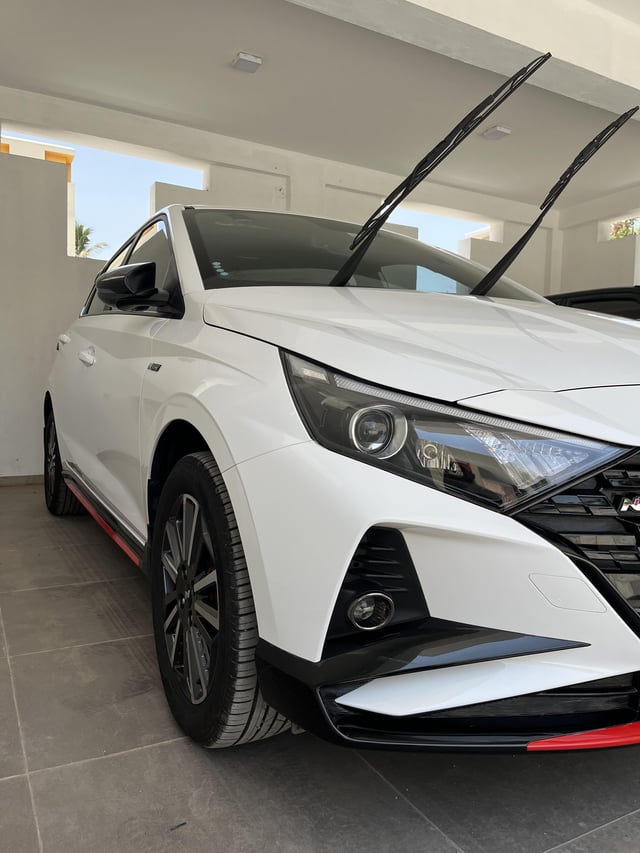
A Hyundai extended warranty can be worth it if you plan to keep your vehicle past the 5-year/60,000-mile bumper-to-bumper coverage and want protection against expensive engine, transmission, and electrical repairs.
However, it is not worth the cost if you drive fewer than 10,000 miles per year, trade vehicles frequently, or are comfortable setting aside a monthly repair fund instead.
What Does Hyundai’s Factory Warranty Cover and Where Does It Fall Short?
Hyundai offers one of the best factory warranties in the industry — a 5-year/60,000-mile bumper-to-bumper warranty and a 10-year/100,000-mile powertrain warranty for the original owner.
That sounds generous on paper, and it is.
But there are critical gaps that catch owners off guard once they start putting serious miles on their cars.
What the Factory Warranty Does Cover
- Bumper-to-bumper (5 years / 60,000 miles): Covers nearly every component from the air conditioning system to the infotainment screen, suspension bushings, window motors, and power seat mechanisms.
- Powertrain (10 years / 100,000 miles): Covers the engine block, transmission, transaxle, and drive axle components — but only for the original owner.
- Anti-perforation (7 years / unlimited miles): Covers body panel rust-through from the inside out.
- Roadside assistance (5 years / unlimited miles: Towing, flat tire changes, fuel delivery, and lockout assistance.
Where the Factory Warranty Falls Short
The biggest issue I see owners face is the second-owner powertrain reduction.
If you buy a used Hyundai, the powertrain warranty drops to 5 years / 60,000 miles — not 10 years / 100,000 miles.
Dealers do not always disclose this clearly, and many second owners discover it only when they file a claim.
The factory warranty also excludes wear items like brake pads, clutch discs, wiper blades, and batteries after the first year.
More critically, certain known Hyundai trouble spots — like carbon buildup on GDI engines or premature steering coupler failure — can be difficult to get covered once the bumper-to-bumper period expires.
How Much Does a Hyundai Extended Warranty Cost?
Hyundai’s official Vehicle Protection Plan (VPP) typically costs between $1,200 and $3,000 depending on the coverage level, deductible, and your vehicle model.
Platinum-level plans that mirror bumper-to-bumper coverage run on the higher end, while powertrain-only plans are more affordable.
| Coverage Level | Typical Cost Range | Duration Options |
|---|---|---|
| Platinum (bumper-to-bumper) | $1,800 – $3,000 | Up to 10 years / 120,000 miles |
| Gold (enhanced powertrain + electronics) | $1,400 – $2,400 | Up to 10 years / 100,000 miles |
| Silver (powertrain only) | $1,200 – $1,800 | Up to 8 years / 80,000 miles |
What Affects the Price
- Vehicle model: Turbocharged and hybrid models cost more due to higher repair complexity.
- Current mileage: Buying closer to the factory warranty expiration means higher premiums.
- Deductible choice: A $100 deductible costs more upfront than a $200 or $500 deductible plan.
- Where you buy it: Dealership markup can add $500–$1,000 over what you’d pay negotiating online or through Hyundai’s direct channels.
Pro Tip from the Real World: Always negotiate the extended warranty price at the dealership finance office. The first price they quote is almost never the best price. I have seen dealers drop $400–$800 with just one counteroffer.
Hyundai Extended Warranty vs Third-Party Warranty — Which Is Better?
A Hyundai-backed extended warranty is generally the safer bet over third-party plans because it uses genuine OEM parts, is honored at every Hyundai dealership nationwide, and has no claim negotiation disputes.
Third-party warranties can be cheaper but often come with claim denials, coverage loopholes, and repair shop restrictions.
Advantages of the Hyundai Factory Extended Warranty
- No claim disputes: Dealers process the claim directly with Hyundai — no adjusters, no phone battles.
- OEM parts guaranteed: Your car gets repaired with factory parts, not aftermarket alternatives.
- Transferable: If you sell the vehicle, the remaining warranty transfers to the new owner, which adds resale value.
- Nationwide coverage: Any Hyundai dealership in the country will honor the plan.
When a Third-Party Warranty Might Make Sense
- You are the second owner and already lost the 10-year powertrain benefit.
- You found a reputable administrator (like Endurance or CARCHEX) with strong reviews and transparent terms.
- The vehicle is older (past 5 years) and the Hyundai plan is no longer available or too expensive.
Third-Party Warranty Red Flags to Watch For
- Exclusions for “pre-existing conditions” that are nearly impossible to disprove.
- Requirement to use their network of repair shops only.
- Low per-claim caps (e.g., $2,000 max per repair) that do not cover real-world transmission or engine costs.
- Waiting periods of 30–90 days before coverage activates.
What Hyundai Repairs Make an Extended Warranty Worth It?
The real question is whether the cost of the warranty is less than the likely cost of repairs during the extended period.
Based on commonly reported Hyundai repair costs, here is where an extended warranty pays for itself.
Known Expensive Hyundai Repairs by Model
| Model | Common Repair | Average Cost Without Warranty |
|---|---|---|
| Sonata / Tucson (Turbo) | Turbocharger replacement | $1,500 – $3,500 |
| Santa Fe / Palisade | Transfer case / AWD coupling failure | $2,000 – $4,000 |
| Elantra / Tucson | Transmission replacement (CVT or DCT) | $3,000 – $5,500 |
| Sonata / Tucson (GDI) | Carbon buildup + intake valve cleaning | $400 – $800 |
| Genesis / Equus | Air suspension compressor failure | $1,800 – $3,200 |
| Multiple models | Infotainment screen / head unit failure | $1,000 – $2,500 |
| Multiple models | Electronic power steering (EPS) motor failure | $1,200 – $2,000 |
Any single one of these repairs — a turbo replacement, a transmission swap, or a transfer case failure — can exceed the entire cost of the extended warranty.
That is the math that matters.
When Is the Best Time to Buy a Hyundai Extended Warranty?
The ideal time to purchase is before your factory bumper-to-bumper warranty expires, ideally during the finance process at the dealership where you have the most negotiating leverage.
You can also buy it later, but the price increases as the vehicle ages and accumulates mileage.
Timing Considerations
- At purchase: Best price, greatest coverage window, and easiest negotiation point in the deal.
- Before 5 years / 60,000 miles: Still eligible for full extended coverage at a reasonable rate.
- After factory warranty expires: Fewer plan options, higher costs, and possible inspection requirements.
- Used Hyundai (second owner): Act quickly — the reduced powertrain window closes fast, and an extended plan fills the gap.
Frequently Asked Questions
Can I cancel my Hyundai extended warranty after buying it?
Yes. Hyundai’s extended warranty plans are fully cancellable.
If you cancel within 30 days, you typically get a full refund.
After 30 days, you receive a prorated refund based on time and mileage used.
Always get cancellation terms in writing at the time of purchase.
Does the Hyundai extended warranty cover rental cars during repairs?
Most Hyundai Platinum and Gold plans include rental car reimbursement, typically covering up to $35–$50 per day for a set number of days while your vehicle is in the shop.
Verify the exact terms in your contract, as lower-tier Silver plans may not include this benefit.
Is the Hyundai extended warranty transferable to a new owner?
Yes, the Hyundai extended warranty can be transferred to a subsequent private-party buyer, which adds resale value to your vehicle.
There is usually a small transfer fee (around $50), and the transfer must be filed with Hyundai’s warranty administration office.
Does a Hyundai extended warranty cover hybrid or EV battery replacement?
Hyundai’s hybrid and EV batteries already carry a separate 10-year / 100,000-mile warranty (10 years / 150,000 miles in some states).
The extended warranty typically covers the high-voltage battery after the factory hybrid/EV warranty expires, but this varies by plan.
Always confirm battery inclusion before purchasing.
Will an independent mechanic void my Hyundai extended warranty?
No. Using an independent shop for routine maintenance like oil changes or brake service will not void your extended warranty.
However, any damage caused by improper third-party work (wrong fluid type, incorrect installation) would not be covered.
Keep all receipts and service records.
The Bottom Line: Should You Buy It?
If you are an original owner planning to keep your Hyundai for 7+ years or past 80,000 miles, a Hyundai extended warranty is a smart financial safety net — especially on turbocharged, AWD, or DCT-equipped models where a single major repair can cost more than the entire plan.
Negotiate the price, choose the right coverage tier, and buy it before your factory warranty expires.
If you are a second owner, low-mileage driver, or someone who trades cars every 3–4 years, skip it and self-insure instead.
The best warranty is the one that matches how long and how hard you actually drive your car.
Leave a Reply