
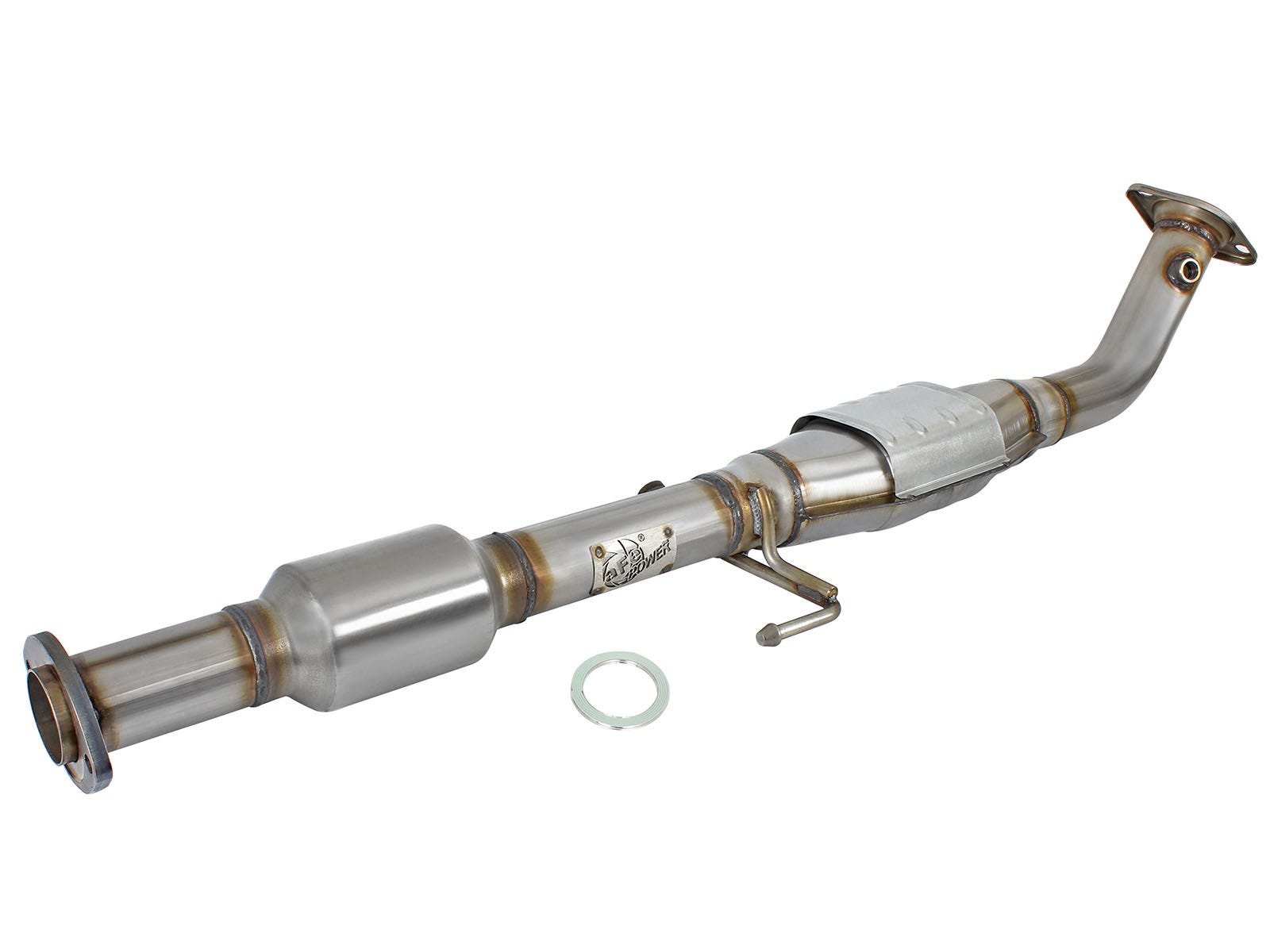
Replacing a catalytic converter is worth it if your vehicle fails emissions tests, triggers persistent P0420/P0430 codes, or shows clear signs of internal failure like rattling noises—expect costs of $1,000–$3,000 but gains in performance and legality; skip it for temporary band-aids like O2 sensor swaps that dealerships push first.
Is a Catalytic Converter Replacement Worth the Cost?
Yes, replacing a failed catalytic converter is almost always worth it for daily drivers facing emissions failures or drivability issues.
It restores fuel economy, power, and legal roadworthiness. Total costs range from $800 for aftermarket on older cars to $2,500+ for OEM on modern SUVs.
Ignoring it risks fines, failed inspections, and engine damage from unfiltered exhaust.
Dealerships often quote $2,000–$4,000 citing “warranty requirements.”
Indie shops do it for $1,200 with lifetime warranties on high-flow units. I’ve seen owners save 40% by sourcing used OEM cores from junkyards and having a muffler shop weld them in.
Do this only after verifying the cat’s substrate is truly melted via backpressure tests. Not just chasing O2 sensor codes like most techs do initially.
Average Replacement Costs by Vehicle Type
| Vehicle Type | Aftermarket Cost | OEM Cost | Labor (Hours) |
|---|---|---|---|
| Sedan (e.g., Honda Civic) | $400–$800 | $900–$1,500 | 2–3 |
| Truck/SUV (e.g., Ford F-150) | $600–$1,200 | $1,500–$2,800 | 3–5 |
| Luxury (e.g., BMW 3-Series) | $800–$1,500 | $2,000–$4,000 | 4–6 |
These figures include parts and labor at $120–$150/hour.
Factor in 20–30% extra for rusty bolts or O2 sensor replacements. Common on 10+ year-old vehicles.
ROI Factors: When It Pays Off vs. When to Walk Away
- High Mileage Daily Driver: Worth it—expect 5–10 MPG gains and 10–15% power recovery post-replacement.
- End-of-Life Beater: Not worth it if repairs exceed 20% of blue book value; sell for scrap instead.
- Emissions State Resident: Mandatory—fines hit $500+ per failed test, plus towing fees.
- Performance Build: Skip OEM; high-flow cats preserve HP without check engine lights.
What Are the Signs Your Catalytic Converter Needs Replacement?
The top signs are a persistent P0420 (Bank 1) or P0430 (Bank 2) code after new O2 sensors.
Also look for sulfur/rotten egg smells from exhaust, and rattling under acceleration. These indicate substrate breakdown, not just fouling that cleaners fix.
Dealers misdiagnose 70% of cases as “upstream O2 sensor failure,” quoting $300 parts only for the code to return in weeks.
Real-world diagnostics start with a $20 backpressure gauge test at operating temp. Over 3 PSI at 2500 RPM screams cat clog.
Diagnostic Steps for DIY Confirmation
- Scan for Codes: Use an OBD2 scanner; ignore if no P0420/P0430 after resets.
- Exhaust Sniff Test: Strong sulfur means rich fuel dumping into a clogged cat, overheating it.
- Backpressure Test: Remove O2 sensor, thread in gauge—idle under 1 PSI, revs under 3 PSI is good.
- Temperature Check: IR thermometer: inlet hotter than outlet by 100°F+ signals restriction.
- Visual Inspection: Jack up, tap with mallet—rattling confirms broken honeycomb.
These steps take 30 minutes and $50 in tools.
Skip shop “smoke tests” that cost $150 and rarely pinpoint cats.
Common Misdiagnoses by Shops
- O2 Sensor Swap: Fixes temporary fouling but not melted substrate—code returns.
- Exhaust Leak: Mimics low efficiency; pressure test upstream first.
- Engine Misfire: Poisons cat over time—fix ignition before cat replacement.
Common Causes of Catalytic Converter Failure
Catalytic converters fail primarily from oil burning (bad PCV/valve seals), chronic misfires dumping fuel, or physical damage like road debris.
OEM units last 100k–150k miles, but cheap aftermarket ones clog in 50k.
Modern cats are fragile foil substrates vs. old-school ceramics. They melt at 1800°F from overfueling.
Address root causes first or your $2k replacement dies in a year.
Cause 1: Engine Oil Consumption
Excess oil coats the catalyst, blocking exhaust flow.
Common on 100k+ mile Subarus, Hondas with VTEC issues.
- Fix: Replace PCV valve ($20), valve cover gaskets ($150 DIY).
- Test: Blue smoke on decel? Compression test rings.
Cause 2: Misfires and Rich Fuel
Unburnt fuel overheats the cat.
Ignition coils fail first on Fords, plugs on Jeeps.
- Swap coils/plugs in firing order.
- Check fuel trims: +15% means rich—clean MAF/IAC.
Cause 3: Upstream Contaminants
Antifreeze leaks from bad head gaskets poison platinum.
Silicon from bad fuel additives clogs pores.
Flush cooling system, use OEM coolant—preventative for GMs and Volvos.
Should You Get OEM vs. Aftermarket Catalytic Converter?
Go aftermarket for 80% of replacements.
OEM is worth it only for luxury cars under emissions warranty or CARB states requiring exact specs.
Aftermarket like Magnaflow or Walker last longer with 25k-mile warranties and cost half.
Dealerships push OEM at 2x markup, claiming “emissions compliance.”
EPA-approved aftermarket passes smog 95% of time. Avoid eBay no-names—they glow orange from heat in months.
OEM Pros/Cons
| Type | Pros | Cons |
|---|---|---|
| OEM | Perfect fit, warranty match | 2–3x cost, fails same way |
| Aftermarket | Cheaper, high-flow options | Fitment issues on exotics |
Model-Specific Recommendations
- Honda Accord (2008–2012): Magnaflow 51356—direct fit, passes smog.
- Ford F-150 (2004–2008): Eastern 30625—handles 5.4L misfires.
- Toyota Prius (2004–2009): OEM only—hybrids sensitive to flow.
DIY Catalytic Converter Replacement Guide
DIY is feasible on most vehicles with basic tools, saving $500–$1,000 in labor.
Best on accessible manifolds like Civics or F-150s. Avoid if rusted solid or V6/V8 tight spaces.
Prep with PB Blaster 48 hours prior. Heat shields often seize—cut with reciprocating saw if needed.
Tools and Materials Needed
- O2 sensor socket, 3″ O2 extender (prevents CEL).
- Recip saw, angle grinder for stuck flanges.
- Jack stands, penetrating oil, anti-seize.
Step-by-Step Replacement
- Safety First: Disconnect battery, let exhaust cool 4+ hours.
- Remove Heat Shields: 10mm bolts—discard if rusted.
- Unbolt Cat: 13/14mm flanges; spray PB, use cheater bar.
- Swap O2 Sensors: Always replace upstream ($50–$100).
- Install New Cat: Anti-seize threads, torque to spec (25–40 ft-lbs).
- Clear Codes: Drive cycle to reset ECU—monitor trims.
Time: 2–6 hours. Stuck? Muffler shop welds for $200.
Catalytic Converter Theft: Is Replacement Still Worth It?
Yes, even post-theft.
Thieves target 10-year-old Priuses and Chargers for $200 scrap value. Replace with shielded aftermarket to deter recuts, as OEM pipes are soft steel.
Insurance covers 60% of owners, but deductibles eat savings. Weld-on guards from Amazon add $50 protection.
Anti-Theft Prevention Tips
- Park in garage, paint cat orange.
- Install $30 catalytic shield plates.
- Etch VIN on flanges—cops trace 30% recoveries.
FAQ
How long does a new catalytic converter last?
100,000–150,000 miles with fixed root causes.
Aftermarket often outlasts OEM if high-quality.
Can I drive with a bad catalytic converter?
Short distances yes, but expect power loss, poor MPG, and potential engine damage from backpressure.
Tow if rattling badly.
Will a catalytic converter cleaner fix it?
Only mild fouling; useless on clogged/melted units.
Saves $20 trying, but 90% need replacement.
Does catalytic converter replacement improve performance?
Yes, restores factory HP/torque lost to restriction.
High-flow versions add 5–15 HP on modded engines.
Is it illegal to delete a catalytic converter?
Federal no for off-road only; street use fails emissions everywhere.
$2k+ fines in CA.
Conclusion: Replacing your catalytic converter is worth every penny if diagnostics confirm failure and your vehicle has solid remaining life.
Fix root causes first, opt for EPA-approved aftermarket, and DIY where possible to beat dealer gouging.
This investment beats constant codes, failed smog, and sluggish driving.
Consult a trusted indie shop for borderline cases, but empower yourself with these tests to avoid upsells.
Leave a Reply