
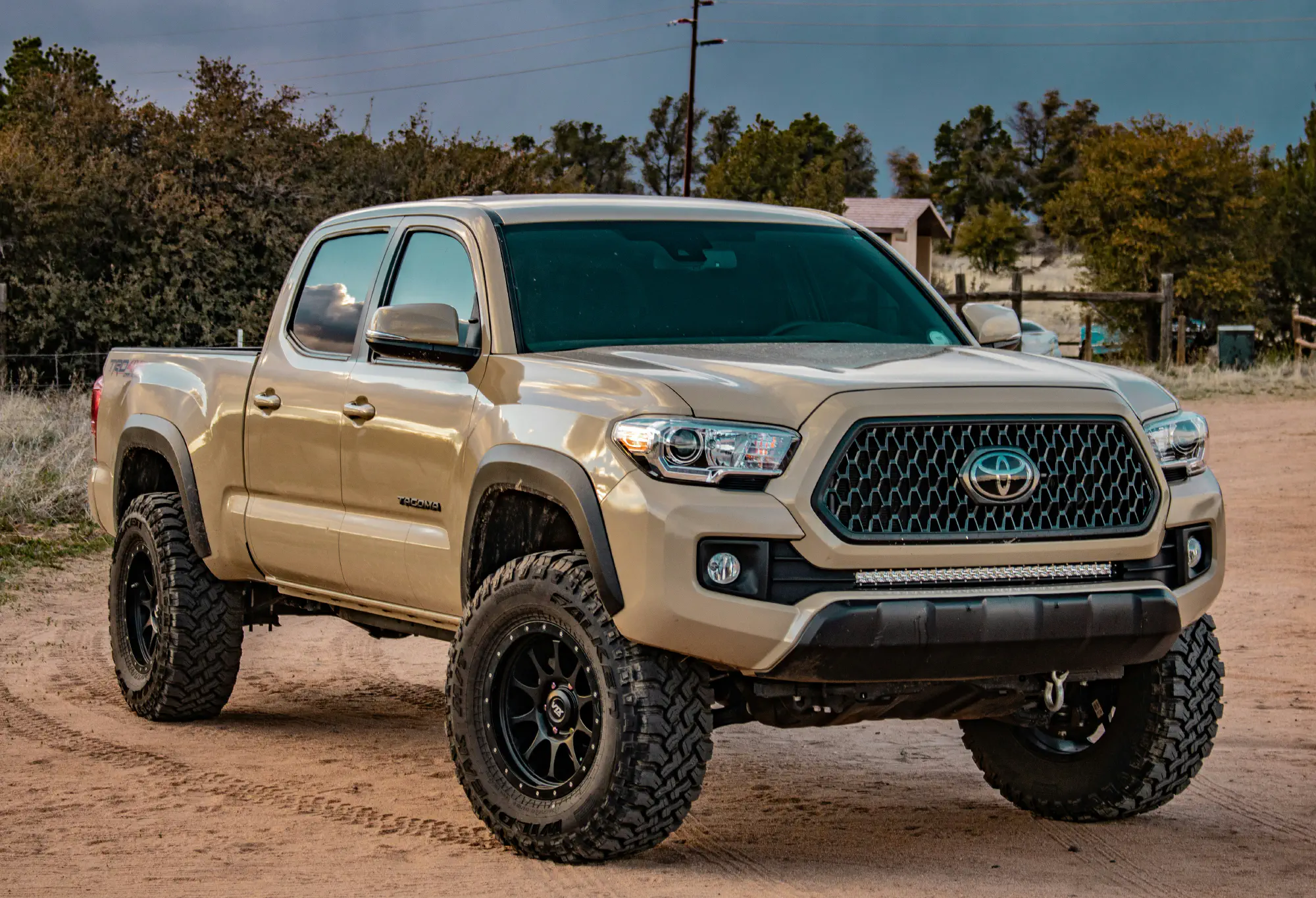
Toyota Gold Certified can be worth it if you’re buying a high-mileage vehicle (up to 120,000 miles) and want manufacturer-backed warranty protection on powertrain components. However, if you’re mechanically savvy or the vehicle has a clean pre-purchase inspection, you may overpay $1,500–$3,000 in dealer markup for coverage you could get cheaper elsewhere.
What Is the Toyota Gold Certified Program and What Does It Actually Include?
Toyota Gold Certified is the lowest tier of Toyota’s Certified Used Vehicle (TCUV) program, designed for older or higher-mileage Toyota vehicles. It provides limited warranty coverage compared to the higher-tier Toyota Certified (formerly Platinum) program.
Here is what the Gold Certified package typically includes:
- 12-month/12,000-mile Limited Comprehensive Warranty from date of purchase
- 7-year/100,000-mile Powertrain Warranty from original in-service date
- 160-point quality assurance inspection
- Free CARFAX Vehicle History Report
- Roadside Assistance for the duration of the comprehensive warranty
What the 160-Point Inspection Actually Covers
The inspection covers engine components, transmission, brakes, suspension, electrical systems, and interior/exterior condition. Dealers are supposed to check every item on the list and either repair or document deficiencies before certifying the vehicle.
In reality, the quality of this inspection varies wildly by dealership. Some technicians spend 45 minutes doing a thorough once-over.
Others pencil-whip the checklist in 15 minutes. The vehicle still gets the Gold Certified sticker either way, which is a genuine concern for buyers who trust the certification label.
What Is the Difference Between Toyota Gold Certified and Toyota Certified?
Toyota Certified (formerly Platinum) covers more components and offers longer warranty terms, while Gold Certified provides basic powertrain protection on higher-mileage vehicles.
| Feature | Gold Certified | Toyota Certified |
|---|---|---|
| Mileage Eligibility | Up to 120,000 miles | Up to 80,000 miles |
| Vehicle Age Limit | Up to 10 model years old | Up to 6 model years old |
| Comprehensive Warranty | 12 months/12,000 miles | 12 months/12,000 miles |
| Powertrain Warranty | 7 years/100,000 miles (from original in-service) | 7 years/100,000 miles (from original in-service) |
| Deductible Per Claim | $0 | $0 |
| Roadside Assistance | Yes | Yes |
| Typical Dealer Markup | $1,500–$2,500 over non-certified | $2,000–$3,500 over non-certified |
The key difference is that Toyota Certified vehicles are newer and lower-mileage, meaning you get a longer remaining powertrain warranty window. Gold Certified vehicles may already have most of that 7-year/100,000-mile powertrain warranty consumed by the time you buy.
Is the Toyota Gold Certified Warranty Actually Worth the Extra Cost?
It depends on the vehicle’s remaining factory warranty, its mechanical history, and how much the dealer is charging for the certification. For many buyers, the premium is not justified.
When It IS Worth It
- You’re buying a high-mileage vehicle with no service history. If the previous owner did not keep records, a powertrain warranty is genuine peace of mind for a vehicle approaching 80,000–100,000 miles.
- You’re financing the vehicle. The warranty cost gets rolled into your monthly payment, making it feel painless. If something fails, you are covered.
- The vehicle is a model with known transmission or engine issues. Certain Toyota models have documented weak points (covered below), and coverage on those components alone can justify the cost.
- You’re not mechanically inclined. If you cannot diagnose or repair issues yourself, a factory-backed warranty that any Toyota dealer honors nationwide is valuable.
When It Is NOT Worth It
- The vehicle still has remaining factory warranty. If it’s a 2021 model with 40,000 miles, you likely still have factory powertrain coverage. The Gold Certified warranty does not extend beyond the original terms; it just fills gaps.
- The dealer is charging more than $2,500 for the certification premium. At that price point, you can often buy a standalone third-party extended warranty for less with broader coverage.
- You’re buying a model year known for bulletproof reliability. A 2019 Camry with 60,000 miles and full service records has a near-zero probability of major powertrain failure in the next 24 months. The warranty is essentially free money for the dealer.
- You plan to get a pre-purchase inspection from an independent mechanic. A thorough PPI ($150–$250) gives you far more diagnostic information than a dealership’s 160-point checklist, often catching things the dealer misses or ignores.
Which Toyota Models Benefit Most from Gold Certified Coverage?
Not all Toyota models carry the same risk profile. Some have known weaknesses that make the warranty more valuable, while others are so reliable that the certification premium is wasted money.
Models Where Gold Certified Makes Sense
- Toyota Tacoma (2016–2020): Known for transmission shudder and rear differential issues at higher mileage. Transmission repairs can exceed $3,500.
- Toyota RAV4 (2019–2021): Some units experience transmission hesitation and jerking. Hybrid models have had battery cooling system concerns.
- Toyota Highlander (2017–2020): The 8-speed transmission in some trims has documented rough shifting complaints. Repairs are expensive.
- Toyota Tundra (2014–2021): Air injection pump failures are common and costly ($1,500–$2,500 to fix). The powertrain warranty covers this.
Models Where Gold Certified Is Probably Unnecessary
- Toyota Camry (2018–2023): Extremely reliable. The 8-speed auto in the 4-cylinder models has been largely problem-free.
- Toyota Corolla (2020–2024): One of the most dependable compact cars on the road. Major failures are exceptionally rare.
- Toyota Prius (2016–2023): Proven hybrid drivetrain. Battery packs routinely last 200,000+ miles.
How Much Does Toyota Gold Certified Add to the Price of a Used Vehicle?
Dealers typically charge a $1,500–$3,000 premium over the same vehicle sold as a standard used car. This markup covers the inspection labor, any reconditioning work, the warranty cost, and dealer profit margin.
Here is how to determine if the markup is fair:
- Check the vehicle’s KBB and Edmunds values for both “certified” and “non-certified” conditions. The difference should align with the dealer’s markup.
- Ask what reconditioning work was performed. If the dealer replaced brake pads, rotors, and tires as part of certification, the markup is more justified because those parts have real value.
- Compare to a standalone extended warranty. A 12-month comprehensive warranty from a reputable third-party provider typically costs $800–$1,400. If the Gold Certified markup exceeds that significantly, you are paying a premium for the Toyota name.
- Negotiate the certification cost separately. Many dealers will reduce the markup if you push. The certification is a profit center for them, and they have room to move.
Do Dealerships Ever Cut Corners on the Gold Certified Inspection?
Yes, and it happens more often than Toyota would like to admit. The 160-point inspection is only as good as the technician performing it, and some dealers rush the process to move units off the lot quickly.
Common Corners That Get Cut
- Brake measurements taken but pads not replaced even when near minimum thickness, because they technically “passed” the threshold.
- Fluid conditions noted but not changed. Old transmission fluid or dirty coolant may be documented as acceptable when a responsible shop would flush and replace.
- Tire depth recorded but uneven wear ignored. A vehicle can pass the inspection with 5/32″ tread but have severe inner-edge wear from alignment issues that will cause problems within months.
- Check engine light codes cleared rather than diagnosed. The light stays off long enough for the sale, then returns weeks later.
How to Protect Yourself
- Request the full inspection report before purchasing. Every item should be documented with pass/fail and actual measurements.
- Ask for reconditioning invoices. If the dealer claims they replaced parts, you should see the work order.
- Get an independent pre-purchase inspection anyway. Even on a Gold Certified vehicle, a second opinion from your own mechanic is $150 well spent.
- Test drive aggressively. Take the vehicle on the highway, run it through full acceleration, hard braking, and tight turns. Problems that hide during a gentle lot test drive surface under stress.
Can You Negotiate the Price of a Toyota Gold Certified Vehicle?
Absolutely. The certification markup is not fixed by Toyota, and most dealers expect negotiation on certified used vehicles just as they do on new cars.
- Research comparable non-certified listings for the same year, model, and mileage. Use that as your baseline and negotiate up from there, not down from the dealer’s asking price.
- Ask the dealer to remove the certification and sell the vehicle at a non-certified price. Some will do this, though you lose the warranty. This lets you see the true base price.
- Get quotes from multiple dealers. Certified used vehicle pricing is not standardized. One dealer may charge $2,000 more for the same year and model as another dealer down the road.
- Time your purchase. End-of-month and end-of-quarter periods give you more leverage because dealers are pushing to hit sales targets.
Frequently Asked Questions
Does Toyota Gold Certified transfer to a new owner if I sell the vehicle?
Yes, the remaining warranty coverage transfers to subsequent owners at no additional cost. This can add modest resale value to your vehicle when you sell it privately.
Can I use any Toyota dealership for Gold Certified warranty repairs?
Yes. The warranty is honored at any authorized Toyota dealership in the United States, not just the selling dealer. This is one of the genuine advantages over third-party warranties, which sometimes have limited repair networks.
Does Gold Certified cover hybrid battery replacement?
Not typically. Hybrid battery components usually fall under the original 8-year/100,000-mile (or 10-year/150,000-mile in some states) hybrid component warranty from the factory. Gold Certified does not extend or supplement that coverage.
What happens if I decline Gold Certified and buy the car as-is?
You save the certification premium but have no warranty protection beyond any remaining factory coverage. You are responsible for all repair costs from the date of purchase. If you go this route, budget $1,000–$2,000 in an emergency repair fund.
Is the Toyota Gold Certified warranty better than a third-party extended warranty?
It depends on the provider. Toyota’s warranty uses genuine OEM parts and is backed by the manufacturer, which gives it more credibility.
However, reputable third-party providers like Endurance or CARCHEX sometimes offer broader component coverage at lower prices. Read the exclusions carefully on any policy before purchasing.
The Bottom Line: Should You Pay Extra for Toyota Gold Certified?
Toyota Gold Certified is a solid program when you understand exactly what you are getting and what you are paying for. It is best suited for buyers purchasing higher-mileage vehicles with unknown or incomplete service histories, especially models with known weak points like certain Tacomas, Highlanders, or Tundras.
However, if you are buying a reliably-engineered Toyota model with documented maintenance, low mileage, and remaining factory warranty, the Gold Certified premium often adds cost without proportional value. A pre-purchase inspection from an independent mechanic and a disciplined negotiation on price will serve you better than paying extra for a certification label that may or may not reflect thorough reconditioning.
Always ask for the full inspection report, compare the certification markup against standalone warranty pricing, and never assume the Gold Certified sticker means the vehicle is problem-free. It means the dealer checked a list and Toyota allows them to use the label. That is the starting point of your due diligence, not the end of it.
Leave a Reply