
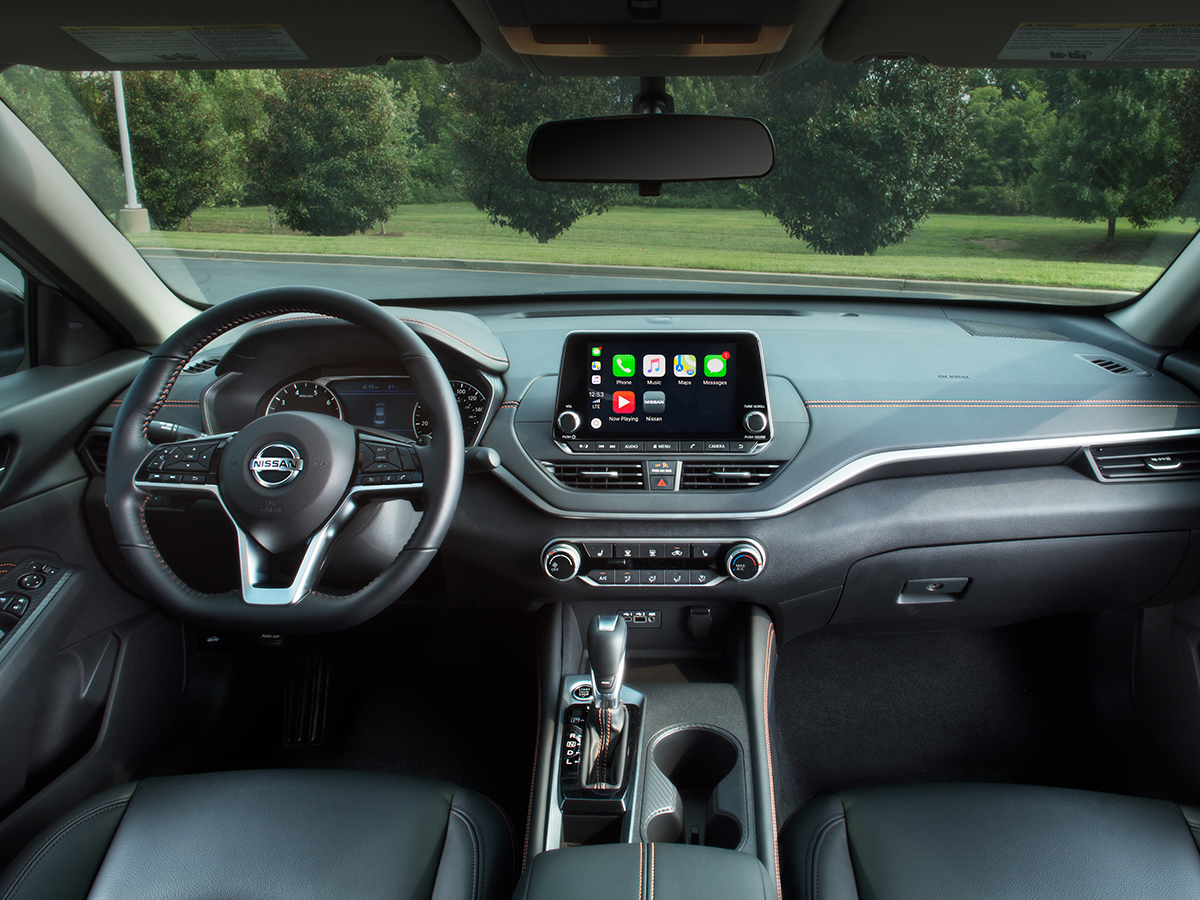
A Nissan Altima air conditioning recharge involves adding R-134a refrigerant (2002–2018 models) or R-1234yf refrigerant (2019 and newer) to the AC system through the low-pressure service port, typically located on the passenger side of the engine bay near the firewall. A full recharge usually requires 18 to 24 ounces of refrigerant and costs between $150 and $300 at a shop, or $30 to $60 if you DIY with a recharge kit.
How Do I Know If My Nissan Altima Needs an AC Recharge?
Your Altima needs a recharge when the AC blows warm or lukewarm air, the compressor cycles on and off rapidly, or you hear a hissing sound from the dashboard. These symptoms indicate low refrigerant, which means there is a leak somewhere in the system that must be addressed before simply adding more refrigerant.
Common Symptoms of Low Refrigerant
Most Altima owners first notice the problem on a hot day when the AC simply cannot keep up. Here are the telltale signs experienced technicians see repeatedly:
- ⚠️Warm air from vents — The most obvious sign. If the air never gets truly cold, refrigerant is likely low or completely gone.
- 🔄Compressor clutch cycling rapidly — Stand in front of the car with the AC on max. If the compressor clicks on and off every few seconds, the low-pressure switch is cutting it out due to insufficient refrigerant.
- 🛢️Visible oil residue around fittings — Refrigerant leaks carry compressor oil with them. Look for oily, dirty spots around AC hose connections and the condenser.
- 🔊Hissing or bubbling sounds — A refrigerant leak often produces an audible hiss near the evaporator or condenser when the system is off.
- 🌡️AC works fine on cool days but fails in heat — This is a classic early-stage low refrigerant symptom. The system has just enough charge to cool when ambient temps are mild but cannot handle high heat loads.
Why You Should Never Just “Top Off” Without Finding the Leak
Refrigerant does not get consumed or degrade over time in a sealed system. If it is low, there is a leak — period. Adding refrigerant without fixing the leak is a temporary band-aid that wastes money and can damage the compressor over time due to oil starvation.
⚠️ If your Altima has needed a recharge more than once in two years, you have an active leak that a dye test or electronic leak detector can pinpoint. Do not keep buying cans of refrigerant every summer.
What Refrigerant Does a Nissan Altima Use?
The refrigerant type depends entirely on the model year. Using the wrong refrigerant can permanently damage the AC system and is illegal to vent into the atmosphere.
R-134a Models (2002–2018)
These are the most common Altimas on the road today and use the widely available R-134a refrigerant. Recharge kits for R-134a are sold at every auto parts store for $30 to $50 and include a hose with a gauge. The low-pressure port is on the passenger side, typically on the larger-diameter aluminum line near the firewall.
R-1234yf Models (2019 and Newer)
Nissan switched to R-1234yf, a more environmentally friendly refrigerant, starting around 2019. This refrigerant is significantly more expensive — a single 8 oz can costs $40 to $60 — and the fittings are different from R-134a, so you cannot accidentally cross-connect. Most DIY recharge kits do not support R-1234yf, making professional service the practical choice for these models.
Where Is the AC Recharge Port on a Nissan Altima?
The low-pressure service port on most Nissan Altima model years is located on the passenger side of the engine bay, on the larger-diameter aluminum suction line that runs along the firewall or near the evaporator housing. It has a blue or black plastic cap marked with an “L.”
How to Locate It Step by Step
- Open the hood and stand on the passenger side of the engine bay.
- Look near the firewall where the AC lines enter the cabin. You will see two aluminum lines — one thick (low-pressure/suction) and one thin (high-pressure/discharge).
- Find the larger line. The low-pressure port is always on the larger-diameter line. It has a quick-connect fitting with a plastic dust cap.
- Verify with the cap color. On most Altimas, the low-pressure cap is blue or black. The high-pressure cap is typically red — do not connect to that one.
💡 On the 2013–2018 Altima with the 2.5L engine, the low-pressure port is notoriously tucked behind the headlight assembly. You may need to remove the air box or move wiring harnesses to get a clear shot with the recharge hose.
How to Recharge the AC on a Nissan Altima Yourself
A DIY AC recharge on a 2002–2018 Altima using R-134a is straightforward if the system still has some refrigerant and no major leaks. You will need a recharge kit with a built-in gauge, available at any auto parts store.
Tools and Materials Needed
- 🔧R-134a recharge kit with pressure gauge and hose ($30–$50)
- 🔧Safety glasses and gloves
- 🔧Thermometer for vent temperature testing
- 🔧Optional: UV dye kit for leak detection
Step-by-Step Recharge Process
- Start the engine and turn the AC to maximum cold, fan on high, and recirculation mode engaged. Open all windows slightly to prevent the compressor from cycling off too early.
- Connect the recharge hose to the low-pressure port. The coupler snaps on — pull back the collar, press it onto the port, and release.
- Read the gauge. With the compressor running, the low-side pressure should read between 25 and 45 psi in most conditions. If it reads below 20 psi or at zero, you have very low or no refrigerant.
- Shake the refrigerant can well and attach it to the hose. Hold the can upright and open the valve.
- Add refrigerant slowly. Squeeze the trigger in short bursts while watching the gauge. Target 35 to 45 psi on the low side. Never exceed 55 psi.
- Check vent temperature. After a few minutes, the center vent should blow between 40°F and 50°F on a warm day. If it does, the recharge is complete.
- Disconnect the hose and replace the dust cap on the low-pressure port.
What to Avoid During a DIY Recharge
- ❌Never connect to the high-pressure side — this can cause the can to rupture and cause serious injury.
- ❌Do not overcharge the system — too much refrigerant raises high-side pressure dangerously and can damage the compressor or blow seals.
- ❌Avoid refrigerant cans with “sealant” additives — these sealants can gum up the expansion valve, compressor, and receiver/drier, leading to expensive repairs.
- ❌Do not vent refrigerant — it is a federal violation under the EPA Clean Air Act to intentionally vent refrigerant.
How Much Does a Professional AC Recharge Cost for a Nissan Altima?
A professional AC recharge at a dealership typically costs $200 to $350 for R-134a systems and $300 to $500 for R-1234yf systems. An independent shop usually charges $150 to $250 for R-134a. These prices include a leak check, evacuation, and a full recharge with the correct refrigerant amount measured by weight.
Dealership vs. Independent Shop
When to Pay for Professional Service
If the system is completely empty (gauge reads zero), you need professional evacuation and leak detection before recharging. A shop will pull a vacuum on the system to check for leaks, replace any failed components, and charge by exact weight — which is the only accurate method. A DIY can simply cannot measure refrigerant precisely.
Common Nissan Altima AC Leak Points to Check Before Recharging
Before spending money on refrigerant, knowing where Altimas commonly leak saves time and money. Certain model years have known weak points that Nissan has acknowledged through technical service bulletins.
Condenser Leaks (All Model Years)
The front condenser sits behind the grille and takes road debris hits constantly. Small rocks puncture the thin aluminum tubes, causing slow leaks.
Inspect the condenser face for bent fins, oily residue, or visible damage. The condenser on the 2013–2018 Altima is especially vulnerable because of its large frontal exposure.
Compressor Shaft Seal (2007–2012 2.5L)
The AC compressor on the 2.5L four-cylinder engine from this era is known for shaft seal leaks. You will typically see oil staining around the front of the compressor where the clutch engages. This leak gets worse as the seal dries out from lack of refrigerant oil circulation.
Evaporator Core Leaks (2013–2018)
The evaporator lives inside the dashboard and is labor-intensive to access. If you smell a sweet chemical odor from the vents or see oil residue at the evaporator drain tube under the car, the evaporator is likely leaking. This repair runs $800 to $1,200 because the entire dashboard often needs partial disassembly.
Expansion Valve / Orifice Tube Issues
The expansion valve (2.5L models) or orifice tube (3.5L models) can clog or stick, mimicking low refrigerant symptoms. If the system is fully charged but still blows warm, the expansion valve may be stuck closed or the orifice tube may be clogged with debris from a failing compressor.
Frequently Asked Questions
How often should I recharge the AC on my Nissan Altima?
A properly sealed AC system should never need recharging. If your Altima loses refrigerant, there is a leak that needs to be found and repaired. A slow leak may require a recharge every one to two years, but that is not normal maintenance — it is a symptom of a problem.
Can I use any brand of R-134a refrigerant for my Altima?
Yes, as long as it is pure R-134a without added sealants or stop-leak compounds. Look for cans labeled “pure R-134a” with no additives. Brands like Chemours DuPont, Honeywell, and store-brand pure R-134a are all acceptable.
Why does my Altima AC work when driving but blow warm at idle?
This usually indicates a condenser airflow problem or a weak cooling fan. At highway speed, air flows through the condenser naturally.
At idle, the electric condenser fan must pull air through. If the fan is weak, failing, or the condenser fins are clogged with bugs and dirt, high-side pressure spikes and the system blows warm.
Will a recharge fix my Nissan Altima AC compressor noise?
No. A grinding, squealing, or rattling compressor has a mechanical internal failure — not a refrigerant issue.
Recharging the system will not silence a failing compressor and may actually make the problem worse by increasing internal pressure on damaged components. The compressor needs to be replaced.
Final Verdict: Recharge Your Altima AC the Right Way
A Nissan Altima AC recharge is a legitimate DIY job for 2002–2018 models with a slow leak and some remaining refrigerant in the system. For completely empty systems or 2019 and newer models using R-1234yf, professional service is the smarter choice.
Always hunt for the leak before adding refrigerant — fixing the root cause once costs less than buying recharge cans every summer. If your compressor is cycling rapidly, the system is nearly empty, and a simple top-off will get you through until you can schedule a proper repair.
Leave a Reply