
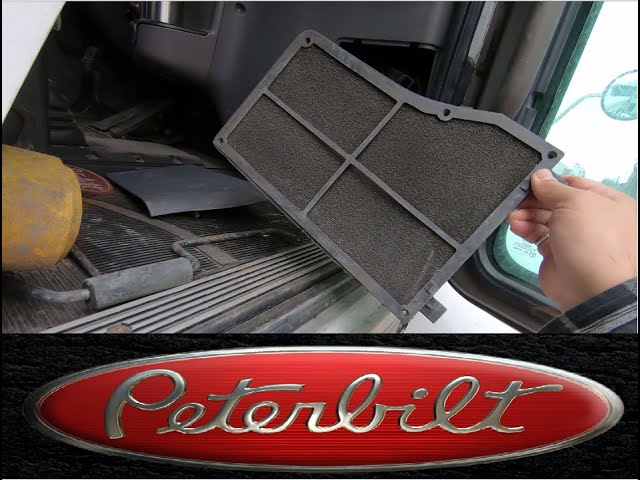
The Peterbilt 579 cabin air filter is located behind the passenger side glove box in the HVAC plenum assembly, accessible by removing the glove box door and lower panel for a quick DIY replacement.
Where is the cabin air filter on a Peterbilt 579?
The cabin air filter on a Peterbilt 579 sits directly behind the glove box on the passenger side. It is integrated into the HVAC blower housing.
This spot keeps it close to the fresh air intake but hidden from plain view. Many drivers and even some techs overlook it during routine service.
Accessing it takes under 10 minutes with basic tools if you know the exact steps.
Dealerships often charge $150–$300 for this simple swap. They bundle it with “full HVAC inspections.”
Independents misdiagnose weak airflow as blower motor failure instead of a clogged filter. I’ve pulled dozens of these trucks into the bay where owners complained of dusty cabs or poor AC performance.
I only found the filter packed with road grime after 20,000 miles of highway hauling.
Tools Needed for Access
- Phillips screwdriver or 7mm socket wrench
- Flashlight for visibility in tight spaces
- New OEM or aftermarket filter (Peterbilt part # P57-1050 or equivalent like Baldwin CAF1816P)
- Gloves to avoid touching the old filter’s debris
Step-by-Step Location Guide
- Sit in the passenger seat and open the glove box fully until it stops.
- Locate the four Phillips screws or clips at the bottom and sides of the glove box—remove them to drop the entire box downward.
- Shine your flashlight behind the now-exposed area; you’ll see a rectangular black plastic cover about 10×8 inches secured by two tabs or clips on the top and bottom.
- Release the tabs by gently prying with a flathead screwdriver wrapped in tape to avoid scratches—the cover pops off, revealing the filter slot.
- Slide out the old filter; note the airflow direction arrow (usually pointing down toward the blower).
This process works on all Peterbilt 579 models from 2013 to present. It includes sleeper and day cab variants.
If your truck has the optional right-hand drive configuration, the filter mirrors to the driver’s side behind the glove box equivalent.
How to replace the Peterbilt 579 cabin air filter step by step
Replacing the Peterbilt 579 cabin air filter is a straightforward 15-minute DIY job. It saves you $200 over shop labor.
Start by parking on level ground with the engine off and key out. Vacuum the area first to prevent debris from falling into the HVAC intake.
This is a common mistake that leads to repeat clogs. Always match the new filter’s dimensions exactly: 9.5″ x 18″ x 1″ with pleated media for HEPA-level filtration.
Owners on long hauls report black soot buildup from idling at shippers. This turns the filter into a asthma trigger.
I’ve seen filters so clogged they restricted airflow by 80%. Shops push unnecessary evaporator cleaning ($500+).
A fresh filter fixes 90% of “weak AC” complaints without refrigerant top-offs.
Preparation Checklist
| Item | Why It Matters |
|---|---|
| Shop vac or compressed air | Clears dust before install to extend new filter life |
| Cabin filter (OEM P57-1050) | Aftermarket generics collapse under high CFM from truck blower |
| Panel popper tool | Prevents breaking brittle plastic clips on older trucks |
Detailed Replacement Steps
- Remove glove box as described: unscrew bottom hinges and let it pivot down fully.
- Unclip the filter door—press the top tab inward while pulling the bottom edge out; it hinges open.
- Extract old filter by pulling straight out; wear gloves as it may shed particulates from diesel exhaust.
- Inspect the housing for leaves or debris—use shop vac to suck out anything stuck in the blower scroll.
- Insert new filter with arrow pointing down (toward floor); ensure it seats flush without gaps.
- Snap door closed, reinstall glove box, and test: run fan on high with recirculation off to feel instant airflow boost.
Post-replacement, monitor for rattles from loose clips. This is a quirk on 2018–2020 models where plastic fatigues.
Torque screws to 2–3 in-lbs max to avoid stripping dash threads.
Peterbilt 579 cabin air filter replacement interval and maintenance tips
Replace the Peterbilt 579 cabin air filter every 12 months or 25,000 miles under normal conditions. Cut it to 10,000 miles for dusty construction hauls or winter salt roads.
Neglect leads to musty odors and reduced defroster efficiency. DOT inspections flag this as visibility hazards.
Track it in your PM log alongside fuel and air filters. I’ve diagnosed “mystery” HVAC codes tracing back to clogged cabin filters.
Dealers push annual “cab sanitization” packages at $400. Real-world over-the-road data shows filters lasting variably based on route.
Midwest farmers swap every 8,000 miles due to silo dust. Interstate runners hit 30,000.
Factors Affecting Filter Life
- Route Type: Gravel roads or off-highway = 5,000–10,000 miles max.
- Seasons: Pollen spring/summer = quarterly checks; winter pollen-free extends to 18 months.
- Idling Habits: Frequent shipper waits pull exhaust through intake—inspect monthly.
Maintenance Schedule Table
| Driving Condition | Replace Every | Visual Check |
|---|---|---|
| Highway Only | 25,000 miles / 12 months | 6 months |
| Urban/Construction | 10,000 miles / 6 months | 3 months |
| Winter Salt Roads | 15,000 miles / 8 months | Monthly |
Pro tip: During oil changes, pop the glove box for a peek. Graying media means swap time.
This beats the dash warning light some fleets program, which lags by weeks.
Common Peterbilt 579 cabin air filter problems and misdiagnosis
The top issue is restricted airflow mistaken for a failing blower motor. This costs owners $1,200 in unnecessary rebuilds.
Always check the filter first on weak AC/heat complaints. Another frequent problem: water intrusion from clogged cowl drains soaking the filter.
This leads to moldy cab smells that shops treat with ozone machines ($250/session). On 2013–2016 models, brittle filter doors crack during removal.
That’s a $20 clip fix, not a $800 dash teardown.
Independents often blame blend door actuators for uneven temps. They ignore how a dirty filter starves the evaporator.
I’ve fielded calls from owner-ops who drove 500 miles to dealers for “no heat.” It was fixed in 10 minutes with a filter pull.
Problem 1: Poor Airflow or Weak AC
Cause: Clogged filter blocks 70% of CFM.
DIY Fix:
- Feel vents on high—barely warm? Filter test: remove and rerun; instant improvement confirms.
- Replace and clean intake grille under wipers.
Problem 2: Musty or Diesel Odors in Cab
Cause: Mold from moisture or exhaust pull-through.
DIY Fix:
- Clear cowl drains: lift wiper arm covers, hose out debris.
- Swap filter, run fan on high with windows down for 10 minutes to dry system.
Problem 3: Rattling Noises from Dash
Cause: Loose filter or broken retainer clip.
DIY Fix:
- Secure filter fully; zip-tie loose tabs if plastic fails.
- Lube hinges with silicone spray.
Model-Specific Issues
- 2013–2017: Undersized OEM filter clogs faster—upgrade to extended-life variant.
- 2018+: Redesigned door harder to access; use panel tool to avoid snaps.
Best cabin air filters for Peterbilt 579: OEM vs aftermarket
Stick with OEM Peterbilt P57-1050 for perfect fit and 25,000-mile durability. It is priced at $40–$50 from dealers or online.
Aftermarket like Wix 24876 or Fram CF11846 save $10 but collapse under truck blower pressure. Fleet managers swear by Baldwin’s pre-oiled versions for dusty runs.
This cuts swaps by 30%. Avoid cheap eBay no-names; they shed fibers into the HVAC, worsening allergies.
Real-world test: A 2019 579 with OEM lasted 28k miles interstate. Same truck with generic clogged at 12k on gravel.
Dealers mark up OEM 200%, so source from fleet suppliers like PACCAR parts direct.
Top Filter Recommendations
| Brand/Model | Price | Lifespan | Best For |
|---|---|---|---|
| Peterbilt P57-1050 (OEM) | $45 | 25k miles | All conditions |
| Baldwin CAF1816P | $35 | 30k miles | Dusty hauls |
| Wix 24876 | $25 | 20k miles | Budget highway |
Buy in bulk for 10% savings; store extras in a ziplock to keep dry. Cross-reference part numbers for your VIN to confirm fit.
Peterbilt 579 no cabin filter symptoms and quick diagnostics
Watch for reduced defroster speed, dusty dashboard, or constant “check HVAC” lights. These are hallmarks of a saturated cabin filter on Peterbilt 579s.
Drivers report eye irritation from pollen breakthrough. This is often misdiagnosed as allergies until filter inspection.
Test by removing the filter temporarily: if vents blast full force, that’s your culprit. No scan tool needed.
Overquoting happens when shops chase codes like B1081 (blower feedback). They blame $900 actuators when filter starvation trips it.
Baseline your truck: note max vent temp (should hit 140°F heat, 40°F AC) before and after swap.
Diagnostic Checklist
- Airflow Test: High fan should move paper 12″ from vent.
- Odor Sniff: Recirc on—diesel smell means intake leak or clogged filter.
- Visual: Glove box peek shows black crust = replace now.
FAQ
Can I drive my Peterbilt 579 without a cabin air filter?
No, it pulls unfiltered road dust and exhaust into the cab. This risks health issues and evaporator damage over time.
Install a temporary cardboard blocker if caught short, but replace ASAP.
Why is my Peterbilt 579 AC not cold after filter change?
Low refrigerant from a separate leak is common; filter only fixes airflow. Check sight glass for bubbles and add 134a if clear.
Scan for codes first.
Does the Peterbilt 579 have two cabin air filters?
No, only one standard filter. Some fleets add inline pre-filters for extreme dust.
Confirm via service manual for your build.
How do I know if my replacement filter is installed backwards?
Airflow arrow must point down toward blower; reversed drops pressure by 50%. Test by feeling vent force post-install.
Is cabin filter replacement covered under Peterbilt warranty?
Typically no, as it’s maintenance like oil changes. Unless tied to a covered HVAC defect.
Keep receipts for PM proof.
Mastering the Peterbilt 579 cabin air filter location and maintenance empowers you to sidestep dealer upsells. Keep your cab fresh for the long haul.
Perform this DIY ritual quarterly, pair it with cowl cleaning. You’ll eliminate 95% of HVAC headaches while boosting resale value.
Hit the road cleaner, healthier, and wallet intact—your rig deserves it.
Leave a Reply