
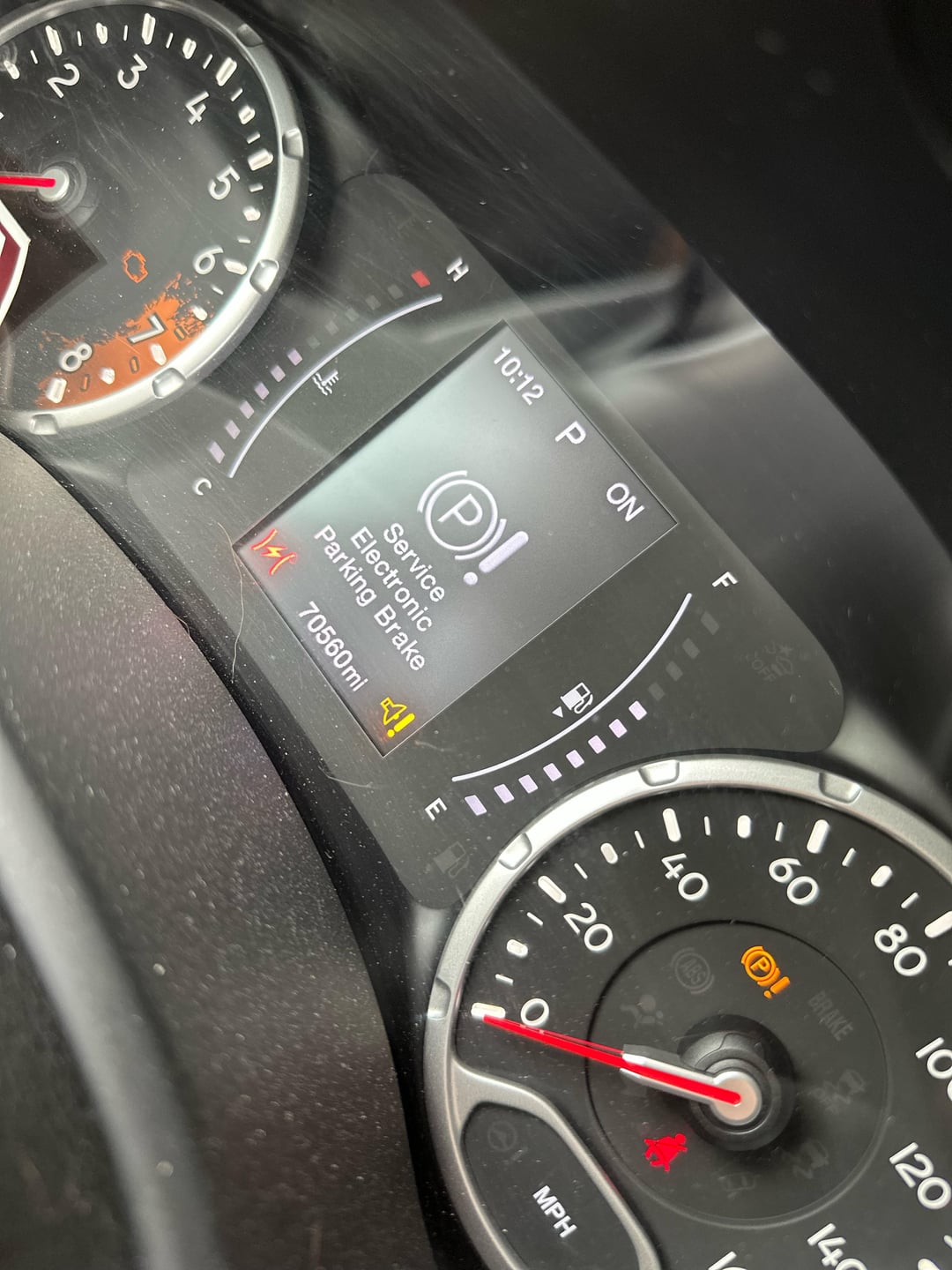
The service parking brake light on GM trucks like the Chevy Silverado and GMC Sierra points to an electronic parking brake system fault, most often caused by low brake fluid, a failing actuator, or wiring issues rather than a simple pad wear problem.
What Does the Service Parking Brake Light Mean on a Chevy Silverado?
The service parking brake light activates when the electronic parking brake control module detects a fault in the actuator, fluid level sensor, or related wiring.
This differs from the standard brake warning light because it specifically targets the auto-apply mechanism found on 2014 and newer GM trucks.
Dealerships often quote full actuator replacement immediately, yet many cases trace back to simple fluid level drops or corroded connectors that independent shops locate first with a scan tool.
Why the Light Appears After Brake Fluid Changes
Technicians who top off fluid without bleeding air from the rear actuators can trigger the light because the module monitors pressure consistency.
The system expects stable hydraulic feedback during self-tests that run every time the vehicle is started.
Common Causes of the Service Parking Brake Light
Real-world diagnostics show four primary triggers that repeat across Silverado and Sierra trucks.
Each requires different verification steps before parts replacement.
Low Brake Fluid Level in the Reservoir
Even a small drop below the minimum mark causes the module to set a code because the rear actuators rely on the same reservoir.
Owners often notice the light after highway trips when fluid expands and contracts.
Check the reservoir with the truck parked on level ground and the engine cold.
Wipe the sides clean first to read the actual level instead of relying on the sensor alone.
Faulty Electronic Parking Brake Actuator
The actuator motor seizes from road salt exposure on the rear calipers, especially on trucks driven in northern states.
Once internal gears bind, the module records an over-current fault and disables auto-apply.
Listen for a grinding or clicking noise when the parking brake switch is pressed.
This sound confirms mechanical failure before any scan tool is connected.
Corroded Wiring or Poor Ground Connections
Harness chafing near the rear axle or under the cab creates intermittent signals that set the light during bumps.
Ground points on the frame collect rust and raise resistance enough to confuse the module.
Inspect connectors at the actuator and the main harness junction near the fuel tank for green corrosion.
Clean terminals with electrical contact cleaner and dielectric grease after repair.
Brake Pad Wear Sensor or Switch Failure
Some 2019 and newer models integrate pad wear data into the parking brake module.
When the inner pad wears past a threshold, the light can illuminate even though the hydraulic system remains functional.
Measure pad thickness at all four corners rather than trusting the dashboard message alone.
Replace pads before the wear sensor damages the rotor surface.
How to Diagnose the Service Parking Brake Light Step by Step
Follow this sequence to avoid unnecessary actuator replacement that many shops perform first.
- Connect a capable scan tool and read codes in the electronic parking brake and ABS modules. Note any C-series codes related to actuator performance.
- Verify brake fluid level and condition. Dark or contaminated fluid requires flushing before further testing.
- Command the parking brake to apply and release using bidirectional controls. Watch for motor current draw exceeding 15 amps.
- Inspect all visible wiring and grounds from the rear bumper forward to the cab. Repair any damaged sections with solder and heat-shrink tubing.
- Perform a brake fluid flush using a pressure bleeder while cycling the actuator to remove trapped air.
Model-Specific Fixes for 2014-2018 Silverado and Sierra
These years use an early actuator design prone to water intrusion.
Replacement requires dropping the rear axle slightly for access.
After installing the new actuator, perform a module calibration with a scan tool to teach the full apply and release positions.
Skipping this step leaves the light on.
Model-Specific Fixes for 2019 and Newer Silverado and Sierra
Newer trucks integrate the actuator with the brake caliper more tightly.
Fluid must be flushed at 30,000-mile intervals to prevent internal corrosion.
Use only DOT 4 fluid specified by GM.
Mixing types causes swelling in the actuator seals and repeats the original fault.
How to Reset the Service Parking Brake Light After Repair
Clear codes with a scan tool after all mechanical issues are fixed.
Cycle the ignition three times while holding the parking brake switch to allow the module to run its self-test sequence.
Drive the truck for at least 10 miles, including several full stops from highway speed, to confirm the light stays off.
Persistent illumination means an unresolved code still exists.
FAQ
Can I still drive with the service parking brake light on?
Short distances are possible, but the electronic parking brake may not apply automatically in an emergency. Have the system scanned within a few days to prevent further module damage.
Does the light always mean the actuator needs replacement?
No. Fluid level, wiring, and calibration issues account for nearly half of the cases seen in independent shops. Full diagnosis prevents unnecessary parts costs.
How much does a dealership typically charge for this repair?
Quotes range from $800 to $1,600 when the actuator is replaced without checking simpler causes first. Independent diagnosis often resolves the light for under $300.
Will changing the brake pads turn the light off?
Only if the pads triggered a wear sensor code. Most cases require addressing the actuator circuit or fluid condition before the light extinguishes.
Conclusion
Addressing the service parking brake light starts with fluid level verification and code reading rather than immediate actuator replacement.
Following the diagnostic order outlined here resolves the majority of complaints on GM trucks without dealership-level expense.
Regular fluid maintenance and connector inspections prevent recurrence on high-mileage vehicles.
Leave a Reply