
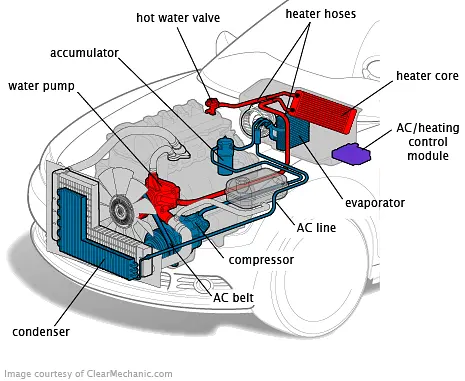
A Subaru Forester AC recharge typically requires R-134a refrigerant (most 2009–2024 models) or R-1234yf (2025+ models). A DIY recharge costs $30–$50 with a kit, while a shop charges $150–$300. If the system keeps losing charge, you likely have a leak at the condenser, compressor seal, or evaporator core that must be repaired before recharging.
How Much Does a Subaru Forester AC Recharge Cost?
A DIY AC recharge on a Subaru Forester costs between $30 and $50 for a refrigerant kit with a gauge. Taking it to a shop typically runs $150 to $300, depending on labor rates and whether a leak inspection is included.
Dealerships will quote you $250–$350 and often push for a full system evacuation and recharge using their machine. Independent shops usually do the same job for less because their labor rate is lower.
The refrigerant itself is cheap — the cost difference is almost entirely labor and equipment.
DIY Recharge Kit Cost Breakdown
- ▸R-134a refrigerant can with gauge: $25–$40 at any auto parts store
- ▸Refrigerant with stop-leak additive: $35–$50 (not recommended for systems with confirmed leaks)
- ▸UV dye kit (for leak detection): $10–$15 extra
- ▸OBD-II scanner with AC data: Optional, $20–$50 for a Bluetooth model
What Type of Refrigerant Does a Subaru Forester Use?
Most Subaru Foresters use R-134a refrigerant. This covers model years from roughly 2009 through 2024. Starting with the 2025 redesign, Subaru switched to R-1234yf, which requires different equipment and is significantly more expensive per can.
The easiest way to confirm your refrigerant type is to check the sticker under the hood. Pop the hood and look on the underside of the hood itself or on the radiator support — there will be a label specifying the refrigerant type and the system capacity in grams or ounces.
Refrigerant Capacity by Generation
| Forester Generation | Model Years | Refrigerant Type | System Capacity |
|---|---|---|---|
| SH (3rd gen) | 2009–2013 | R-134a | ~16.9 oz (480g) |
| SJ (4th gen) | 2014–2018 | R-134a | ~17.6 oz (500g) |
| SK (5th gen) | 2019–2024 | R-134a | ~17.6 oz (500g) |
| SU (6th gen) | 2025+ | R-1234yf | ~15.9 oz (450g) |
How Do I Recharge the AC on My Subaru Forester?
With the engine running and AC set to max cold, connect the recharge kit to the low-pressure service port on the passenger side of the engine bay. The low-pressure port is the smaller of the two AC lines and has a black or blue cap marked “L.”
Here is the step-by-step process that actually works in practice:
- 1Start the engine and turn the AC to the coldest setting with the fan on high. Make sure recirculate mode is engaged.
- 2Locate the low-pressure port. On the Forester, it sits on the larger-diameter aluminum line coming off the firewall or near the passenger-side strut tower. The high-pressure port is on the smaller line — do not connect to that one.
- 3Attach the recharge hose. Pull back the collar on the kit’s connector, push it onto the low-pressure port, and release. It should click and lock.
- 4Read the gauge. With the compressor running, the low-side pressure should read between 25–45 psi on most Foresters when properly charged. If it reads below 20 psi, the system is low.
- 5Add refrigerant in short bursts. Hold the can upright and squeeze the trigger for 10–15 seconds at a time. Shake the can between bursts. Watch the gauge climb into the green zone.
- 6Check vent temperature. After adding refrigerant, the center vent should blow 38–45°F on a properly charged system. If it is still warm after the gauge reads normal, you have a different problem.
- 7Disconnect the hose and replace the dust cap. Do not overcharge — too much refrigerant causes the compressor to cycle erratically or not engage at all.
Real-world tip: If the compressor clutch never engages during this process — even with a full charge — check the 10A AC fuse in the under-hood fuse box and the AC relay before assuming the compressor is dead. I have seen dozens of Foresters brought in for “bad compressors” that only needed a $5 relay.
Why Does My Subaru Forester AC Keep Losing Refrigerant?
If you recharged the system and it went warm again within weeks or months, you have a leak. Subaru Foresters are known for a few specific leak points that show up consistently at higher mileage.
Cause 1: Condenser Leak (Most Common)
The condenser sits right behind the front bumper and takes road debris hits constantly. Even a tiny stone can puncture a condenser tube and create a slow leak that bleeds refrigerant over 2–6 weeks.
Shine a UV light on the condenser face — if the POE oil was dyed, the leak will glow bright green or yellow.
Fix: Replace the condenser. Aftermarket condensers for the Forester run $60–$120. Labor at an independent shop is typically 1.5–2 hours.
The system must be evacuated, the condenser swapped, held under vacuum, and recharged with the correct amount by weight.
Cause 2: Compressor Shaft Seal
The front seal on the Subaru scroll-type compressor can dry out and leak, especially on 2014–2018 Foresters that see a lot of highway driving. You may notice oil residue around the compressor body where the shaft enters.
Fix: Replace the compressor. Trying to replace just the seal is rarely cost-effective because the labor is the same.
A new compressor costs $250–$400 for the part. Total repair at a shop runs $600–$900.
Cause 3: Evaporator Core Leak
This is the most expensive and hardest to diagnose leak. The evaporator lives inside the dashboard. When it leaks, you may smell a faint sweet chemical odor from the vents and see oil staining around the drain tube under the car.
AC pressure drops slowly over several weeks.
Fix: Evaporator replacement requires removing the entire dashboard and HVAC housing. Expect $800–$1,200 at a shop.
On 2019+ models, the job is slightly easier because Subaru redesigned the HVAC box, but it is still a full-day repair.
Cause 4: O-Ring Failure at Line Connections
The rubber O-rings where the AC lines connect to the compressor, condenser, and evaporator harden with age and heat cycles. This is especially common on Foresters with 100K+ miles.
The leak is slow and can be spotted with UV dye.
Fix: Replace the O-rings. This is the cheapest repair — a full O-ring kit is under $15.
The system must be evacuated before opening the lines and recharged after. A shop will charge $150–$250 for the whole job.
How Do I Know If My Subaru Forester Needs an AC Recharge?
The most reliable sign is warm air from the vents when the AC is set to max cold. However, warm air alone does not always mean low refrigerant. You need to rule out other failures first.
Symptoms That Point to Low Refrigerant
- ⚠Compressor clutch cycles on and off rapidly (every few seconds) instead of staying engaged
- ⚠Low-side pressure reads below 20 psi with the compressor running
- ⚠AC worked fine last season but is weak or warm now
- ⚠You hear a hissing sound from the dashboard area right after turning the AC off
- ⚠Visible oil stains or green/yellow dye around AC components under the hood
Symptoms That Point to a Different Problem
- ✕Compressor clutch does not engage at all: Could be a blown fuse, bad relay, failed clutch coil, or a bad pressure switch — not necessarily low refrigerant
- ✕AC blows cold at idle but warm at highway speed: Often a failing compressor or a clogged orifice tube, not a recharge issue
- ✕AC blows cold on one side but warm on the other (dual-zone models): Usually a blend door actuator problem, not refrigerant-related
- ✕Intermittent cold/warm cycling every 10–30 seconds: Could indicate a failing expansion valve or moisture in the system
Should I Use a DIY Recharge Kit or Go to a Shop?
If the system is simply low after several years of normal use and has no confirmed leak, a DIY kit works fine. If you suspect a leak or the system is completely empty, go to a shop that can perform a proper evacuation, vacuum test, and recharge by weight.
The problem with DIY kits is that they cannot remove air or moisture from the system. If the system was open to the atmosphere for any period — say, after a line was disconnected — air and moisture get trapped inside.
Air in the system raises high-side pressures and reduces cooling. Moisture reacts with refrigerant and oil to form acids that eat the system from the inside.
When DIY Is Fine
- ✔System was working and gradually got weaker over one or more seasons
- ✔Compressor still engages and cycles normally
- ✔No visible leaks with UV dye inspection
- ✔You are only topping off a slightly low charge
When You Need a Professional
- ✕System is completely empty — compressor will not engage
- ✕You have confirmed or suspect a leak
- ✕You need refrigerant recovered before opening the system
- ✕Vehicle uses R-1234yf (2025+ Forester) — DIY kits for this refrigerant are not widely available
- ✕Previous owner or shop added stop-leak or unknown additives
Frequently Asked Questions
Can I mix R-134a and R-1234yf in my Subaru Forester?
No. Never mix refrigerant types. R-134a and R-1234yf have different operating pressures, oil requirements, and chemical compositions.
Mixing them can damage the compressor and contaminate the entire system, turning a $50 recharge into a $1,500 full system replacement.
Why does my Subaru Forester AC smell bad when I turn it on?
A musty or sour smell from the vents is almost always caused by mold and bacteria growing on the evaporator core. The evaporator collects condensation, and if the drain tube is clogged, moisture sits on the fins.
Spraying an evaporator cleaner into the HVAC housing through the cabin filter opening usually solves it. This is not a refrigerant issue.
How often should a Subaru Forester AC system be recharged?
A sealed, leak-free AC system does not need routine recharging. Subaru does not list a service interval for refrigerant.
If your Forester needs a recharge, something leaked or was opened. Recharging every year or two means there is a leak that needs to be found and fixed.
Will AutoZone or O’Reilly recharge my AC for free?
Most auto parts stores sell DIY recharge kits but do not perform the recharge service themselves. Some stores will help you connect the kit in the parking lot as a courtesy.
They will not evacuate the system or perform a vacuum test — those require professional equipment.
Can a bad cabin air filter make my AC seem weak?
Yes. A clogged cabin air filter restricts airflow through the vents and makes the AC feel weak even when the system is fully charged.
On the Forester, the cabin filter sits behind the glove box and costs about $15 to replace. Check it before assuming you need a recharge.
Get Your Forester’s AC Blowing Cold Again
A Subaru Forester AC recharge is one of the simplest and cheapest HVAC fixes you can do yourself — as long as the system is not leaking. Start by checking the cabin air filter, verifying the compressor engages, and reading the low-side pressure.
If the system is just low on refrigerant, a $30 kit from any parts store will get you blowing cold in 15 minutes.
But if you are recharging every few weeks or the system is completely empty, stop throwing refrigerant at it and get a proper leak diagnosis done. Finding and fixing the actual leak once will always be cheaper than recharging repeatedly for the rest of the summer.
Leave a Reply