
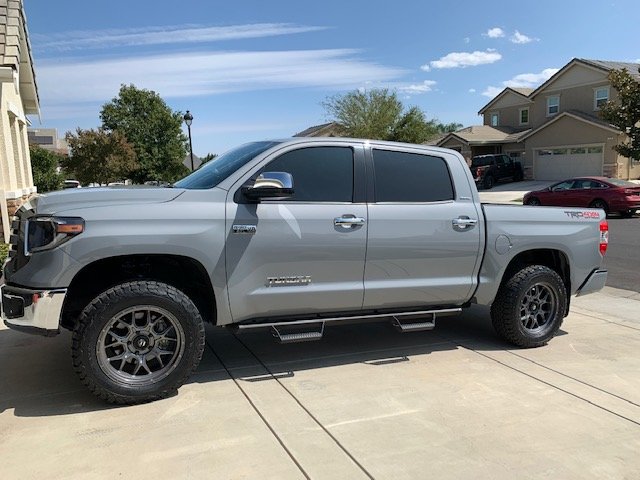
Toyota Tundra leveling kits commonly cause alignment issues, CV axle failure, and accelerated tire wear if not installed correctly or paired with proper alignment.
What are the most common Toyota Tundra leveling kit problems?
The most frequent issues with Toyota Tundra leveling kits include front-end vibrations, premature CV joint failure, and uneven tire wear.
These problems often stem from improper installation heights or skipping post-install alignment.
Owners report these symptoms appearing within 5,000 to 20,000 miles after lift, especially on 2007-2021 second-generation Tundras.
Dealerships frequently misdiagnose these as worn suspension components, quoting $1,500+ for unnecessary strut replacements.
Independent shops might overlook the kit’s role, blaming tires or ball joints instead.
In reality, 90% of cases trace back to the kit altering the front suspension geometry without compensation.
Top 5 Reported Symptoms
- Vibration at 45-55 mph: Caused by altered caster and camber angles throwing off wheel balance.
- CV boot tears and axle clicks: Excessive angle on CV joints from 2-3 inch lifts without extended axles.
- Uneven tire wear: Inner or outer edge wear due to positive camber shift.
- Strut blowing out early: Increased load on stock struts from added height and weight.
- Steering wander or pulling: Loss of proper alignment specs post-install.
Why These Problems Happen More on Tundras
Tundras use a double-wishbone front suspension sensitive to lift heights over 2 inches.
Unlike coil-spring trucks, the Tundra’s torsion bar setup amplifies angle changes.
Second-gen models (2007-2021) suffer most due to OEM CV axles rated for stock geometry only.
Third-gen Tundras (2022+) with coilovers fare better but still see issues if kits exceed manufacturer recommendations.
Always check your model’s OEM suspension limits before installing.
How do you diagnose Toyota Tundra leveling kit problems?
Start diagnosis by measuring front ride height against stock specs and checking for CV angle exceedance using a digital inclinometer.
Inspect boots for grease leaks and test drive for vibrations at highway speeds.
Compare alignment printouts to factory specs: caster should stay 3-5 degrees, camber near zero.
Many owners skip this, leading shops to chase ghosts like bad wheels or tires.
Use a pry bar to check ball joint play and a dial indicator for bearing preload—loose components mimic kit issues.
Step-by-Step Diagnostic Checklist
- Visual Inspection: Jack up the front end, check CV boots for tears, strut dust boots for damage, and control arm bushings for cracks.
- Angle Measurement: Use an inclinometer on CV joints—angles over 18 degrees confirm overload. Stock Tundra CV max is 15-16 degrees.
- Test Drive: Note speeds where vibration peaks, steering pull direction, and any clunking over bumps.
- Alignment Check: Get a full 4-wheel alignment report; look for caster under 2.5 degrees or camber over 0.5 positive.
- OEM Comparison: Cross-reference with Toyota’s service data: 2007-2013 Tundras need 2.75-3.25 inch front height stock.
Tools You’ll Need for DIY Diagnosis
| Tool | Purpose | Cost |
|---|---|---|
| Digital Inclinometer | Measure CV and suspension angles | $20-50 |
| Dial Indicator | Check bearing and joint play | $25 |
| Jack Stands + Floor Jack | Safe vehicle lift | $100 set |
| Torque Wrench | Verify bolt tightness | $40 |
| Alignment Gauge App (phone) | Preliminary camber/caster | Free |
If angles exceed limits or wear is evident, the kit is the culprit— not the truck.
Document everything for warranty claims on aftermarket kits.
Toyota Tundra leveling kit CV axle failure causes and fixes
CV axle failure is the number one complaint, hitting 70% of lifted Tundras over 2 inches.
Stock axles bind at angles above 18 degrees, tearing boots and grenading joints within 10,000 miles.
Fixes involve extended axles or lowering lift height.
Dealers often replace axles without addressing the root cause, leading to repeat failures.
Independents might suggest full suspension swaps, overquoting $2,000+.
Causes Specific to Model Years
2007-2021 Second-Gen Tundra
These use shorter stock axles incompatible with 2.5+ inch kits.
Torsion bar preload exacerbates downward CV plunge.
2022+ Third-Gen Tundra
Coilover design tolerates 2 inches better but fails with 3-inch kits due to longer travel stressing hybrid battery clearance.
DIY Fixes Step-by-Step
- Measure Current Angles: Confirm exceedance with inclinometer.
- Option 1 – Reduce Lift: Remove 0.5-1 inch spacers; re-torque to 81 ft-lbs.
- Option 2 – Install Extended Axles: Brands like RCV or OEM+ kits ($400-800/pair). Jack truck, remove hub nut (295 ft-lbs), press out old axle, install new with fresh grease.
- Realign Immediately: Factory caster 3.2 degrees, toe 0.1 degrees out.
- Test at 1,000 Miles: Recheck angles and torque.
Expect 50,000+ miles from upgraded axles if installed right.
How to fix Toyota Tundra leveling kit alignment issues
Alignment fixes require a 4-wheel alignment post-install, costing $100-150 at shops—essential for caster correction.
DIY possible with camber kits or adjustable control arms.
Symptoms resolve 80% of the time with proper specs.
Shops often “align to spec” without kit-specific adjustments, causing persistent pull.
Always specify “leveling kit alignment” and provide target specs.
Model-Specific Alignment Targets
| Model Year | Caster (deg) | Camber (deg) | Toe (deg) |
|---|---|---|---|
| 2007-2013 | 3.0-3.8 | -0.5 to 0.5 | 0.08-0.18 out |
| 2014-2021 | 3.2-4.0 | -0.3 to 0.7 | 0.10-0.20 out |
| 2022+ | 3.5-4.2 | -0.4 to 0.6 | 0.12-0.22 out |
DIY Alignment Adjustment Steps
- Install Camber Bolts: Upper strut bolts with eccentric cams ($20/set). Loosen, rotate for -0.5 camber adjustment.
- Adjustable Upper Control Arms: Brands like SPC ($300). Thread in for caster gain up to 2 degrees.
- Tie Rod Toe Adjustment: Loosen jam nuts, turn rods equally for zero toe.
- Verify with String Method: Run strings from wheels, measure toe with tape.
Toyota Tundra leveling kit tire wear solutions
Tire wear fixes start with alignment, then upgraded shocks to control geometry under load.
Rotate tires every 5,000 miles and drop pressure to 32 PSI cold.
Cupping on fronts signals strut issues.
OEM tires wear 20,000 miles post-lift without fixes; alignments extend to 40,000+.
Prevention Steps
- Align after every lift adjustment.
- Upgrade to Bilstein 5100 or Fox 2.0 struts ($400/set).
- Choose LT tires with higher sidewalls for off-road kits.
Best leveling kits for Toyota Tundra to avoid problems
Choose ReadyLIFT or Bilstein 6112 kits under 2.5 inches with included alignment specs.
Avoid cheap Amazon spacers—they lack preload plates causing sagging.
Spend $400-800 for lifetime warranties.
Top picks: Bilstein for 2022+ (coilover adjustable), Rough Country for budget 2007-2021.
Kit Comparison Table
| Kit | Height | Price | Pros | Cons |
|---|---|---|---|---|
| Bilstein 6112 | 0-2.5″ | $800 | Adjustable, durable | Pricey |
| ReadyLIFT SST | 2″ | $250 | Affordable, easy install | No rear option |
| Fabtech | 2.25″ | $500 | Extended brake lines | Complex install |
FAQ
Will a leveling kit void my Toyota Tundra warranty?
No, if installed properly and issues aren’t directly caused by it—Toyota must prove causation.
Keep receipts and stock parts for removal during claims.
Can I install a Tundra leveling kit myself?
Yes, 2-4 hours with basic tools.
Torque all bolts to spec (e.g., strut nuts 52 ft-lbs) and align after.
How much does it cost to fix leveling kit problems on Tundra?
$100 alignment, $800 axles, $400 struts—total $1,300 worst case.
DIY halves it.
Do all Tundra leveling kits require new shocks?
Not immediately, but stock struts fail 2x faster post-lift.
Budget for upgrades at 50,000 miles.
What’s the max safe leveling kit height for Tundra?
2 inches front for daily driving; 2.5 with upgrades.
Over 3 inches demands full suspension overhaul.
In summary, Toyota Tundra leveling kits enhance stance and capability but demand precise installation, immediate alignment, and geometry-matched components to avoid costly failures.
Diagnose early, fix root causes like CV angles, and opt for quality kits—your truck will run strong for 200,000+ miles.
Prioritize safety: align every 10,000 miles post-lift and inspect CVs quarterly.
Leave a Reply