
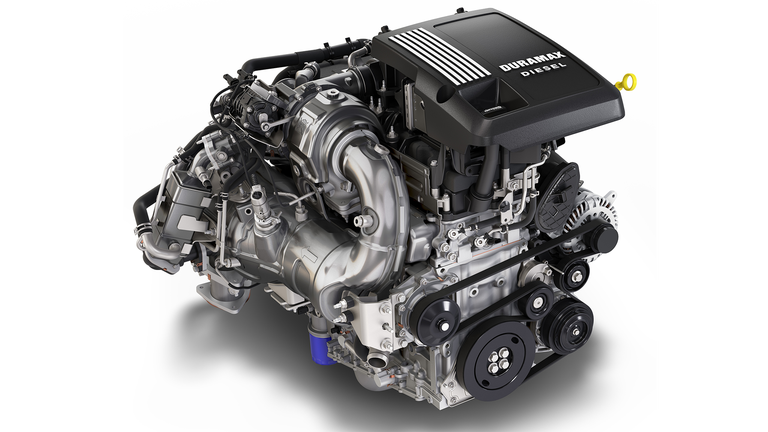
The best performance upgrades for the 3.0L Duramax (LM2 and LZ0) engines include custom ECM tuning via HP Tuners, throttle response controllers, high-flow cold air intakes, upgraded intercooler charge pipes, and crucial reliability modifications like an oil catch can and timely wet-timing belt maintenance.
What are the best 3.0 Duramax performance upgrades?
The most effective performance upgrades for the 3.0 Duramax are custom ECM tuning, throttle response controllers, high-flow cold air intakes, upgraded aluminum intercooler pipes, and drop-in variable geometry turbochargers.
The 3.0-liter inline-six Duramax diesel engine, found in both the LM2 (2020–2022) and LZ0 (2023+) configurations, is an incredibly efficient platform.
However, factory calibrations prioritize stringent emissions and conservative torque management over raw performance. To truly wake this engine up, you must address the restrictive factory intake tract, the lazy throttle pedal mapping, and the highly protective ECM parameters.
Real-world testing shows that combining intake, exhaust, and tuning upgrades can transform these light-duty trucks into towing powerhouses. Below, we break down the primary performance upgrades that deliver actual, measurable dyno gains without compromising daily driveability.
1. Custom Tuning and ECM Unlocks
Unlike older diesel engines where you could simply plug a programmer into the OBD-II port, the E99 (LM2) and E66 (LZ0) engine control modules are heavily encrypted.
To achieve true custom tuning, the ECM must be physically removed and sent to a facility like HP Tuners to be unlocked. Once unlocked, custom calibrations can adjust fuel rail pressure, injection timing, and variable geometry turbo (VGT) vane positions to unlock up to 40 to 60 additional horsepower and 80 to 100 lb-ft of torque.
2. Throttle Response Controllers
If you do not want to go through the hassle of unlocking your ECM, a throttle response controller is the single best “seat-of-the-pants” upgrade.
Devices like the Banks PedalMonster or Pedal Commander intercept the signal from your accelerator pedal and eliminate the dead spot at the beginning of pedal travel. This does not add horsepower, but it completely alters how the truck drives by removing the dangerous factory lag when merging or pulling out into traffic.
3. Cold Air Intakes and High-Flow Filters
The factory airbox is designed to suppress turbo noise and filter out snow and water, which creates a highly restrictive path for incoming air.
Upgrading to a sealed cold air intake system, such as those from S&B Filters or Banks Power, increases airflow by up to 35 percent. This results in quicker turbo spool-up, lower exhaust gas temperatures (EGTs), and a noticeable increase in mid-range pulling power.
4. Upgraded Intercooler Charge Pipes
The factory hot-side and cold-side intercooler pipes are constructed from cheap plastic and thin rubber boots designed to save manufacturing costs.
Under increased boost pressures from a tune, these factory plastic pipes are prone to splitting at the seams or blowing off the throttle body. Upgrading to mandrel-bent aluminum charge pipes with heavy-duty silicone couplers ensures your engine receives every pound of boost the turbo produces.
Can you tune a 3.0 Duramax LM2 or LZ0?
Yes, you can tune both the LM2 and LZ0 Duramax engines, but it requires a physical ECM unlock service from HP Tuners before any custom tunes can be flashed to the vehicle.
Tuning the 3.0 Duramax is not as straightforward as older diesel platforms due to GM’s Global B electronic architecture.
This advanced security system monitors the vehicle’s control modules for unauthorized software modifications. If you attempt to flash a tune without a proper unlock, the truck will instantly enter a “no-start” security lockout condition.
Dealerships can easily detect if an ECM has been unlocked or flashed, which will immediately void your powertrain warranty. For owners who want to preserve their warranty, inline piggyback tuners are the preferred alternative, as they do not flash the ECM directly.
The ECM Unlock Process Step-by-Step
To get a true custom tune on your 3.0 Duramax, you must follow a specific multi-step process.
First, you or your shop must physically locate and remove the ECM from the engine bay. Next, the module must be shipped to an authorized tuning facility to bypass the factory encryption. Once returned and reinstalled, you can use an HP Tuners RTD or MPVI3 device to load custom files from reputable diesel calibrators.
Inline Tuners vs. Full Custom Tunes
If you are debating between an inline module and a custom tune, it is important to understand how they differ in operation.
Inline modules, such as the Banks Derringer, connect to the MAP and FRP sensors to safely increase boost and fuel rail pressure within factory safety margins. While they provide a noticeable power bump, they cannot match the precise control over transmission shift points, EGR operation, and injection timing that a full custom ECM tune offers.
Do cold air intakes actually add horsepower to the 3.0 Duramax?
A cold air intake adds between 5 to 12 horsepower on a stock 3.0 Duramax, but its main benefits are lower intake air temperatures, faster turbo spool, and supporting high-horsepower custom tunes.
Many diesel owners believe that installing a cold air intake is a waste of money because the factory airbox is already a “cold air” design.
While the factory box does pull air from the fender well, its internal baffling and restrictive paper filter create significant flow restriction. When you increase fueling via a tune or inline module, the demand for air increases exponentially, making the factory intake a major bottleneck.
Aftermarket intake systems feature larger, smooth-bore intake tubes that eliminate turbulent airflow before it reaches the turbo compressor wheel. This allows the turbocharger to work less to produce the same amount of boost, directly reducing drive pressure and exhaust gas temperatures.
| Feature | Factory OEM Intake | Aftermarket Cold Air Intake |
|---|---|---|
| Airflow Rating | Highly restrictive paper filter with baffled tubes | High-flow cotton/dry media with smooth-bore tubes |
| Turbo Spool Time | Noticeable lag under sudden acceleration | Significantly reduced lag and faster boost build |
| Exhaust Gas Temps (EGTs) | Higher EGTs during heavy towing | Consistently lower EGTs (50–100°F drop) |
| Sound Profile | Silent, muffled engine bay acoustics | Audible turbo whistle and aggressive engine note |
When selecting an intake, you must choose between a dry filter media and an oiled filter media.
Dry filters are highly recommended for the 3.0 Duramax because oiled filters can shed microscopic oil droplets onto the Mass Airflow (MAF) sensor. A contaminated MAF sensor will send incorrect air-mass data to the ECM, resulting in erratic shifting, poor fuel economy, and check engine lights.
How do you fix the 3.0 Duramax throttle lag?
The notorious throttle lag on the 3.0 Duramax is best resolved by installing an inline throttle response controller, which intercepts and modifies the pedal position signal to eliminate the factory delay.
Almost every 3.0 Duramax owner complains about a dangerous 1-to-2 second delay when pressing the accelerator pedal from a complete stop. This lag is not a mechanical defect; it is a deliberate programming choice by General Motors.
To meet strict tailpipe emissions standards, the factory calibration limits fuel delivery until the turbocharger has fully spooled to prevent any trace of black smoke.
While custom tuning can eliminate some of this lag by adjusting torque management tables, a dedicated throttle controller is the fastest and most cost-effective solution. These plug-and-play devices install in less than ten minutes and do not leave a digital footprint on the ECM.
Why the Banks PedalMonster is the Industry Standard
Unlike cheap throttle controllers that simply multiply the pedal signal, the Banks PedalMonster connects directly to the vehicle’s OBD-II diagnostic port. This allows the device to monitor active vehicle data, such as gear selection and reverse engagement.
For safety, it automatically reverts to stock throttle sensitivity when you shift into reverse, preventing dangerous lurching while backing up or hooking up a trailer.
How to Install a Throttle Controller (DIY Steps)
- Prepare the Vehicle: Turn off the vehicle’s ignition and open the driver-side door.
- Allow System Sleep: Wait at least ten minutes for the vehicle’s electrical system to enter sleep mode.
- Locate the Harness: Locate the electrical harness connected to the top of the accelerator pedal assembly.
- Disconnect Factory Plug: Depress the locking tab and disconnect the factory wiring harness.
- Connect the Controller: Plug the factory harness into the female connector of the throttle controller.
- Attach to Pedal: Plug the male connector of the throttle controller into the accelerator pedal sensor.
- Secure the Module: Route the control module up under the dashboard and secure it using zip ties away from moving parts.
- Calibrate via App: Calibrate the device using the manufacturer’s smartphone application over Bluetooth.
What reliability upgrades prevent 3.0 Duramax engine failure?
Crucial reliability upgrades for the 3.0 Duramax include installing an oil catch can, upgrading the weak plastic intercooler pipes, and strictly adhering to the wet timing belt replacement interval.
While the 3.0 Duramax is generally a highly reliable engine, it possesses several engineered weaknesses that can lead to catastrophic failures if left unaddressed.
Dealerships frequently misdiagnose these issues, often quoting thousands of dollars for complete component replacements when a simple preventative upgrade would have prevented the failure entirely.
By addressing these weak points early in the vehicle’s life, you can ensure your Duramax runs trouble-free well past the 200,000-mile mark, even when subjected to heavy towing and performance modifications.
1. Install an Oil Catch Can (Crankcase Ventilation)
Like all modern direct-injection diesel engines, the 3.0 Duramax utilizes a positive crankcase ventilation (PCV) system that routes oil-laden blow-by gases back into the intake tract.
This oil vapor mixes with hot exhaust gas from the EGR system, creating a thick, sticky carbon sludge that coats the intake valves and clogs the MAP sensor. Installing a high-quality catch can, such as those from Mishimoto or S&B, traps this oil before it enters the intake, keeping your engine’s breathing passages clean.
2. Upgrade the Plastic Intercooler Pipes
The factory intercooler charge pipes are notorious for failing at the quick-disconnect couplers. Over time, heat cycles degrade the plastic, causing the locking tabs to shear off under load.
When this happens, the pipe blows off completely, causing an instant loss of boost, a loud “pop” sound, and a sudden transition into limp mode. Replacing these with aftermarket aluminum pipes featuring heavy-duty silicone boots is cheap insurance against being stranded on the side of the highway.
3. Monitor and Replace the Wet Timing Belt
The 3.0 Duramax utilizes a rear-mounted timing belt that is submerged in engine oil (a “wet” belt design) to drive the high-pressure fuel pump and oil pump. GM specifies a replacement interval of 150,000 miles for the LM2 and 200,000 miles for the LZ0.
However, using the incorrect engine oil or neglecting oil changes can cause the belt to degrade prematurely, leading to belt shredding and total oil pressure loss. Always use a certified DexosD oil and inspect the belt service port if you buy a used truck.
LM2 vs LZ0 Duramax: Which responds better to performance mods?
The LZ0 Duramax responds significantly better to performance modifications due to its upgraded steel pistons, redesigned combustion bowl, improved turbocharger compressor wheel, and enhanced thermal management.
Introduced for the 2023 model year, the LZ0 is the second generation of the 3.0-liter Duramax engine.
While the LM2 is an excellent engine, GM engineers made several structural and mechanical revisions to the LZ0 to address the limitations of the first-generation design. These changes make the LZ0 a much more robust platform for supporting high-horsepower tunes and increased boost pressures.
The most notable upgrade is the transition from aluminum pistons in the LM2 to forged steel pistons in the LZ0. Steel pistons expand less under high cylinder pressures and temperatures, allowing the LZ0 to safely handle higher boost levels without the risk of cracked piston crowns.
Turbocharger and Fuel System Advancements
The LZ0 features a redesigned variable geometry turbocharger that offers faster transient response and higher peak boost capabilities than the LM2 unit.
Additionally, the fuel injection system was upgraded to deliver higher injection pressures, resulting in finer fuel atomization and cleaner combustion. When tuned, the LZ0 can maintain peak torque further up the RPM band, making it the superior engine for performance enthusiasts.
Frequently Asked Questions
Q: Does tuning the 3.0 Duramax void the factory warranty?
Yes, unlocking and custom tuning your ECM will void your powertrain warranty. Dealership diagnostic tools can easily detect modified calibration files and write-history logs on the ECM.
If warranty preservation is your main priority, stick to plug-and-play throttle controllers and intake upgrades that can be easily removed before service appointments.
Q: How often should the wet timing belt be replaced on a modified 3.0 Duramax?
While GM recommends 150,000 miles for the LM2 and 200,000 miles for the LZ0, highly modified trucks or those subjected to severe towing should have this belt inspected or replaced by 120,000 miles.
The labor is intensive because the belt is located at the back of the engine, requiring transmission removal, but a broken belt will instantly destroy the engine.
Q: Is a transmission tune necessary when upgrading the 3.0 Duramax?
A transmission calibration is highly recommended if you are adding more than 40 horsepower to the engine.
The 10L80 10-speed automatic transmission relies on precise torque modeling from the ECM to calculate clutch pack line pressure. Tuning the transmission ensures firmer shifts, prevents clutch slippage under heavy loads, and extends the life of the torque converter.
Q: What is the maximum safe horsepower for a stock block 3.0 Duramax?
The stock block and rotating assembly of the LM2 can safely handle up to 350 wheel horsepower and 600 lb-ft of torque. The steel-piston equipped LZ0 is slightly more robust, safely supporting up to 380 wheel horsepower on stock internals.
Exceeding these limits risks lifting the cylinder head or damaging the main bearings due to excessive cylinder pressures.
Conclusion
The 3.0-liter Duramax is an incredibly capable diesel engine that responds exceptionally well to targeted performance and reliability upgrades.
By pairing a custom ECM tune or high-quality inline module with a cold air intake and throttle controller, you can eliminate factory lag and unlock the truck’s true towing potential.
More importantly, investing in preventative upgrades like an oil catch can and heavy-duty intercooler pipes will protect your engine from costly failures down the road, ensuring your Duramax remains reliable for years to come.
Leave a Reply