
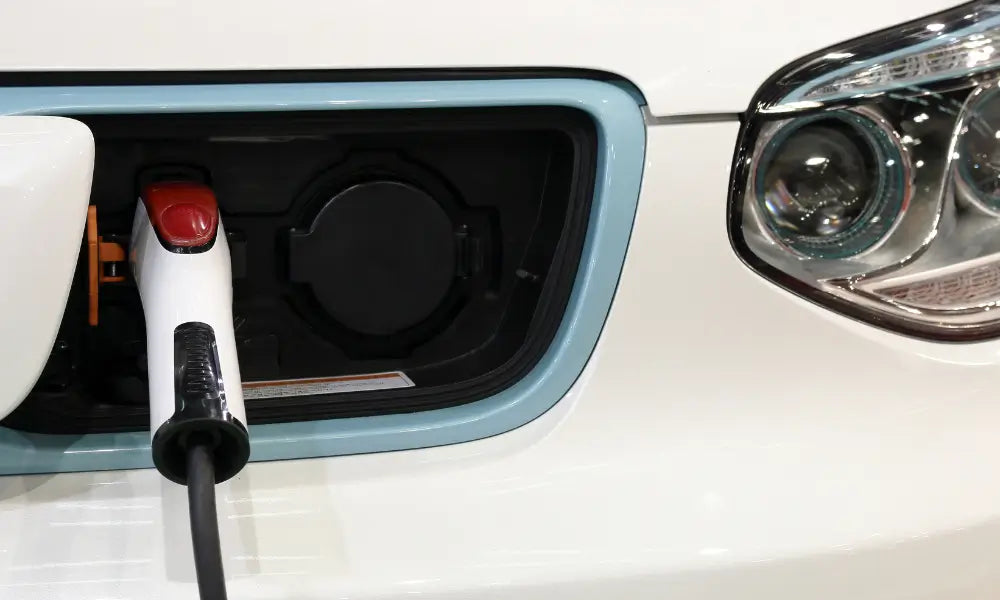
No, standard hybrid cars (HEVs) and mild hybrids (MHEVs) do not need to be plugged in to charge because they generate their own electricity through regenerative braking and an engine-driven generator. However, Plug-in Hybrid Electric Vehicles (PHEVs) must be plugged into an external power source if you want to utilize their electric-only driving mode, though they can still run on gasoline alone if the battery is fully depleted.
Understanding the differences between these hybrid powertrains is crucial for both prospective buyers and current owners. Many consumers are misled by dealerships into buying more complex systems than they need.
They are often hit with astronomical repair bills for charging issues that can actually be fixed in a driveway for under fifty dollars. This guide breaks down how these systems charge, what happens when they fail, and how to avoid getting ripped off by service centers.
Whether you drive a Toyota Prius, a Ford Escape Hybrid, or a plug-in Jeep Wrangler 4xe, the way your vehicle manages its electrical energy dictates its fuel efficiency and longevity. Let us look at how these systems operate in the real world and how you can diagnose charging faults yourself.
Do All Hybrid Cars Need to Be Plugged In?
No, only Plug-in Hybrid Electric Vehicles (PHEVs) require an external electrical outlet to charge their high-voltage batteries for electric-only operation, while traditional hybrids (HEVs) and mild hybrids (MHEVs) charge themselves entirely on the go.
The hybrid market is divided into three distinct categories, and confusing them is one of the most common mistakes consumers make. Traditional hybrids, also known as Self-Charging Hybrids or HEVs, use a small battery pack (typically 1 to 2 kWh) that acts as an energy buffer.
This battery is continuously charged by the internal combustion engine and kinetic energy captured during braking. You drive it exactly like a conventional gasoline car; you only ever put fuel in the gas tank.
Plug-in Hybrids (PHEVs), on the other hand, feature much larger battery packs (typically 10 to 20 kWh) and more powerful electric motors. This allows them to drive on pure electricity for 20 to 50 miles before the gasoline engine turns on.
To get the benefit of this electric-only range, you must plug the vehicle into a Level 1 (120V) or Level 2 (240V) charger. If you do not plug it in, the car simply operates as a standard, slightly heavier hybrid.
Mild Hybrids (MHEVs) use a very small 48-volt electrical system. They cannot drive on electricity alone.
Instead, the small battery assists the engine during acceleration and powers electrical systems when the engine shuts off at stoplights. These systems never require plugging in and are integrated directly into the vehicle’s standard alternator/starter setup.
| Hybrid Type | Requires Plug-In? | Average Battery Size | Electric-Only Range | Primary Energy Source |
|---|---|---|---|---|
| Mild Hybrid (MHEV) | No | 0.5 – 1 kWh | 0 miles (Assist only) | Gasoline & Braking |
| Traditional Hybrid (HEV) | No | 1 – 2 kWh | 1 – 2 miles (Low speed) | Gasoline & Regenerative Braking |
| Plug-In Hybrid (PHEV) | Optional (Highly Recommended) | 10 – 20 kWh | 20 – 50 miles | Grid Electricity & Gasoline |
How Do Hybrid Cars Charge Their Batteries Without a Plug?
Traditional hybrid cars charge their high-voltage batteries by converting kinetic energy into electrical energy during braking (regenerative braking) and by using the gasoline engine to spin an internal generator.
The magic of a self-charging hybrid lies in its ability to capture energy that is normally wasted as heat in a standard vehicle. In a conventional car, when you press the brake pedal, the brake pads squeeze the rotors, creating friction and converting your forward momentum into useless heat.
Hybrids handle this process completely differently through a highly coordinated powertrain control module.
1. Regenerative Braking System
When you lift your foot off the accelerator or lightly press the brake pedal in a hybrid, the vehicle’s electric motor reverses its role. Instead of using electricity to turn the wheels, the spinning wheels drive the electric motor, turning it into a generator.
This action creates magnetic resistance, which slows the vehicle down while simultaneously generating alternating current (AC) electricity. This AC power is sent to the inverter-converter, which transforms it into direct current (DC) to charge the high-voltage traction battery.
2. Engine-Driven Generator (MG1)
Most hybrid configurations, such as Toyota’s Hybrid Synergy Drive, utilize two electric motor-generators designated as MG1 and MG2. While MG2 primarily drives the wheels and recovers braking energy, MG1 is physically linked to the gasoline engine via a planetary gearset.
When the hybrid computer detects that the traction battery’s state of charge (SoC) has dropped below a specific threshold (typically around 40% to 50%), it starts the engine. The engine then spins MG1, which acts as an onboard generator to charge the battery back up to its nominal operating level.
3. Deceleration and Coasting
Even when you are not actively braking, simply coasting down a hill or slowing down for a traffic light charges the battery. The system applies a mild regenerative drag that mimics the engine-braking feel of a traditional car.
This continuous trickle of energy ensures that the battery rarely stays depleted for long, maintaining a healthy state of charge during everyday stop-and-go city driving.
What Happens If You Never Charge a Plug-In Hybrid (PHEV)?
If you never plug in a PHEV, the vehicle will continue to run safely as a standard hybrid, but you will experience significantly lower fuel economy, reduced performance, and accelerated battery degradation due to carrying heavy, unutilized electrical components.
Many drivers buy a PHEV for the tax incentives or dealership discounts without actually having a place to plug it in at home. While the vehicle is designed to handle this scenario without leaving you stranded, it is highly inefficient.
This setup can lead to long-term reliability issues that manufacturers rarely mention in the owner’s manual.
1. Severe Drop in Fuel Economy
A PHEV carries a massive high-voltage battery pack that weighs several hundred pounds more than a standard hybrid battery. If you do not charge this battery from the wall, you are carrying dead weight.
Your gasoline engine will have to work much harder to propel the vehicle. This results in fuel economy that is often worse than a standard, non-plug-in hybrid version of the same vehicle.
2. Accelerated Battery Degradation
PHEV batteries are designed to be cycled through their full capacity. If you never plug the car in, the hybrid management computer will keep the battery at a very low state of charge (usually between 15% and 20%) to preserve a buffer for standard hybrid operation.
Keeping a lithium-ion battery constantly at its lowest operating limit causes chemical stress. This leads to premature capacity loss and accelerated cell degradation over time.
3. Reduced Powertrain Performance
When your PHEV battery is depleted, you lose access to “boost” mode, where the electric motor and gasoline engine work together to provide maximum horsepower.
If you need to accelerate quickly to merge onto a highway, you may experience a noticeable lag or a lack of power. This happens because the small gasoline engine is struggling to move the heavy vehicle without assistance from the depleted electric motor.
Why Dealerships Misdiagnose Hybrid Battery and Charging Failures
Dealerships frequently quote $3,000 to $8,000 to replace an entire high-voltage hybrid battery when the actual fault is a simple $50 auxiliary 12V battery, corroded copper bus bars, or a clogged cooling fan.
Because high-voltage systems are complex and require specialized safety training, many independent shops refuse to touch them. This leaves owners at the mercy of dealership service departments.
Dealership technicians are often trained to “replace rather than repair.” If a hybrid system throws a fault code, their diagnostic tree almost always leads to a complete battery pack or inverter replacement, even when a cheap, component-level fix is available.
1. The 12V Auxiliary Battery Trap
Almost every hybrid vehicle on the road has a standard 12-volt auxiliary battery in addition to the massive high-voltage traction battery. This 12V battery does not start the engine; instead, it boots up the hybrid computer systems and closes the high-voltage relays.
When this 12V battery becomes weak or drops below 11.5 volts, the vehicle’s computers will go haywire, throwing terrifying dashboard warnings like “Hybrid System Malfunction” or “Check Hybrid System.” Dealerships often misdiagnose this as a failed traction battery.
Replacing a $150 12V auxiliary battery yourself will instantly solve this issue in a vast majority of cases.
2. Corroded Copper Bus Bars
Inside a hybrid battery pack, individual battery modules are connected in series by copper plates called bus bars. Over time, moisture and battery off-gassing cause these copper plates to develop heavy green corrosion (copper carbonate).
This corrosion creates electrical resistance, causing the hybrid computer to detect a voltage imbalance between blocks. This triggers a diagnostic trouble code (DTC) like P0A80 (Replace Hybrid Battery Pack).
Instead of replacing the battery, you can safely remove the pack, clean the bus bars with a wire brush and vinegar. You can also buy a brand-new set of nickel-plated bus bars online for under $30 to restore perfect battery balance.
3. Clogged Hybrid Battery Cooling Fan
Hybrid batteries generate significant heat during charging and discharging. To keep them cool, manufacturers install an electric cabin air fan that blows cool air across the battery modules.
Over time, this fan accumulates pet hair, dust, and lint, completely blocking airflow. The battery then overheats, causing the hybrid computer to limit its charging capacity and trigger a fault code.
Clean the fan ductwork and blower wheel (usually located under the rear seat or in the trunk side panel) to immediately resolve overheating-induced charging issues.
Step-by-Step DIY Diagnostic for Hybrid Charging Problems
You can diagnose hybrid battery charging issues at home using a standard OBD2 bluetooth adapter and a smartphone app to read live battery block voltages and resistance values.
Before agreeing to an expensive repair, you should perform your own diagnostics. This process is safe, requires no contact with high-voltage wiring, and gives you the exact health status of your hybrid system.
- Purchase a Compatible OBD2 Adapter: Buy a high-quality Bluetooth OBD2 scanner (such as the OBDLink LX or Veepeak) that supports proprietary hybrid communication protocols.
- Download a Dedicated Hybrid App: Install an app specifically designed for your vehicle, such as Dr. Prius for Toyota/Lexus vehicles, or Torque Pro with custom PIDs for Ford and Honda hybrids.
- Read the Diagnostic Trouble Codes (DTCs): Plug the adapter into the OBD2 port under your dashboard, turn the vehicle on, and scan for codes. Look for codes starting with “P0A” or “P30,” which point directly to hybrid battery, inverter, or cooling fan issues.
- Monitor Individual Block Voltages: Open the live data screen to view the voltages of individual battery blocks (usually 14 blocks total). In a healthy battery, all blocks should read within 0.2 volts of each other under load. If one block drops significantly lower than the others when accelerating, that single block has failed cells.
- Check Internal Resistance: Look at the internal resistance values of the blocks. High resistance (above 15-20 milliohms) indicates aged, degraded cells or corroded bus bars that are restricting the flow of current.
Frequently Asked Questions
Can you jump-start a hybrid car if the battery dies?
Yes, you can jump-start a hybrid car, but you are only jump-starting the 12-volt auxiliary battery, not the high-voltage traction battery. Most hybrids have dedicated jump-start terminals located under the hood in the fuse box, even if the actual 12V battery is hidden in the trunk or under the rear seat.
Never attempt to jump-start or charge the high-voltage battery using standard jumper cables, as this requires specialized high-voltage equipment.
How long do hybrid car batteries last before needing replacement?
Most modern hybrid batteries last between 100,000 and 150,000 miles, or roughly 8 to 10 years, before experiencing noticeable degradation. Many manufacturers offer excellent warranties on hybrid components, typically covering the battery for 8 years/100,000 miles.
In states that follow California emission laws, this coverage extends to 10 years/150,000 miles. This means you may be eligible for a free replacement if it fails prematurely.
Can you drive a hybrid car without the hybrid battery?
No, you cannot drive a traditional hybrid or plug-in hybrid if the high-voltage traction battery is completely dead or disconnected. The high-voltage battery is required to spin the motor-generator that starts the gasoline engine.
It also acts as the alternator to power the vehicle’s 12-volt electrical systems while driving. Without it, the vehicle will not enter “Ready” mode.
Do hybrid cars charge their batteries when idling?
Yes, traditional hybrids can charge their batteries while idling, but only if the hybrid computer determines that the state of charge is too low. If the battery drops below its target level while parked, the gasoline engine will automatically turn on to spin the generator.
The engine will then charge the battery and shut back off once the target charge is reached.
Does cold weather affect how a hybrid car charges?
Yes, extreme cold weather temporarily reduces the efficiency of a hybrid battery and limits its ability to accept a charge. The hybrid control module will restrict regenerative braking performance when the battery is freezing cold.
This prevents plating of the lithium or damage to the nickel-metal hydride cells. This is why you may notice lower fuel economy during winter months.
Conclusion
Hybrid vehicles offer an excellent balance of efficiency and reliability, but understanding how they charge is key to getting the most out of your vehicle. While traditional hybrids require absolutely no lifestyle changes and charge entirely on their own, plug-in hybrids demand regular charging habits to justify their higher upfront cost.
By understanding the real-world mechanics of these systems and learning how to perform basic diagnostics at home, you can keep your hybrid running efficiently for hundreds of thousands of miles. This knowledge will also protect you from unnecessary dealership repair bills.
Leave a Reply