
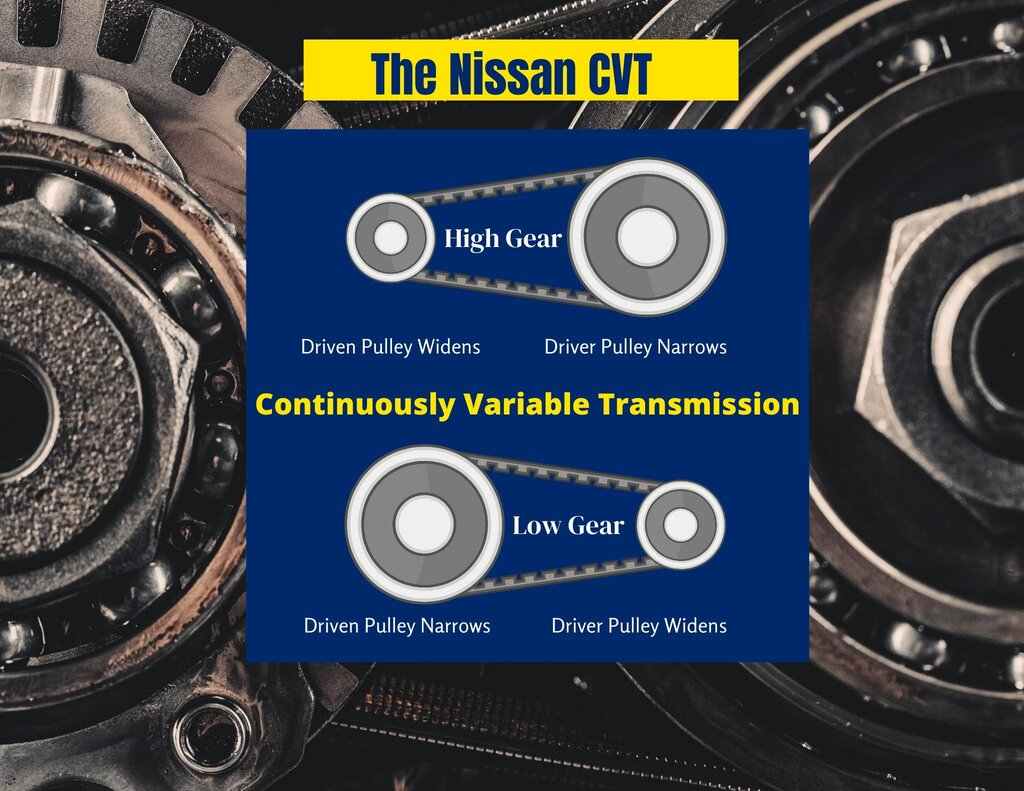
Nissan CVT transmissions are generally unreliable, with widespread reports of premature failure, shuddering, and complete breakdowns occurring between 60,000 and 120,000 miles—significantly below the expected lifespan of conventional transmissions.
What Are the Most Common Nissan CVT Transmission Problems?
Nissan CVT transmissions, particularly in models from 2007 to 2019, experience several recurring failure modes that mechanics and owners encounter repeatedly in the field. The most prevalent issues involve belt and pulley degradation, which causes the transmission to lose power delivery and create a characteristic shuddering sensation during acceleration.
Shuddering and Hesitation During Acceleration
Shuddering is the earliest warning sign that a Nissan CVT is beginning to fail. This symptom manifests as a vibration or jerking sensation when the vehicle accelerates from a stop or during moderate throttle application. The shuddering typically worsens over time and can eventually prevent the vehicle from moving safely.
- Root Cause: The CVT belt slips on the pulleys due to metal debris accumulation, worn belt edges, or inadequate transmission fluid pressure
- When It Occurs: Usually first noticed between 40,000 and 80,000 miles
- Progression: Starts intermittently, becomes constant, then leads to complete transmission failure if ignored
- Why Dealerships Miss This: They often blame engine problems or recommend a “transmission fluid flush,” which temporarily masks the symptom but does not address the underlying belt degradation
Complete Transmission Failure and No Movement
Complete transmission failure represents the most severe outcome of CVT deterioration. The vehicle may suddenly lose all forward or reverse motion, leaving the owner stranded. This failure can occur suddenly or develop gradually from earlier warning signs that were ignored.
- Belt Separation: The CVT belt physically breaks or separates from the pulleys, cutting off all power transfer to the wheels
- Pulley Failure: The metal pulleys wear excessively, creating an incorrect belt angle that prevents proper engagement
- Internal Debris Accumulation: Fragments from belt wear circulate through the transmission fluid, creating a grinding effect that locks up the transmission
- Hydraulic System Failure: The pressure system that controls pulley movement fails, leaving the transmission unable to shift ratios
Whining, Grinding, and Noise During Operation
Abnormal transmission noise is a diagnostic indicator that internal components are deteriorating. These sounds often precede complete failure by several weeks or months, providing an opportunity for early intervention.
- High-Pitched Whining: Indicates low transmission fluid pressure or a failing pump; often worse during cold starts
- Grinding or Metallic Crunching: Suggests belt wear particles circulating in the fluid; this is irreversible damage
- Clunking When Shifting into Gear: Points to worn pulley engagement or internal slack in the drivetrain
- Delayed Response After Shifting: A lag between selecting Drive or Reverse and actual vehicle movement indicates belt slippage
Transmission Fluid Degradation and Discoloration
CVT transmission fluid serves a dual purpose: it acts as both a lubricant and a hydraulic medium that controls the pulleys. When this fluid deteriorates, the transmission loses its ability to function properly.
- Normal Fluid: Bright red, transparent, with no visible particles
- Degraded Fluid: Dark brown or black, opaque, with metallic particles visible when held to light
- Burnt Smell: A sharp, acrid odor indicates the fluid has overheated and lost its protective properties
- Why This Matters: Degraded fluid cannot maintain proper pressure, causing the belt to slip and accelerating failure
Which Nissan Models Have the Worst CVT Transmission Reliability Records?
Not all Nissan CVTs are equally problematic, but certain model years and vehicle platforms show dramatically higher failure rates than others. Understanding which models are most affected helps owners make informed decisions about purchasing used vehicles or planning maintenance.
Nissan Altima (2007-2019)
The Altima represents the single most problematic CVT application in Nissan’s lineup, with documented failures occurring as early as 50,000 miles. The 2013-2019 model years are particularly notorious.
- 2013-2015 Altima: Class action lawsuits filed; widespread reports of failure between 60,000 and 100,000 miles
- 2016-2019 Altima: Nissan implemented an updated CVT (JF015E), but failures still occur regularly, though slightly less frequently
- Affected Engines: Both the 2.5L and 3.5L engines experience CVT problems at similar rates
- Dealership Response: Many dealerships acknowledge the problem and offer extended warranties or replacements, but out-of-warranty repairs cost $3,500–$5,500
Nissan Rogue (2008-2019)
The Rogue’s CVT exhibits similar failure patterns to the Altima, with a slightly lower failure rate but still significantly higher than industry standards. The 2014-2019 generation shows the most problems.
- 2014-2016 Rogue: Shuddering and hesitation reported frequently; some owners report failures at 70,000 miles
- 2017-2019 Rogue: Improved reliability compared to earlier years, but still more problematic than competitors
- Why the Rogue is Affected: The CVT is paired with a heavier vehicle platform than the Sentra, placing greater stress on the belt and pulleys
Nissan Sentra (2007-2019)
The Sentra’s CVT shows fewer catastrophic failures than the Altima or Rogue, likely because the vehicle’s lighter weight places less stress on the transmission. However, problems still occur regularly.
- 2013-2019 Sentra: Shuddering and hesitation reported, but complete failures less frequent than in heavier models
- 2007-2012 Sentra: Earlier generation with different CVT design; somewhat more reliable but still problematic
Nissan Juke (2011-2019)
The Juke’s compact size and lighter weight result in fewer CVT failures compared to the Altima or Rogue. However, owners still report transmission problems, particularly in the 2011-2014 model years.
Nissan Murano (2009-2019)
The Murano’s CVT failures are less common than in the Altima or Rogue, but the larger vehicle and higher torque output from the V6 engine place significant stress on the transmission. Failures tend to occur later in the vehicle’s life, typically after 100,000 miles.
Why Do Nissan CVT Transmissions Fail So Frequently?
Understanding the engineering and design decisions behind Nissan’s CVT failures requires examining both the transmission’s mechanical design and Nissan’s manufacturing choices. Multiple factors combine to create a transmission that is inherently less durable than conventional automatics or CVTs from other manufacturers.
Inadequate Belt and Pulley Design
The core component of any CVT is the belt and pulley system. Nissan’s design, particularly in earlier generations, used materials and dimensions that proved insufficient for the stresses placed on them during normal driving.
- Belt Material: Nissan’s CVT belts use a rubber-based compound with steel bands that wear faster than competitor designs from Toyota or Honda
- Pulley Geometry: The pulleys are designed to change diameter by moving axially along a tapered shaft. Nissan’s pulley design has less surface area contact with the belt, causing higher unit pressure and faster wear
- Belt Tension Control: The hydraulic system that maintains belt tension is prone to pressure loss, allowing the belt to slip and degrade
- Comparison to Competitors: Toyota’s CVTs (used in Corolla, Camry, and RAV4) use a chain-based design with metal-to-metal contact, which is more durable than Nissan’s belt design
Transmission Fluid Pressure and Cooling Issues
The hydraulic system that controls a CVT’s pulleys requires precise fluid pressure and temperature management. Nissan’s design has inherent weaknesses in both areas.
- Low Pressure Design: Nissan’s CVTs operate at lower hydraulic pressures than competitors, reducing the force holding the belt against the pulleys and increasing slippage
- Inadequate Cooling: The transmission cooler integrated into the radiator is undersized for the heat generated during normal driving, particularly in stop-and-go traffic or towing conditions
- Fluid Breakdown: When transmission fluid overheats, it loses viscosity and cannot maintain proper pressure, accelerating belt wear
- No Transmission Cooler Option: Unlike many competitors, Nissan does not offer an aftermarket transmission cooler option for high-stress driving conditions
Inadequate Maintenance Intervals and Fluid Specifications
Nissan’s recommended CVT maintenance intervals are longer than what the transmission actually requires to remain healthy. Additionally, the specific fluid formulation matters significantly.
- Official Recommendation: Nissan recommends CVT fluid changes at 30,000-mile intervals for “severe driving” but does not clearly define what constitutes severe driving
- Reality: CVT transmissions operated in stop-and-go traffic, towing, or hot climates benefit from fluid changes every 20,000-30,000 miles
- Fluid Specification: Nissan specifies CVT Fluid NS-2 or NS-3, which are proprietary formulations. Using incorrect fluid or mixing fluid brands accelerates degradation
- Dealership Negligence: Many dealerships fail to recommend fluid changes until the transmission is already failing, at which point fluid changes do not prevent replacement
Manufacturing Defects and Quality Control Issues
Quality control problems in Nissan’s transmission manufacturing have been documented in internal communications and class action lawsuits. These defects compound the design weaknesses.
- Belt Manufacturing Variance: Some CVT belts contain internal defects (micro-tears, improper rubber curing) that cause premature failure
- Pulley Surface Finish: Inconsistent machining of the pulley tapered surfaces results in uneven belt contact and accelerated wear
- Seal and Gasket Quality: Transmission seals fail prematurely, allowing fluid leaks that reduce hydraulic pressure and cause belt slippage
- Assembly Errors: Improper torque specifications on pulley fasteners have been documented, causing pulleys to shift during operation
How Much Does a Nissan CVT Transmission Replacement Cost?
Understanding the financial impact of CVT failure is critical for owners deciding whether to repair or replace their vehicle. Costs vary significantly based on whether the vehicle is under warranty, the age and mileage, and whether a used or new transmission is installed.
New OEM Transmission Replacement
- Parts Cost: $2,500–$4,000 (depending on transmission model and Nissan dealership pricing)
- Labor Cost: $1,200–$2,000 (typically 8–12 hours of labor at $150–$200 per hour)
- Total Cost: $3,700–$6,000 at a Nissan dealership
- Additional Repairs: Fluid cooler replacement, torque converter inspection, and engine flush may add $500–$1,500
Used or Remanufactured Transmission Replacement
- Used Transmission: $800–$1,500 (sourced from salvage yards; no warranty or limited warranty)
- Remanufactured Transmission: $1,500–$2,500 (rebuilt by third-party shops; typically includes 12–24 month warranty)
- Labor Cost: $1,200–$2,000 (same as OEM replacement)
- Total Cost: $2,000–$4,500 (significantly less than new OEM, but with higher risk)
- Risk Factor: Used and remanufactured transmissions may have hidden defects and could fail prematurely
Warranty Coverage and Extended Warranties
- Factory Warranty: Nissan covers transmission failures under the 3-year/36,000-mile powertrain warranty (no cost to owner)
- Extended Warranty: Nissan offers extended powertrain warranties up to 10 years/100,000 miles (cost varies by dealership, typically $1,500–$3,000)
- Class Action Settlements: Owners of affected vehicles (particularly 2013-2015 Altima) may qualify for extended warranty coverage or reimbursement through settled class actions
- Out-of-Warranty Repairs: Nissan has been known to negotiate partial reimbursement or warranty extensions for customers who can demonstrate a pattern of problems, but this is not guaranteed
Can You Extend the Life of a Nissan CVT Transmission?
While Nissan CVTs have inherent design limitations, specific maintenance practices and driving habits can extend transmission lifespan and delay failure. These strategies are particularly important for owners of high-risk models like the 2013-2019 Altima.
Aggressive Fluid Change Schedule
The single most effective way to extend CVT life is to change the transmission fluid more frequently than Nissan recommends. This removes metal particles and degraded fluid before they cause belt slippage.
- Recommended Interval: Every 20,000 miles for vehicles in hot climates, stop-and-go traffic, or with towing history
- Fluid Specification: Always use Nissan CVT Fluid NS-2 or NS-3 (never substitute with other brands or conventional ATF)
- Procedure: Drain fluid from the transmission pan, replace the filter, and refill with new fluid
- Cost: $150–$300 per service at independent shops; $250–$400 at Nissan dealerships
- Benefit: Can extend transmission life by 50,000–100,000 miles if started early
Transmission Cooler Installation
Installing an auxiliary transmission cooler is one of the most effective modifications for reducing CVT failure risk. This upgrade improves cooling capacity and maintains optimal fluid temperature during all driving conditions.
- Cooler Type: Plate-and-fin aluminum coolers are most effective; typically rated for 20,000–30,000 BTU heat dissipation
- Installation Location: Mounted in front of the radiator or in the lower bumper area; requires custom bracket fabrication
- Cost: $300–$600 for cooler; $400–$800 for professional installation
- Benefit: Reduces transmission temperature by 10–20 degrees Fahrenheit during highway driving and stop-and-go traffic
- Important Note: This is not an OEM option and may affect warranty coverage if installed by a dealer
Driving Habits and Stress Reduction
How you drive directly impacts CVT lifespan. Aggressive acceleration, frequent stop-and-go driving, and towing all accelerate belt wear and fluid degradation.
- Avoid Rapid Acceleration: Gradual throttle application reduces stress on the belt and pulleys
- Minimize Stop-and-Go Driving: Frequent acceleration from a stop generates high hydraulic pressure spikes that stress the belt
- Avoid Towing: Nissan CVTs are not designed for towing; if you must tow, keep loads under 1,000 pounds and install a transmission cooler
- Allow Warm-Up Time: Cold transmission fluid is thicker and creates higher pressure spikes; allow 2–3 minutes of gentle driving before normal operation
- Avoid Extreme Temperatures: Park in shade during summer and allow the engine to idle briefly before driving in cold weather
Regular Transmission Inspections
Catching early warning signs allows for intervention before complete failure occurs. Regular inspections by a knowledgeable technician can identify problems while they are still manageable.
- Fluid Analysis: Have transmission fluid analyzed for metal content and viscosity at 40,000-mile intervals
- Diagnostic Scanning: Use a professional scan tool to check for transmission error codes that may indicate early degradation
- Visual Inspection: Check transmission pan for metal particles during fluid changes
- Test Drive Evaluation: Have a technician perform a test drive to assess shuddering, hesitation, or noise
Nissan CVT Reliability Compared to Competitors
Comparing Nissan’s CVT reliability to other manufacturers reveals just how problematic Nissan’s design truly is. Most competitors offer significantly more durable CVT systems or have chosen alternative transmission technologies.
| Manufacturer | CVT Type | Typical Failure Rate | Average Failure Mileage |
|---|---|---|---|
| Nissan | Belt-based | 15–20% (2013–2019 models) | 70,000–120,000 miles |
| Toyota | Chain-based | 2–5% | 150,000+ miles |
| Honda | Belt-based (improved design) | 5–8% | 120,000+ miles |
| Subaru | Belt-based | 8–12% | 100,000+ miles |
| Hyundai/Kia | Belt-based | 10–15% | 90,000–130,000 miles |
Toyota’s Chain-Based CVT Advantage
Toyota’s decision to use a chain instead of a belt in their CVTs (Corolla, Camry, RAV4, Prius) has proven dramatically more durable. The chain-based design uses metal-to-metal contact, which can withstand higher pressures and temperatures than Nissan’s rubber belt.
- Durability: Toyota CVTs regularly exceed 150,000 miles with minimal issues
- Why Nissan Didn’t Use Chain Design: Chain-based CVTs are more expensive to manufacture and require different hydraulic systems; Nissan prioritized cost reduction over durability
Honda’s Improved Belt Design
Honda’s belt-based CVTs (used in Civic and Accord) incorporate design improvements that address many of Nissan’s weaknesses. These improvements include better pulley geometry, improved fluid pressure control, and more durable belt materials.
- Durability: Honda CVTs show failure rates of 5–8%, significantly lower than Nissan
- Design Differences: Honda uses a different belt compound, larger pulley surface areas, and more aggressive cooling systems
Should You Buy a Used Nissan with a CVT Transmission?
Purchasing a used Nissan equipped with a CVT requires careful evaluation and realistic expectations about potential transmission costs. The decision depends on the vehicle’s age, mileage, model, and price relative to the risk.
High-Risk Models to Avoid or Approach Cautiously
- 2013–2019 Nissan Altima: Avoid unless the vehicle has documented warranty coverage or is priced significantly below market value to account for transmission replacement risk
- 2014–2016 Nissan Rogue: High failure rate; only consider if extended warranty is included or price reflects transmission risk
- 2011–2014 Nissan Juke: Moderate risk; acceptable if priced appropriately and pre-purchase inspection shows no transmission symptoms
Lower-Risk Models with Better Track Records
- 2017–2019 Nissan Altima: Improved CVT design; still carries risk but lower than earlier years
- 2017–2019 Nissan Rogue: Better reliability than 2014–2016 generation; acceptable risk if properly inspected
- Nissan Murano (any year): Larger vehicle with lower stress on transmission; failure rates lower than Altima or Rogue
Pre-Purchase Inspection Checklist
Before purchasing any used Nissan with a CVT, perform these specific inspections to identify early warning signs of transmission problems.
- Cold Start Test: Start the engine when cold and listen for whining or grinding noises from the transmission
- Fluid Inspection: Check transmission fluid color (should be bright red, not dark brown); look for metal particles
- Acceleration Test: Accelerate gently from a stop and feel for shuddering or hesitation
- Highway Test: Drive at highway speeds and feel for smooth power delivery without surging or hesitation
- Reverse Test: Shift into Reverse and listen for clunking or delayed engagement
- Diagnostic Scan: Have a technician scan for transmission-related error codes
- Service History: Request all transmission service records; frequent fluid changes may indicate known problems
- Warranty Status: Verify whether the vehicle’s factory powertrain warranty is still active or if extended warranty is available
Pricing Considerations
A used Nissan with a CVT should be priced lower than comparable vehicles with conventional transmissions or more reliable CVTs to account for transmission risk. Use this pricing framework:
- If transmission is symptom-free and under 60,000 miles: Price should be 5–10% below market value
- If transmission shows early symptoms (shuddering, noise) or mileage exceeds 80,000: Price should be 15–25% below market value or include extended warranty
- If transmission has been replaced: Verify the replacement was done with an OEM part and confirm warranty coverage on the replacement
FAQ: Nissan CVT Transmission Reliability
How long should a Nissan CVT transmission last?
A properly maintained Nissan CVT should theoretically last 150,000–200,000 miles, similar to conventional automatics. However, in practice, many Nissan CVTs fail between 60,000 and 120,000 miles due to design and manufacturing defects. With aggressive maintenance (fluid changes every 20,000 miles) and favorable driving conditions, some owners achieve 130,000+ miles before failure.
Is it worth repairing a Nissan CVT transmission or should I replace the vehicle?
This decision depends on the vehicle’s overall condition and value. If the vehicle is otherwise in good condition with low mileage and a strong body, a transmission replacement may be worthwhile.
However, if the vehicle is older (over 10 years), has high mileage (over 100,000 miles), or has other mechanical problems, selling the vehicle and purchasing a replacement may be more economical. Calculate the transmission replacement cost ($3,500–$6,000) against the vehicle’s current market value; if replacement cost exceeds 30% of the vehicle’s value, replacement may not be justified.
Can a Nissan CVT transmission be repaired instead of replaced?
In rare cases, early-stage CVT problems can be temporarily addressed through transmission fluid changes, filter replacement, and cooler installation. However, once the belt has begun to slip or the pulleys have worn, repair is not possible—replacement is the only option. Some shops offer “transmission flush” services that temporarily mask symptoms but do not address underlying belt degradation.
What is the difference between Nissan’s CVT Fluid NS-2 and NS-3?
NS-3 is a newer formulation introduced around 2013 with improved thermal stability and anti-wear properties compared to NS-2. Vehicles equipped with NS-3 specification may have slightly better transmission longevity, but the improvement is marginal. Using the correct fluid specification for your vehicle is critical; mixing NS-2 and NS-3 or using non-Nissan CVT fluid can accelerate transmission degradation.
Will Nissan warranty a CVT transmission failure if it occurs after the factory warranty expires?
Standard factory warranty covers transmission failure for 3 years or 36,000 miles. Beyond that, Nissan does not cover CVT failures unless the vehicle was enrolled in an extended powertrain warranty at the time of purchase.
However, owners of affected vehicles (particularly 2013–2015 Altima) may qualify for coverage through class action settlements. Contact a Nissan dealership or search for applicable class actions using your vehicle’s VIN to determine eligibility.
Is the 2020+ Nissan Altima CVT more reliable than earlier generations?
The 2020+ Altima continues to use a CVT transmission, but Nissan has made incremental improvements to the design and manufacturing process. While failure rates appear to be lower than the problematic 2013–2019 generation, long-term reliability data is still limited.
Early reports suggest fewer shuddering complaints, but the transmission’s fundamental design limitations remain. Extended warranty coverage is recommended for newer Altimas.
Can I install a conventional automatic transmission in a Nissan with a failed CVT?
Technically possible but not practical. A conventional automatic transmission from a different vehicle would require extensive modifications to the engine’s torque converter interface, transmission mounts, driveshaft, and engine control computer programming.
The cost and complexity typically exceed $8,000–$12,000, making it more economical to replace the vehicle or install a used CVT. Additionally, warranty implications and potential reliability issues make this conversion risky for most owners.
Conclusion
Nissan CVT transmissions, particularly in 2013–2019 model years, have demonstrated significantly below-average reliability compared to industry standards and direct competitors. Design weaknesses in the belt and pulley system, inadequate hydraulic pressure management, and manufacturing quality issues combine to create a transmission prone to premature failure between 60,000 and 120,000 miles.
For current owners, aggressive maintenance—including fluid changes every 20,000 miles, transmission cooler installation, and careful driving habits—can extend transmission lifespan and delay costly replacement. For prospective buyers, purchasing a used Nissan with a CVT requires careful inspection and realistic pricing that accounts for transmission replacement risk. Toyota and Honda offer significantly more durable CVT alternatives if fuel efficiency is your priority, while conventional automatic transmissions in other brands provide more predictable long-term reliability.
If you own a Nissan with a CVT, monitor your transmission closely for early warning signs (shuddering, hesitation
Leave a Reply