
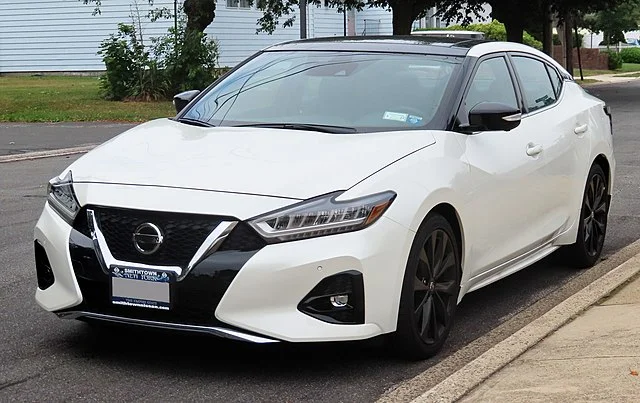
Yes, the Nissan Maxima is generally considered moderately reliable, but its reputation depends heavily on the model year. Earlier generations (2000-2003) and later post-2016 models tend to score better in reliability, while the 2004-2008 and 2009-2015 model years carry significant risk due to CVT transmission failures, catalytic converter issues, and oil consumption problems that can cost thousands to repair.
Owning a Maxima is a mixed bag, and anyone who tells you it is either bulletproof or a money pit is oversimplifying things. After years of diagnosing these vehicles on lifts and reading through thousands of owner reports, the picture becomes very clear: the Maxima has specific weak points that are predictable and, in many cases, preventable if you know what to watch for.
Are Nissan Maximas Reliable Compared to Other Sedans?
The Nissan Maxima lands in the middle of the pack when stacked against competitors like the Toyota Avalon, Honda Accord, and Chevrolet Impala. Repair frequency data from multiple reliability tracking sources consistently gives the Maxima a reliability rating between 3.5 and 4.0 out of 5.0, placing it slightly below Toyota and Honda equivalents but above many domestic sedans.
The real issue is not how often things break but what breaks. When a Maxima fails, it tends to fail catastrophically in one area: the continuously variable transmission (CVT). This single component drives the majority of expensive repair bills and is the primary reason the Maxima’s overall reliability reputation suffers.
Reliability by Generation
- 4th Generation (1995–1999): Very reliable with conventional automatic transmissions. Minimal known weaknesses beyond age-related wear.
- 5th Generation (2000–2003): Still strong. The 3.5L VQ35DE engine is proven, and these used traditional 4-speed automatics that hold up well.
- 6th Generation (2004–2008): This is where things start to decline. CVT introduction becomes a recurring headache for owners.
- 7th Generation (2009–2015): CVT issues peak during these years. Many owners report transmission replacements between 80,000 and 120,000 miles.
- 8th Generation (2016–2023): Improved CVT design reduces failure rates. Overall reliability improves, though some electronic gremlins appear.
What Are the Most Common Nissan Maxima Problems?
The most reported Nissan Maxima problems are CVT transmission failure, catalytic converter degradation, excessive oil consumption, power steering pump leaks, and premature suspension component wear. Of these, the CVT issue alone accounts for the largest share of repair costs and owner complaints across multiple model years.
1. CVT Transmission Failure
The Jatco-built CVT is the Achilles heel of the Maxima from 2004 onward. Symptoms include shuddering at low speeds, RPM flaring during acceleration, delayed engagement when shifting from Park to Drive, and eventual complete loss of forward motion.
A full CVT replacement at a dealership typically runs between $3,500 and $5,500, while independent shops can often do the job for $2,500 to $4,000 using remanufactured units.
2. Catalytic Converter Breakdown
Maximas from 2002 through 2009 are notorious for premature catalytic converter failure. The upstream converter can deteriorate and send debris into the downstream converter, effectively clogging the exhaust system.
You will notice sluggish acceleration, a rotten egg smell, and eventually a check engine light with codes P0420 or P0430. Replacing both converters can cost $1,200 to $2,800 depending on where you live and whether OEM or aftermarket parts are used.
3. Excessive Oil Consumption
The VQ35 engine in certain Maxima years burns oil at a rate well above normal. Owners report consuming one quart every 1,000 to 2,000 miles, which is excessive even for a high-mileage engine.
The root cause is typically worn piston rings or valve stem seals. If left unchecked, this leads to catalytic converter damage, fouled spark plugs, and eventually engine failure.
4. Suspension Noise and Wear
Front strut mounts, sway bar links, and control arm bushings tend to wear prematurely, especially in Maximas driven on rough roads. Clunking over bumps and vague steering feel are the early warning signs.
Replacing the front suspension components as a set usually costs between $800 and $1,400 at an independent shop.
Which Nissan Maxima Years Are the Most Reliable?
The most reliable Nissan Maxima years are 2000, 2001, 2002, 2016, 2017, 2019, 2020, and 2021. These model years consistently receive fewer owner complaints and have lower average repair costs compared to other years in the lineup.
The early 2000s models benefit from the proven VQ35DE engine paired with a conventional automatic transmission, which is a mechanically simpler and more durable setup. The 2016-and-later models benefit from Nissan’s incremental CVT improvements, better build quality, and updated electronic systems that are less prone to random failures.
Which Nissan Maxima Years Should You Avoid?
Avoid the 2004, 2005, 2006, 2009, 2010, 2011, 2012, and 2015 Nissan Maxima model years. These years have the highest volume of reported transmission failures, engine problems, and catalytic converter complaints across owner forums and consumer complaint databases.
Worst Years Breakdown
| Model Year | Primary Issue | Average Repair Cost |
|---|---|---|
| 2004 | CVT failure, catalytic converter | $3,000 – $5,000 |
| 2005 | CVT shudder and failure | $3,500 – $5,500 |
| 2009 | CVT, steering lock module | $4,000 – $6,000 |
| 2011 | CVT, excessive oil consumption | $3,500 – $6,000 |
| 2012 | CVT, timing chain stretch | $3,000 – $5,500 |
How Many Miles Can a Nissan Maxima Last?
A well-maintained Nissan Maxima can last between 200,000 and 250,000 miles. The VQ35 engine is mechanically robust when kept properly lubricated, and even the problematic CVT can reach high mileage if the transmission fluid is changed every 30,000 to 40,000 miles instead of following Nissan’s often-criticized “lifetime fluid” recommendation.
The biggest threat to Maxima longevity is not engine wear but transmission neglect. Owners who follow a strict maintenance schedule, particularly regarding CVT fluid changes and oil consumption monitoring, consistently report reaching the 200,000-mile mark without major drivetrain failures.
Maxima Longevity Tips
- Change CVT fluid every 30,000–40,000 miles using only Nissan NS-3 fluid. Do not use universal CVT fluids.
- Monitor oil levels weekly if your Maxima is known to consume oil. Running low accelerates engine and catalytic converter damage.
- Replace the transmission cooler with an aftermarket unit if you live in a hot climate or do a lot of city driving.
- Address check engine lights immediately. A P0700 or P1778 code is an early CVT warning that, if ignored, leads to total failure.
- Use OEM spark plugs and ignition coils to prevent misfires that can damage the catalytic converter over time.
Is the Nissan Maxima CVT Transmission Really That Bad?
Yes, the Nissan Maxima CVT is one of the weakest points of the vehicle, particularly in 2004–2015 models. The Jatco CVT used in these years is prone to belt slippage, torque converter shudder, and overheating, which leads to premature internal failure.
Nissan extended the CVT warranty to 10 years or 120,000 miles on many affected models, but most of those warranty extensions have now expired.
Post-2016 Maximas use an improved CVT with a wider ratio range and better heat management. While not completely immune to problems, the failure rate on these later units is significantly lower. If you are buying a used Maxima, the CVT condition should be your number one inspection priority.
How to Test a Used Maxima CVT Before Buying
- Cold start test: Start the engine when cold and shift into Drive immediately. Any delay longer than 2 seconds indicates internal wear.
- Acceleration shudder test: Accelerate gently from 20 to 40 mph. If you feel a vibration or shudder, the CVT belt is likely slipping.
- Highway merge test: Floor the accelerator on a highway on-ramp. Watch for RPM flare without corresponding acceleration, which signals belt slippage.
- Fluid check: Pull the CVT dipstick (if equipped) and inspect the fluid. It should be transparent red or greenish. Dark, brown, or burnt-smelling fluid is a red flag.
Is It Worth Buying a Used Nissan Maxima?
A used Nissan Maxima can be a smart buy if you choose the right year, verify the CVT condition, and budget for potential repairs. Models from 2016–2021 offer the best value proposition with improved reliability, modern features, and lower risk of catastrophic transmission failure.
Avoid 2004–2008 models entirely unless they have documented CVT replacement history with receipts.
The Maxima offers a powerful 300-horsepower V6, a comfortable interior, and a driving experience that feels more upscale than its price suggests. If you are mechanically inclined or have a trusted independent Nissan specialist, the Maxima can deliver years of enjoyable ownership at a fraction of the cost of a comparable Toyota Avalon or Lexus ES.
Frequently Asked Questions
Does the Nissan Maxima require premium gas?
Nissan recommends premium unleaded fuel (91 octane or higher) for the Maxima to achieve the rated horsepower and optimal engine performance. Using regular 87-octane fuel will not immediately damage the engine, but the ECU will retard timing, reducing power and potentially affecting long-term fuel economy.
Is the Nissan Maxima expensive to maintain?
The Nissan Maxima has average annual maintenance costs of approximately $500 to $700, which is slightly above the midsize sedan average but well below luxury brands. The exception is when the CVT needs replacement, which is a $3,000 to $5,500 expense that can skew the long-term ownership cost significantly.
Can I convert my Maxima CVT to a regular automatic transmission?
No, there is no practical or cost-effective way to convert a CVT-equipped Maxima to a conventional automatic transmission. The engine management system, mounting points, and drivetrain electronics are all designed around the CVT. Your best option is a rebuilt or remanufactured CVT replacement.
What is the best Nissan Maxima engine?
The VQ35DE 3.5-liter V6 used in 2002–2003 Maximas is widely regarded as the most reliable version of the engine paired with a proper automatic transmission. The updated VQ35HR in later models is also excellent but comes mated to the CVT, which offsets some of its mechanical advantages.
Are Nissan Maxima parts expensive?
Nissan Maxima parts are moderately priced and widely available through both OEM and aftermarket channels. Common maintenance items like brake pads, rotors, and filters are inexpensive. However, CVT-specific parts and the steering lock module found in 2009–2014 models can be costly due to limited aftermarket options.
The Bottom Line on Nissan Maxima Reliability
The Nissan Maxima is a capable, comfortable sedan with a reliability record that is heavily dependent on the model year and maintenance history. Choose a 2000–2003 or 2016–2021 model, keep the CVT fluid fresh, and stay on top of oil consumption, and you will have a dependable vehicle that lasts well beyond 200,000 miles.
Buy the wrong year without doing your homework, and you could be facing a transmission repair bill that exceeds the car’s value within months of ownership.
Leave a Reply