
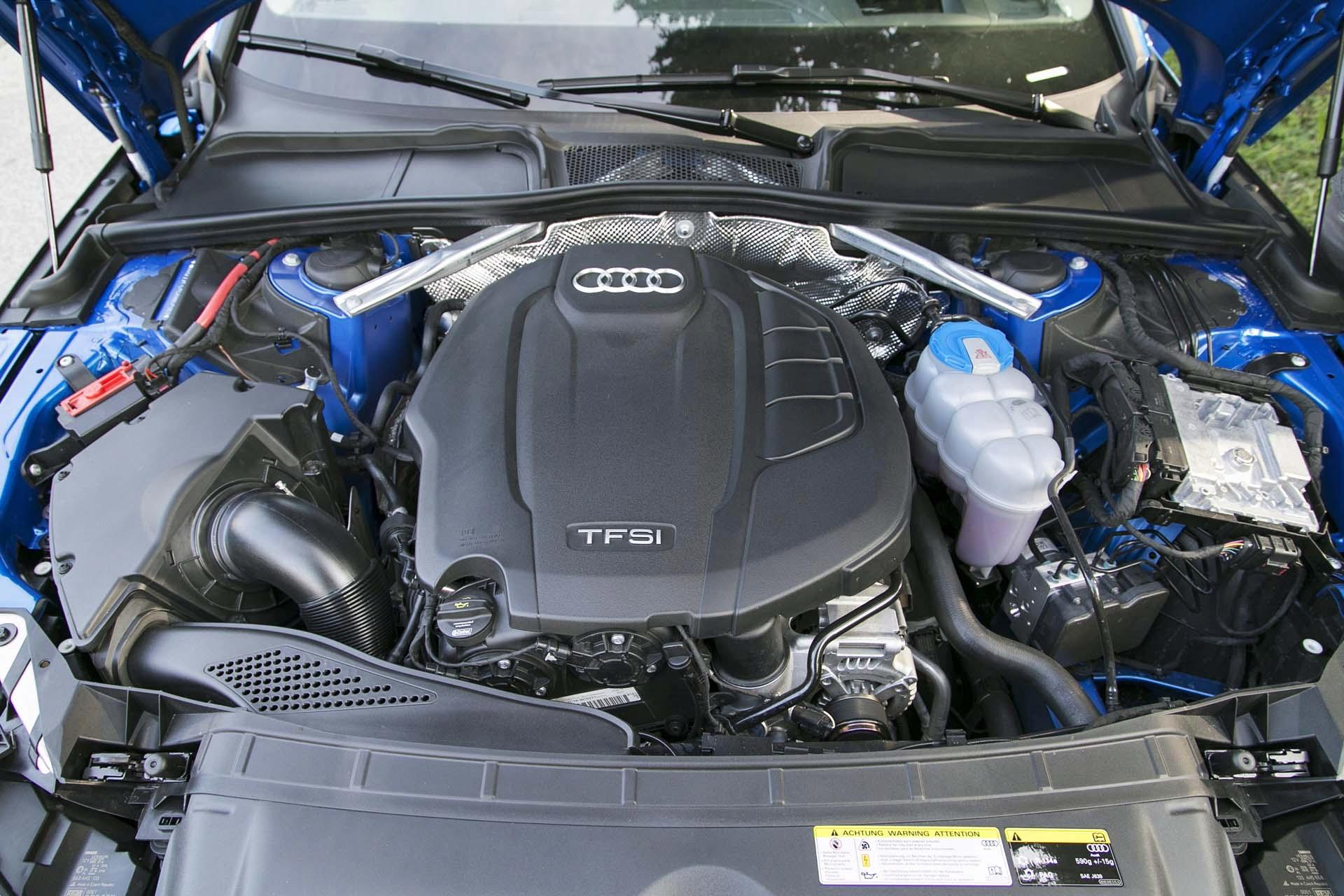
Audi 2.0 TFSI engines commonly suffer from excessive oil consumption, carbon buildup on intake valves, timing chain tensioner failures, and coolant leaks, often misdiagnosed by dealers as needing full engine replacements costing $10,000+.
What are the most common Audi 2.0 TFSI engine problems?
The Audi 2.0 TFSI engine powers models like the A4, A5, A6, Q5, and TT from 2008-2016.
It earns a reputation for reliability issues that hit owners hard after 80,000 miles.
Owners report oil burning at rates up to a quart every 1,000 miles, warped cylinder heads from overheating, and chain-driven timing systems that stretch prematurely.
Dealerships often overlook root causes, quoting $5,000-$15,000 engine swaps instead of targeted fixes.
These problems stem from direct injection design flaws, where fuel washes carbon off pistons but leaves valves filthy.
This is combined with PCV system weaknesses that pull oil into combustion chambers.
Independent shops see these daily, fixing them for under $2,000 with DIY-friendly parts.
Early intervention prevents cascading failures like bent valves or hydrolock.
Oil Consumption Issues
Excessive oil use is the top complaint, affecting 60-70% of high-mileage 2.0 TFSIs.
Piston rings stick due to carbon fouling, allowing oil to burn off invisibly.
Carbon Buildup
Intake valves coke up from direct injection lacking port fuel cleaning.
This causes misfires and power loss by 50,000 miles.
Timing Chain Failures
Tensioners fail under oil starvation, leading to chain slap, skipped timing, and potential engine destruction.
Other Frequent Failures
- Coolant flange leaks at the thermostat housing.
- PCV valve diaphragm ruptures, pressurizing the crankcase.
- High-pressure fuel pump (HPFP) failures causing no-starts.
How do I diagnose Audi 2.0 TFSI excessive oil consumption?
Check oil level weekly using the dipstick—top up if low between changes, but track exact usage over 1,000 miles for proof.
Perform a leak-down test to rule out external leaks; healthy cylinders hold 90-95% pressure.
Blue exhaust smoke on startup or acceleration confirms internal burning from bad rings or valve seals.
Dealers misuse VCDS scans for “normal” consumption up to 1 quart per 1,000 miles.
But independents measure ring end gaps directly via borescope.
Remove the oil filler cap at idle—if it blows off violently, suspect PCV failure contributing to consumption.
This diagnostic takes 30 minutes at home with basic tools.
Step-by-Step Oil Consumption Test
- Fill to max on dipstick with 5W-40 synthetic.
- Drive 1,000 miles normally, avoiding short trips.
- Recheck level; over 1 quart used flags a problem.
- Inspect tailpipe for blue smoke and undercarriage for drips.
Tools Needed for DIY Diagnosis
| Tool | Purpose | Cost |
|---|---|---|
| Dipstick (OEM) | Accurate level check | $20 |
| Borescope camera | Inspect rings/valves | $30 |
| VCDS or OBDeleven | Read misfire codes | $200 |
| Compression tester | Test cylinder seal | $50 |
If consumption exceeds 1 quart/1,000 miles, it’s not “normal”—Audi extended warranties for this on 2008-2011 models, but most are expired now.
Audi 2.0 TFSI oil consumption fix: DIY or shop?
Short-term, switch to thicker 5W-40 or 0W-40 oils like Mobil 1 to slow burning, but this masks the issue.
Permanent fixes involve piston ring replacement, costing $4,000-$6,000 at shops.
But DIYers rebuild top ends for $1,500 in parts.
Avoid dealer overhauls quoting $12,000; independents use upgraded rings from Integrated Engineering.
For 2012+ engines with improved rings, clean PCV first—many cases resolve there.
Test post-fix by repeating the 1,000-mile burn test.
Expect 100,000+ miles post-repair if oil changes are every 5,000 miles.
Model-Specific Fixes
2008-2011 CAEB/CCBA Engines (Worst Offenders)
These burn due to defective low-tension rings.
Full teardown required: pull head, hone cylinders, install IE Stage 2 rings.
- Drain coolant/oil, remove intake/exhaust manifolds.
- Drop oil pan, extract pistons with ring compressor.
- Measure ring end gaps (spec: 0.25-0.45mm); replace if excessive.
- Reassemble with new gaskets, torque to spec (main bearings 30 Nm + 90°).
2012+ Engines (CNTC/CJTA)
Improved rings, but PCV still fails.
Replace valve cover PCV diaphragm first ($50 part).
- Remove valve cover (10mm bolts, careful with chain).
- Swap diaphragm, test crankcase pressure.
- If persists, check valve stem seals via borescope.
Audi 2.0 TFSI carbon buildup symptoms and walnut blasting
Misfires, rough idle, and CEL with P0300 codes signal carbon on valves, reducing airflow by 30%.
Symptoms worsen on cold starts with fluttering idle.
Shops charge $800-$1,500 for cleaning; DIY walnut blasting costs $200 and takes 4 hours.
OEM direct injection skips valve cleaning, so carbon accumulates 1-2mm thick by 60,000 miles.
Dealers ignore until power drops 20hp.
VCDS logs show lean misfires on cylinders 2/3 first.
DIY Walnut Blasting Procedure
- Remove intake manifold (8x T30 Torx, label vacuum lines).
- Stuff rags in ports, use adapter for walnut shell media ($40 bag).
- Blast each valve 2-3 minutes with shop vac suction (20psi max).
- Reinstall, clear codes, test drive.
Repeat every 50,000 miles.
Alternatives like Seafoam fail here—walnut is 90% effective per owner forums.
Audi 2.0 TFSI timing chain tensioner failure causes and replacement
Tensioners collapse from oil pressure drops, causing rattle on startup and potential chain jump.
A4 B8 owners hear it first at 70,000 miles.
Dealers push $8,000 timing jobs; DIY with guides runs $1,200 in parts including chain, guides, tensioner.
Root cause: Plastic guides wear, metal shavings clog tensioner diaphragm.
Listen for chain noise cold—stethoscope confirms.
Measure chain stretch with VCDS (over 8° = replace).
Full Timing Chain Replacement Steps
- Support engine, remove radiator/fan shroud.
- Lock crank at TDC (special tool 3256), remove cam adjusters.
- Extract old chain/tensioner (depress plunger carefully).
- Install OEM or IE upgraded kit, time precisely (intake cam 40° BTDC).
- Prime oil system before startup.
2009-2013 models need front-end teardown; later ones are simpler via valve cover.
Torque cam sprockets to 80 Nm + 90°.
Audi 2.0 TFSI coolant leaks: Thermostat housing and flange fixes
Plastic coolant flanges crack at 100,000 miles, leaking green coolant onto turbo.
P0128 code and low temp gauge confirm.
Shops replace whole assembly for $600; DIY $150 with aluminum upgrade.
Overheating warps heads if ignored—check for white crust at housing.
Pressure test system (15psi holds 10min).
Q5 owners see this most from off-road vibes.
Thermostat Housing Replacement
- Drain coolant, remove air intake pipe.
- Unbolt housing (3x 10mm), pry gently.
- Install billet aluminum unit, refill with G13 coolant.
Audi 2.0 TFSI PCV system failure symptoms and repair
Ruptured PCV diaphragm pressurizes crankcase, blowing oil seals and consuming oil.
Whining turbo and oil in intake confirm.
$100 DIY fix prevents $2,000 rebuilds.
Remove valve cover, inspect diaphragm—if torn, replace with ECS Tuning kit.
Test vacuum post-fix.
Preventive maintenance for Audi 2.0 TFSI longevity
Oil changes every 5,000 miles with Euro-spec 504/507 oils reduce carbon/oil burn 50%.
Use catch cans to trap vapors.
Monitor VCDS for chain stretch quarterly.
- Walnut blast at 50k/100k miles.
- Replace tensioner proactively at 80k.
- Upgrade to all-aluminum coolant parts.
FAQ
Is the Audi 2.0 TFSI a bad engine?
No, with proper maintenance it lasts 200,000+ miles, but neglect common issues and it grenades at 100k.
Why do dealerships overquote 2.0 TFSI repairs?
They follow Audi TSBs mandating full assemblies over piecemeal fixes to upsell warranties.
Can I drive with Audi 2.0 TFSI oil consumption?
Yes, top up frequently, but fix before low oil destroys bearings.
What’s the best oil for 2.0 TFSI oil burners?
Mobil 1 0W-40 or Liqui Moly 5W-40; change more often.
How much does a full 2.0 TFSI engine rebuild cost?
DIY: $2,500-$4,000; shop: $6,000-$10,000.
Conclusion
The Audi 2.0 TFSI delivers thrilling performance when you address its known weaknesses head-on—oil consumption, carbon, timing chains—with DIY diagnostics and targeted repairs.
Skip dealer rip-offs, invest in VCDS and quality parts, and your A4 or Q5 will outlast expectations.
Regular maintenance turns a problematic powerplant into a 250,000-mile workhorse.
Leave a Reply