
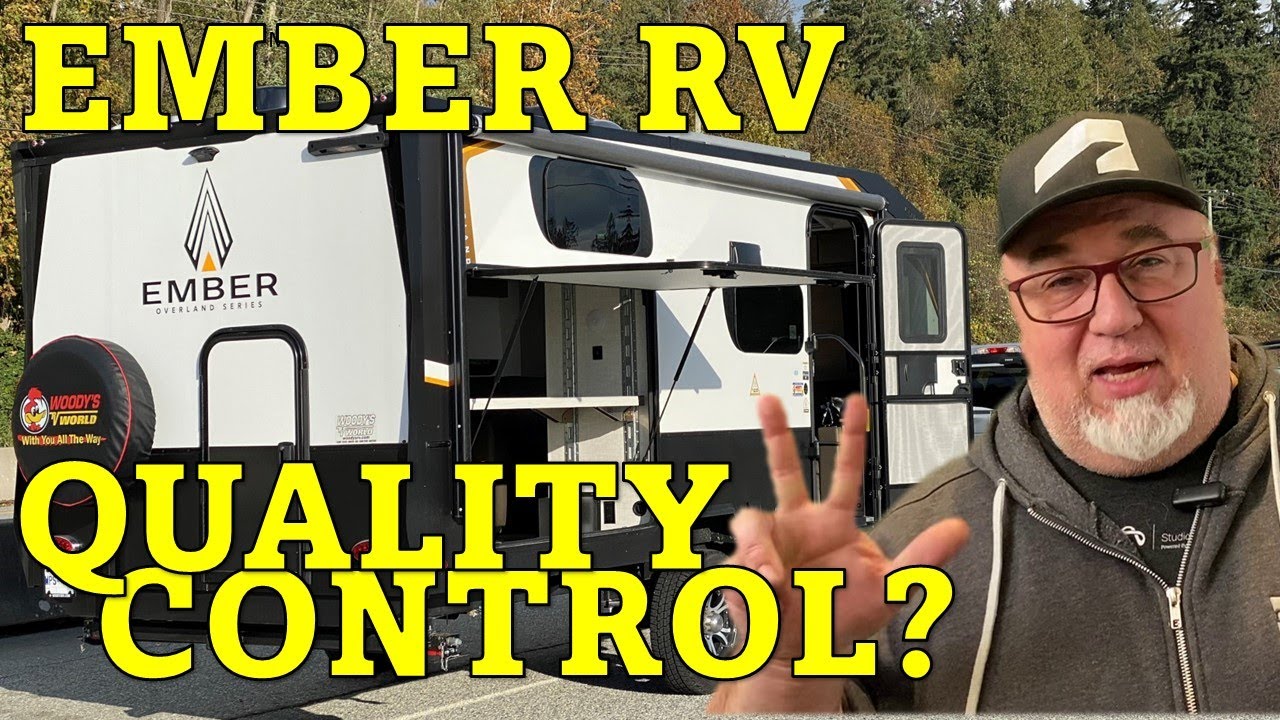
The most common Ember RV problems include Curt independent suspension misalignment leading to rapid tire wear, Victron solar integration glitches such as incorrect SmartShunt programming, loose PEX plumbing connections behind the Nautilus water panel, and Schwintek slide-out binding. While Ember’s use of wood-free Azdel walls and TransCore composite floors prevents rot, these component-level issues require proactive maintenance and specific DIY troubleshooting.
What Are the Most Common Ember RV Problems Reported by Owners?
The most common problems reported by Ember RV owners are Curt trailing-arm suspension misalignment, loose plumbing fittings behind the Nautilus control panel, Victron solar system programming errors, and Schwintek slide-out motor desynchronization.
Ember RV entered the market with a focus on rugged, off-grid adventure travel trailers. While their use of high-end composite materials like Azdel and TransCore floorboards solves the industry-wide issue of wood rot, they are still subject to component failures. Many of these issues stem from third-party components or assembly-line oversight during rapid production phases.
Because these trailers are marketed for off-road and overland travel, they are subjected to harsher vibrations than standard travel trailers. This extra vibration accelerates mechanical loosening and electrical connection failures. Understanding these common failure points allows owners to catch problems before they lead to expensive out-of-warranty repairs.
1. Curt Independent Suspension Alignment and Component Wear
The Curt Adventure Series independent suspension is a major selling point for the Ember Overland series, but it requires regular maintenance. Owners frequently report rapid, uneven tire wear on the inside edges of the tires, which indicates severe negative camber or toe-out. This is often caused by the suspension settling after the first few thousand miles or by loose alignment bolts from the factory.
2. Victron and Go Power Solar System Configuration Glitches
Ember RVs feature sophisticated solar packages, often utilizing Victron SmartShunts, MPPT controllers, and Go Power inverters. However, dealerships often fail to program the Victron SmartShunt to match the exact amp-hour capacity of the installed lithium battery bank. This leads to inaccurate state-of-charge (SoC) readings, causing owners to believe their batteries are fully charged when they are actually critically low.
3. Plumbing Leaks at the Nautilus Panel and PEX Connections
The Nautilus water management system is highly convenient, but the space behind the physical panel is crowded with PEX tubing and plastic elbow joints. Road vibrations from overland trails can loosen the hand-tightened plastic swivel nuts connecting the PEX lines to the back of the Nautilus valves. This results in slow, hidden water leaks that pool underneath the floor or behind the utility bay cabinets.
4. Schwintek Slide-Out Binding and Motor Desynchronization
Models equipped with slide-outs utilize the Lippert Schwintek dual-motor system, which relies on absolute synchronization between the left and right motors. If the trailer is not perfectly leveled before extending the slide, or if the button is released before the motors complete their cycle, the slide will bind. This causes the motors to work against each other, leading to stripped gear tracks or blown motor harnesses.
5. Cabinetry, Trim, and General Fit-and-Finish Issues
Despite the premium pricing of Ember RVs, some owners report loose cabinet hinges, misaligned baggage door latches, and peeling trim. The heavy-duty gas struts installed on overhead cabinet doors are often anchored into lightweight materials without sufficient backing plates. Over time, the force of the struts can pull the mounting screws completely out of the cabinet frames.
How to Diagnose and Fix Ember RV Suspension and Alignment Issues
To diagnose Ember RV suspension issues, inspect the inside tread of your tires for feathering, check the torque on the trailing arm pivot bolts, and measure the distance from the wheel hub to the frame on both sides.
The Curt independent suspension utilizes trailing arms, coil springs, and heavy-duty shock absorbers to cushion the trailer over rough terrain. Unlike traditional leaf-spring axles, this system allows each wheel to move independently, but it also introduces multiple pivot points that can wear out or slip out of alignment. If your trailer pulls to one side or exhibits uneven tire wear, immediate intervention is required to avoid a high-speed blowout.
Dealerships often lack the specialized equipment to align independent trailer suspensions and may tell you that uneven tire wear is “normal” for off-road trailers. This is incorrect. The Curt suspension is fully adjustable for both camber and toe using eccentric cam bolts located at the trailing arm pivot points.
Step 1: Inspect Tire Wear Patterns
Run your hand across the tread of both tires; if you feel sharp edges pointing inward, the tires are toeing out. Smooth wear on the inside edge of the tire indicates excessive negative camber, which is usually caused by overloaded trailers or worn-out coil springs. If you detect these patterns, the suspension must be aligned before installing replacement tires.
Step 2: Torque the Suspension Fasteners
Using a heavy-duty torque wrench, check the tightness of the trailing arm pivot bolts, shock absorber mounting bolts, and wheel lug nuts. The pivot bolts should be torqued to the manufacturer’s specification (typically 150 ft-lbs, but check your specific Curt manual). Loose pivot bolts allow the trailing arm to shift dynamically while towing, destroying your alignment.
Step 3: Adjust Camber and Toe via Eccentric Bolts
If you have mechanical experience, you can adjust the alignment yourself using the eccentric washers on the pivot bolts. Loosen the retaining nut slightly, then rotate the eccentric bolt head to push the trailing arm inward or outward to correct the toe and camber. If you prefer a professional service, bypass standard RV dealerships and take the trailer to a heavy-duty truck and alignment shop.
| Symptom | Likely Root Cause | Corrective Action |
|---|---|---|
| Inside Edge Tire Wear | Excessive Negative Camber | Adjust eccentric cam bolts; check for overloaded cargo weight. |
| Feathered Tread Wear | Incorrect Toe-Out or Toe-In | Align trailing arms using a straight-edge reference to the frame. |
| Trailer Bouncing Excessively | Blown Shock Absorber | Inspect shocks for oil leakage; replace worn shocks with heavy-duty units. |
| Metallic Clunking Noise | Loose Pivot Bolts or Worn Bushings | Torque pivot bolts to 150 ft-lbs; replace damaged polyurethane bushings. |
Troubleshooting Ember RV Victron Solar and Electrical Faults
Troubleshoot Ember RV solar issues by connecting to the VictronConnect app via Bluetooth, verifying that the battery chemistry parameters match your battery type, and inspecting the high-amp fuses near the battery box.
The electrical systems in Ember RVs are highly advanced, but their complexity means there are more potential points of failure. A common complaint is that the battery bank fails to charge from the solar panels or the tow vehicle while driving. Often, this is not a hardware failure, but rather a configuration error or a tripped circuit breaker that is hidden from plain view.
Dealership technicians are often poorly trained on advanced solar systems and may suggest replacing expensive components like the inverter or solar controller when a simple settings reset or fuse replacement is all that is required. Taking a systematic approach to diagnostic steps will save you time and money.
Step 1: Verify SmartShunt Settings in the App
Download the VictronConnect app on your smartphone and connect to the SmartShunt via Bluetooth. Navigate to the settings menu and verify that the “Battery Capacity” matches your actual battery bank capacity (e.g., 200Ah for dual 100Ah lithium batteries). If this value is incorrect, the shunt will calculate your remaining battery percentage based on false parameters, leading to unexpected power shutdowns.
Step 2: Check the Solar Disconnect Switch and Fuses
If your solar controller shows zero watts of input on a sunny day, locate the solar disconnect switch (usually located near the battery compartment or inside the front pass-through storage). Ensure the switch is turned to the “ON” position. Next, inspect the inline fuse on the positive wire leading from the solar panels to the charge controller; a blown 30-amp fuse is a common cause of charging failures.
Step 3: Test the DC-to-DC Charger (If Equipped)
Many Ember models utilize a DC-to-DC charger to pull power from the tow vehicle’s alternator. If your batteries are not charging while driving, use a digital multimeter to test the voltage at the 7-pin connector. If the truck is sending 12-volt power but the charger is inactive, check the ignition-trigger wire connection on the charger itself, which can shake loose during off-road travel.
How to Fix Plumbing Leaks Behind the Nautilus Water Panel
To fix plumbing leaks behind the Nautilus panel, remove the access panel inside the pass-through bay, locate the leaking PEX connection, and tighten the plastic swivel nuts or recrimp the copper rings using a PEX crimping tool.
The Nautilus system consolidates your city water hookups, tank flushes, and winterization valves into one convenient location. However, behind this panel lies a complex network of PEX tubing, flexible vinyl hoses, and plastic fittings. Because the water pump creates pulsating pressure waves, these connections are subject to constant stress, which is amplified by rough road vibrations.
Many owners discover leaks only after noticing their fresh water pump cycling on and off when no faucets are running. Catching these leaks early is critical to preventing mold growth and structural damage to internal cabinetry, even though Ember’s composite floor panels cannot rot.
Step 1: Access the Rear of the Nautilus Panel
Turn off the water pump and disconnect any pressurized city water lines. Locate the carpeted or plastic access panel inside the front pass-through storage bay that sits directly behind the Nautilus system. Remove the mounting screws to expose the plumbing network behind the utility panel.
Step 2: Pressurize the System and Locate the Leak
Turn the water pump back on to pressurize the system. Use a bright flashlight to inspect every joint, elbow, and valve connection, looking for slow dripping water or accumulation around the base of the PEX fittings. If no leak is immediately visible, dry the joints with a paper towel to see if moisture reappears.
Step 3: Tighten and Re-secure the Connections
If the leak is originating from a plastic threaded swivel nut, tighten it by hand first, then turn it an additional quarter-turn with channel lock pliers if necessary. Do not overtighten, as this can crack the plastic housing. If the leak is coming from a copper crimp ring on a PEX joint, use a PEX crimping tool to compress the ring, or cut the damaged section away and install a high-quality brass push-to-connect fitting.
Are Ember RVs Good Quality Compared to Competitors?
Yes, Ember RVs offer excellent build quality due to their wood-free construction, Azdel composite walls, and heavy-duty chassis, outperforming many competitors that rely on traditional wood framing and luan panels.
When comparing Ember RV to competitors like the Winnebago Micro Minnie FLX or the Rockwood Geo Pro, Ember stands out for its structural integrity. By eliminating wood from the side walls and floor, they have successfully mitigated the risk of water damage, which is the leading cause of death for travel trailers. However, their premium price point means buyers should expect high-quality components throughout, which is where some minor QC issues fall short.
Ember’s frame is also superior to many industry-standard frames. It features a custom-engineered chassis with a hot-dipped galvanized option, preventing rust and structural degradation when exposed to road salt or beach environments. This makes them highly desirable for long-term ownership, provided you are willing to handle minor component troubleshooting.
| Feature | Ember RV Overland | Winnebago Micro Minnie FLX | Rockwood Geo Pro |
|---|---|---|---|
| Wall Construction | Azdel Composite (No Wood) | Azdel with Wood Backing | Azdel with Wood Backing |
| Floor Construction | TransCore Composite (Wood-Free) | Plywood / OSB Sandwich | Plywood / OSB Sandwich |
| Suspension Type | Curt Independent Trailing Arm | Standard Torsion Axle | Dexter Torflex Axle |
| Off-Grid Solar Package | Victron Components (Premium) | Lithionics / Go Power (High-End) | Standard GP Controller (Basic) |
Frequently Asked Questions About Ember RV Problems
Does the Ember RV warranty cover off-road damage to the suspension?
Ember’s warranty covers manufacturing defects in materials and workmanship, including the Curt suspension components, under normal off-road use as advertised. However, damage caused by collisions, overloading beyond the GVWR, or extreme abuse (such as jumping the trailer) is excluded from warranty coverage. Always document your trailer’s cargo weight to prevent claims from being denied due to overloading.
How do I manually override the Schwintek slide-out on an Ember RV?
To manually override the slide-out, locate the Lippert dual-motor controller, which is typically hidden in the bottom of a cabinet or pass-through storage bay. Press the small “mode” button six times rapidly, then press and hold it a seventh time until the red and green LEDs flash rapidly. This puts the controller in manual override mode, allowing you to use the standard wall switch to retract the slide without safety limits.
Why does my Ember RV water pump run continuously when the taps are closed?
If your water pump runs continuously, it indicates either a leak in the plumbing system, an empty fresh water tank, or an incorrectly positioned valve on the Nautilus panel. Check that the Nautilus valves are set to the “Dry Camping” position rather than “City Water” or “Sanitize.” If the valves are correct, inspect the system for slow leaks at the PEX connections or a loose water pump strainer cap.
Can I perform a wheel alignment on the Curt suspension myself?
Yes, you can perform a basic alignment using a long straight-edge tool aligned against the trailer frame and tires to measure toe-in and toe-out. However, because of the precision required to prevent premature tire wear, it is highly recommended to have a professional heavy-truck alignment shop perform the adjustment using computerized laser alignment equipment.
How do I stop my Ember RV cabinet doors from pulling out of their hinges?
To fix loose cabinet hinges, remove the screws and fill the stripped holes with wood glue and wooden toothpicks. Once dry, cut the toothpicks flush and reinstall the screws. For a permanent fix on overhead cabinets with heavy gas struts, replace the standard mounting screws with small machine bolts and backing washers, securing them through the cabinet frame.
Conclusion
Ember RV has positioned itself as an industry leader in wood-free, rugged travel trailer design. While their advanced composite materials eliminate traditional rot concerns, they are still vulnerable to typical RV component failures, particularly regarding suspension alignment, solar system programming, and plumbing connections.
By taking a proactive approach to maintenance, checking fastener torque regularly, and mastering the DIY diagnostics outlined in this guide, owners can enjoy the full off-grid capabilities of their Ember RV without relying on slow and expensive dealership service departments.
Leave a Reply