
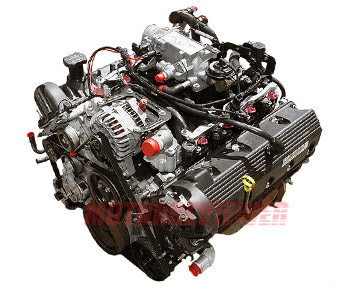
The Ford 4.6L V8 most often fails due to spark plug ejection from the cylinder heads, cam phaser rattle on 3-valve versions, and timing chain stretch that leads to misfires and power loss.
Ford 4.6 V8 spark plug ejection problems
Spark plugs eject from the cylinder heads because the factory threads in the aluminum heads are too shallow on 1996-2004 2-valve engines.
This allows combustion pressure to push the plug out, often taking the threads with it.
Why the threads fail
Early heads used only four to five threads to hold the plug.
Heat cycles and high cylinder pressure from towing or performance driving loosen the seal.
Once the plug moves, exhaust gases erode the remaining threads.
Step-by-step repair options
- Inspection: Remove the coil and inspect for carbon tracking around the plug hole.
- Diagnostics: Use a borescope to check thread condition without pulling the head.
- Thread Repair: Install a time-sert or helicoil insert rated for 14mm plugs if threads are stripped.
- Final Install: Replace all eight plugs with Motorcraft plugs torqued to 11 lb-ft and apply anti-seize on the new inserts only.
Ford 4.6 3-valve cam phaser rattle and failure
Cam phasers on 2005-2010 3-valve engines lose oil pressure and produce a loud rattle on cold start.
The variable cam timing solenoids stick when varnish builds up from infrequent oil changes.
Diagnosing the rattle
Listen for a diesel-like knock for three to five seconds after startup.
Use a scan tool to check for P0011, P0012, P0021 or P0022 codes.
Compare oil pressure at the oil filter housing; anything below 20 psi at idle when hot points to phaser or tensioner wear.
Fixing cam phasers without full engine teardown
- ✓ Replace the VCT solenoids first and perform an oil change with 5W-20 synthetic.
- ✓ If rattle returns within 500 miles, replace both cam phasers and the timing chain tensioners.
- ✓ Verify cam timing with a scope after reassembly; phaser bolts must be torqued to 30 lb-ft plus 90 degrees.
Timing chain stretch and tensioner failure on Ford 4.6 V8
Timing chains stretch after 120,000 miles when the plastic tensioner guides crack.
This causes retarded cam timing, misfires under load, and eventual valve-to-piston contact on 3-valve engines.
Model-specific differences
2-valve engines in Crown Victoria and early F-150s tolerate more stretch before codes appear.
3-valve Mustang and Expedition engines set codes sooner because the phasers amplify the timing error.
Replacement procedure
- Remove the water pump and front cover to access the chains.
- Replace both primary and secondary chains plus all four tensioners and guides in one job.
- Align the colored links on the new chains with the cam and crank sprocket marks.
- Prime the oil system with a pre-oiler before first start to protect the new tensioners.
Ignition coil and spark plug wire failures
Coils fail from heat soak and cracked boots, sending voltage to ground instead of the plug.
This creates random misfires that many shops misdiagnose as fuel injectors.
Testing coils on the vehicle
Swap coils between cylinders and see if the misfire follows the coil.
Measure primary resistance between pins 1 and 2; anything outside 0.3-1.0 ohms means the coil is bad.
Intake manifold and thermostat housing leaks
The plastic intake manifold warps at the thermostat housing on 1999-2004 models.
Coolant seeps into the valley and can reach the coils, causing additional misfires.
Repair steps
- Pressure test the cooling system to confirm external leaks.
- Replace the entire intake manifold with an aluminum aftermarket unit if the vehicle is used for towing.
- Install a new thermostat and housing gasket at the same time; reuse of the old plastic housing often leads to repeat leaks.
Oil consumption and PCV system issues
Valve cover gaskets harden and allow oil into the intake through the PCV hose.
Excessive oil burning on 3-valve engines also comes from worn piston rings after 150,000 miles.
Reducing consumption
Replace the PCV valve and both valve cover gaskets every 60,000 miles.
Use a catch can between the PCV hose and intake to measure actual consumption rate before assuming ring wear.
Frequently Asked Questions
How many miles can a Ford 4.6 V8 last with proper maintenance?
Well-maintained examples regularly exceed 250,000 miles when timing chains and phasers are addressed before they shed debris into the oil.
Is it worth fixing cam phasers on a high-mileage 4.6?
Yes if the rest of the engine shows good compression and the vehicle is otherwise rust-free; the repair cost is usually less than half the price of a replacement engine.
Can I drive with a spark plug that has ejected once?
No. The missing plug allows exhaust gases to erode the head and can send debris into the cylinder, leading to scored walls and a required engine replacement.
Why do independent shops often quote a full engine replacement for these issues?
Many shops lack the tooling or experience to perform time-sert repairs or phaser replacement and default to the easier engine-swap quote.
Conclusion
Addressing the known weak points of the 4.6L V8 in order of mileage prevents cascading failures.
Owners who change oil every 5,000 miles, replace chains and phasers proactively, and repair spark plug threads at the first sign of loosening routinely reach high mileage without major engine work.
Leave a Reply