
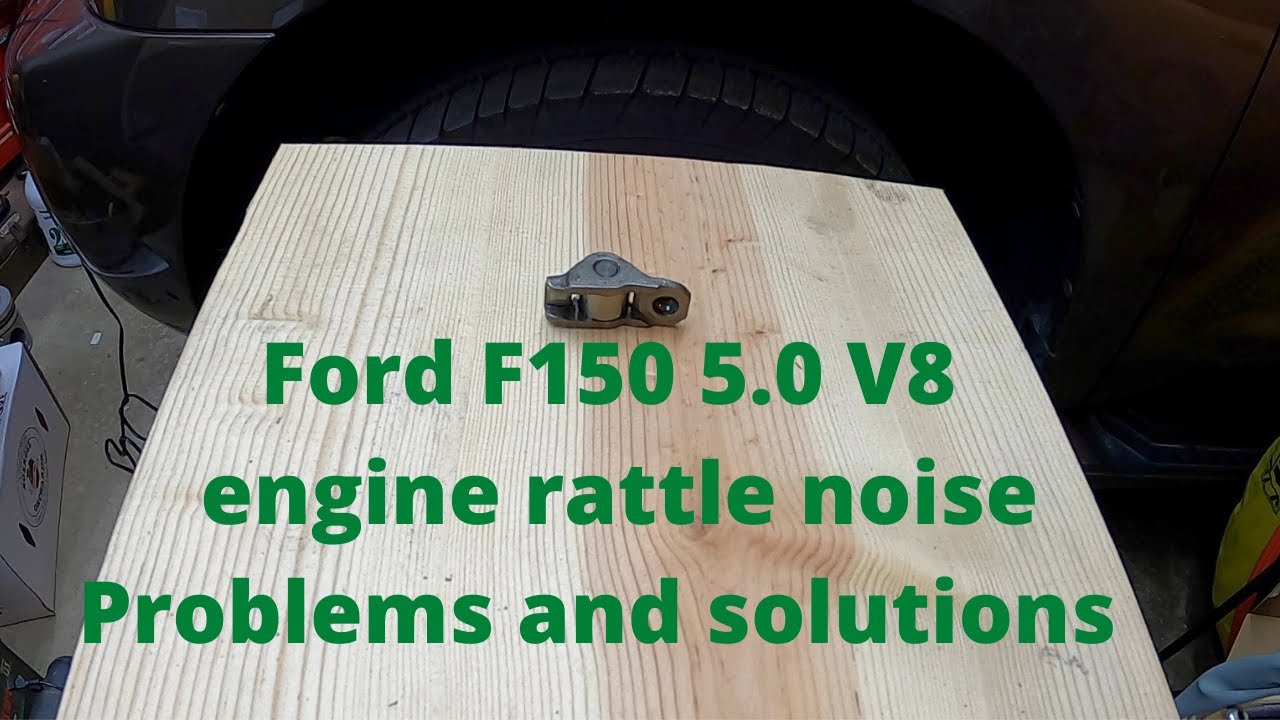
A rattling noise under acceleration in a Ford F-150 is most commonly caused by a failing Integrated Wheel End (IWE) 4WD vacuum system, a loose turbocharger wastegate linkage on EcoBoost engines, a stretched timing chain/worn cam phasers, or a loose exhaust heat shield. To isolate the issue, check if the noise disappears when shifting into 4WD (indicating an IWE vacuum leak) or inspect the turbo wastegates and exhaust piping for physical play.
What Causes the Ford F-150 Rattling Noise Under Acceleration?
The primary causes of an F-150 acceleration rattle are vacuum-loss in the 4WD Integrated Wheel Ends (IWE), worn turbocharger wastegate linkages, stretched timing chains, or loose exhaust heat shields. These components are highly susceptible to wear, thermal cycling, and pressure changes during acceleration.
F-150 owners frequently report this metallic, buzzing, or grinding noise occurring between 1,500 and 3,000 RPM. Because the truck has several systems that experience high stress during acceleration, isolating the sound requires a systematic diagnostic approach.
Dealers often default to recommending expensive component replacements, such as entire turbo assemblies or complete 4WD hub rebuilds. However, many of these issues can be accurately diagnosed at home and repaired with inexpensive OEM update kits or simple hardware modifications.
1. Integrated Wheel End (IWE) Vacuum System Failure
The Ford F-150 uses a vacuum-operated hub engagement system called Integrated Wheel Ends to engage and disengage four-wheel drive. When the engine is running in two-wheel drive (2H), engine vacuum is applied to the hubs to pull them outward, keeping them disengaged from the front axle shafts.
When you accelerate, engine vacuum naturally drops. If there is a minor tear in a vacuum line, a failing check valve, or a leaking solenoid, the system cannot maintain enough vacuum to hold the hubs out.
The hub gears partially engage with the spinning axle, creating a loud, metallic rattling or grinding sound that sounds like a can of spray paint being shaken.
2. EcoBoost Turbocharger Wastegate Linkage Wear
On EcoBoost engines (both the 2.7L and 3.5L variants), the wastegate actuator arm regulates boost pressure by opening and closing the wastegate valve. Over time, the pin and linkage connection points wear down due to extreme exhaust heat and constant movement.
This wear creates physical play in the linkage. When you accelerate lightly or lift off the throttle, exhaust pulses cause the loose butterfly valve inside the turbo housing to vibrate rapidly against its seat, producing a metallic buzzing or rattling sound.
3. Cam Phaser and Timing Chain Stretch
The Ford modular engine family, particularly the EcoBoost and 5.0L V8, utilizes variable camshaft timing (VCT) phasers. Internal oil pressure control issues can cause these phasers to lose lock, resulting in a severe rattle during cold starts and under light acceleration loads.
Additionally, extended oil change intervals can cause the timing chain to stretch. When the chain stretches beyond the tensioner’s ability to compensate, it slaps against the plastic chain guides, creating a distinct metallic rattling noise from the front of the engine under acceleration.
4. Loose Exhaust Heat Shields
Exhaust systems are wrapped in thin aluminum heat shields to protect the vehicle’s underbody from extreme heat. These shields are secured with steel welds or bands that frequently rust, corrode, and snap over time.
Once a weld or clamp fails, the heat shield sits loosely on the exhaust pipe. As engine RPMs rise during acceleration, the exhaust system reaches a specific resonant frequency, causing the loose shield to vibrate violently against the exhaust pipe.
How to Diagnose the F-150 IWE Vacuum Rattle
To diagnose an IWE vacuum rattle, shift the truck from 2H to 4A (Four-Wheel Auto) or 4H (Four-Wheel High) while the rattling noise is actively occurring during acceleration. If the noise immediately stops when 4WD is engaged, you have confirmed a vacuum leak in your IWE system.
This diagnostic test works because shifting into 4WD signals the solenoid to block vacuum to the hubs entirely. Without vacuum, internal springs fully engage the hubs into the axle shafts, stopping the partial engagement that causes the grinding and rattling.
If the noise disappears in 4WD, you must isolate which component in the vacuum circuit has failed. Follow these step-by-step diagnostic procedures to pinpoint the exact leak using basic hand tools.
Step 1: Inspect and Test the Vacuum Check Valve
The vacuum check valve (located near the brake booster) is designed to hold vacuum in the IWE lines when engine vacuum drops during acceleration. A failing check valve is the most common cause of temporary vacuum loss under load.
- Locate the check valve: Find the small tube-like check valve (often black and blue or black and white) inline with the vacuum hoses near the driver’s side firewall.
- Remove the valve: Carefully pull the check valve from the vacuum lines.
- Test the airflow: Blow through both ends of the valve; air should flow freely in one direction but be completely blocked in the opposite direction.
- Replace if faulty: If air flows both ways, the check valve is blown and must be replaced with the updated Ford part (Part No. YG-360).
Step 2: Test the IWE Solenoid
The vacuum solenoid regulates the flow of vacuum to the hubs based on signals from the transfer case control module. If the internal seals of the solenoid fail, vacuum will leak past the valve.
- Locate the component: Find the solenoid mounted on the firewall near the brake booster.
- Disconnect connections: Unplug the vacuum lines and electrical connector from the solenoid.
- Apply vacuum pressure: Connect a handheld vacuum pump to the supply port of the solenoid and apply 15 in-Hg of vacuum.
- Verify seal: The solenoid should hold this vacuum indefinitely; if the pressure drops, replace the solenoid.
Step 3: Perform a Vacuum Draw Test on the Hubs
If the check valve and solenoid pass inspection, you may have a cracked vacuum line or a leaking seal inside the wheel end actuator itself. You will need a manual vacuum pump with a pressure gauge to test this.
- Raise the vehicle: Raise and safely support the front of the vehicle on jack stands.
- Disconnect the line: Disconnect the dual-port vacuum line from the IWE actuator located behind the front wheel knuckle.
- Pump vacuum: Connect your handheld vacuum pump to the larger port on the IWE actuator and pump it to 15 in-Hg of vacuum.
- Spin the wheel: Spin the wheel by hand; the half-shaft should not spin, indicating the hub has fully disengaged.
- Monitor the gauge: Watch the vacuum gauge for 5 minutes; if the vacuum drops more than 1 in-Hg, the internal diaphragm of the IWE actuator is torn and the entire unit must be replaced.
How to Diagnose and Fix EcoBoost Wastegate Rattle
To diagnose a turbocharger wastegate rattle, reach behind the front wheel wells when the engine is completely cold and physically wiggle the wastegate actuator linkage arm. Any noticeable play, slop, or metallic clicking when shaking the arm indicates worn linkage pins that require tension correction.
Dealerships will tell you that the only cure for this rattle is to replace the entire turbocharger assembly, which can cost upwards of $2,500. However, because the rattle is caused by physical play rather than internal turbo failure, you can resolve the noise using simple mechanical dampening methods.
Using a high-temperature helper spring or an aftermarket wastegate clip is a proven, DIY-friendly fix that restores tension to the arm and stops the rattle permanently without affecting turbo performance.
Method 1: Installing a High-Temperature Helper Spring
This method involves installing a stainless steel spring to pull constant tension on the wastegate arm, preventing it from vibrating against the exhaust housing.
- Cool down: Ensure the engine and turbos are completely cold to avoid severe burns.
- Locate the arm: Find the wastegate actuator arm through the front wheel well opening (removing the inner fender liner provides excellent access).
- Attach spring: Connect one end of a heavy-duty, high-temperature stainless steel spring to the wastegate linkage arm pivot point.
- Anchor opposite end: Stretch the spring and anchor the opposite end to a secure, non-moving bracket on the turbocharger body or engine block.
- Verify movement: Ensure the spring pulls the arm tight but does not prevent the vacuum actuator from fully moving the arm when system pressure is applied.
Method 2: Using an Aftermarket Wastegate Clip
Specialized spring-steel clips are available online that slip directly over the loose pivot pin on the wastegate arm to take up the mechanical slack.
- Access the pin: Reach the wastegate linkage pin behind the turbocharger assembly.
- Install clip: Slide the specialized clip over the actuator arm joint where the play is located.
- Secure fit: Ensure the clip snaps firmly into place, compressing the joint slightly to eliminate lateral movement.
- Test rotation: Verify that the linkage can still rotate smoothly through its full sweep when operated by the vacuum actuator.
Addressing Cam Phaser and Timing Chain Rattle
A cam phaser rattle is characterized by a loud, rapid metallic rattling sound lasting 2 to 5 seconds immediately following a cold start, which can sometimes transition into a light ticking or rattling under low-RPM acceleration. This issue is covered under Ford Technical Service Bulletin (TSB) 21-2119 for affected model years.
The root cause is a failing locking pin inside the phaser sprocket housing. When the vehicle sits, oil drains out of the phasers; upon startup, the internal pin fails to lock the phaser in place, causing the internal rotor to slam back and forth against the housing until oil pressure builds up.
If you ignore this cold start rattle, the constant violent movement will stretch the timing chain. Once the chain stretches, it will rattle continuously under acceleration as it slaps against the timing cover and guides.
How to Prevent and Address Cam Phaser Wear
- Use High-Quality Oil and Filters: Always use full synthetic 5W-30 oil and an OEM Motorcraft oil filter (which features a silicone anti-drainback valve to keep oil in the upper engine).
- Perform the “Clear Flood” Crank: If your truck has sat for several days, press the gas pedal flat to the floor and crank the engine for 5 seconds. This disables the fuel injectors, allowing the engine to build oil pressure and lubricate the phasers before the engine actually fires up.
- Replace with Updated Parts: If replacement is necessary, ensure you or your mechanic use the redesigned Ford cam phasers (Part No. ML3Z-6C525-A) which feature a hardened steel locking pin that does not fail like the original design.
Locating and Repairing Loose Exhaust Heat Shields
To find a loose exhaust heat shield, crawl under the truck when cold and tap along the exhaust pipe with a rubber mallet. A metallic buzz or ringing sound upon impact will immediately pinpoint the loose shield that is vibrating under acceleration.
The most common failure points are the heat shields wrapped around the crossover pipe (Y-pipe) and those shielding the catalytic converters. The factory spot welds break due to rust and thermal expansion, leaving the shield free to vibrate at specific engine harmonics.
Do not pay a shop to weld these shields back on, as the thin metal is difficult to weld and will likely crack again. Instead, use stainless steel worm-gear hose clamps to secure the shield back to the pipe.
Step-by-Step Heat Shield Fix
- Purchase clamps: Buy several large stainless steel worm-gear hose clamps from a local hardware store (usually 3-inch to 4-inch clamps depending on your pipe diameter).
- Clean the area: Clean any loose rust and debris from between the heat shield and the exhaust pipe using a wire brush.
- Position clamps: Wrap the hose clamps around both the exhaust pipe and the loose heat shield.
- Tighten securely: Tighten the clamps securely using a socket wrench or nut driver until the heat shield is clamped flat against the pipe and cannot move.
- Confirm fix: Tap the shield again with the rubber mallet to verify that the metallic rattle has been completely eliminated.
F-150 Rattling Under Acceleration: Model & Engine Diagnostic Chart
Use the diagnostic matrix below to quickly identify the most probable source of your F-150’s acceleration rattle based on model year, engine configuration, and specific noise characteristics.
| Model Years | Engine Option | Primary Culprit | Key Diagnostic Indicator | Recommended Fix |
|---|---|---|---|---|
| 2011 – 2020 | All 4WD Models | IWE Vacuum Check Valve / Solenoid | Rattle stops immediately when shifted into 4A or 4H. | Replace check valve (YG-360) and solenoid assembly. |
| 2015 – 2020 | 3.5L & 2.7L EcoBoost | Wastegate Actuator Linkage | Metallic buzzing at 1,800 RPM; loose arm when cold. | Install high-temp helper spring or aftermarket clip. |
| 2017 – 2021 | 3.5L EcoBoost (Gen 2) | VCT Cam Phasers | 2-5 second harsh rattle on cold start; light load ticking. | Replace with updated ML3Z-6C525-A phasers. |
| All Years | All Engines (V6 & V8) | Exhaust Heat Shield | Rattle occurs at specific RPMs; metallic ring when tapped. | Secure loose shield with stainless steel hose clamps. |
Frequently Asked Questions
Can a bad spark plug cause a rattling noise under acceleration?
Yes, worn spark plugs or incorrect spark plug gaps can cause engine knock (pre-ignition), which sounds like a metallic rattling or pinging noise under acceleration. This is especially true on EcoBoost engines, which are highly sensitive to spark plug wear and should have their plugs replaced and gapped to exactly 0.030 inches every 30,000 to 40,000 miles.
Is it safe to drive my F-150 with a wastegate rattle?
Yes, driving with a wastegate rattle is generally safe and will not cause immediate engine damage. The noise is purely cosmetic, caused by physical play in the external mechanical linkage rather than an internal turbocharger failure. However, if the wear becomes extreme, it can eventually lead to boost pressure codes (such as P0299 Underboost) and a loss of engine power.
Why does my F-150 rattle only when the engine is cold?
A rattle that occurs only when the engine is cold is typically caused by failing cam phasers or a loose timing chain. When the truck sits, oil drains away from these components. Until the oil pump builds up sufficient pressure to lubricate and lock the phasers, the internal components will rattle against each other.
Will driving in 4WD damage my truck if the IWE is failing?
No, driving in 4WD will not damage your truck if your IWE system is failing; in fact, it actually prevents further damage. Shifting into 4WD vents all vacuum, allowing the internal springs to fully lock the hub gears together. This stops the partial engagement and grinding that destroys the teeth on the wheel hubs and axle shafts.
How much does it cost to fix a cam phaser rattle?
If you have the work performed at a dealership, a complete cam phaser replacement typically costs between $2,000 and $3,500. This is because the job requires removing the entire front timing cover and replacing the phasers, timing chains, guides, and tensioners. Independent shops can often perform this repair for significantly less using OEM Ford update kits.
Conclusion
A rattling noise under acceleration in your Ford F-150 can be incredibly frustrating, but it does not have to result in an expensive dealership repair bill. By systematically testing the IWE vacuum system, checking the turbo wastegate linkages, inspecting the exhaust heat shields, and understanding the symptoms of cam phaser wear, you can accurately identify the source of the noise right in your own driveway.
Taking the time to perform these simple diagnostic steps can save you thousands of dollars in unnecessary parts replacements. Always start with the easiest and cheapest potential fixes first—such as replacing a $10 vacuum check valve or installing a $5 stainless steel helper spring—before assuming your truck requires major engine or transmission work.
Leave a Reply