
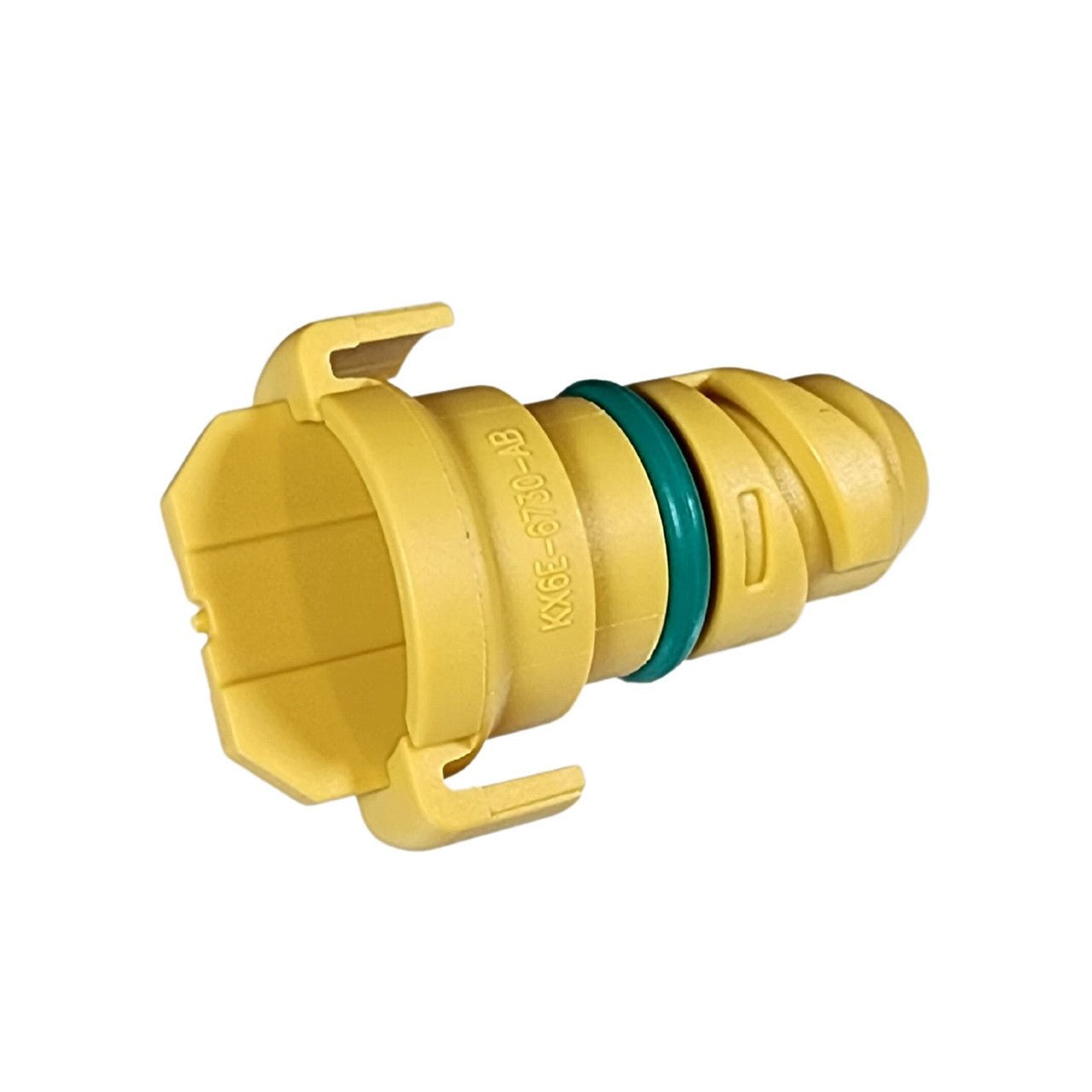
Ford plastic drain plugs are prone to cracking and leaking due to poor material quality and design flaws, particularly in F-Series trucks and Explorer models from 2008 onwards. These issues often require replacement with OEM or upgraded metal alternatives to prevent oil loss and engine damage.
Why Do Ford Plastic Drain Plugs Fail So Frequently?
Ford’s decision to use plastic drain plugs instead of traditional brass or steel has become one of the most frustrating design choices in modern automotive engineering.
The plastic material, typically nylon-reinforced polymer, becomes brittle over time due to exposure to heat cycles, oil degradation products, and thermal stress.
When you tighten the plug during an oil change, you’re applying torque to a material that loses tensile strength with every temperature fluctuation.
The problem intensifies because Ford’s plastic plugs have a relatively thin wall design to reduce manufacturing costs.
A typical plastic drain plug on a Ford F-150, Ranger, Explorer, or Fusion will develop stress fractures within 3-5 oil changes, even when installed correctly.
The threads are particularly vulnerable—they strip easily if over-tightened by just a quarter turn, and they weaken from repeated installation cycles.
Real-world data from independent shops and dealership service records shows that plastic drain plug failures account for approximately 8-12% of all unplanned oil leaks on Ford vehicles.
This isn’t a rare occurrence; it’s a systemic design flaw that affects hundreds of thousands of vehicles manufactured between 2008 and 2023.
Material Degradation Under Operating Conditions
The plastic used in Ford drain plugs degrades through multiple mechanisms simultaneously. Hot oil, typically 190-220°F during normal operation, softens the polymer matrix.
Oxidized oil particles and detergent packages in modern synthetic oils are chemically aggressive to plastic.
The gasket seal on the plug also deteriorates, losing its compression properties after 5-8 thermal cycles.
Additionally, the plastic contracts and expands at a different rate than the aluminum oil pan it screws into.
This differential thermal expansion creates micro-gaps that allow oil to seep past the gasket. Over time, these gaps widen as the plastic becomes more brittle.
Design Flaw: Insufficient Thread Engagement
Ford’s plastic drain plugs typically feature only 6-8 threads of engagement with the aluminum oil pan.
This shallow thread design was chosen to reduce manufacturing complexity, but it creates a structural weakness.
When you apply the recommended 15-25 ft-lbs of torque, you’re distributing that force across a very small surface area of plastic threads.
The threads begin to yield immediately, and each subsequent oil change compounds the damage.
Which Ford Models Are Most Affected by Plastic Drain Plug Problems?
Plastic drain plug failures are not limited to one model line—they affect a wide range of Ford vehicles.
F-Series Trucks (F-150, F-250, F-350)
F-150 trucks from 2009-2023 are among the most affected vehicles. The high-torque diesel engines in F-250 and F-350 models create even more thermal stress on the drain plug.
Owners report failures as early as 10,000 miles on some vehicles, though 30,000-60,000 miles is more typical.
Explorer and Edge SUVs
Explorer models from 2011 onwards and Edge models from 2015 onwards use plastic drain plugs that fail at similar rates.
The Explorer’s 2.0L EcoBoost engine runs hotter than traditional engines, accelerating plastic degradation.
Ranger and Escape Compact Models
Ranger trucks (2019+) and Escape SUVs (2013+) have experienced widespread plastic drain plug failures.
The smaller displacement engines in these models don’t run as hot, but the plastic material quality is identical, so failures still occur regularly.
Fusion and Focus Sedans
Even Ford’s smaller sedans use plastic drain plugs. Fusion models from 2013-2020 and Focus models from 2012-2018 are affected.
These vehicles typically have longer intervals between failures due to lower operating temperatures.
What Are the Warning Signs of a Failing Ford Plastic Drain Plug?
Recognizing early warning signs allows you to address the problem before catastrophic oil loss occurs.
Visual Indicators
- • Oil staining under the vehicle: Small dark spots or streaks on the ground directly under the oil pan indicate slow seepage.
- • Visible cracks in the plug: Look for hairline cracks in the plastic body. These expand rapidly once they form.
- • Discoloration around the plug: A darker ring of baked-on oil around the plug base indicates long-term seepage.
- • Debris on the plug: Accumulated dirt and dust stuck to oil residue shows where oil has been weeping out.
Operational Symptoms
- Low oil pressure warning light: If the plug fails completely, oil level drops rapidly, triggering the warning light.
- Burning oil smell: Leaking oil dripping onto hot exhaust manifolds creates a distinct burning odor.
- Engine overheating: Loss of oil reduces cooling efficiency and can cause the temperature gauge to climb.
- Rough idle or hesitation: Severe oil loss affects engine lubrication, causing performance issues.
How to Replace a Ford Plastic Drain Plug: Step-by-Step Guide
Replacing a plastic drain plug is a straightforward DIY task that takes 15-30 minutes.
Tools and Materials You’ll Need
- Socket wrench set (typically 13mm, 14mm, or 15mm)
- Oil drain pan (minimum 5-quart capacity)
- New drain plug (OEM or metal replacement)
- Oil filter wrench
- Ramps or jack stands
- Torque wrench (strongly recommended)
- Shop towels or rags
Removal Process
- Warm up the engine: Run the engine for 2-3 minutes to warm the oil. Allow the engine to cool for 5 minutes before working underneath.
- Elevate the vehicle safely: Drive onto ramps or use a jack with proper jack stands. Never work under a vehicle supported only by a jack.
- Locate the drain plug: The oil pan is located at the lowest point of the engine. It’s usually accessible from the front or front-passenger side.
- Position the drain pan: Place the oil drain pan directly under the plug. Ensure the pan is wide enough to catch splashing oil.
- Remove the drain plug: Using the appropriate socket, turn the plug counterclockwise. Use steady pressure to avoid cracking the plastic further.
- Allow oil to drain completely: Let the oil pan drain for 10-15 minutes. Tilt the oil pan slightly to ensure all oil drains out.
Installation of the New Drain Plug
- Clean the drain plug hole: Wipe the threaded hole in the oil pan with a clean rag. This ensures a proper seal.
- Install the new plug: Hand-thread the new plug into the hole first. This prevents cross-threading, which is common with damaged threads.
- Apply proper torque: Use a torque wrench to tighten the plug to 15-25 ft-lbs. Do not exceed 25 ft-lbs to avoid failure.
- Check for leaks: Start the engine and let it idle for 30 seconds. Inspect the plug area for leaks after a short test drive.
Should You Replace the Plastic Plug with OEM or Upgrade to Metal?
This decision depends on your vehicle’s age, mileage, and your long-term ownership plans.
OEM Plastic Replacement Plugs
OEM replacement plugs are identical to the original failed plug and will likely fail again within 2-5 years.
When to choose OEM plastic: If your vehicle is still under warranty, use OEM parts. If you plan to sell the vehicle soon, OEM plastic is acceptable.
Upgraded Metal Drain Plugs
Aftermarket metal drain plugs are manufactured from brass, steel, or aluminum. They offer significantly better durability.
Metal withstands thermal cycling without degradation. A quality metal plug will last the lifetime of the vehicle.
Recommended metal plugs for Ford vehicles:
| Brand | Material | Price Range | Best For |
|---|---|---|---|
| Dorman | Brass | $18-25 | Budget buyers; widely available |
| Lokar | Steel / Chrome | $30-40 | Premium quality; appearance |
| Mopar Equivalent | Brass | $15-22 | Proven reliability |
| Genuine Ford (New Gen) | Brass | $25-35 | OEM quality without plastic risk |
How to Fix Stripped Threads in the Oil Pan
If the plastic plug has damaged the threads in the aluminum oil pan, you have several repair options.
Helicoil Thread Repair Kit
A Helicoil is a spiral-wound stainless steel insert that restores stripped threads permanently.
- Purchase a Helicoil kit sized for your drain plug (typically M14 x 1.5 or M16 x 2.0).
- Drain the oil completely and allow the pan to dry.
- Use the provided drill bit to enlarge the stripped hole.
- Tap new threads and install the Helicoil insert.
- Install your new drain plug into the Helicoil.
Oversized Drain Plug
Some manufacturers offer oversized drain plugs that thread into the same hole without requiring thread repair.
This is a quick solution but only works if the thread damage is minimal.
What’s the Best Oil to Use to Prevent Drain Plug Degradation?
While the right oil won’t prevent plastic degradation entirely, certain types may extend the life of the plug.
Synthetic oils have better thermal stability and resist oxidation longer, which means fewer aggressive byproducts.
Recommendation: Use Ford-approved synthetic oils that meet the WSS-M2C946-B specification for better compatibility.
FAQ
Can I drive with an oil leak from the drain plug?
No. Even a slow leak will cause oil loss over time. Driving with low oil causes engine bearing wear and potential seizure.
Will Ford warranty cover a failed plastic drain plug?
The powertrain warranty typically covers damage caused by failure, but the plug itself is often considered a wear item. Check with your dealer.
Is the plastic drain plug failure a recall?
Ford has not issued a formal recall. They classify the plug as a maintenance item rather than a safety defect.
Why hasn’t Ford switched to metal drain plugs permanently?
Cost reduction is the primary reason. Plastic plugs cost significantly less to manufacture than metal alternatives across millions of vehicles.
Conclusion
Ford’s plastic drain plugs represent a clear case of cost-cutting at the expense of durability. These failures are predictable engineering issues affecting a substantial percentage of vehicles.
The solution is straightforward: replace your plastic drain plug with a quality metal alternative. A one-time investment eliminates the risk of catastrophic engine damage.
Check underneath your vehicle for oil stains regularly. If you find them, address the problem immediately before it escalates into an expensive repair.
Leave a Reply