
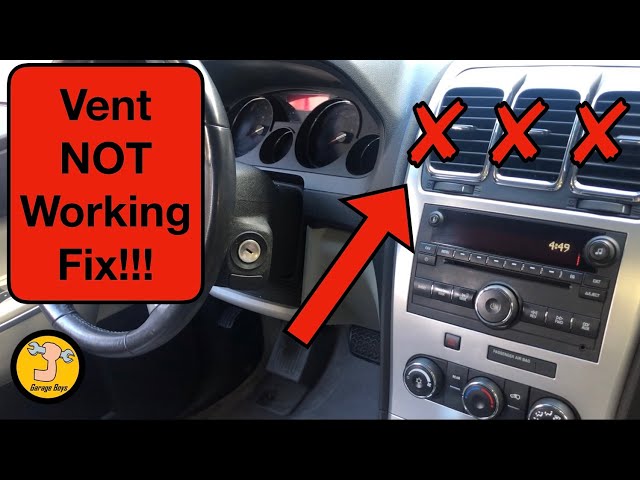
The most common reasons a GMC Acadia air conditioner stops working include a failed compressor clutch, a leaking condenser, a faulty blend door actuator, low refrigerant due to system leaks, or a blown fuse/relay.
The first-generation Acadia (2007–2016) is especially known for condenser and evaporator core leaks, while the second-generation (2017–present) commonly suffers from blend door actuator failures and compressor issues.
Why Is My GMC Acadia AC Blowing Warm Air?
Your Acadia is likely blowing warm air because the refrigerant charge is too low to engage the compressor clutch, or the compressor itself has failed.
A clogged condenser or a stuck blend door actuator can also redirect heat into the cabin even when the system has adequate refrigerant.
Before spending money at a shop, check the simplest things first. Turn the AC on max, open the hood, and watch the compressor pulley.
If the center clutch is not spinning when the AC is on, the system is either too low on refrigerant, the clutch coil has failed, or there is an electrical issue preventing engagement.
Quick Diagnostic Steps
- Start the engine and set the AC to the coldest setting with the fan on high.
- Open the hood and locate the AC compressor on the front of the engine.
- Watch the center of the compressor pulley. It should engage and start spinning.
- If it does not spin, check the AC fuse and relay in the underhood fuse box.
- If the fuse and relay are good, have the system checked for refrigerant pressure.
GMC Acadia AC Compressor Not Engaging — Causes and Fixes
The compressor will not engage if the system is low on refrigerant because the low-pressure switch cuts power to protect the compressor from damage.
A failed compressor clutch coil, a bad relay, or a faulty AC pressure sensor can also prevent engagement.
1. Low Refrigerant Charge
The Acadia’s AC system uses a low-pressure cutoff switch that disables the compressor when refrigerant drops below a safe level. This is a protective measure, but it means even a small leak will shut the entire system down.
You will need to recover, vacuum, and recharge the system with the correct amount of R-134a refrigerant specified on the underhood label.
2. Failed Compressor Clutch Coil
The clutch coil can burn out over time, especially on first-generation Acadias with higher mileage. You can test it by checking for battery voltage at the compressor connector when the AC is commanded on.
If voltage is present but the clutch does not engage, the coil is open and the compressor needs replacement or clutch repair.
3. Blown Fuse or Bad Relay
The AC compressor fuse and relay are located in the underhood fuse box. A blown fuse is often a sign of a deeper electrical problem such as a shorted clutch coil, so do not just replace the fuse without investigating further.
Swap the AC relay with another identical relay in the box to rule out a bad relay quickly.
GMC Acadia AC Condenser Leak — A Known Weak Point
The first-generation GMC Acadia (2007–2016) is notorious for condenser leaks, typically at the joints where the aluminum tubes meet the condenser body.
Road debris and vibration cause micro-cracks that slowly release refrigerant over weeks or months until the system stops cooling entirely.
How to Confirm a Condenser Leak
- 🔍 Look for oily residue or green UV dye around the condenser face and fittings.
- 🔍 A professional dye test or electronic leak detector will pinpoint the exact location.
- 🔍 Check the condenser for visible physical damage from rocks or road debris.
Fix and Cost
The condenser must be replaced if it is leaking. On the first-generation Acadia, the condenser is relatively accessible behind the front bumper cover.
Parts cost between $80 and $200 depending on whether you choose OEM or aftermarket. Labor at an independent shop typically runs $200 to $350.
Dealerships often quote $600 to $900 for the same job, so getting a second opinion from an independent AC specialist is worth it.
GMC Acadia Blend Door Actuator Failure — Clicking Noise Behind the Dash
A failed blend door actuator causes the AC to blow warm air on one side or both sides even when the system is fully charged.
You will often hear a rapid clicking or tapping noise behind the dashboard when you change the temperature setting. This is one of the most common AC-related complaints on both generations of the Acadia.
Symptoms of a Bad Blend Door Actuator
- ⚠️ Clicking or ticking noise behind the dash when adjusting temperature.
- ⚠️ Hot air on one side and cold air on the other in dual-zone systems.
- ⚠️ AC blows warm regardless of the temperature setting.
- ⚠️ Temperature does not change when you move the dial from cold to hot.
How to Replace It
The blend door actuator is located behind the dashboard, typically above or behind the glove box area on the passenger side. On most Acadia model years, you can access it by removing the glove box and lower dash panel.
The actuator is held in place by two or three small screws and a wiring connector. Unplug the connector, remove the screws, pull the old actuator out, and install the new one.
Parts cost $25 to $60. This is a very DIY-friendly repair if you are comfortable working behind the dash.
GMC Acadia Evaporator Core Leak — The Expensive Hidden Problem
The evaporator core sits deep inside the HVAC housing behind the dashboard, and when it leaks, refrigerant escapes into the cabin.
You may notice a sweet chemical smell from the vents or see oil residue around the evaporator drain tube under the vehicle. This is the most labor-intensive AC repair on the Acadia because the entire dashboard often needs to come out.
Why Shops Overquote This Repair
Many dealerships and shops quote 10 to 14 hours of labor for evaporator core replacement because the dashboard, steering column, and HVAC box must be removed.
Dealership quotes for this repair commonly range from $1,500 to $2,500. An experienced independent shop can often do it for $800 to $1,200.
Always get multiple quotes and ask if the shop has done this specific job on an Acadia before.
GMC Acadia AC Not Working After Recharge — What Went Wrong
If you recharged the system yourself and the AC still does not work, the system likely has a leak that allowed the new refrigerant to escape, or air got into the system during the recharge.
A proper recharge requires pulling a vacuum for at least 30 minutes to remove moisture and air before adding refrigerant by weight, not by pressure gauge alone.
Common DIY Recharge Mistakes
- Not finding and fixing the leak before recharging.
- Using a DIY can without a proper scale to measure refrigerant by weight.
- Overcharging the system, which causes high-side pressure to spike and can damage the compressor.
- Not pulling a vacuum first, leaving moisture in the system that can freeze and block the expansion valve.
Frequently Asked Questions
How much refrigerant does a GMC Acadia hold?
The GMC Acadia typically requires 1.5 to 1.75 pounds (approximately 24 to 28 ounces) of R-134a refrigerant. Always check the underhood sticker for the exact specification for your model year, as overcharging can cause compressor damage.
Can I drive my Acadia with a broken AC compressor?
If the compressor clutch is not engaged, the pulley freewheels and you can drive without issue. However, if the compressor is seized, it will burn the serpentine belt and potentially leave you stranded.
Listen for grinding or squealing from the compressor area and address it immediately.
Why does my Acadia AC work intermittently?
Intermittent cooling usually points to a slow refrigerant leak that is just above the low-pressure cutoff threshold, a compressor clutch that is failing intermittently, or an electrical connection that is corroded or loose.
A system pressure test when the AC is not working will reveal whether the issue is refrigerant-related or electrical.
Does the GMC Acadia have a cabin air filter that affects AC performance?
Yes, the Acadia has a cabin air filter behind the glove box. A clogged cabin air filter restricts airflow through the evaporator, making the AC feel weak even when the system is working properly.
Replace it every 15,000 to 20,000 miles or whenever you notice reduced airflow from the vents.
Take Control of Your Acadia AC Repair
Most GMC Acadia AC problems are diagnosable at home with basic tools and a willingness to look under the hood before heading to a shop.
Start with the free checks — fuses, relay swaps, and visual inspections for leaks — before paying for diagnostic fees.
When you do need professional help, knowing the likely cause puts you in a stronger position to avoid unnecessary upsells and overquoted labor. A well-informed owner always gets a fairer repair.
Leave a Reply