
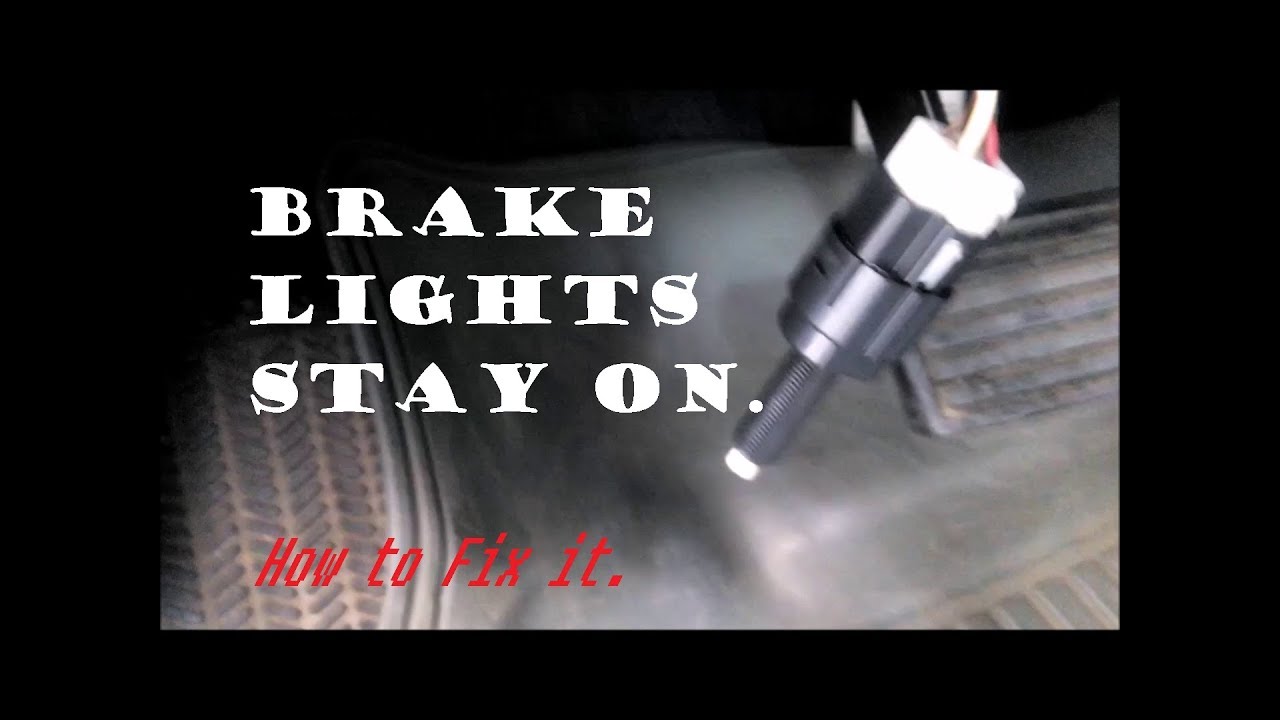
If your Honda Accord brake lights stay on after you turn off the car, the most common cause is a faulty or misadjusted brake light switch mounted above the brake pedal. Replace or readjust the switch, and check the brake pedal return spring for breakage — these two fixes solve the problem in over 80% of cases.
Why Are My Honda Accord Brake Lights Staying On?
Brake lights staying on is one of the most common electrical complaints on Honda Accords across nearly every generation. The root cause is almost always a mechanical or electrical failure at the brake pedal area, not a wiring fault deeper in the car. Before you start tearing into the harness, focus your diagnostic effort on the brake light switch and pedal assembly — that is where the problem lives 9 times out of 10.
This issue drains your battery overnight, confuses tailgating drivers, and can even get you pulled over. The good news is that most fixes cost under $30 in parts and take less than 30 minutes in your driveway. Below is everything you need to know to diagnose and fix it properly.
The Most Common Culprits
- Brake light switch failure or misadjustment — the switch behind the brake pedal is stuck, out of alignment, or internally welded shut.
- Broken or disconnected brake pedal return spring — the pedal physically does not return to the fully released position.
- Worn brake pedal pad or bushing — the pedal sits lower than normal and keeps the switch depressed.
- Low brake fluid triggering a sensor — some Accords use a fluid level sensor that can illuminate the rear lights or dashboard warning.
- Aftermarket LED bulbs or resistors — incorrect load can confuse the body control module on newer models.
- Stuck cruise control / brake interlock switch — some Accords use a dual-function switch that affects both systems.
How to Diagnose a Bad Brake Light Switch on a Honda Accord
The brake light switch on a Honda Accord is a small plunger-style switch mounted on a bracket directly above the brake pedal arm. When the pedal is released, the plunger should be fully extended and the circuit open. When you press the pedal, the plunger compresses and closes the circuit, powering the brake lights.
If the switch is stuck, misadjusted, or internally shorted, it keeps the circuit closed at all times. This is the single most reported cause of brake lights staying on across all Accord model years.
How to Test the Switch
- Get on your knees and locate the switch above the brake pedal. It is a white or black plastic body with a small pushrod.
- With the engine off and key out, press and release the brake pedal several times while watching or listening for the switch click.
- Unplug the wiring connector from the switch. If the brake lights turn off immediately, the switch is confirmed bad or misadjusted.
- If the lights stay on even with the switch disconnected, you have a wiring short elsewhere — this is rare but requires tracing the harness.
How to Replace or Adjust the Switch
On most Honda Accords, the switch is held in by a retaining clip or twist-lock mount. No special tools are needed. Simply unplug the connector, twist or unclip the old switch, and install the new one.
Make sure the pushrod length matches the old switch or adjust the threaded body so the plunger fully extends when the pedal is released.
Pro Tip: Do not buy a generic aftermarket switch from a parts bin. Honda uses specific part numbers with exact plunger lengths.
A switch that is even 2mm too short will leave your brake lights on. Use OEM part number 36750-SDA-A01 for most 2003–2012 Accords, or verify your exact year on a Honda parts diagram before ordering.
Brake Pedal Return Spring Broken or Missing
Behind the brake pedal assembly there is a small coil spring that pulls the pedal back to its resting position after you release it. If this spring breaks, stretches, or falls off its mounting tab, the pedal hangs slightly depressed. That small amount of travel is enough to keep the brake light switch engaged permanently.
How to Check for a Broken Spring
- Press the brake pedal down and release it slowly. Watch whether it snaps back crisply or drifts back lazily.
- Use a flashlight to inspect the spring behind the pedal bracket. Look for a disconnected hook end or a visibly stretched coil.
- Compare pedal height to another Honda Accord if possible. A sagging pedal is a dead giveaway.
Fixing the Return Spring
Honda sells the return spring as a standalone part. For most Accords it costs between $5 and $15. Installation requires removing the lower dash panel and possibly the knee bolster for access.
The spring hooks onto a small tab on the pedal arm and another tab on the bracket. It is a straightforward DIY job — just make sure the pedal moves freely after installation.
Model-Specific Brake Light Issues on Honda Accords
Not all Accords are built the same. Different generations have unique weak points that cause this exact symptom. Here is what to watch for based on your model year.
7th Generation Honda Accord (2003–2007)
This generation is notorious for brake light switch failure. Honda issued a service bulletin acknowledging premature switch wear. The original switches had a tendency for the internal contacts to weld themselves together under high current draw, especially if someone previously installed high-wattage bulbs.
The fix is a revised OEM switch with improved contact material.
8th Generation Honda Accord (2008–2012)
The 8th gen Accords introduced a slightly different pedal assembly with a plastic bushing at the pivot point. Over time, this bushing wears and introduces free play, allowing the pedal to sit lower than intended. Replacing the bushing (Honda part number 46505-SDA-A01) restores proper pedal geometry and corrects the switch engagement point.
9th Generation Honda Accord (2013–2017)
Honda issued a safety recall (Campaign 19V-298) for certain 2013–2016 Accords related to the brake light switch. The recall addressed a manufacturing defect where the switch housing could crack and allow moisture intrusion, causing the switch to stick or fail intermittently. Check with your local dealer — if your VIN is affected, the repair is free regardless of warranty status.
10th Generation Honda Accord (2018–2022)
The 10th gen uses an electronic brake booster and a different switch configuration integrated with the vehicle stability assist system. If brake lights stay on in this generation, scan the vehicle with a Honda-capable OBD-II tool for codes in the VSA module.
A faulty brake pedal position sensor — not the traditional switch — can cause this symptom. This sensor is part of the pedal assembly and costs around $80–$120 for the part.
Low Brake Fluid and Sensor-Related Causes
Some Honda Accords use a float-type sensor in the brake fluid reservoir. When the fluid drops below a certain level, the sensor triggers a dashboard warning and, on certain model years, can also activate the brake lights. This is a secondary safety feature that many owners do not realize exists.
What to Check
- Pop the hood and inspect the brake fluid reservoir. The fluid should be between the MIN and MAX lines.
- If the fluid is low, check for leaks at the calipers, wheel cylinders, master cylinder, and brake lines. Low fluid means fluid is going somewhere.
- Top off with Honda-approved DOT 3 or DOT 4 brake fluid and see if the lights turn off after a few pedal cycles.
- Do not just top off and ignore it. If the fluid was low, you have a leak that needs repair before driving the car.
Aftermarket LED Bulbs Causing Electrical Gremlins
Many Accord owners swap their incandescent brake bulbs for LEDs and do not install load resistors. On older Accords this causes hyper-flashing on the turn signals but usually does not keep brake lights on.
However, on 2013-and-newer Accords, the body control module (BCM) monitors current draw on the brake light circuit. An incorrect load can cause the BCM to behave erratically, including leaving brake lights partially illuminated or triggering ghost brake signals.
Fix for LED-Related Issues
- Install proper load resistors (6-ohm, 50-watt) in parallel with each LED brake bulb.
- Alternatively, use CAN-bus-compatible LED bulbs that have built-in resistors.
- If the problem persists after installing resistors, revert to OEM incandescent bulbs to confirm the LEDs are the cause before further diagnosis.
How to Prevent Your Battery from Dying Overnight
Brake lights staying on will drain a healthy battery in 8 to 12 hours. If you cannot fix the problem immediately, pull the brake light fuse from the under-hood fuse box to kill power to the circuit overnight. On most Accords, this is a 15-amp fuse labeled “STOP” or “HORN/STOP.”
Verify the fuse location on the diagram printed inside the fuse box cover.
Important: Do not drive the car with the brake light fuse pulled. Other drivers will not know when you are stopping, and you may fail a state inspection. Fix the underlying problem as soon as possible.
Brake Light Staying On — Cost Breakdown
Frequently Asked Questions
Can driving with brake lights stuck on damage my Accord?
The lights themselves will not damage the vehicle, but the constant electrical draw can drain your battery and leave you stranded. Additionally, other drivers may not react properly to your brake signals, increasing the risk of a rear-end collision.
Will a Honda dealer fix brake light switch issues under warranty or recall?
It depends on the model year. The 9th generation (2013–2016) had a specific recall for the brake light switch.
Outside of recalls, it may be covered under a 3-year/36,000-mile bumper-to-bumper warranty. Always check your VIN on the NHTSA recall lookup tool before paying out of pocket.
Why do my Honda Accord brake lights stay on even with the engine off?
The brake light circuit is powered directly from the battery through the fuse box, independent of the ignition switch. If the switch is stuck or the pedal is not returning to the rest position, the lights stay on whether the engine is running or not.
Can a bad brake light switch affect cruise control on my Accord?
Yes. On most Honda Accords, the brake light switch also sends a signal to the cruise control module to disengage when the brake pedal is pressed. A faulty switch can cause cruise control to not activate at all, or to disengage unexpectedly while driving.
How long does it take to replace a Honda Accord brake light switch?
For someone with basic mechanical skills, the swap takes 10 to 20 minutes. The switch is accessible from the driver footwell without removing major panels. The only tool typically needed is a flathead screwdriver or needle-nose pliers for the retaining clip.
Fix It Before It Costs You More
Brake lights staying on is a small problem that turns into a big one fast. A dead battery, a rear-end collision, or a traffic citation are all real consequences of ignoring this symptom. In almost every case, the fix is a $15 part and 20 minutes of your time.
Start at the brake light switch, check the pedal return spring, and verify your brake fluid level. If you own a 2013–2016 Accord, check for an open recall first — you may get the repair done for free. Do not let a shop charge you hundreds of dollars for something you can diagnose and fix in your own garage this afternoon.
Leave a Reply