
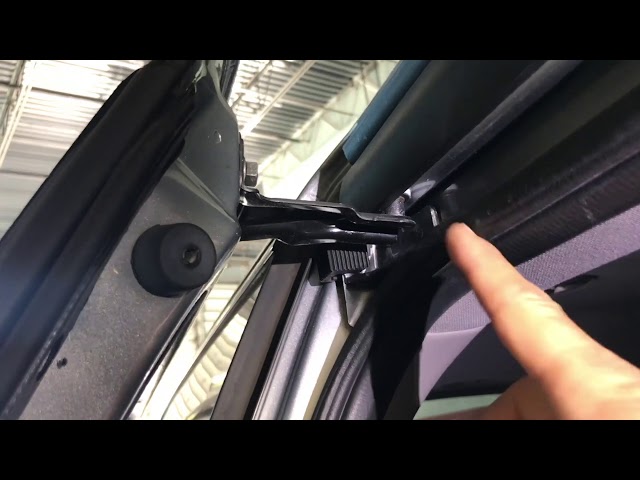
The Honda Odyssey sliding door sensor problem is typically caused by dirty or oxidized B-pillar contact pins, a failing rear latch assembly microswitch, worn center rollers causing door sag, or a damaged rubber pinch sensor along the door’s edge. To quickly resolve this, clean the brass B-pillar contacts with electrical contact cleaner and a pencil eraser, pull the backup fuse (usually Fuse #7 or #13 depending on the model year) in the passenger footwell to reset the sliding door ECU, or replace the worn center rollers to restore proper door alignment.
Why Does the Honda Odyssey Sliding Door Sensor Keep Failing?
Sliding door sensor failures on the Honda Odyssey are primarily caused by physical wear on the door rollers, contaminated electrical contacts on the B-pillar, or moisture intrusion into the rubber pinch sensors. When these components degrade, the sliding door control unit receives incorrect voltage signals, triggering safety protocols that reverse the door or disable power operation entirely.
Dealerships frequently misdiagnose these issues, recommending complete motor and cable replacements that can cost upwards of $1,500 per side. In reality, the root cause is almost always a localized sensor, latch, or alignment issue that can be resolved for a fraction of the cost.
1. Oxidized B-Pillar Junction Switches
The B-pillar junction switch consists of spring-loaded brass pins on the door frame that meet flat brass plates on the sliding door. Over time, road grime, wax, and oxidation build up on these surfaces, creating electrical resistance.
This resistance disrupts the low-voltage signals sent between the door’s internal sensors and the main Electronic Control Unit (ECU). The ECU interprets this interrupted signal as an error or an obstruction, causing the door to stop mid-travel or fail to latch.
2. Failed Pinch Sensors (Touch/Tape Sensors)
The pinch sensor is a long, flexible rubber strip running down the leading edge of the sliding door. Inside this strip are two parallel conductive wires separated by a small gap.
If an object squeezes the rubber, the wires touch, completing a circuit and telling the ECU to reverse the door. As the vehicle ages, the rubber dry-rots, cracks, and allows moisture inside, which shorts the wires and creates “phantom” obstruction detections.
3. Worn-Out Center Rollers and Door Sag
The center roller assembly carries the bulk of the sliding door’s weight as it travels along the exterior track. The plastic outer coating on these rollers eventually cracks and falls off, leaving bare metal to ride in the track.
This causes the door to sag physically by just a few millimeters. This tiny misalignment prevents the latch from lining up with the striker, causing the door to bounce back open or fail to trigger the closed-position microswitch.
4. Faulty Rear Latch Microswitches
Inside the rear latch assembly of the door are several tiny plastic microswitches that detect whether the door is “half-latched” or “full-latched.” These switches are sealed with silicone boots that degrade over time.
Once the boot fails, dirt and grease enter the switch, preventing the contacts from closing. The door will physically close, but the ECU never receives the “fully closed” signal, resulting in a continuous warning chime while driving and a drained battery overnight.
How to Diagnose Honda Odyssey Sliding Door Sensor Issues
To accurately diagnose a Honda Odyssey sliding door sensor issue, you must perform a manual bypass test, inspect the physical alignment of the door, and check for specific diagnostic trouble codes (DTCs) using an OBD-II scanner capable of reading body control modules. This systematic approach prevents you from throwing expensive parts at the vehicle without identifying the actual point of failure.
Most independent shops do not have the specialized scan tools required to read Honda Body DTCs (B-codes), which is why they often recommend replacing the entire door assembly. By following the steps below, you can pinpoint the exact failing sensor in your own driveway.
Step 1: Perform the Manual Mode Test
Locate the main power sliding door switch on the dashboard to the left of the steering wheel and flip it to the “OFF” position. Manually slide the door open and closed several times, paying close attention to the resistance you feel.
If the door slides smoothly with minimal effort and latches securely, your mechanical tracks and rollers are likely fine, pointing to an electrical sensor or latch microswitch issue. If the door catches, grinds, or feels heavy, your center rollers are worn out and must be replaced before diagnosing any sensors.
Step 2: Inspect the B-Pillar Contacts
Open the sliding door and locate the brass pins on the B-pillar door frame and the corresponding contact plates on the front edge of the door. Inspect them for a dull, dark green, or black coating, which indicates heavy oxidation.
Gently press each of the spring-loaded pins with your finger. They should spring back out smoothly and instantly; if any pin stays depressed or feels gritty, the internal spring is broken or clogged with debris, requiring switch replacement.
Step 3: Test the Pinch Sensor Resistance
Using a digital multimeter set to the Ohms (Ω) setting, you can test the integrity of the pinch sensor. Locate the electrical connector for the pinch sensor inside the front interior door panel.
With the sensor unplugged and relaxed, the multimeter should read open loop (OL) or infinite resistance. Gently squeeze the rubber strip along the door edge; the multimeter should immediately drop to near zero ohms, indicating a completed circuit. If it reads low resistance while relaxed, the sensor is shorted and must be replaced.
How to Fix Honda Odyssey Sliding Door Sensor Problems
Fixing a Honda Odyssey sliding door sensor problem involves cleaning the electrical contact points, replacing worn center roller assemblies, or swapping out the rear latch microswitches. These repairs are highly DIY-friendly and require only basic hand tools, saving you hundreds of dollars in dealership labor fees.
Below are the step-by-step instructions for the most common and effective fixes compiled from real-world diagnostic solutions.
Method 1: Cleaning and Reconditioning the B-Pillar Contacts
This is the most common cause of intermittent door reversals and warning chimes. It should always be your first step before buying any replacement parts.
- Locate the brass contact pins on the B-pillar and the contact plates on the sliding door.
- Take a clean, high-quality pencil eraser and vigorously rub the brass surfaces until the dark oxidation is gone and bright, shiny brass is visible.
- Spray a generous amount of electronic contact cleaner (such as CRC QD Electronic Cleaner) onto the pins and plates to wash away any remaining residue.
- Apply a very thin layer of dielectric grease to the contact plates to prevent future oxidation and moisture buildup.
Method 2: Replacing the Center Roller Assembly
If your door sags or makes a grinding noise when opening, the center roller is shot, preventing the door sensors from aligning correctly.
- Open the sliding door halfway and support the bottom of the door with a floor jack and a block of wood to prevent it from falling.
- Remove the taillight assembly on the side you are repairing to access the roller track cover screw.
- Slide the metal track cover off toward the rear of the vehicle to expose the center roller track.
- Unbolt the center roller bracket from the rear edge of the door using a 12mm socket, slide the old roller out of the track, insert the new roller assembly, and bolt it back to the door.
Method 3: Replacing the Rear Latch Microswitch Assembly
If your door closes fully but the dashboard “Slide Door” light stays on and chimes, the rear latch microswitch is failing to register the closed position.
- Remove the interior sliding door panel by popping the plastic retaining clips and disconnecting the window switch wire harness.
- Peel back the plastic moisture barrier carefully to access the inner door cavity.
- Unbolt the rear latch assembly from the rear edge of the door using a Torx T30 screwdriver and disconnect the metal actuator rods.
- Unplug the electrical connector, remove the latch, and replace either the entire latch assembly or just the microswitch sub-assembly with an OEM Honda replacement part.
How to Reset the Honda Odyssey Power Sliding Door ECU
To reset the Honda Odyssey power sliding door ECU, you must pull the dedicated backup fuse to clear the module’s memory, manually close and latch the doors, and then cycle the dash switch to perform a system relearn. This procedure is essential after performing any physical repairs or battery replacements, as the ECU often stores “hard” error codes that prevent the doors from operating even after the physical fault is fixed.
Failing to perform this reset is the number one reason DIY repairs appear to fail initially. The ECU must re-calibrate its home positions and resistance thresholds.
Step-by-Step ECU Reset Procedure
- Turn the ignition switch to the OFF position and turn the main power sliding door switch on the dashboard to OFF.
- Locate the passenger-side interior fuse box, which is situated in the footwell kick panel on the right side of the vehicle.
- Locate and remove the backup fuse; on 3rd Generation (2005-2010) models, this is Fuse #7 (7.5A), and on 4th Generation (2011-2017) models, it is Fuse #13 (7.5A).
- Leave the fuse out for at least 60 seconds to ensure the capacitors in the sliding door ECU drain completely, clearing the temporary memory.
- Reinstall the fuse, manually slide both sliding doors to their fully closed and latched positions, and turn the main dashboard switch back to the ON position.
- Turn the ignition key to the ON position, press and hold the dashboard door button to fully open the door, and continue holding it for two seconds after it opens; then press and hold the button to fully close the door, completing the relearn process.
Honda Odyssey Sliding Door Component Comparison
The table below outlines the differences in sliding door failure points, diagnostic symptoms, and estimated repair costs across different generations of the Honda Odyssey.
| Odyssey Generation | Primary Failure Point | Common Symptom | DIY Repair Cost | Dealer Repair Cost |
|---|---|---|---|---|
| 3rd Gen (2005-2010) | Center Roller & B-Pillar Contacts | Door sags, grinds, and reverses mid-travel | $20 – $40 | $350 – $600 |
| 4th Gen (2011-2017) | Rear Latch Microswitch & Pinch Sensor | Battery drains overnight; warning chime while driving | $50 – $120 | $800 – $1,200 |
| 5th Gen (2018-Present) | Software Calibration & Cable Tensioners | Door hesitates to open; intermittent sensor errors | $0 (Software Reset) | $150 – $450 |
Frequently Asked Questions
Why does my sliding door open back up right after it closes?
This “rebound” symptom is almost always caused by a physical obstruction signal. If the center rollers are worn, the physical resistance of the sagging door mimics an obstruction, forcing the ECU to reverse the door.
Alternatively, a cracked rubber pinch sensor on the door’s edge may be shorting out due to moisture, sending a false contact signal to the computer.
Can a bad sliding door sensor drain my car battery?
Yes, a failing microswitch inside the rear latch assembly is one of the most common causes of parasitic battery drain on the Honda Odyssey. If the microswitch fails to signal that the door is fully closed, the vehicle’s body control module (BCM) cannot enter “sleep mode.”
This keeps the interior lights or the instrument cluster active, draining a healthy battery within 12 to 24 hours.
Is there a recall for Honda Odyssey sliding door sensors?
While there are no active safety recalls specifically for the sensors themselves, Honda has issued multiple recalls and extended warranties for related sliding door latch mechanisms. For example, Recall 20V-431 addressed rear latches that could freeze in cold weather, preventing the doors from latching securely.
Always check your VIN on the NHTSA database to see if your vehicle qualifies for free dealership repairs under these campaigns.
How do I permanently disable the power sliding doors and use them manually?
If you do not want to spend money on repairs, you can permanently convert the doors to manual operation. Simply turn the main power sliding door switch on the dashboard to the “OFF” position.
To prevent the warning chime from sounding while driving, pull the specific sliding door fuses from the passenger-side fuse box, which disables the electronic monitoring system completely.
What tool do I need to read Honda-specific sliding door trouble codes?
A standard, cheap OBD-II code reader will only read engine codes (P-codes) and cannot communicate with the sliding door ECU. You will need an advanced diagnostic scan tool that supports “All-System” scanning and can read Honda Body Control (B-codes) and Chassis (C-codes).
Look for mid-range DIY scanners from brands like Autel, Launch, or Foxwell that explicitly list Honda bi-directional or body system support.
Conclusion
The Honda Odyssey sliding door sensor problem is a notorious issue that has frustrated minivan owners for generations. However, understanding that these failures are typically caused by simple mechanical wear, dirty brass contacts, or localized microswitch faults allows you to bypass expensive dealership diagnostics.
By systematically cleaning the B-pillar contacts, replacing worn rollers, and performing the ECU fuse reset, you can restore your sliding doors to flawless, safe operation without breaking the bank.
Leave a Reply