
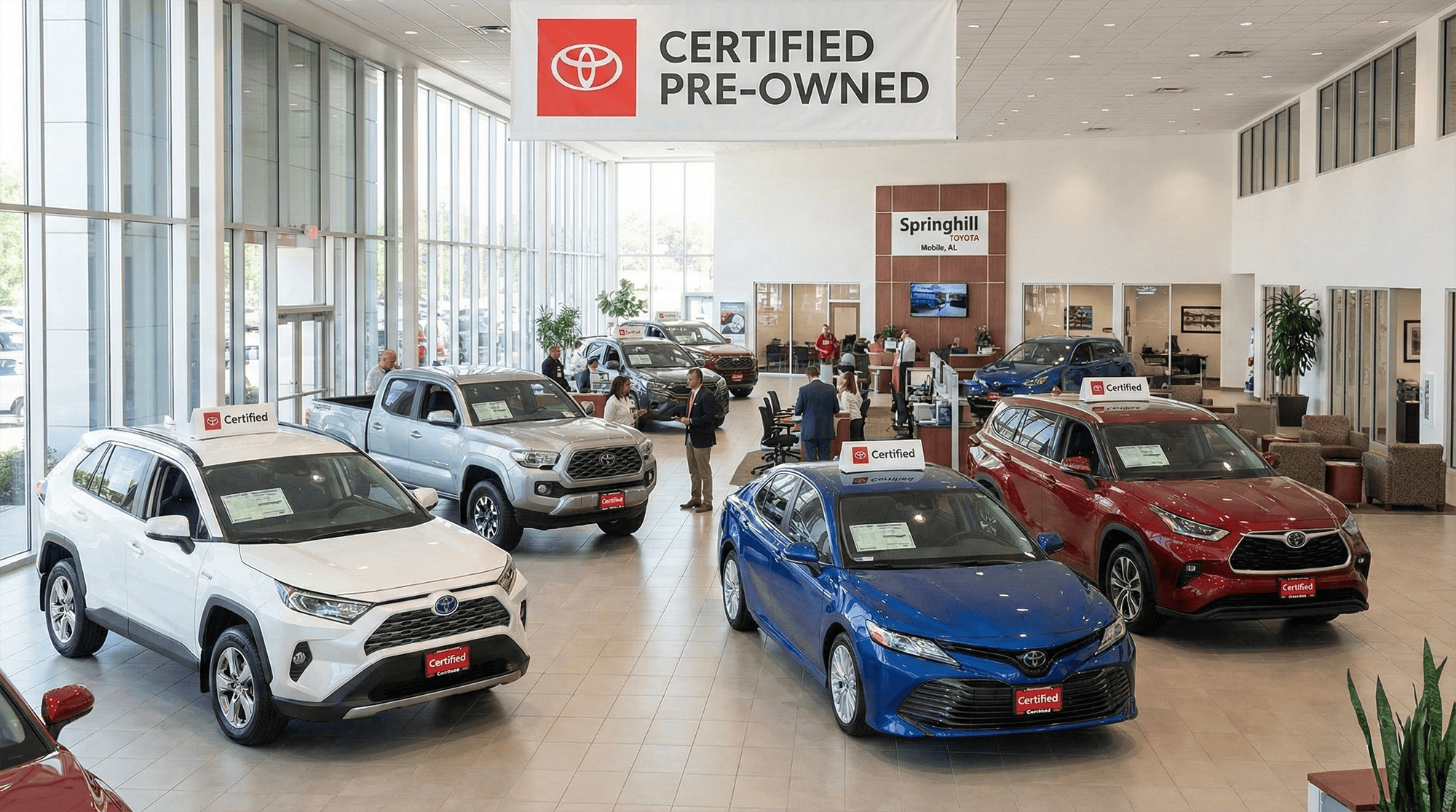
Yes, a manufacturer-certified pre-owned (CPO) car is worth it if you want a factory-backed warranty, lower finance rates, and peace of mind, typically costing $1,000 to $3,000 more than a non-certified equivalent. However, it is only worth the premium if it is an official OEM-backed certification rather than a dealership-specific program, and if you negotiate the markup down.
What does certified pre owned actually mean?
A certified pre-owned (CPO) car is a used vehicle that has been thoroughly inspected, reconditioned, and approved by a manufacturer or authorized dealership to meet specific quality standards, coming with an extended factory warranty.
To truly understand CPO, you must distinguish between an official OEM (Original Equipment Manufacturer) certification and a dealer-certified vehicle. An OEM CPO vehicle is backed directly by the manufacturer, meaning you can take it to any franchised dealership nationwide for warranty repairs.
If you buy a CPO Ford, any Ford dealer in the country must honor that warranty, which is paid for by the manufacturer, not the individual dealership.
Conversely, a “dealer-certified” vehicle is a dealer-specific program underwritten by a third-party insurance company or the dealership itself. These warranties are often riddled with fine print, require you to bring the car back to that specific dealership location for repairs, and carry high deductibles.
Dealerships frequently use the term “certified” loosely in their marketing to trick buyers into paying a premium for a car that only has a basic, low-value dealer warranty.
The reality of the 150-point inspection
Dealership advertisements heavily emphasize their 150-point, 172-point, or 180-point inspections. In the real world, these inspections are performed by flat-rate dealership technicians who are often rushed.
It is common for technicians to “pencil-whip” these checklists, checking off boxes without actually performing the physical inspection of every minor component.
While critical safety items like brakes, tires, and suspension components are usually verified to meet minimum wear limits, smaller items are frequently overlooked.
Cabin air filters, minor oil leaks, worn wiper blades, and outdated infotainment software are routinely ignored during these inspections. You should never assume a CPO car is in perfect mechanical condition without verified documentation.
OEM CPO vs. Dealer Certified comparison
- • Warranty Backing: OEM CPO is backed by the vehicle manufacturer; Dealer Certified is backed by a third-party administrator or the local dealer group.
- • Repair Locations: OEM CPO allows repairs at any franchised dealer nationwide; Dealer Certified often restricts you to the selling dealership or a limited network.
- • Parts Used: OEM CPO guarantees the use of genuine factory parts; Dealer Certified may authorize cheaper aftermarket or salvage parts.
- • Transferability: OEM CPO is easily transferable to the next private buyer, adding resale value; Dealer Certified is rarely transferable.
Is certified pre owned worth the extra cost?
A CPO car is worth the extra cost if the price premium is less than the market cost of an equivalent manufacturer-backed extended warranty and if you take advantage of promotional subvented interest rates from the OEM lender.
The average markup for a CPO vehicle ranges from $1,000 to $3,000 over a standard used car of the same year, make, and mileage.
To determine if this premium is worth it, you must evaluate the remaining factory warranty, the cost of an equivalent aftermarket service contract, and the financing incentives available.
If you are buying a highly reliable vehicle with a long factory warranty remaining, the CPO premium may not offer enough incremental value.
However, for luxury European vehicles or vehicles with known long-term reliability issues, the CPO premium is almost always a bargain.
A single major engine or transmission repair on a BMW, Audi, or Mercedes-Benz can easily exceed $4,000. Paying a $2,000 premium up front for an extra year or two of unlimited-mileage bumper-to-bumper coverage is financially logical in these scenarios.
Financial breakdown: CPO vs. Non-CPO vs. Aftermarket Warranty
| Feature | OEM Certified Pre-Owned (CPO) | Standard Used Car (No Warranty) | Used Car + Aftermarket Warranty |
|---|---|---|---|
| Average Price Premium | $1,000 – $3,000 | $0 (Baseline) | $2,000 – $4,500 |
| Warranty Administrator | Vehicle Manufacturer (OEM) | None (As-Is) | Third-Party Insurance Company |
| Claims Approval Process | Seamless, approved by dealer service advisor | N/A | Often difficult, requires pre-authorization and inspectors |
| Financing Rates | Special low APR (e.g., 1.9% – 3.9%) | Standard used car rates (e.g., 7% – 11%) | Standard used car rates (e.g., 7% – 11%) |
Captive financing interest rate advantages
One of the most overlooked benefits of buying an OEM CPO vehicle is access to “subvented” financing rates. Manufacturer captive lenders (such as Toyota Financial Services, Ford Credit, or BMW Financial Services) regularly run promotional interest rates specifically for CPO vehicles.
These rates are often comparable to new-car financing rates, which are significantly lower than standard used-car interest rates.
For example, if you finance a $30,000 used car at a standard used-car rate of 8.5% APR for 60 months, your total interest paid will be roughly $6,900.
If you purchase a CPO version of the same car with a promotional rate of 2.9% APR, your total interest paid drops to approximately $2,250.
This interest savings of $4,650 completely offsets the CPO price premium, making the certified car the cheaper option overall.
What is covered under a certified pre owned warranty?
An OEM certified pre-owned warranty typically extends the vehicle’s original bumper-to-bumper coverage by 1 to 2 years and extends the powertrain warranty up to 7 years or 100,000 miles from the original in-service date.
It is critical to understand that a CPO warranty is not a bumper-to-bumper extension of the original factory warranty for its entire duration.
Most CPO programs split coverage into two distinct categories: limited comprehensive (bumper-to-bumper) and powertrain.
The comprehensive coverage is what protects your high-tech electronics, infotainment systems, climate control components, and advanced safety sensors.
Powertrain coverage, on the other hand, only covers the internally lubricated parts of the engine, transmission, and drive axle assemblies.
If your vehicle’s engine blows, it is covered. If your adaptive cruise control radar sensor fails or your touch screen goes black, it is only covered if you are still within the comprehensive CPO warranty window.
Common exclusions dealerships hide in the fine print
Many buyers are shocked to learn that certain expensive repairs are excluded from CPO coverage. Wear-and-tear items are universally excluded, which includes brake pads, rotors, clutches, manual transmission pressure plates, belts, hoses, spark plugs, and filters.
If your CPO car develops a squeak, rattle, or wind noise, these adjustments are typically only covered for the first few thousand miles or not at all.
Additionally, cosmetic items such as paint chips, leather tears, cracked trim pieces, and wheel curb rash are not covered under CPO warranties.
Water leaks caused by clogged sunroof drains or deteriorated weatherstripping are also frequently denied by CPO administrators.
Always ask the F&I (Finance and Insurance) manager for the physical CPO warranty booklet to read the “What is Not Covered” section before signing.
Brand-by-brand warranty differences
- Toyota/Lexus: Offers a 12-month/12,000-mile comprehensive warranty from the date of CPO purchase, plus a 7-year/100,000-mile powertrain warranty from the original in-service date. Deductible is $0.
- Hyundai/Kia: Reinstates the industry-leading 10-year/100,000-mile powertrain warranty for the CPO buyer (which normally drops to 5 years/60,000 miles for second owners of non-CPO cars). Also includes a 10-year/unlimited mileage roadside assistance plan.
- Subaru: Provides a 7-year/100,000-mile powertrain warranty with $0 deductible, with options to upgrade to a full wrap-around comprehensive warranty for a small fee at the time of purchase.
- BMW: Adds 1 year of unlimited-mileage comprehensive coverage after the original 4-year/50,000-mile new car warranty expires, making it highly attractive for high-mileage drivers.
How to negotiate a certified pre owned car price
You can negotiate the price of a certified pre-owned car by researching the market value of non-CPO equivalents, requesting a breakdown of the dealer’s reconditioning costs, and identifying wear-and-tear items that are close to the CPO limit.
Dealerships often treat the “CPO” status as non-negotiable, claiming the price is fixed because of the certification costs. This is a sales tactic.
The dealership pays a certification fee to the manufacturer (usually between $500 and $1,500 depending on the brand) and pays for reconditioning parts and labor.
Everything else in the CPO markup is pure dealer profit margin, which is highly negotiable.
To negotiate effectively, you must separate the value of the car from the value of the certification.
Research what non-certified versions of the same car are selling for in your local market. Use this data as your baseline pricing, and then add a reasonable premium for the CPO warranty to formulate your opening offer.
Step-by-step negotiation strategy
First, obtain the vehicle history report (Carfax or AutoCheck) and look for the “In-Service Date.” This is the exact date the car was first sold to its original owner, which dictates when the CPO warranty clock started.
If a car has a 7-year/100,000-mile powertrain warranty but its in-service date was 4 years ago, you only have 3 years of coverage left. Use this depreciation of warranty time to negotiate a lower sales price.
Second, inspect the wear items yourself before sitting down to negotiate. Ask the dealer for the completed, signed CPO inspection checklist.
If the tires are measured at 5/32″ (the minimum for many CPO programs is 4/32″), they technically pass inspection, but you will need to replace them within a year.
Point this out to the salesperson and demand a price reduction equal to the cost of a new set of tires.
Third, watch out for “double-dipping” fees on the final purchase order. Some dishonest dealerships will list a car at an attractive price online, but when you sit down to sign, they add a separate “CPO Certification Fee” of $1,500 to the bill.
This fee should always be included in the advertised price of the car. If they refuse to remove this line-item fee, prepare to walk out of the dealership.
How to verify if a car is actually OEM certified
To verify if a car is truly OEM certified, ensure it is being sold by an authorized franchised dealer of that specific brand, request the manufacturer-branded CPO checklist signed by a certified technician, and run the VIN through the manufacturer’s national database.
A common scam in the used car industry involves independent used car lots advertising vehicles as “Certified.” An independent dealer (like “Bob’s Auto Sales”) cannot sell a factory-certified Toyota, Honda, or BMW.
Only a franchised Toyota dealer can certify a Toyota. If you buy a “certified” car from an independent lot, you are buying a third-party aftermarket warranty of questionable quality.
Even at franchised dealerships, mistakes and deceptive practices happen. A dealer may advertise a car as CPO online to drive traffic, but then attempt to sell it to you as a standard used car without the certification to save themselves the manufacturer fee.
You must verify the paperwork before signing the final contract.
The VIN check and paperwork verification method
Before finalizing your purchase, ask the sales manager to pull up the vehicle’s status in the manufacturer’s dealer portal. This portal will show the vehicle’s VIN registered as “CPO Pending” or “CPO Active.”
If they cannot or will not show you this screen, the car has not been officially registered with the manufacturer.
When you sign the final paperwork in the F&I office, look closely at the warranty documentation. You should see the official manufacturer logo (e.g., Honda Certified Pre-Owned, GM Certified Pre-Owned) on the warranty registration form.
If the form has the name of an independent warranty company like Zurich, Fidelity, or Portfolio, you are not getting an OEM CPO warranty, and you should halt the transaction immediately.
Frequently Asked Questions
Can you buy a CPO car from a private seller?
No, you cannot buy a newly certified CPO car from a private seller, as only authorized franchised dealerships can perform the official inspection and register the certification with the manufacturer. However, if a private seller is selling a car that is already certified, the remaining CPO warranty is usually transferable to you, provided you submit the transfer paperwork and fee to the manufacturer.
Does CPO cover cosmetic damage or scratches?
No, OEM CPO warranties do not cover cosmetic defects, paint chips, scratches, interior wear, or wheel damage. The CPO inspection guidelines allow for a certain amount of normal wear and tear, meaning a car can pass certification with minor dings, scratches, and interior blemishes as long as they do not affect safety or mechanical operation.
Can I cancel a CPO warranty for a refund?
No, you cannot cancel an official OEM CPO warranty for a refund because the cost of the certification is built directly into the purchase price of the vehicle. Unlike aftermarket extended service contracts, which are separate line-item purchases that can be canceled pro-rata, the CPO warranty is permanently tied to the vehicle’s VIN once registered by the selling dealer.
Does a CPO vehicle guarantee a clean Carfax report?
No, a CPO designation does not guarantee a vehicle has never been in an accident. Most manufacturer CPO guidelines allow vehicles with minor accident history, such as repaired bumper covers or minor cosmetic panel work, to be certified. However, vehicles with frame damage, salvage titles, or airbag deployments are strictly ineligible for OEM certification.
Do CPO cars come with free maintenance?
Some manufacturer CPO programs include a limited complimentary maintenance plan, such as one or two free oil changes and tire rotations within the first year of ownership. This varies significantly by brand, with luxury brands more likely to offer complimentary maintenance than non-luxury brands, so you must verify the specific brand’s terms.
Conclusion
A certified pre-owned car is highly worth the premium if you navigate the buying process with an insider’s perspective.
The value of a CPO vehicle does not lie in a flawless “150-point inspection,” but rather in the financial security of an extended, manufacturer-backed warranty and the potential to save thousands through promotional financing rates.
By avoiding dealer-certified traps, verifying the OEM paperwork, inspecting wear items yourself, and negotiating the CPO markup, you can secure a reliable, warrantied vehicle for significantly less than the cost of a new car.
Leave a Reply