
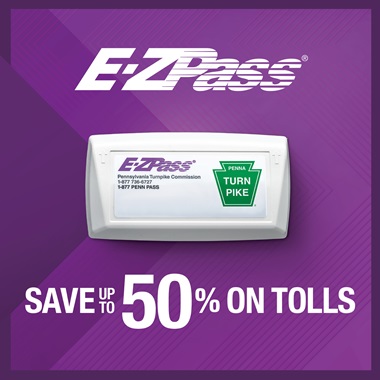
Yes, E-ZPass is absolutely worth it for almost all drivers. It saves between 30% to 50% on toll rates compared to Pay-by-Mail or cash, while completely eliminating administrative invoice fees and stop-and-go delays. Even if you only travel through toll roads a few times a year, choosing a no-monthly-fee state issuer makes the transponder entirely free to maintain.
Is E-ZPass worth it for occasional drivers?
Yes, E-ZPass is highly worth it for occasional drivers, provided you obtain your transponder from a state that does not charge monthly account maintenance fees. This allows you to keep the transponder in your glovebox or windshield indefinitely without incurring passive charges, ready for the occasional road trip or unexpected detour.
Many infrequent drivers mistakenly believe that toll transponders are only for daily commuters. However, without an E-ZPass, casual travelers are subjected to “Pay-by-Plate” or “Toll-by-Mail” systems.
These systems capture your license plate via camera and mail an invoice to your home, often carrying a hefty administrative surcharge of $1.00 to $5.00 per invoice on top of the maximum toll rate.
By contrast, having an active transponder linked to a funded account ensures you pay the lowest possible rate without any surprise bills in the mail. If you only use toll roads two or three times a year, the savings from avoiding just one mail-in invoice administrative fee can completely offset any initial setup effort.
State-by-State Fee Comparison for Occasional Drivers
To make E-ZPass worth it as an occasional driver, you must avoid states that claw back your balance through monthly maintenance fees. Below is a breakdown of which states are friendly to low-frequency drivers and which ones will slowly drain your account balance.
- Massachusetts (EZDriveMA): No monthly fee, no transponder purchase fee. Highly recommended for out-of-state casual drivers.
- New Hampshire: No monthly fee, but requires a one-time purchase fee for the transponder hardware (around $7.40).
- Ohio: Charges a minor $0.75 monthly fee if the transponder is not used for toll travel within the state during that month.
- New York (NY Customer Service Center): Charges a $1.00 monthly fee for accounts without a linked NY-profile, though specific plans can waive this.
- New Jersey: Charges a $1.00 monthly membership fee plus a $1.00 bi-monthly fee, making it less ideal for occasional out-of-state drivers.
How much money does E-ZPass actually save you?
E-ZPass saves drivers an average of 30% to 54% per toll crossing compared to cash or Pay-by-Mail rates. Over the course of a single year, a daily commuter can easily save between $200 and $1,200, while a casual holiday traveler can save $20 to $50 on a single round-trip journey.
Toll authorities actively penalize drivers who do not use transponders. Because processing paper invoices, mailing letters, and chasing down unpaid bills is incredibly expensive for state governments, they pass these operational costs directly onto non-E-ZPass users through highly inflated “cash” or “pay-by-mail” rates.
To illustrate the stark financial difference, let us look at some of the most heavily trafficked toll roads, bridges, and tunnels in the E-ZPass network.
| Toll Facility / Location | Cash / Pay-by-Mail Rate | E-ZPass Rate | Direct Savings per Trip | Percentage Saved |
|---|---|---|---|---|
| Pennsylvania Turnpike (Typical Exit-to-Exit) | $4.50 | $2.10 | $2.40 | 53% |
| Mario M. Cuomo Bridge (NY) | $7.48 | $6.25 | $1.23 | 16% |
| Lincoln / Holland Tunnel (NY/NJ Peak) | $17.63 | $13.38 | $4.25 | 24% |
| Chesapeake Bay Bridge-Tunnel (VA) | $20.00 | $14.00 | $6.00 | 30% |
| MTA Bridges & Tunnels (NYC e.g., Verrazzano) | $11.19 | $6.94 | $4.25 | 38% |
As shown above, the savings are not trivial. Passing through the Lincoln Tunnel just once a week without an E-ZPass wastes over $220 annually in unnecessary surcharges.
What are the hidden fees and downsides of E-ZPass?
The primary downsides of E-ZPass include automatic replenishment credit card charges that temporarily tie up your cash, monthly account fees in select states, and administrative penalties for outdated license plate records. While the system is highly efficient, failing to understand its operational rules can result in unexpected bank charges or violation notices.
Many drivers feel frustrated when they realize that E-ZPass is not a simple “pay-as-you-go” system. Instead, it operates on a pre-funded debit model that can catch budget-conscious consumers off guard if they do not monitor their linked bank accounts.
1. The Auto-Replenishment Cash Grab
When you open an E-ZPass account, you are typically required to make an initial deposit (usually $20 to $35 per transponder). The system is set to “auto-replenish” by default.
Whenever your account balance dips below a specific threshold (often $10.00), E-ZPass automatically charges your linked credit card or bank account a pre-set amount to top it back up.
If you rarely travel on toll roads, this means $25 of your hard-earned money might sit idle in an E-ZPass escrow account for months or even years. To avoid this, some states allow you to opt out of auto-replenishment, but this requires you to manually monitor your balance to avoid low-balance penalties.
2. Out-of-State Discount Discrepancies
A common trap for interstate travelers is assuming that any E-ZPass tag gets the same discount everywhere. While a Massachusetts E-ZPass will physically work on the New York Thruway or the New Jersey Turnpike, you may not receive the specialized local discounts reserved exclusively for residents holding that specific state’s transponder.
For example, New York offers steep discounts on its bridges and thruways, but many of those discounts are only applied if your transponder was issued by the New York E-ZPass Customer Service Center. If you use a New Jersey tag in New York, you might be charged the slightly higher out-of-state E-ZPass rate.
3. The “V-Toll” (Video Toll) Penalty Trap
If your transponder battery dies or if it is mounted incorrectly, the toll gantry will fail to read the RFID chip. When this happens, the system takes a photo of your license plate and attempts to match it to an active E-ZPass account in their database.
If they find a match, they apply a “V-Toll” (Video Toll) to your account, which usually deducts the standard E-ZPass rate. However, if you forget to update your account when you get a new car or new license plates, the system will not find a match.
This results in a full-price violation notice mailed to your home, complete with administrative penalties that can easily exceed $50 per occurrence.
How to choose the best state to get your E-ZPass from
You do not have to live in a state to purchase its E-ZPass; any driver can order a transponder online from almost any participating state to take advantage of lower fees. By shopping around, you can secure a transponder with zero monthly maintenance fees and low initial deposit requirements.
This “toll arbitrage” is highly popular among RV owners, commercial drivers, and savvy consumers. If your home state charges high monthly fees or requires a large deposit, you can simply order a tag from a friendlier state.
The transponder will arrive in the mail, and it will work seamlessly across all 19+ states in the E-ZPass network.
The Top 3 State E-ZPass Accounts to Open
- Massachusetts (EZDriveMA): This is widely considered the best overall choice for drivers nationwide. There is no fee to obtain the transponder, no monthly account maintenance fee, and no requirement to be a Massachusetts resident. Your balance never expires as long as the account remains active.
- New Hampshire E-ZPass: Excellent for drivers who want a reliable account with zero monthly fees. While you must pay a one-time fee of around $7.40 to buy the physical transponder, you are rewarded with a 30% discount on all New Hampshire toll roads, with no recurring administrative fees to worry about.
- Delaware E-ZPass: Another strong contender that offers zero monthly account fees. It is highly convenient for East Coast travelers who want to avoid the administrative fees commonly levied by neighboring Maryland, New Jersey, and New York.
Common E-ZPass technical problems and how to fix them
Most E-ZPass failures are caused by incorrect windshield mounting, metallic thermal windshield glass blocking the radio signal, or a depleted internal transponder battery. Understanding how to troubleshoot these issues can prevent costly violation notices and frustrating customer service phone calls.
Because the transponder relies on a passive 915 MHz Radio Frequency Identification (RFID) signal, any physical obstruction between the tag and the overhead gantry can cause a read failure. If you hear your transponder fail to beep (in older models) or notice frequent “V-Tolls” on your statement, use the following diagnostic steps.
1. Troubleshooting Athermic and Heated Windshields
Many modern luxury vehicles, electric vehicles (such as Tesla), and cars with heated windshields utilize “athermic” glass. This glass contains a micro-thin layer of metal oxide designed to reflect infrared heat and UV rays.
Unfortunately, this metallic layer acts as a Faraday cage, completely blocking the E-ZPass RFID signal. To bypass this issue, manufacturers leave a small, non-coated “window” in the windshield glass, typically located directly behind or next to the rearview mirror.
This area is often designated by a black dotted ceramic matrix. If your car has an athermic windshield, you must mount your E-ZPass precisely within this dotted area, or purchase an exterior license-plate-mounted transponder instead.
2. Identifying and Replacing a Dead Transponder Battery
E-ZPass transponders contain a sealed lithium-ion battery designed to last between 8 and 10 years. These batteries cannot be serviced or replaced by the user.
When the battery begins to fail, the overhead toll gantries will struggle to read the tag, leading to intermittent “V-Tolls” on your monthly statement.
To check if your battery is dying, log into your online portal and look at your recent transactions. If you see an influx of “V-Tolls” or “Image Reads” instead of “Transponder Reads,” your battery is likely dead.
Contact your issuing state agency; they will mail you a replacement transponder free of charge, along with a prepaid envelope to return the old unit for recycling.
3. Proper Placement to Avoid Read Failures
Waving the transponder with your hand while driving through a toll lane is a recipe for failure. The overhead sensors are calibrated to read tags mounted at a specific angle and height on the windshield.
Holding the tag manually often blocks the signal with your hand or positions it at an angle that the gantry cannot read.
Always mount the transponder using the provided dual-lock adhesive strips. Position it at least two inches below the roofline and directly behind the rearview mirror. This ensures optimal signal line-of-sight and keeps your view of the road unobstructed.
Frequently Asked Questions
Can I use my E-ZPass transponder in a rental car?
Yes, you can use your personal E-ZPass in a rental car, but you must manually add the rental car’s license plate to your E-ZPass account portal before driving through any toll plazas.
Failure to register the plate can result in the rental company charging you exorbitant administrative convenience fees (often $10 to $15 per day) if the transponder fails to read and the toll is billed via license plate camera.
Does E-ZPass work in Florida and Georgia?
Yes, E-ZPass is now fully compatible with Florida’s SunPass system and Georgia’s Peach Pass system. You can use your standard E-ZPass transponder on almost all toll roads and express lanes throughout Florida and Georgia without needing to purchase a separate state-specific tag.
What happens if my E-ZPass balance goes negative?
If your balance falls below zero, your transponder will be temporarily suspended. If you continue to pass through toll gantries with a suspended tag, the system will capture your license plate and mail you a toll violation notice.
This notice will charge you the maximum cash toll rate plus an administrative violation fee, which can range from $25 to $50 per crossing.
Can I share one E-ZPass transponder between two different cars?
Yes, you can share a single transponder between multiple vehicles, provided that both vehicles are of the same toll class (e.g., both are passenger cars with two axles) and both license plates are fully registered on your E-ZPass account.
If you use a passenger car transponder on a vehicle towing a trailer or an RV without updating your account, you can face severe fines for class evasion.
Does E-ZPass track your speed and issue speeding tickets?
No, E-ZPass toll authorities do not issue speeding tickets based on the time it takes you to travel between toll plazas.
While the system technically has the mathematical capability to calculate your average speed between gantries, state laws prevent this data from being used to issue moving violations, though toll authorities can suspend your E-ZPass privilege if you drive dangerously fast through physical toll booth lanes.
Conclusion
Ultimately, E-ZPass is an incredibly valuable tool that pays for itself almost instantly. By eliminating the inflated rates of Pay-by-Mail invoices and avoiding time-consuming cash lanes, it streamlines your travel while protecting your wallet.
To maximize its value, simply purchase your transponder from a fee-free state like Massachusetts, mount it correctly away from metallic windshield obstructions, and keep your license plate information meticulously up to date.
Leave a Reply