
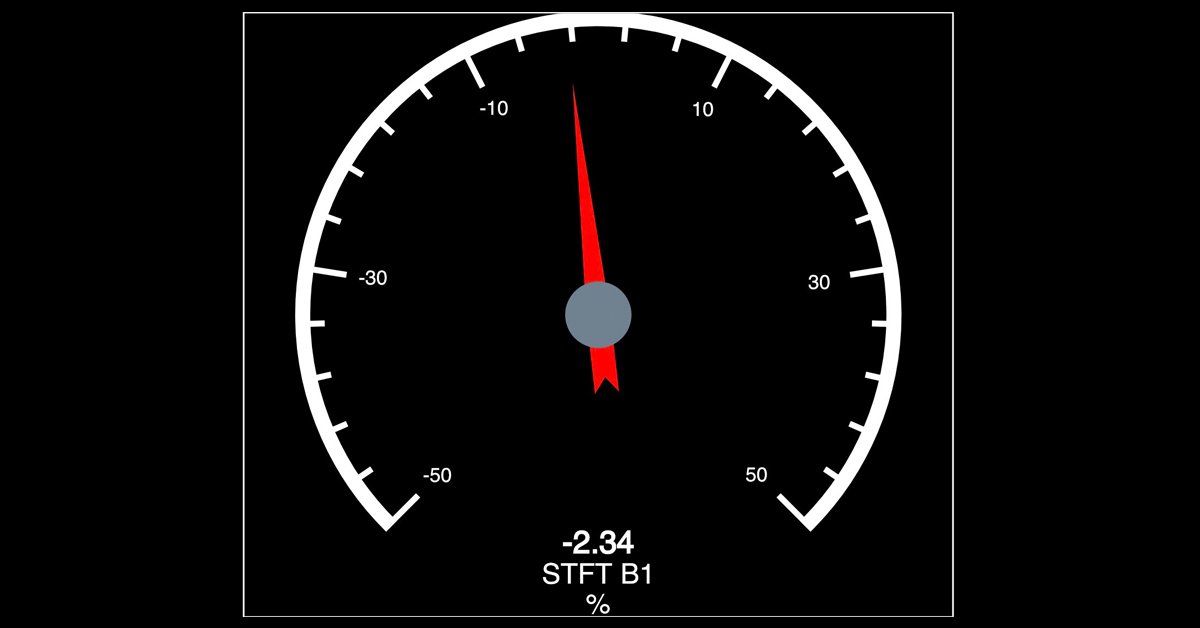
The normal LTFT B1 range is -10% to +10%, with values near 0% showing the ECU requires little long-term fuel correction on Bank 1.
What Does LTFT B1 Actually Measure on Your Vehicle?
LTFT B1 tracks the long-term fuel adjustments the powertrain control module makes for Bank 1 cylinders after short-term trims average out. This value is a critical indicator of engine health and fuel efficiency.
The value reflects how far the ECM must shift injector pulse width to maintain 14.7:1 air-fuel ratio under varying loads and temperatures. It acts as a permanent memory of fuel compensation trends.
Mechanics see this parameter through a scan tool in live data or freeze-frame records. It provides a snapshot of how the engine has been performing over time rather than just a momentary reading.
Positive numbers mean the ECM is adding fuel because the mixture has been lean. Conversely, negative numbers mean it is removing fuel because the mixture has been rich.
What Is the Normal LTFT B1 Range Across Most Gasoline Engines?
Factory service information lists the acceptable window as -10% to +10% for the majority of port-injected and direct-injected engines. Staying within this range ensures the engine can still compensate for minor wear.
Values that stay between -5% and +5% under steady cruise and idle conditions indicate the fuel system and sensors are operating near baseline calibration. This is considered the “sweet spot” for optimal performance.
Some late-model vehicles with tighter emissions calibrations keep the limit at -8% to +8%. These modern systems are much more sensitive to slight deviations in the air-fuel mixture.
Anything outside these windows triggers a pending or stored code such as P0171 or P0172 once the ECM reaches its authority limit. At this point, the Check Engine Light will typically illuminate.
Idle versus Cruise LTFT B1 Behavior
At idle the ECM often shows slightly higher positive LTFT because of unmetered air past the throttle body or PCV valve. This is common as vacuum is highest when the throttle plate is closed.
During 40-60 mph steady cruise the value should drop closer to zero if the MAF or MAP sensor is accurate. Higher speeds reduce the impact of small vacuum leaks on the overall air percentage.
Compare both operating conditions on the same drive cycle. A large spread between idle and cruise LTFT points to vacuum leaks or fuel delivery problems that only appear under certain manifold vacuum levels.
Why Does LTFT B1 Read Positive Above 10%?
A consistently high positive reading means Bank 1 is running lean and the ECM is adding fuel. This is a compensatory measure to prevent engine hesitation or stalling.
Common root causes include vacuum leaks after the MAF, low fuel pressure, clogged injectors, or an exhaust leak before the upstream oxygen sensor. Each of these introduces excess air or insufficient fuel.
Step-by-step diagnosis begins with smoke testing the intake tract while monitoring LTFT. Next, check fuel pressure at the rail against specification at idle and under load.
Finally, inspect the Bank 1 upstream O2 sensor waveform for slow response or bias. A “lazy” sensor can trick the ECM into thinking the engine is leaner than it actually is.
Vacuum Leak Diagnosis on Bank 1
- STEP 1: Connect a smoke machine to the intake with the engine off and PCV valve blocked.
- STEP 2: Look for smoke at intake manifold gaskets, brake booster hose, EVAP purge valve, and PCV hose connections.
- STEP 3: Repair any leaks found, then clear adaptive fuel trim tables and road test to verify LTFT returns below 5%.
Fuel Pressure and Injector Flow Testing
Attach a mechanical fuel pressure gauge to the Schrader valve on the fuel rail. This provides a direct measurement that electronic sensors might miss.
Compare readings to the service manual specification; a weak pump or clogged filter often produces 10-15 psi below spec at wide-open throttle. This drop in pressure causes a lean condition under load.
Perform injector balance testing with a noid light or lab scope. Uneven pulse width on Bank 1 injectors requires cleaning or replacement before resetting fuel trims.
Why Does LTFT B1 Read Negative Below -10%?
A large negative value indicates the ECM is removing fuel because Bank 1 is running rich. This usually results in poor fuel economy and a strong smell of gasoline from the exhaust.
Typical causes are leaking injectors, high fuel pressure, faulty EVAP purge valve, or a failing upstream oxygen sensor. A sensor that reads lean when the mixture is actually rich will force the ECM to over-correct.
Begin diagnosis by checking for fuel in the vacuum line at the fuel pressure regulator if equipped. If fuel is present, the internal diaphragm has likely ruptured.
Next, command the EVAP purge valve closed with a scan tool and watch whether LTFT improves. Finally, scope the O2 sensor signal for voltage stuck above 800 mV.
EVAP Purge Valve and Charcoal Canister Issues
Disconnect the purge valve electrical connector and retest LTFT at idle. If the negative trim improves immediately, replace the purge valve and inspect the charcoal canister for liquid fuel saturation.
Clear the adaptive memory after repairs and monitor LTFT over multiple cold-start and hot-soak cycles to confirm the fix holds. This ensures the ECM has fully relearned the correct parameters.
How to Reset and Verify LTFT B1 After Repairs
Disconnect the battery for 10 minutes or use a scan tool to clear adaptive fuel trim tables. This forces the ECM to start from a “zeroed” baseline rather than using old, incorrect data.
Drive the vehicle through the manufacturer’s drive cycle that includes steady cruise, acceleration, and deceleration segments. This allows the ECM to sample data across all operating ranges.
Record LTFT B1 at idle, 2000 rpm no-load, and 55 mph cruise. Consistent monitoring is the only way to ensure the repair was successful.
Values that remain inside -5% to +5% after 50 miles of mixed driving confirm the repair addressed the root cause rather than masking it. This verification step is vital for long-term reliability.
Model-Specific LTFT B1 Normal Ranges and Common Failures
| Engine Model | Common LTFT Issue | Primary Solution |
|---|---|---|
| Ford 4.6L / 5.4L | Positive trim (+12%) | Intake manifold runner seals |
| GM 5.3L / 6.2L | Positive trim (Lean) | Walnut blasting intake valves |
| Toyota 2GR-FE V6 | Negative trim (Rich) | Purge valve replacement |
Ford 4.6L and 5.4L Modular Engines
These engines tolerate up to +12% before setting P0171, yet real-world data shows vacuum leaks at the intake manifold runner control seals are the most frequent cause. Replace the seals and relearn trims rather than chasing sensor replacements.
GM 5.3L and 6.2L L83/L86 Engines
Direct-injection versions often show positive LTFT from carbon buildup on intake valves restricting airflow. Walnut blasting restores cylinder balance and brings LTFT back inside the normal window without fuel system parts replacement.
Toyota 2GR-FE V6 Engines
Common negative LTFT readings trace to leaking purge valves located under the intake manifold. Access requires manifold removal, so technicians frequently misdiagnose the issue as faulty injectors and quote unnecessary fuel system work.
FAQ
Can a dirty MAF sensor alone push LTFT B1 outside normal range?
Yes. A MAF that under-reports airflow causes positive LTFT on both banks, yet cleaning or replacement often restores normal values without further repairs.
How long does it take for LTFT B1 to update after a repair?
Most ECMs require 30-100 miles of varied driving including idle, cruise, and light acceleration before long-term trims fully relearn.
Is it safe to drive with LTFT B1 at +15%?
Short-term driving is possible, but sustained high positive trim increases combustion temperatures and risks catalyst damage if left unaddressed.
Does resetting the ECM erase learned LTFT values permanently?
No. The ECM relearns new values within a few drive cycles once the underlying fault is corrected.
Conclusion
LTFT B1 outside the -10% to +10% window signals a measurable deviation from the calibrated air-fuel mixture on Bank 1. Systematic diagnosis of vacuum integrity, fuel pressure, injector performance, and oxygen sensor response isolates the fault before expensive parts are replaced.
After each repair, verify the correction by monitoring LTFT over multiple drive cycles rather than relying on a single idle reading. This approach prevents repeat visits and protects the catalytic converter from long-term damage.
Leave a Reply