
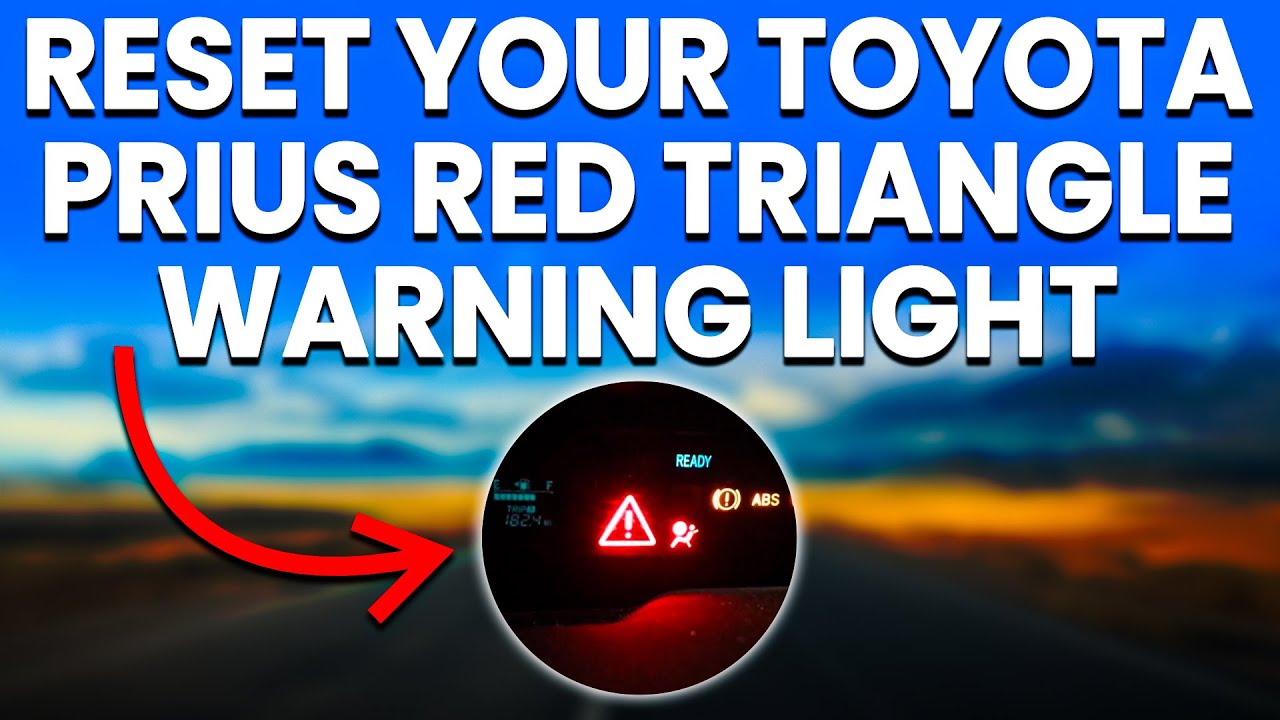
The red triangle warning light on your Toyota Prius indicates a hybrid system issue, most commonly triggered by a 12V battery problem, low coolant, or inverter coolant issues. Check the 12V battery voltage first—below 12.6V often causes it. Scan for codes with an OBD2 reader to pinpoint the exact fault.
What Does the Red Triangle Light Mean on Toyota Prius?
The red triangle exclamation point on your Prius dashboard signals a serious hybrid system fault that requires immediate attention to avoid stranding or further damage.
It illuminates when the car’s computer detects anomalies in the hybrid battery, cooling systems, or related electronics. Ignoring it can lead to limp mode, where the car reduces power or won’t start.
In real-world diagnostics, this light appears alongside specific error messages on the multi-information display, like “Check Hybrid System” or “Hybrid System Malfunction.”
Dealerships often quote $2,000+ for vague “hybrid repairs,” but independent shops and DIYers fix 80% of cases for under $200 by targeting common culprits.
Common Accompanying Symptoms
- Car won’t start or goes into limp mode with reduced power.
- Triangle with brake warning or ABS light.
- Audible beep and messages like “Stop Safely” or “Hybrid Battery Cooling Issue.”
- EV mode unavailable; relies only on gas engine.
Why Dealerships Overdiagnose It
Dealers scan with Techstream software and blame the expensive hybrid battery pack ($3,000+), but that’s rarely the root cause.
They’ve misdiagnosed low 12V batteries as hybrid failures repeatedly, charging for unnecessary traction battery tests. Start with basics before towing to avoid this rip-off.
Toyota Prius Red Triangle Light Causes and Fixes
The red triangle stems from five primary issues: 12V battery failure (most common, 60% of cases), hybrid system overheat, coolant problems, DC/DC converter faults, and wiring issues.
Diagnose systematically to avoid replacing good parts. Here’s how to identify and fix each, based on repeated shop experience.
1. Weak or Dead 12V Auxiliary Battery
This is the number one cause across all Prius generations (Gen 2-4). The 12V battery powers the car’s computers; when it drops below 12.2V, it falsely triggers the hybrid warning.
Symptoms include slow cranking, dim lights, or the light appearing after sitting overnight.
Test voltage with a multimeter: engine off should read 12.6V+; running at 13.8-14.4V. Replace with an AGM battery like Optima or Interstate (Group 46B, 45Ah minimum) for reliability—OEM lasts only 3-5 years.
- Park on level ground, turn off car, pop hood.
- Disconnect negative terminal first (10mm wrench), then positive.
- Remove hold-down bracket (12mm bolt), lift out old battery.
- Install new battery, torque terminals to 4-5 Nm, reconnect positive then negative.
- Clear codes with OBD2 scanner or drive cycle (10 miles mixed driving).
2. Low or Air-Bleeding Hybrid Coolant
Gen 3 (2010-2015) Prius models suffer from air pockets in the inverter coolant reservoir, causing the triangle after coolant top-offs. Low levels trigger the sensor falsely.
Check the translucent reservoir under the hood—should be between MIN/MAX when cold.
Use Toyota Super Long Life Coolant (pink, pre-mixed). Never mix types, as it gels the system.
- Engine cold, remove radiator cap slowly.
- Fill reservoir to MAX with pink coolant.
- Run engine in accessory mode (press power without brake) for 5 minutes, top off.
- Drive 20 miles, repeat until stable—no bubbles.
- Burp system: jack front slightly, run heater on max, rev to 2500 RPM briefly.
3. Inverter Coolant Pump Failure
The electric water pump for the inverter (under rear seat in Gen 3) fails from wear, causing overheat warnings.
Listen for pump hum with hood open—silence means it’s dead. Replacement part is $200-300; pump codes like P0A08 show on scan.
Access via rear seat lift-up; unplug connector, twist counterclockwise to remove. Install new pump, refill coolant, prime by running accessory mode.
4. DC/DC Converter Issues
The DC/DC converter (under hood) charges the 12V from hybrid battery; faults trigger triangle with “12V Battery Weak” message.
Common in high-mileage Gen 2 (2004-2009). Test by measuring 12V output while driving—should hold steady.
Shops replace entire unit ($1,500), but clean connections and fuse first. If failed, swap with Denso remanufactured unit.
5. Wiring Harness or Sensor Faults
Chafed wires near battery ECU or loose hybrid battery sensors cause intermittent triangles.
Inspect for corrosion at grounds (behind glovebox). Use dielectric grease on reconnections.
Toyota Prius Red Triangle No Codes: What to Do
Red triangle without OBD2 codes points to transient faults like voltage drops or unstored errors. It clears after resets in 70% of cases.
Force a hard reset: disconnect 12V battery for 10 minutes, touch cables together to drain capacitors.
Drive a full cycle: 10 miles highway, 5 city stops. If persistent, check multifunction display fuses (under dash, 7.5A #12). Gen 4 owners report success jumping the 12V briefly to recharge.
Step-by-Step No-Code Diagnostic
- Scan anyway—use a hybrid-capable reader like BlueDriver for pending codes.
- Check all fluid levels: brake, transaxle, windshield washer (overflows fool sensors).
- Inspect hood strut switch—faulty ones trigger warnings.
- Monitor live data: hybrid battery SOC should be 40-60%.
Red Triangle and Brake Light on Prius: Hybrid Brake Issues
When triangle pairs with brake light, it’s often brake accumulator or ABS module pressure loss. Car may start in limp mode.
Prioritize parking safely—brakes still work but with less assist.
Common in Gen 2/3: low brake fluid or failing booster pump. Top off DOT 3 fluid, bleed system if spongy.
| Symptom | Cause | Fix | Cost |
|---|---|---|---|
| Triangle + Brake | Low brake fluid | Top off DOT3, bleed | $20 |
| Won’t shift to Park | Shift lock solenoid | Clean actuator | $50 |
| Hard braking | Brake booster pump | Replace pump | $400 |
Gen 3 Prius Red Triangle Warning Specific Fixes
2010-2015 Gen 3 hits hardest due to inverter design flaws. Head gasket failures mimic hybrid issues—check for milky oil.
Coolant pump recall affected some; verify VIN on Toyota site.
EGR cooler leaks cause overheating triangles. Clean EGR valve first ($20 kit) before valve replacement.
Gen 3 Model-Year Breakdown
- 2010-2011: Head gasket prone; monitor temps.
- 2012-2015: Software glitch—update ECU via dealer flash (free if under warranty).
How to Reset Toyota Prius Red Triangle Light
Resets work for soft faults but not hardware issues—light returns if root cause persists. Use OBD2 scanner (Torque Pro app + Bluetooth adapter, $20).
Generic scanners miss hybrid codes. DIY reset sequence: Key on (no start), hold brake + power button 30 seconds, cycle 3x.
- Plug scanner under dash OBD port (driver knee area).
- Turn ignition to ON (press power without brake).
- Select “Clear Codes” under Hybrid or Powertrain menu.
- Drive 50 miles to complete readiness monitors.
- If no scanner, pull HV battery fuse #21 (10A, under hood) for 5 min.
Warning: Never reset while driving; park safely first.
Red Triangle Prius Won’t Start: Emergency Steps
If triangle flashes and car won’t start, jump the 12V battery directly—hybrid won’t engage without it.
Use booster cables to another car: positive to positive, negative to chassis ground (not battery). Let charge 10 minutes, then try starting.
Tow if hybrid battery contactor clicks but no crank. Avoid AAA jump on hybrid side.
Safe Jump Procedure
- Both cars off, hoods open.
- Red to dead Prius positive post, black to good car negative, then Prius chassis bolt.
- Start good car, idle 5 min.
- Attempt Prius start (brake + power).
- Drive immediately to charge systems.
FAQ
Can I drive with the red triangle light on?
Short distances only if power remains; limp mode protects components. Park ASAP if flashing or with other lights—risk of shutdown.
How much does it cost to fix Prius red triangle?
$100-300 DIY (battery/coolant); $800-2,000 at shops. Avoid dealer hybrid battery quotes unless codes confirm.
Why does red triangle come on randomly?
Voltage fluctuations from failing alternator (DC/DC) or corroded grounds. Clean terminals yearly.
Is the red triangle related to the check engine light?
Often yes—both from same ECU. Scan for P0A80 (hybrid battery) or P3000 series.
Does red triangle drain the hybrid battery?
No, but it prevents charging—monitor gauge; tow if below 20%.
Conclusion
Most Prius red triangle issues boil down to the overlooked 12V battery or simple coolant bleeds—don’t let shops upsell hybrid pack replacements.
Invest in a $30 OBD2 scanner and multimeter for ownership; they’ll pay off repeatedly.
Regular maintenance like annual battery tests and coolant checks prevents 90% of these scares, keeping your Prius running efficiently for 200,000+ miles.
Leave a Reply