
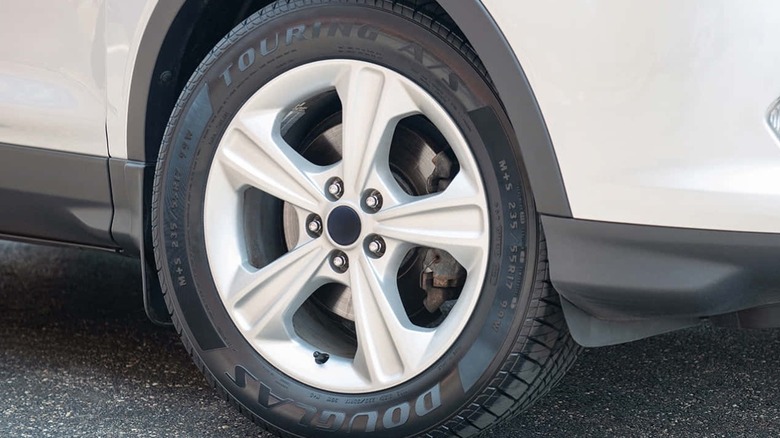
Douglas tires are manufactured exclusively by the Goodyear Tire & Rubber Company, one of the world’s largest and most reputable tire manufacturers. Established as a private-label house brand for Walmart, Douglas tires offer a budget-friendly alternative engineered and produced in Goodyear’s domestic and international manufacturing facilities.
For decades, budget-conscious drivers have walked into Walmart Auto Care Centers and noticed the incredibly low price tags on Douglas tires. Many consumers naturally wonder if these tires are cheap, low-quality imports that compromise safety for savings. The reality is far more reassuring for vehicle owners looking to stretch their dollars without sacrificing basic road safety.
By leveraging the massive manufacturing infrastructure of Goodyear, Douglas tires are built to meet federal safety standards using legacy Goodyear technology. This relationship allows everyday drivers to access reliable, American-engineered tires at a fraction of the cost of premium brands. Understanding who makes these tires, where they are built, and how they perform in the real world is key to making an informed buying decision.
Who makes Douglas tires and where are they manufactured?
Douglas tires are manufactured by the Goodyear Tire & Rubber Company, primarily within their highly automated United States production plants. This strategic partnership allows Walmart to offer an exclusive, high-volume house brand while Goodyear keeps its domestic factories running at peak capacity.
Unlike many budget tire brands sold online that are imported from unverified factories overseas, Douglas tires benefit from Goodyear’s strict quality control protocols. The majority of Douglas tires are stamped with “Made in the USA,” rolling off the same assembly lines as premium Goodyear Assurance and Wrangler tires.
Goodyear utilizes factories in cities such as Fayetteville, North Carolina; Danville, Virginia; Topeka, Kansas; and Lawton, Oklahoma to produce the Douglas line.
Because Goodyear operates a global manufacturing network, a small percentage of Douglas tires may occasionally be sourced from Goodyear facilities in Chile, Indonesia, or other international locations depending on supply chain demands. However, the engineering standards, rubber compounds, and structural designs remain strictly managed by Goodyear’s corporate engineering team in Akron, Ohio. This domestic manufacturing heritage gives Douglas a massive quality control advantage over anonymous, white-label import tires.
How to identify the exact factory using the DOT code
Every tire sold in the United States is required by the Department of Transportation (DOT) to have a identification code stamped onto its sidewall. By reading the first two characters of the DOT code on a Douglas tire, you can determine the exact factory where it was built. This is a valuable tool for verifying that your budget tires were made in a high-quality domestic Goodyear facility.
- Code M6: Manufactured at the Goodyear plant in Lawton, Oklahoma.
- Code PJ: Manufactured at the Goodyear plant in Fayetteville, North Carolina.
- Code DA: Manufactured at the Goodyear plant in Danville, Virginia.
- Code MD: Manufactured at the Goodyear plant in Gadsden, Alabama (historical production).
Are Douglas tires good quality for daily driving?
Yes, Douglas tires offer highly reliable quality for daily commuting, utilizing Goodyear’s legacy rubber compounds and proven tread designs to deliver dependable dry and wet traction. While they lack the cutting-edge polymer innovations found in premium $200 tires, they easily outperform cheap, non-branded imports in safety, balancing, and structural integrity.
From a professional diagnostic perspective, Douglas tires are an excellent “point A to point B” solution for standard sedans, minivans, and compact crossovers. They are designed for drivers who prioritize value, short commutes, and normal highway driving over high-performance cornering or extreme winter capability.
The tread wear life is highly respectable, with most models carrying a 45,000-mile treadwear warranty that real-world drivers regularly achieve with proper maintenance.
However, it is important to understand the engineering trade-offs of a budget tire. To keep manufacturing costs low, Goodyear uses older-generation carbon black rubber compounds rather than the expensive silica-infused compounds found in premium tires.
This means Douglas tires may experience a slight drop-off in wet braking performance and snow traction compared to a top-tier Goodyear tire, and the ride may feel slightly firmer.
| Tire Model | UTQG Rating | Warranty (Miles) | Best For |
|---|---|---|---|
| Douglas All-Season | 420 A B | 45,000 | Daily commuting, sedans, minivans |
| Douglas Performance | 440 A A | 45,000 | Sportier sedans, larger wheel fitments |
What are the main types of Douglas tires available?
The Douglas tire lineup is highly streamlined, consisting of two primary models: the Douglas All-Season and the Douglas Performance. This simplified catalog allows Walmart and Goodyear to minimize manufacturing setup costs and pass those direct savings on to the consumer.
By focusing on just two primary tire designs, Goodyear can run massive production batches without needing to constantly re-tool their machinery. This manufacturing efficiency is the primary reason these tires are so inexpensive, rather than a lack of quality control or poor materials. Both models are engineered to cover over 80% of the passenger vehicles on the road today.
1. The Douglas All-Season Tire
The Douglas All-Season is the flagship budget tire designed for everyday passenger cars, compact SUVs, and minivans. It features a classic symmetric tread pattern with circumferential grooves designed to channel water away from the contact patch, reducing the risk of hydroplaning.
It is highly regarded by budget-conscious drivers for its predictable handling and decent tread life during normal driving conditions.
This tire features specialized biting edges along the tread blocks to provide basic traction in light snow and slush. While it is not a substitute for a dedicated winter tire, it performs admirably in mild climates.
The internal construction includes twin steel belts reinforced by polyester cord plies, providing a stable footprint and a relatively smooth highway ride.
2. The Douglas Performance Tire
The Douglas Performance tire is engineered for drivers of sportier sedans and coupes who require larger wheel fitments and sharper handling response. It features an asymmetric tread design, which places larger, stiffer tread blocks on the outer shoulder of the tire to improve cornering stability and steering feedback.
This design helps maintain a larger contact patch with the road when cornering at highway speeds.
In addition to improved dry handling, the Douglas Performance utilizes refined tread siping and wider longitudinal grooves to enhance wet-weather braking. The rubber compound is formulated to be slightly stickier than the standard All-Season model, resulting in a higher UTQG traction rating of “A” instead of “B.”
This makes it an excellent, low-cost option for vehicles like the Honda Accord, Toyota Camry, or Ford Fusion.
How do Douglas tires compare to premium Goodyear tires?
While both brands are designed and built by Goodyear, Douglas tires utilize legacy rubber compounds and simplified tread patterns, whereas premium Goodyear tires feature advanced silica chemistry, sound-dampening technology, and longer mileage warranties. Douglas represents Goodyear’s entry-level tier, offering basic safety and function without the premium price markup.
When you purchase a premium Goodyear tire, such as the Assurance ComfortDrive or the Eagle Exhilarate, you are paying for cutting-edge tire technology. These premium lines feature highly advanced, silica-rich rubber compounds that remain flexible in freezing temperatures and grip wet roads exceptionally well.
They also include specialized internal layers, such as ComfortEdge sidewalls or DuPont Kevlar reinforcement, to absorb road vibrations and reduce cabin noise.
In contrast, Douglas tires are built using standard, time-tested carbon black compounds. These compounds are highly durable but do not offer the same low rolling resistance (which improves fuel economy) or extreme wet-grip capabilities as modern silica compounds.
Furthermore, while a premium Goodyear tire might carry an 80,000-mile warranty, Douglas tires top out at 45,000 miles. However, for a vehicle owner on a tight budget or someone selling a car soon, the lower price of Douglas makes them a highly practical choice.
What are the common real-world problems with Douglas tires?
The most common real-world complaints regarding Douglas tires include increased road noise as the tread wears down, reduced wet-weather traction past the 50% wear mark, and balancing difficulties during installation. Understanding these common issues can help you mitigate them through proper maintenance and realistic expectations.
Because Douglas tires are built to a strict price point, they do not feature the advanced, multi-pitch tread block designs used by premium manufacturers to cancel out road noise. As a result, you may notice a low-frequency hum on the highway, which can become more pronounced as the tires age and the rubber hardens.
Additionally, because the rubber compound is harder, wet braking distances will naturally increase once the outer tread depth drops below 4/32 of an inch.
Another issue frequently noted by professional tire technicians is that Douglas tires sometimes require more wheel weights to achieve a perfect balance. This is due to slightly wider manufacturing tolerances compared to Goodyear’s premium lines.
If you experience a steering wheel vibration after having these tires installed, it is highly recommended to take the vehicle back to the shop and request a high-speed road-force balance to correct any minor heavy spots in the tire assembly.
How to diagnose and prevent uneven wear on Douglas tires
Because Douglas tires feature a slightly softer sidewall construction than premium heavy-duty tires, they are highly sensitive to improper vehicle alignment and incorrect tire pressure. If your vehicle’s suspension is out of spec, these budget tires will wear out prematurely, often in under 20,000 miles. Follow this diagnostic checklist to maximize the lifespan of your tires:
- Check Alignment Every 12,000 Miles: If you notice feathering or cupping on the inner edge of the tread, your vehicle likely has excessive toe-out or negative camber.
- Maintain OEM Tire Pressure: Under-inflation causes the outer shoulders of Douglas tires to wear rapidly, while over-inflation wears out the center tread strip. Always refer to the placard on your driver-side door jamb, not the maximum pressure stamped on the tire sidewall.
- Rotate Tires Every 5,000 to 7,500 Miles: Regular front-to-back rotation is critical to prevent the front steering tires from wearing out twice as fast as the rear tires.
How to read Douglas tire sidewall markings and DOT codes?
To properly read a Douglas tire sidewall, you must locate the standardized alphanumeric codes that indicate the tire’s size, load capacity, speed rating, age, and quality standards. Being able to decode this information prevents you from buying outdated stock or installing the wrong tire class on your vehicle.
When shopping at big-box retailers like Walmart, tires can sometimes sit in warehouse storage for several years before being sold. Installing “new” tires that are actually five years old is a safety hazard, as rubber naturally degrades and dries out over time. By knowing how to read the DOT date code, you can ensure you are driving away on fresh, safe rubber.
Additionally, the sidewall contains the Uniform Tire Quality Grading (UTQG) standards, which are mandated by the National Highway Traffic Safety Administration (NHTSA). These ratings grade the tire’s treadwear, traction, and temperature resistance, allowing you to compare the Douglas tire’s raw performance capabilities directly against any other tire brand on the market.
Step-by-step guide to decoding your Douglas tire
Locate the main text block on the side of your Douglas tire. You will see a sequence similar to P205/55R16 91H. Here is exactly what those characters mean:
- P (Passenger): Indicates the tire is designed for standard passenger cars, light SUVs, and minivans.
- 205 (Section Width): The width of the tire from sidewall to sidewall in millimeters (205mm).
- 55 (Aspect Ratio): The height of the sidewall profile, represented as a percentage of the section width (55% of 205mm).
- R (Radial): The industry-standard radial construction method using fabric plies running perpendicular to the direction of travel.
- 16 (Wheel Diameter): The diameter of the wheel rim in inches that the tire is designed to fit.
- 91 (Load Index): A numerical code indicating the maximum weight capacity the tire can safely support (91 equates to 1,356 pounds per tire).
- H (Speed Rating): A letter code indicating the maximum safe speed capability of the tire (H is rated for speeds up to 130 mph).
Frequently Asked Questions
Do Douglas tires have a mileage warranty?
Yes, both the Douglas All-Season and Douglas Performance tire models come with a 45,000-mile limited treadwear warranty. To keep this warranty valid, you must keep records showing that the tires were rotated and balanced every 5,000 to 7,500 miles, and your vehicle’s wheel alignment must be kept within factory specifications.
Are Douglas tires noisy on the highway?
Douglas tires are generally quiet when they are brand new, but they can develop more road noise as the tread wears down past 50%. This is because they lack the expensive, noise-canceling tread block designs and specialized inner liners found on premium Goodyear tires. Keeping your tires properly rotated and aligned will significantly reduce this noise build-up.
Can you get Douglas tires serviced at any tire shop?
Yes, while Douglas tires are sold exclusively through Walmart, they can be serviced, patched, rotated, and balanced at any professional tire shop or automotive dealership. Because they use standard radial construction and standard valve stems, no specialized equipment is required to service them.
Why are Douglas tires so cheap compared to other Goodyear products?
Douglas tires are inexpensive because they are a private-label house brand for Walmart, which purchases them in massive, high-volume quantities directly from Goodyear. Additionally, Goodyear saves on research and development costs by using legacy tread designs and standard rubber compounds rather than expensive new chemical innovations.
Are Douglas tires safe for driving in snow?
The Douglas All-Season tire features basic siping and tread block biting edges that are safe for light, occasional snow and slush. However, they are not dedicated winter tires and do not carry the Three-Peak Mountain Snowflake (3PMSF) symbol. If you live in an area with heavy winter snow and consistent freezing temperatures, you should invest in dedicated snow tires.
Conclusion
Douglas tires represent one of the best value propositions in the automotive industry for budget-conscious drivers. Manufactured by the Goodyear Tire & Rubber Company and sold exclusively through Walmart, they offer the peace of mind of domestic, high-quality manufacturing without the premium brand-name price tag.
While they may lack the whisper-quiet ride, ultra-long warranties, and advanced wet-grip chemistry of premium $200 tires, they are a highly safe, reliable, and practical choice for daily commuting and standard passenger vehicles.
By maintaining proper tire pressure, keeping your suspension aligned, and performing regular rotations, a set of Douglas tires will safely and dependably serve you for years to come.
Leave a Reply