
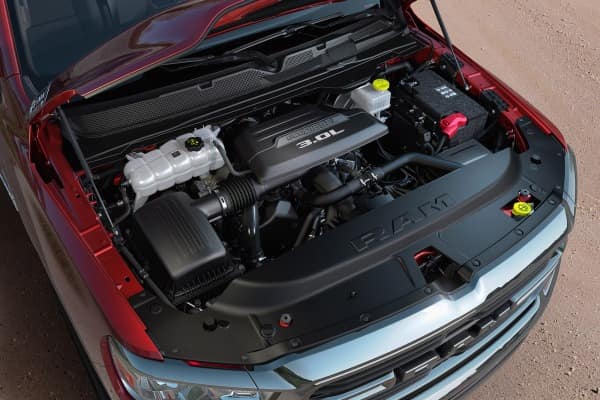
The Ram 1500 and Jeep Grand Cherokee 3.0L EcoDiesel is known for EGR cooler failures, engine overheating, excessive oil consumption, timing chain stretching, turbocharger issues, and problematic DPF/DEF emissions systems. These problems span from the 2014–2023 model years, with Gen 1 engines (2014–2019) being significantly more failure-prone than the redesigned Gen 3 (2020+).
What Are the Most Common 3.0 EcoDiesel Problems?
The most frequently reported 3.0 EcoDiesel problems include EGR cooler failure causing coolant leaks, excessive oil consumption, stretched timing chains, turbo failure, DPF clogging, DEF system faults, and overheating due to oil cooler breakdowns. These issues affect Ram 1500, Jeep Grand Cherokee, and Jeep Gladiator models equipped with the V6 diesel engine.
If you own a 3.0L EcoDiesel-powered vehicle, chances are you have either already dealt with one of these failures or you are nervously waiting for one to show up. This engine, built by VM Motori and used by FCA (now Stellantis), was marketed as a fuel-sipping diesel alternative for half-ton trucks and SUVs. In practice, it has developed a reputation that makes many diesel techs cringe when one rolls into the bay.
The problems are not random. They follow predictable failure patterns based on mileage, model year, and how the vehicle was driven. Below is every major issue broken down with causes, symptoms, and what you can actually do about it without getting taken to the cleaners by a dealership.
Which Model Years Are the Worst?
- 2014–2016 Ram 1500 EcoDiesel: The earliest and most problematic years. EGR cooler recalls, oil cooler failures, and early turbo deaths are extremely common.
- 2017–2019 Ram 1500 EcoDiesel (Gen 2): Slightly improved but still plagued by EGR issues, DPF clogging, and DEF injector faults.
- 2020–2023 Ram 1500 EcoDiesel (Gen 3): A complete redesign with better internals, stronger main bearings, and revised emissions hardware. Far more reliable but not bulletproof.
- 2014–2020 Jeep Grand Cherokee EcoDiesel: Shares nearly all the same problems as the Ram, with the added headache of tighter engine bay packaging making repairs more labor-intensive.
Why Does the 3.0 EcoDiesel EGR Cooler Fail?
The 3.0 EcoDiesel EGR cooler fails because the internal cooler core cracks over time from repeated heat cycling, allowing coolant to leak into the exhaust stream or intake. This was so widespread that FCA issued multiple recalls and a class-action settlement covering 2014–2019 models.
The EGR (Exhaust Gas Recirculation) cooler on this engine is a heat exchanger that cools exhaust gases before sending them back into the intake. It sits in an extremely hostile thermal environment.
Over time, the thin-walled internal passages crack. When they crack, you get one or more of the following symptoms.
Symptoms of EGR Cooler Failure
- Coolant loss with no visible external leak — You keep topping off the reservoir but never see a puddle under the truck.
- White smoke from the exhaust — Especially at idle or on cold starts. This is coolant being burned in the combustion chamber or exiting through the exhaust.
- Sweet smell from the exhaust — Classic sign of burning ethylene glycol.
- Check engine light with P04DB or P2457 codes — Related to EGR cooler performance and exhaust temperature rationality.
- Overheating under load — Particularly when towing or climbing grades because coolant is being lost internally.
How to Fix It
If your truck is still under the recall coverage or the extended warranty settlement, the dealer will replace the EGR cooler, bypass valve, and associated hoses at no cost. If you are outside coverage, expect to pay between $1,200 and $2,500 at an independent shop depending on the model year.
The Ram 1500 is a straightforward job. The Grand Cherokee is significantly tighter and adds labor hours.
Pro Tip: Many owners choose to do an EGR delete if they are not in an emissions-testing state. This eliminates the cooler entirely and prevents recurrence. However, it is not federally legal for on-road vehicles and will void any remaining powertrain warranty.
What Causes 3.0 EcoDiesel Overheating Problems?
3.0 EcoDiesel overheating is most commonly caused by oil cooler failure, EGR cooler cracks, a clogged radiator, or a failing thermostat. The oil cooler sits in the engine valley and when its seals degrade, coolant and oil mix internally, reducing the cooling system’s ability to manage engine temperatures.
This is one of the most misunderstood failures on this engine. Owners will see the temperature gauge climbing, immediately assume it is the thermostat or water pump, and throw parts at it. In reality, the root cause on a high-mileage EcoDiesel is almost always the oil cooler or the EGR cooler, often both at the same time.
How to Diagnose the Real Cause
- Check the oil fill cap — Look for a milky, milkshake-like substance on the underside. This indicates coolant mixing with oil through a failed oil cooler.
- Pressure test the cooling system — A proper pressure test will reveal if the system holds pressure. Rapid pressure loss with no external leak points to an internal failure.
- Pull the oil cooler and inspect — On the EcoDiesel, the oil cooler is integrated into the engine valley. If the gaskets are swollen, cracked, or the cooler body is corroded, that is your failure point.
- Inspect the EGR cooler simultaneously — Since you are already dealing with a cooling issue, checking the EGR cooler at the same time saves you from tearing the engine apart twice.
Repair Costs for Overheating Issues
| Repair | Parts Cost | Labor Cost | Total Estimate |
|---|---|---|---|
| Oil Cooler Replacement | $250–$500 | $800–$1,500 | $1,050–$2,000 |
| EGR Cooler Replacement | $300–$700 | $500–$1,200 | $800–$1,900 |
| Thermostat Replacement | $40–$80 | $150–$300 | $190–$380 |
| Full Cooling System Overhaul | $600–$1,200 | $1,200–$2,500 | $1,800–$3,700 |
Is the 3.0 EcoDiesel Timing Chain a Known Problem?
Yes, the 3.0 EcoDiesel has a well-documented timing chain stretching problem, especially on 2014–2019 models. The chain elongates over time due to inadequate tensioner design, causing rough idle, misfires, check engine lights, and eventually catastrophic valve timing issues if left unchecked.
The timing chain on this engine is located at the rear of the engine, against the firewall. This is an extremely labor-intensive repair because the transmission often needs to be partially dropped or the engine pulled forward to access it. FCA knew this was an issue and revised the chain and tensioner design in later production runs.
Symptoms of a Stretched Timing Chain
- Rough idle that worsens when warm — The chain slack increases as the engine heats up.
- Codes P0016, P0017, P0018, P0019 — Correlation codes between the crankshaft and camshaft position sensors.
- Rattling or slapping noise at startup — Especially pronounced during cold starts before oil pressure builds.
- Reduced power and poor throttle response — Because valve timing is no longer accurate.
- Failed emissions inspection — Incorrect valve timing causes incomplete combustion, raising NOx and particulate output.
Fix and Prevention
The only real fix is replacement of the timing chain, guides, tensioners, and associated gears. At an independent diesel shop, expect to pay $2,500 to $4,500 depending on your region and whether any valve damage has occurred. At a dealership, quotes of $5,000 to $7,000 are not uncommon.
Prevention: Strict oil change intervals using the correct spec (MS-12991 for most models) are critical. Dirty, degraded oil accelerates chain and tensioner wear dramatically. Do not go past 7,500 miles between oil changes even if the oil life monitor says otherwise.
Why Does the 3.0 EcoDiesel Burn So Much Oil?
Excessive oil consumption on the 3.0 EcoDiesel is caused by weak piston ring design, valve guide wear, turbo seal leaks, or a combination of all three. Many owners report burning 1 quart every 1,000–2,000 miles, which is far above the acceptable threshold for a modern diesel engine.
This is one of the most frustrating problems because there is no single fix. The root cause depends on mileage and how the engine has been maintained.
On lower-mileage engines, the turbo seals are usually the culprit. On engines past 80,000–100,000 miles, piston ring and valve guide wear become the dominant factor.
How to Identify the Source
- Check the turbo inlet and outlet for oil residue — If oil is pooling in the intercooler boots or dripping from the turbo, the turbo seals are leaking.
- Perform a compression test — Low compression on one or more cylinders indicates ring wear or damage.
- Inspect the PCV system — A clogged or malfunctioning PCV valve can cause excessive crankcase pressure, pushing oil past the rings and turbo seals.
- Check for blue smoke on deceleration — This is a telltale sign of oil passing through the valve guides into the combustion chamber.
Solutions Ranked by Severity
- PCV valve replacement ($50–$150) — Cheapest fix and often overlooked. A bad PCV can cause consumption to spike dramatically.
- Turbo replacement or rebuild ($1,500–$3,000) — If the turbo seals are the primary leak source, this resolves it. Always use OEM or quality reman turbos.
- Engine teardown with piston ring replacement ($5,000–$8,000) — The nuclear option. Only worth it if the engine has strong compression otherwise and the block is in good shape.
- Complete engine replacement ($8,000–$14,000) — Sometimes the most cost-effective route on high-mileage Gen 1 engines when multiple problems stack up.
What Are the 3.0 EcoDiesel DPF and DEF System Issues?
The 3.0 EcoDiesel suffers from frequent DPF (Diesel Particulate Filter) clogging and DEF (Diesel Exhaust Fluid) system faults, particularly on trucks used for short trips or city driving. The DPF cannot regenerate properly without sustained highway speeds, leading to soot buildup, reduced power, and forced limp mode.
This is not unique to the EcoDiesel — every modern diesel with a DPF has this issue to some degree. But the EcoDiesel is particularly sensitive because it is sold in vehicles that are often used as daily commuters rather than highway haulers. Short trips and stop-and-go traffic are the worst-case scenario for DPF health.
Common DPF and DEF Fault Codes
- P246B — Vehicle conditions incorrect for DPF regeneration. This triggers when the truck has not reached sustained highway speed long enough to initiate a burn cycle.
- P2002 — DPF efficiency below threshold. The filter is clogged beyond its design limit.
- P20EE or P207F — SCR (Selective Catalyst Reduction) NOx catalyst efficiency below threshold. Often related to bad DEF quality or a failing DEF injector.
- P203E — DEF quality fault. Usually triggered by contaminated or diluted DEF fluid.
Prevention and Fixes
The single best thing you can do for your DPF is take the truck on a 30–45 minute highway drive at least once a week at consistent speeds. This allows the passive and active regeneration cycles to complete.
If the DPF is already clogged, a forced regeneration using a dealer-level scan tool can often clear it. In severe cases, the DPF must be removed and professionally cleaned or replaced, which costs $1,500 to $3,500.
For DEF issues, always use fresh, name-brand DEF (BlueDEF, Peak, or Mopar branded). Never buy DEF that has been sitting on a shelf in direct sunlight. Replace the DEF injector if you keep getting quality faults despite using good fluid.
How Reliable Is the Gen 3 3.0 EcoDiesel (2020–2023)?
The Gen 3 EcoDiesel (2020–2023) is significantly more reliable than the earlier versions. Stellantis redesigned the bottom end with stronger main bearings, revised the timing chain and tensioner, improved the EGR cooler, and added a more robust turbo. However, DPF and DEF emissions issues still persist on all years.
The 2020 redesign addressed most of the catastrophic failure modes that plagued Gen 1 engines. Owners of Gen 3 trucks report far fewer EGR cooler failures, almost no oil cooler issues, and greatly reduced oil consumption. The timing chain was also redesigned with better materials and a more effective tensioner.
Remaining Weak Points on Gen 3
- DPF regeneration frequency — Still requires regular highway driving to keep clean.
- DEF injector clogging — The injector design is still prone to crystallization if the truck sits for extended periods.
- CP4 fuel pump failure — The Bosch CP4 high-pressure fuel pump used in all EcoDiesel years is notorious for catastrophic internal failure, sending metal debris through the entire fuel system. This is a $5,000–$10,000 repair when it happens.
- EGR valve sticking — While the cooler is improved, the EGR valve itself can still carbon-foul and stick on any diesel engine.
Frequently Asked Questions About 3.0 EcoDiesel Problems
How long does a 3.0 EcoDiesel engine last?
With proper maintenance, a 3.0 EcoDiesel can last 200,000 to 300,000 miles. The Gen 3 version has a better track record. The key is strict oil change intervals, quality fuel, regular highway driving, and addressing small problems before they cascade into major failures.
Is it worth buying a used Ram 1500 EcoDiesel?
A 2020 or newer Gen 3 EcoDiesel is a solid buy if the price is right and maintenance records are available. Avoid 2014–2016 models unless they have documented EGR recall work completed and the price reflects the high probability of upcoming repairs.
What is the CP4 fuel pump failure on the EcoDiesel?
The Bosch CP4.2 high-pressure fuel pump can internally fail due to inadequate lubrication from low-lubricity US diesel fuel. When it grenades, it sends metal shavings into the injectors, fuel lines, and fuel tank.
The entire fuel system must be flushed or replaced. Adding a lift pump with a fuel filter and using quality diesel fuel with lubricity additives is the best prevention.
Can you delete the emissions system on a 3.0 EcoDiesel?
Technically yes, but it is a federal violation under the Clean Air Act. Fines for shops that perform deletes can reach $45,000 per vehicle.
For individual owners, it also voids the warranty and makes the vehicle illegal for street use. That said, many owners in non-testing states do it for the reliability benefits.
What oil does the 3.0 EcoDiesel take?
The manufacturer specifies 5W-30 meeting FCA material standard MS-12991 for Gen 1 and Gen 2 engines, and 5W-40 meeting MS-12991 for Gen 3. Always use the correct spec oil — using generic 5W-30 without the proper additive package accelerates timing chain wear and turbo bearing failure.
Final Verdict: Should You Keep or Dump Your 3.0 EcoDiesel?
If you own a 2014–2019 EcoDiesel and are facing a stack of repairs exceeding $5,000 or more, it may be more cost-effective to sell the truck and move into a 2020+ model or a different platform entirely. The Gen 1 and Gen 2 engines have a pattern of compounding failures where fixing one problem exposes the next weak link. For Gen 3 owners, the picture is much brighter.
Keep up on maintenance, drive it on the highway regularly, use the correct oil and DEF, and you should have a capable, efficient diesel truck for years to come. Just stay ahead of the CP4 fuel pump and DPF — those two items alone can turn a good ownership experience into a nightmare if ignored.
Leave a Reply