
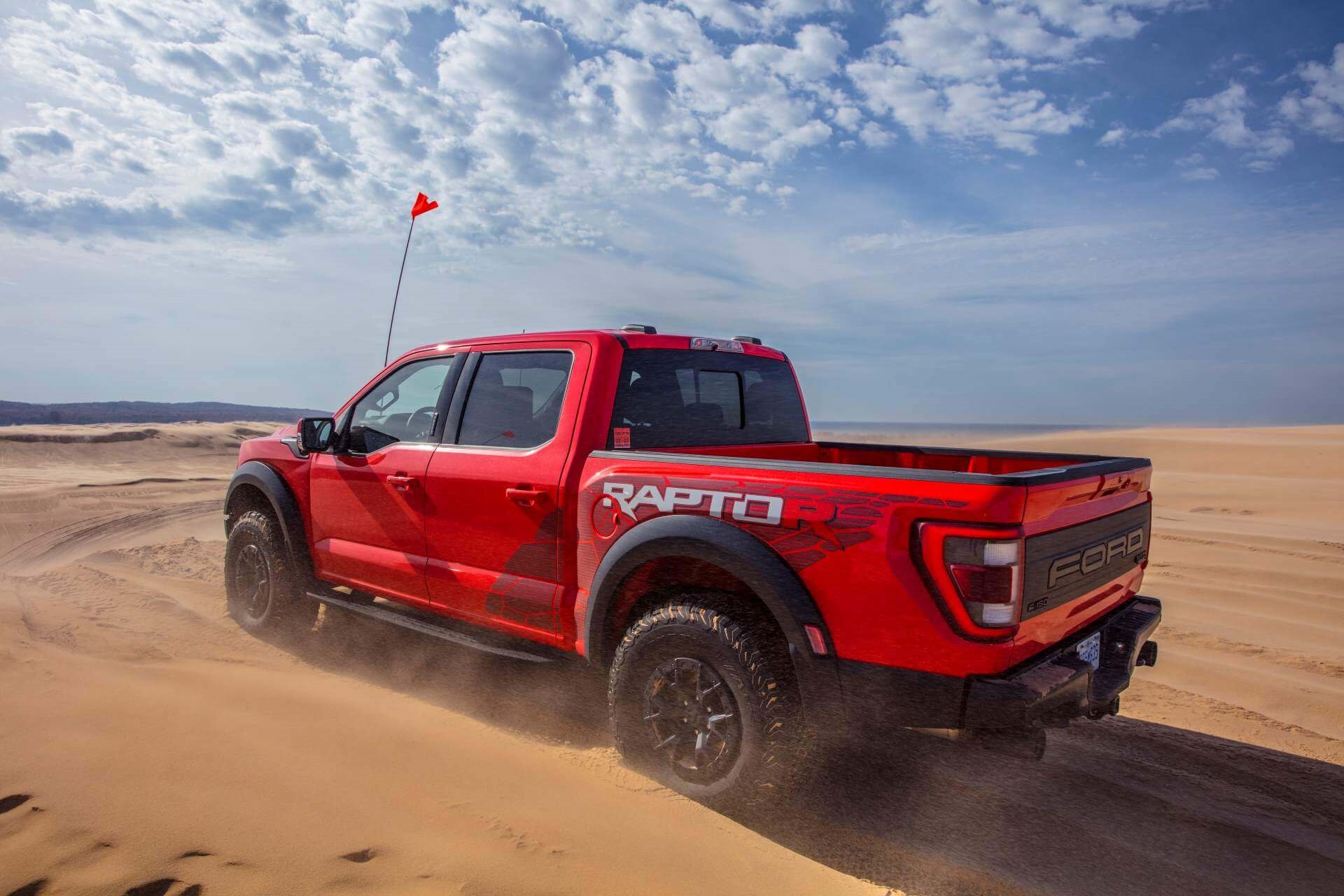
Yes, Ford trucks are highly reliable vehicles, but their long-term dependability is highly dependent on the specific engine, transmission, and model year you choose. While configurations powered by the 2.7L EcoBoost V6 and the 5.0L Coyote V8 easily surpass 250,000 miles with basic maintenance, other options suffer from well-documented OEM engineering flaws like cam phaser failure in the 3.5L EcoBoost and bushing migration in the 10R80 10-speed transmission.
To get the most out of a Ford truck, you must look past marketing brochures and understand these vehicles from a diagnostic perspective. Dealership service departments and independent shops often misdiagnose common Ford issues, leading to thousands of dollars in unnecessary repairs.
By understanding how these trucks fail, what causes those failures, and how to address them using updated OEM or aftermarket parts, you can keep a Ford truck on the road indefinitely. This guide breaks down the real-world reliability of Ford trucks based on hands-on wrenching experience and fleet repair data.
Are Ford F-150 Trucks Reliable?
The Ford F-150 is a highly reliable truck platform, offering robust frame designs and corrosion-resistant aluminum bodies, though its overall reliability hinges on avoiding specific model years and transmission configurations.
Since 2015, Ford has constructed F-150 bodies using military-grade aluminum alloy mounted on a high-strength steel frame. This design choice completely eliminated the rocker panel and cab corner rust issues that plagued older steel-bodied Ford trucks. However, this transition introduced galvanic corrosion risks if steel fasteners are improperly installed in contact with the aluminum body without insulating washers.
From a mechanical standpoint, the chassis, suspension, and steering components on the F-150 are incredibly durable. Front wheel hubs, upper and lower control arms, and rear leaf springs routinely last past 150,000 miles even under heavy commercial use. The primary vulnerabilities of the F-150 platform lie within its complex electrical networks and high-technology engine management systems.
If you are shopping for a used F-150, the electrical system requires close inspection. Water intrusion into the taillight assemblies on trucks equipped with the Blind Spot Information System (BLIS) can short out the entire MS-CAN bus network. This failure manifests as a cascade of dashboard warning lights, loss of climate control, and a sudden no-crank, no-start condition that dealerships often misdiagnose as a failed Body Control Module (BCM).
What Are the Most Reliable Ford Truck Engines?
The 2.7L EcoBoost V6 and the 5.0L Coyote V8 (specifically Gen 2, 2015–2017) are the most reliable modern Ford truck engines, followed closely by the 6.2L “Boss” gas V8 and the post-2015 6.7L Power Stroke turbodiesel.
Ford offers a diverse lineup of truck engines, but they are not engineered equally. Some are built like commercial-grade powerplants, while others feature complex timing systems that require meticulous maintenance to survive.
1. The 2.7L EcoBoost V6 (The Sleeper Engine)
Unlike its larger 3.5L sibling, the 2.7L EcoBoost V6 features a block constructed from Compacted Graphite Iron (CGI)—the same material Ford uses in its heavy-duty Power Stroke diesel engines. This makes the engine block incredibly rigid and resistant to thermal warping. It also utilizes a simplified, shorter timing chain design that virtually eliminates the chain stretch and guide wear issues common to other overhead-cam engines.
2. The 5.0L Coyote V8 (Traditional Power with Modern Tech)
The 5.0L Coyote V8 is a favorite among traditionalists for its linear power delivery and lack of turbochargers. The second-generation version (2015–2017) is the sweet spot for reliability, featuring robust cylinder walls and a reliable port-injection fuel system. Third-generation versions (2018+) introduced a dual-injection system and plasma-wire arc cylinder liners, which can occasionally lead to high oil consumption, though overall durability remains excellent.
3. The 6.2L Boss V8 (Super Duty Workhorse)
Found in F-250 and F-350 models from 2011 to 2022, the 6.2L naturally aspirated V8 is arguably the most bulletproof gasoline engine Ford has built in the modern era. It uses a simple overhead-cam design, a cast-iron block, and a massive timing chain that rarely fails. Its only common weakness is broken valve springs on early 2011–2012 models, which is a relatively straightforward repair.
4. The 6.7L Power Stroke Diesel (Post-2015)
For heavy towing, the 6.7L Power Stroke diesel is a powerhouse, especially the 2015 and newer iterations. Ford resolved the early turbocharger bearing failures of the 2011–2014 models by switching to a larger GT37 single-sequential turbo. While diesel emissions systems (DPF, SCR, and DEF) require highway driving to prevent soot clogging, the core engine assembly is exceptionally durable.
| Engine Displacement | Fuel Type | Primary Strength | Known Vulnerability | Expected Lifespan |
|---|---|---|---|---|
| 2.7L EcoBoost V6 | Gasoline | CGI Block, High Efficiency | Oil pan leaks (plastic pans) | 250,000+ Miles |
| 5.0L Coyote V8 | Gasoline | No turbos, simple design | Oil consumption (2018+) | 250,000+ Miles |
| 3.5L EcoBoost V6 | Gasoline | Massive towing torque | Cam phaser rattle | 200,000+ Miles |
| 6.2L Boss V8 | Gasoline | Industrial-grade durability | Broken valve springs (early) | 300,000+ Miles |
| 6.7L Power Stroke | Diesel | Extreme towing capacity | CP4 injection pump failure | 350,000+ Miles |
What Are Common Ford Truck Problems and How Do You Fix Them?
The most common Ford truck issues include 3.5L EcoBoost cam phaser rattle, 10R80 transmission harsh shifting, 5.0L Coyote coolant leaks, and Super Duty “Death Wobble,” all of which have permanent, DIY-friendly fixes.
If you own or plan to buy a Ford truck, you will likely encounter one of these common issues. Understanding the root cause allows you to bypass expensive dealership diagnostics and fix the vehicle permanently.
1. Cam Phaser Rattle on the 3.5L EcoBoost (2017-2020)
This issue presents as a loud, metallic rattling noise lasting for 2 to 5 seconds immediately following a cold start. The root cause is a failing locking pin inside the variable camshaft timing (VCT) phasers, which allows the phaser to slap back and forth before oil pressure builds up.
-
•
The Diagnostic: Start the truck after it has sat for at least 6 hours. If you hear a loud clattering sound from the front of the engine that vanishes once the oil pressure gauge rises, your phasers are worn. -
•
The Permanent Fix: Do not install the original style phasers. Ford issued an updated phaser design (Part numbers ML3Z-6C525-A and ML3Z-6C526-A) with a hardened locking pin. Replace the phasers, timing chains, guides, and tensioners simultaneously. Preventative maintenance involves changing engine oil every 5,000 miles using high-quality full synthetic oil to prevent sludge buildup in the phaser oil passages.
2. 10R80 10-Speed Transmission Harsh Shifting
Co-developed with GM, the 10R80 10-speed automatic transmission is prone to harsh upshifts, delayed gear engagements, and erratic downshifting, particularly between gears 3 through 5.
-
•
The Diagnostic: Check for shifting hesitation when the transmission fluid is hot. If the transmission hesitates and then slams violently into gear, the issue is likely a migrating bushing inside the CDF clutch drum assembly. This bushing slides out of position, blocking the internal fluid passages and starving the clutch packs of hydraulic pressure. -
•
The Permanent Fix: Dealerships often suggest a complete transmission replacement costing upwards of $8,000. The cost-effective solution is to have an independent transmission specialist rebuild the unit using Ford’s updated CDF clutch drum (Part number HL3Z-7G383-H), which features an integrated lip to prevent the bushing from ever migrating again. Additionally, performing a transmission adaptive learning reset via software like FORScan can resolve minor shifting issues.
3. Coolant Leaks at the Y-Connector (5.0L Coyote)
The 5.0L Coyote engine is notorious for mysterious coolant losses that puddle underneath the front center of the engine bay. This is caused by a cheap, plastic coolant Y-connector and upper radiator hose quick-disconnect fittings that degrade over time due to engine heat cycles.
-
•
The Diagnostic: Look directly beneath the throttle body. If you see crusty orange or red coolant residue pooling on the engine block or dripping from the plastic Y-pipe connection, the internal rubber O-ring has flattened and failed. -
•
The DIY Fix: Do not buy the expensive OEM replacement hose assembly, as the plastic construction will fail again. Instead, purchase an aftermarket aluminum Y-connector kit or replace the internal nitrile O-rings with heavy-duty silicone O-rings (Size 4mm thick by 31mm ID for the main connector). This repair takes under an hour using basic hand tools.
4. Super Duty “Death Wobble” (F-250 and F-350)
This terrifying phenomenon occurs on solid-front-axle Super Duty trucks when hitting a bump at highway speeds. The front suspension begins to oscillate violently, causing the steering wheel to shake uncontrollably until the vehicle is brought to a near-stop.
-
•
The Diagnostic: Inspect the front steering linkage while an assistant turns the steering wheel back and forth. Look for play in the track bar ball joint, drag link, tie rod ends, and track bar frame bracket bushing. -
•
The Permanent Fix: Dealerships often install a new steering stabilizer as a band-aid. A steering stabilizer only masks the issue; the true culprit is a worn track bar ball joint or frame bushing. Replace the track bar bushing with a heavy-duty polyurethane upgrade and replace the factory steering stabilizer with a high-quality gas-charged unit like a Bilstein 5100 to permanently damp out axle oscillations.
Which Ford Truck Years and Models Should You Avoid?
You should avoid 2004–2008 F-150s with the 5.4L 3V Triton engine, 2018 F-150s with early 10R80 transmissions, and 2003–2010 F-250/F-350 diesels equipped with the 6.0L or 6.4L Power Stroke engines.
While Ford builds some of the best trucks on the market, certain production runs suffer from fundamental design flaws that make them financial liabilities on the used market.
The 2004–2008 F-150 models equipped with the 5.4L 3-valve Triton V8 are legendary for spark plug blowouts, broken spark plugs during removal, and catastrophic oil starvation in the cylinder heads. The oil starvation is caused by failing plastic timing chain tensioner seals, which bleed off oil pressure and starve the overhead cams, leading to engine failure.
In the heavy-duty segment, avoid the 2003–2007 6.0L Power Stroke diesel due to head bolt stretching, EGR cooler ruptures, and oil cooler clogging. The subsequent 2008–2010 6.4L Power Stroke is even worse; it features a fragile fuel system and is prone to cracked pistons, fuel dilution in the motor oil, and catastrophic turbocharger failures that require lifting the truck cab off the frame to repair.
How Do Ford Trucks Compare to Chevy and Ram in Reliability?
Ford trucks generally outperform Chevrolet and Ram in terms of body longevity and engine architecture, but they lag slightly behind Chevrolet in transmission refinement and Ram in interior electronics reliability.
When comparing the “Big Three” American truck manufacturers, each brand has distinct engineering philosophies that impact long-term reliability.
Ford’s aluminum body panels give it a massive advantage over Chevrolet and Ram in rust-prone northern climates. While older Chevy Silverados and Ram 1500s suffer from rusted-out wheel arches and cab corners, Ford trucks remain structurally sound. Additionally, Ford’s overhead-cam engine designs (like the Coyote V8) do not suffer from the lifter failures and camshaft wiping issues that plague Chevrolet’s Active Fuel Management (AFM/DFM) V8 engines or Ram’s 5.7L Hemi “lifter tick.”
However, GM’s execution of the shared 10-speed automatic transmission is widely considered superior due to better factory programming and calibration. Ram trucks offer highly comfortable interiors, but their electrical systems and air suspension setups are notoriously prone to cold-weather failures compared to Ford’s more robust, traditional suspension layouts.
Frequently Asked Questions
Why does my Ford truck make a clicking noise behind the dashboard?
This clicking noise is caused by a failing blend door actuator. The plastic gears inside the actuator strip out, preventing the HVAC system from directing airflow or controlling the cabin temperature. Replacing the actuator is a common DIY job, though accessing it may require removing the glovebox or center console panels.
Can you prevent the Ford 10-speed transmission from slipping or shifting hard?
Yes, you can minimize harsh shifting by servicing the transmission fluid every 45,000 miles instead of waiting for the OEM-recommended 150,000-mile interval. Additionally, using a diagnostic tool like FORScan to clear the adaptive transmission tables can help the transmission control module relearn shift points and smooth out gear transitions.
Is the Ford F-250 more reliable than the F-150?
The F-250 is built on a heavier commercial chassis, making its suspension, axles, and frame significantly more durable than the light-duty F-150. However, the overall reliability depends on the engine; an F-250 with a 6.2L gas V8 is incredibly reliable, whereas an F-250 with an poorly maintained 6.7L diesel can incur much higher repair costs than a standard F-150.
How long does a Ford EcoBoost turbocharger last?
With proper maintenance, EcoBoost turbochargers routinely last between 150,000 and 200,000 miles. The key to turbo longevity is frequent oil changes using high-quality full synthetic oil, as dirty oil will clog the small oil feed lines that lubricate and cool the turbocharger bearings.
What is the easiest way to check for galvanic corrosion on an aluminum F-150?
Inspect the areas where steel accessories (such as aftermarket running boards, bed covers, or toolboxes) mount directly to the aluminum body. Look for a bubbling paint texture or white powdery residue, which indicates that galvanic corrosion is occurring due to the lack of an insulating rubber or plastic barrier between the two metals.
Conclusion
Ford trucks remain some of the most capable and dependable vehicles on the road, provided you understand their specific engineering quirks. By choosing highly regarded powertrains like the 2.7L EcoBoost or the 5.0L Coyote V8, and steering clear of known problematic years like the early 5.4L Tritons or 6.0L/6.4L diesels, you can avoid the most common pitfalls of Ford ownership.
Maintaining a Ford truck successfully comes down to proactive maintenance and using updated, revised parts rather than cheap aftermarket replacements. When you address known vulnerabilities like the cam phasers or the 10R80 transmission proactively, a Ford truck will easily reward you with decades of dependable service and high resale value.
Leave a Reply