
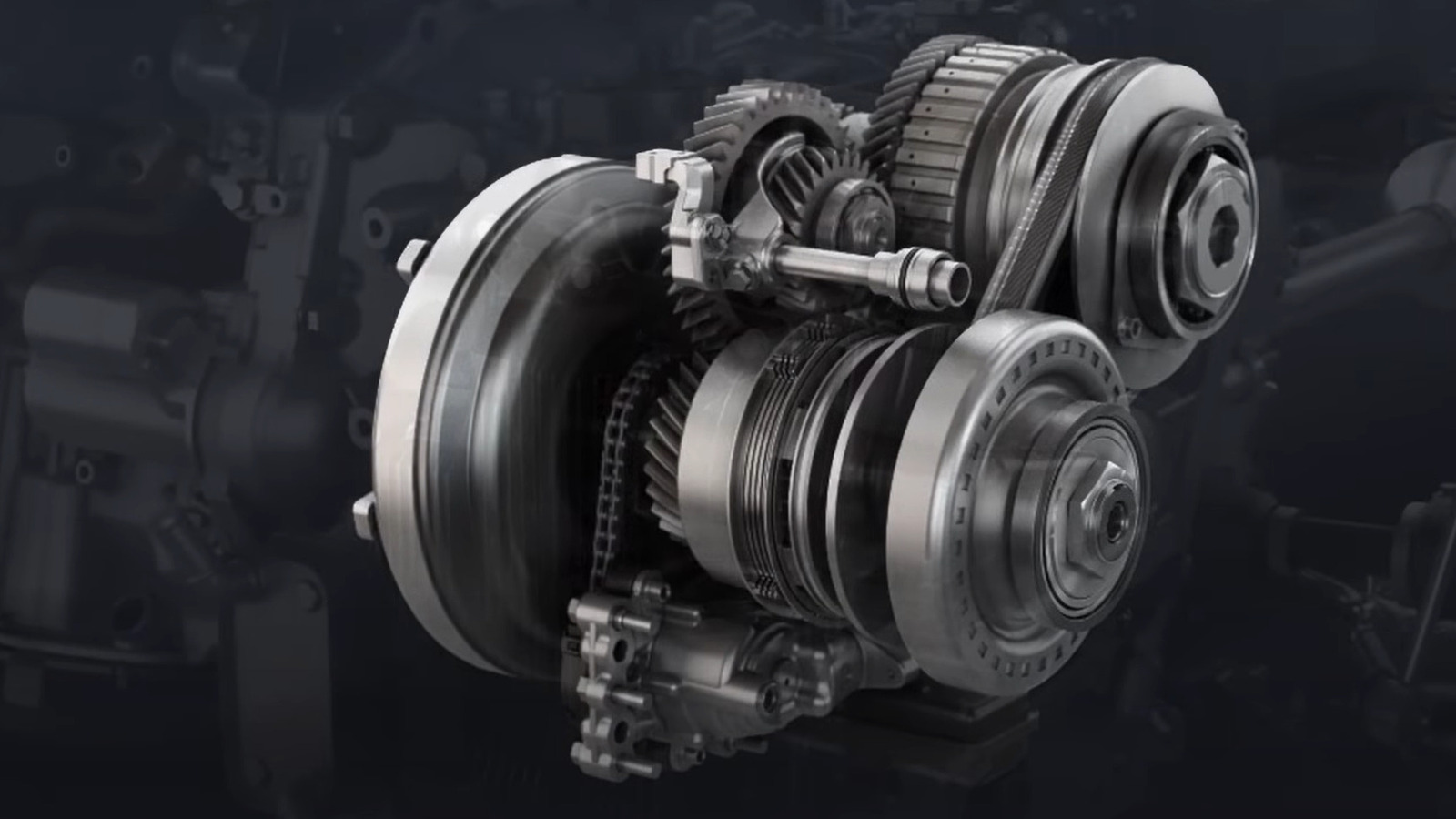
Yes, Toyota CVT transmissions are among the most reliable continuously variable transmissions on the market. Toyota engineers its own CVTs in-house rather than outsourcing to Jatco like Nissan, uses a unique Direct Shift CVT with a physical launch gear to reduce belt wear, and backs its hybrid e-CVT planetary gear system with a proven track record spanning over two decades. While no transmission is perfect, Toyota CVTs consistently outlast competitors and suffer fewer catastrophic failures.
Why Are Toyota CVT Transmissions More Reliable Than Other Brands?
Toyota designs and manufactures its own CVT transmissions in-house, allowing strict quality control over every component. Their Direct Shift CVT, found in the Corolla, includes a physical first-gear launch mechanism that eliminates the weakest point of traditional CVTs — low-speed belt slippage under heavy load.
Most other automakers purchase CVT units from external suppliers. Nissan, for example, relies heavily on Jatco-supplied CVTs that have earned a reputation for premature failure.
Toyota took a fundamentally different engineering approach by building the entire system internally.
Toyota’s Direct Shift CVT Explained
The Direct Shift CVT, introduced in the 2019 Corolla, pairs a traditional steel push belt with a physical first gear. During launch and low-speed driving, the gear engages directly.
Once you reach cruising speed, the CVT belt takes over for seamless efficiency.
- ▸Reduces heat buildup during stop-and-go driving — the number one CVT killer
- ▸Eliminates the rubber-band feeling at takeoff that owners hate
- ▸Extends belt and pulley lifespan by reducing stress during the highest-torque moments
- ▸Provides a more natural, connected driving feel compared to pure CVTs
The e-CVT in Toyota Hybrids Is Not a Traditional CVT
Many owners confuse the e-CVT found in the Prius, Camry Hybrid, and RAV4 Hybrid with a belt-driven CVT. They are completely different systems.
The e-CVT uses a planetary gear set with two electric motor-generators. There are no belts, pulleys, or variable-diameter cones.
This mechanical simplicity means there are far fewer wearable components. The planetary gear system has been in production since the first-generation Prius in 1997.
Toyota has had over 25 years to refine it, and catastrophic e-CVT failures remain extremely rare.
What Are the Most Common Toyota CVT Problems?
The most reported Toyota CVT issues include shuddering at low speeds, hesitation during acceleration, and occasional jerking when transitioning from the physical gear to the belt in Direct Shift models. Most of these issues are resolved through software recalibration rather than hardware replacement.
Shuddering or Juddering at Low Speeds
This is the most frequently cited complaint across Toyota CVT forums and owner communities. You may feel a vibration or shudder when creeping in traffic or pulling away from a stoplight at partial throttle.
- ▸Usually caused by torque converter lockup calibration in traditional CVT models
- ▸In Direct Shift CVTs, it can occur during the gear-to-belt transition point around 15-25 mph
- ▸Toyota has issued multiple TSBs (Technical Service Bulletins) with updated ECU software to address this
- ▸If your dealer wants to replace the transmission, request a software update first
Acceleration Hesitation or Lag
Some owners describe a dead spot or delay when pressing the accelerator, especially from a rolling stop. The CVT seems to pause before responding.
This is almost always an ECU calibration issue, not a mechanical failure.
A dealer software flash typically resolves this in under an hour. If the hesitation persists after an update, the issue may involve the throttle position sensor or a failing CVT speed sensor — both of which are inexpensive parts compared to a full transmission replacement.
Overheating Warning Under Sustained Load
CVTs generate more heat than conventional automatics during sustained high-load conditions like towing, mountain driving, or aggressive driving in hot climates. Toyota includes a transmission fluid temperature warning for protection.
If you see a CVT temperature warning, pull over immediately and let the transmission cool for 15-20 minutes. Continued driving with an overheated CVT will destroy the belt and pulleys, turning a $200 fluid change into a $4,000+ replacement.
How Long Do Toyota CVT Transmissions Last?
With proper maintenance, a Toyota CVT transmission can last 150,000 to 200,000 miles or more. Hybrid e-CVT systems frequently exceed 250,000 miles without major service because they have no belts or pulleys to wear out.
The lifespan depends heavily on maintenance habits and driving conditions. Owners who follow Toyota’s severe-duty service intervals and avoid aggressive driving report significantly longer transmission life.
Toyota CVT vs Nissan CVT: Which Is More Reliable?
Toyota CVTs are significantly more reliable than Nissan CVTs. Nissan uses Jatco-sourced CVTs that are known for premature failure between 60,000 and 100,000 miles, while Toyota designs its own units with stronger components and better thermal management, routinely lasting 150,000+ miles.
The difference comes down to engineering philosophy. Toyota over-engineers components with generous safety margins.
Nissan’s Jatco CVTs were designed to hit aggressive cost and weight targets, sometimes at the expense of long-term durability.
Key Reliability Differences
- ▸Heat management: Toyota CVTs include auxiliary coolers or improved fluid routing; many Jatco units lack dedicated cooling
- ▸Belt quality: Toyota uses higher-grade steel push belts with better surface treatment
- ▸Software calibration: Toyota’s ECU mapping protects the transmission from driver abuse; Nissan’s calibration prioritizes responsiveness over protection
- ▸Failure rate data: Consumer complaint databases consistently show 3-4x more CVT complaints per unit sold for Nissan versus Toyota
- ▸Repair cost: Toyota CVT replacement averages $3,500-$5,000; Nissan CVT replacement runs $3,000-$4,500 but happens far more frequently
How to Maintain Your Toyota CVT for Maximum Lifespan
Change your Toyota CVT transmission fluid every 30,000 to 60,000 miles using only Toyota Genuine CVT Fluid FE or the specific fluid listed in your owner’s manual. Avoid generic or universal CVT fluids — incorrect fluid chemistry will destroy the belt surface and cause premature failure.
DIY CVT Fluid Change Steps
- 1Warm up the transmission by driving for 10-15 minutes
- 2Jack up the vehicle and place it securely on jack stands
- 3Remove the CVT drain plug and catch the old fluid in a drain pan
- 4Remove the CVT fluid strainer or clean the filter screen if accessible
- 5Reinstall the drain plug with a new crush washer — torque to spec
- 6Measure the exact amount of fluid drained
- 7Refill through the CVT fluid fill port with the same amount of Toyota Genuine CVT Fluid FE
- 8Start the engine, cycle through all gears, and check the fluid level with the engine running
- 9Top off as needed to the correct level on the dipstick or overflow plug
Maintenance Mistakes That Kill Toyota CVTs
- ✕Using Dex-CVI or generic CVT fluid: Different friction modifiers cause belt slippage and glazing
- ✕Towing beyond the rated capacity: CVTs are not designed for heavy towing loads — the belt overheats rapidly
- ✕Ignoring the fluid temperature warning: One overheating event can permanently damage the belt surface
- ✕Never changing the fluid: Toyota’s “lifetime fluid” claim is marketing, not engineering guidance — change it every 60,000 miles regardless
- ✕Aggressive launch driving: Flooring the accelerator from stops places maximum stress on the belt and pulleys
Which Toyota Models Have CVT Transmission Issues?
No Toyota model has widespread CVT failure rates comparable to Nissan’s Altima or Sentra. However, the 2014-2017 Corolla with the standard CVT and the 2019-2020 Corolla with the first-generation Direct Shift CVT have the highest volume of owner complaints, mostly related to shuddering and software calibration issues.
2014-2017 Toyota Corolla CVT
The earlier Corolla CVT is a straightforward belt-and-pulley design. The primary complaints involve shuddering at low speeds and a lack of responsiveness.
Toyota addressed many of these with software updates, so vehicles that received dealer updates perform noticeably better.
2019-2021 Toyota Corolla Direct Shift CVT
The first two model years of the Direct Shift CVT experienced the most complaints. The physical-gear-to-belt transition sometimes felt abrupt, and throttle response tuning was inconsistent.
Toyota refined the software calibration significantly for 2022 and later models.
Toyota C-HR CVT
The C-HR uses a standard CVT without the Direct Shift gear. Complaints are minimal but include occasional hesitation and a droning noise under hard acceleration.
No widespread mechanical failures have been reported.
Toyota Camry CVT (Non-Hybrid)
The non-hybrid Camry switched to an 8-speed automatic in most markets. Some regions still receive a CVT variant.
Reliability reports from those markets are positive with few complaints beyond normal adaptation behavior.
Frequently Asked Questions About Toyota CVT Reliability
Can you tow with a Toyota CVT?
Toyota rates most CVT-equipped vehicles for light towing of 1,500 pounds or less. The e-CVT in hybrid models handles light loads better because the electric motors assist during acceleration, reducing strain on the planetary gear set.
Exceeding the tow rating by even a small margin significantly accelerates CVT wear.
Is Toyota discontinuing CVT transmissions?
No. Toyota is expanding its CVT use, particularly the Direct Shift CVT in non-hybrid models and the e-CVT in its growing hybrid lineup. The company sees CVTs as essential for meeting fuel economy regulations.
Expect CVTs to remain a core part of Toyota’s powertrain strategy through at least 2030.
Does the Toyota warranty cover CVT transmission failure?
Toyota’s standard powertrain warranty covers the CVT for 5 years or 60,000 miles, whichever comes first. ToyotaCare and extended warranty plans may cover it longer.
If your CVT fails outside warranty, contact Toyota Customer Experience directly — the company has a history of offering goodwill repairs on known issues even after warranty expiration.
Should I buy a used Toyota with a CVT?
Yes, but verify maintenance records first. Ask the seller or dealer for proof of CVT fluid changes.
A Toyota CVT with documented fluid changes at 30,000-mile intervals is a strong buy. Avoid units with no maintenance history or those that show signs of overheating such as dark, burnt-smelling fluid.
Why does my Toyota CVT feel different from a regular automatic?
A CVT does not have fixed gears. It uses a continuously variable ratio, which means the engine can hold a steady RPM while the car accelerates. This creates a droning or rubber-band sensation that feels unfamiliar.
It is normal behavior, not a sign of malfunction. The Direct Shift CVT minimizes this feeling by using a physical first gear.
Final Verdict: Should You Trust a Toyota CVT Transmission?
Toyota CVT transmissions are the most reliable continuously variable transmissions available today. The combination of in-house engineering, the Direct Shift launch gear innovation, and the battle-tested e-CVT in hybrids gives Toyota a durability advantage that competitors have not matched.
Change the fluid on schedule, avoid overheating, and your Toyota CVT will likely outlast the rest of the vehicle.
Leave a Reply