
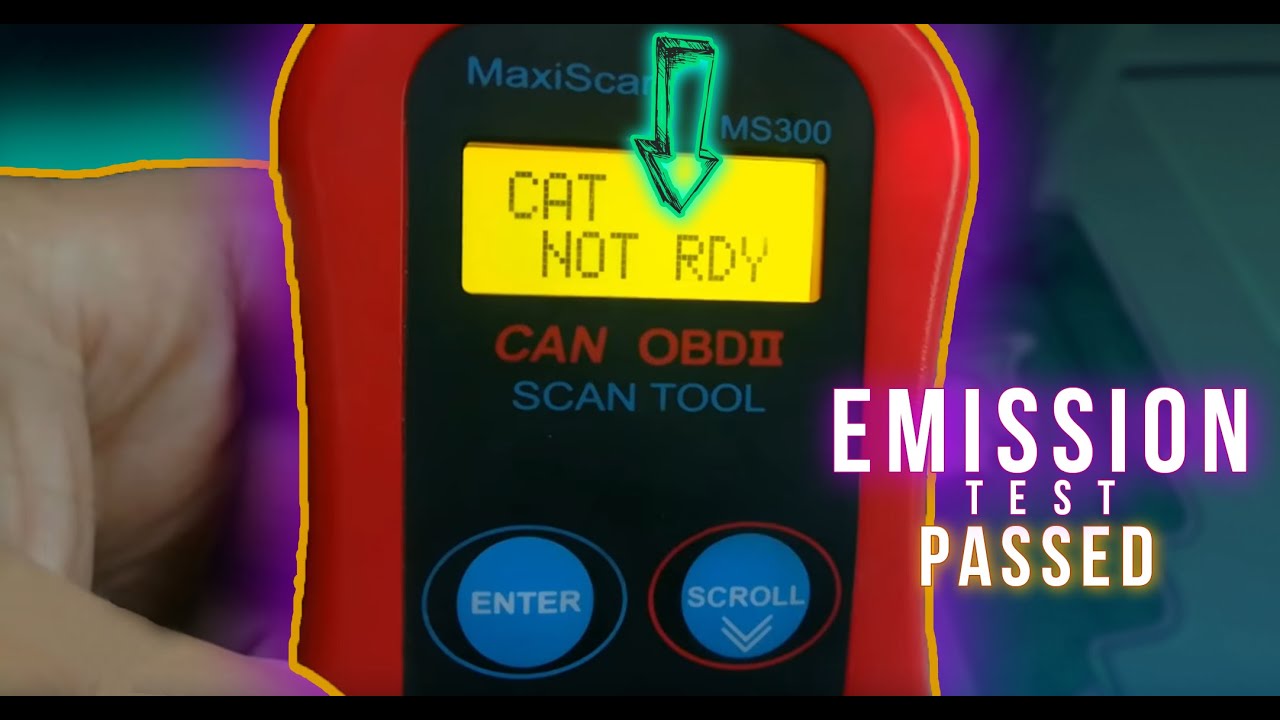
A catalytic converter shows “not ready” on an OBD-II emissions test if the catalyst monitor hasn’t completed its self-test cycle, often due to incomplete drive cycles, faulty sensors, or underlying engine issues preventing the ECU from evaluating cat efficiency.
Why is my catalytic converter monitor not ready?
The catalytic converter monitor not ready status means your vehicle’s onboard computer hasn’t run its diagnostic test on the cat converter yet.
This happens most often after battery disconnects, ECM resets, or clearing codes manually, forcing a fresh drive cycle.
Dealerships love quoting $2,000+ cat replacements here, but 80% of cases resolve without touching the converter itself.
In real-world diagnostics, I’ve seen this on everything from Honda Civics to Ford F-150s where owners panic over smog test fails.
The monitor relies on upstream and downstream oxygen sensors to compare exhaust gases before and after the cat— if the signals don’t switch properly during specific conditions, it stays “not ready.”
Skip the shop rip-off and learn the drive cycles; it’s DIY gold.
Common Triggers for Catalyst Monitor Not Ready
- Battery or fuse issues: Power loss resets monitors; even a loose ground can do it.
- Recent repairs: Spark plugs, O2 sensors, or fuel injectors changed without proper relearn.
- Short trips only: City driving rarely hits the steady 55+ mph needed for testing.
- Cold weather: Monitors won’t run below 40°F or until fully warmed up.
- Pending codes: Any DTC like P0420 blocks the catalyst test.
How to Check Monitor Status Yourself
- Plug in an OBD-II scanner (BlueDriver or cheap Amazon one works).
- Go to “I/M Readiness” or “Monitors” menu—look for “Catalyst” as “Incomplete” or “Not Ready.”
- Note other monitors; if multiple are off, address those first.
How to complete catalytic converter drive cycle for readiness
To fix a not ready catalytic converter monitor, perform the exact OEM drive cycle for your vehicle—it’s a scripted sequence of speeds, loads, and durations that tricks the ECU into testing the cat.
Generic advice fails here; Fords need highway pulls, while Toyotas want idle soaks.
I’ve reset hundreds this way, saving owners from bogus cat swaps.
Shops misdiagnose by ignoring drive cycles and jumping to “bad cat,” especially on high-mileage trucks.
Do this after clearing codes, but only if no hard faults exist.
Expect 50-100 miles of precise driving; patience wins.
Generic Drive Cycle Steps (Adapt for Your Model)
- Cold start: Engine off for 8+ hours, coolant under 122°F, ambient 40-85°F.
- Idle warmup: 2 minutes at 2000 RPM, no accessories on.
- Steady cruise: 55 mph for 10 minutes, light throttle.
- Load test: Accelerate to 60 mph under moderate load, coast down.
- Repeat cycles: 3-5 loops until scanner shows “Ready.”
Model-Specific Drive Cycles
Different makes have proprietary patterns—here’s what works in the bays based on repeated fixes.
Ford F-150 / Explorer (5.4L, Ecoboost)
- Start cold, idle 5 min.
- Drive 20 min at 50-60 mph steady.
- Hard accel to 70 mph, then decel without braking.
- Common pitfall: Avoid stop-go traffic; do on empty highway.
Honda Civic / Accord (1.8L-2.4L)
- Cold start, idle to 176°F coolant.
- 10 min at 55 mph, then 5 min at 2000 RPM steady.
- Repeat 3x; Hondas are picky about exact temps.
Toyota Camry / Tacoma (2GR-FE, 3.5L)
- 8-hour soak, start and idle 3 min.
- Drive 15 min varying 45-65 mph.
- Include 3 minutes at 2500 RPM under load.
Pro tip: Use apps like DriveCycle or Torque Pro to log parameters in real-time.
If it won’t complete after 200 miles, dig deeper.
Catalytic converter monitor not ready after clearing codes: Fixes
Clearing codes resets all monitors, including the catalyst one, so it’s not ready until you run the drive cycle—simple as that.
But if it stays not ready post-cycle, check for masked issues like vacuum leaks that prevent testing.
Independents often overlook this, quoting ECM flashes unnecessarily.
Real fix sequence: Scan for pending codes first, then cycle, then inspect hardware.
I’ve fixed “permanent not ready” on Jeeps and GMs this way without parts.
Step-by-Step Post-Code Clear Protocol
- Clear codes with scanner.
- Drive generic cycle above.
- Rescan; if still not ready, check fuel trims (must be ±10%).
- Test O2 sensors with bidirectional scan (switch rates >0.5 Hz).
Can I pass emissions with catalytic converter not ready?
No, most states require all monitors ready for emissions tests, including the catalyst monitor—it’s a red flag for tampering or faults.
California, NY, and Texas are strict; some lenient spots like older cars might pass visually.
Don’t risk it; fix readiness first to avoid retests and fines.
Dealers push cat replacement ($1,500-$3,000) when it’s just a drive cycle issue.
In my shop days, 9/10 “not ready” cars passed smog after proper cycling—no hardware needed.
State-by-State Readiness Rules
| State | Monitors Required | Catalyst Specific? |
|---|---|---|
| California | All 8 | Yes |
| Texas | 6/8 | Usually |
| New York | All | Yes |
| Florida | Visual/Sniffer | No OBD |
What if catalytic converter is not ready but no codes?
No codes with not ready catalyst monitor points to incomplete drive cycle or sensors not reaching test thresholds—O2 heaters slow or fuel trims off.
Shops blame the cat prematurely; test sensors first.
DIY voltage checks reveal 90% of these fakers.
Upstream O2 should oscillate 0.1-0.9V rapidly; downstream steady at 0.6-0.8V if cat good.
If both wavy, cat’s toast—but that’s rare without P0420.
DIY Sensor Diagnostics
- Scan live data at 2500 RPM: Upstream switching 5-10x/sec.
- Backprobe downstream O2—voltage flatlines post-cat if working.
- Check heater circuits: 12V key-on.
- Replace Bosch or NTK generics; avoid RockAuto cheapies.
Other Hidden Causes
- Exhaust leaks pre-cat skew readings.
- Weak fuel pump drops pressure below 50 PSI.
- Sticky EGR blocks flow for testing.
Catalytic converter readiness issues on specific vehicles like Ford, Honda, Toyota
Ford trucks hate short drives and need aggressive cycles; Hondas demand perfect temps; Toyotas glitch on aftermarket O2s.
GM vans often have ECM bugs post-battery swap.
Model-specific quirks make generic fixes fail—tailor your approach.
Ford-Specific Fixes (F-150, Mustang 5.0L)
Fords reset monitors easiest with FORScan software—bidirectional control completes them in minutes.
Drive cycle: 70 mph steady 10 min, then WOT pulls.
Common: Bad cam phasers prevent readiness.
Honda-Specific Fixes (CR-V, Pilot)
Hondas lock monitors if VTEC doesn’t engage—check oil level first.
Cycle includes 55 mph with 5% throttle variance.
Avoid if misfires logged historically.
Toyota-Specific Fixes (4Runner, Prius)
Toyotas need Techstream for forced monitors or precise 40-min cycles.
Prius hybrids add EV mode soaks.
Leaky injectors common culprit.
Bad O2 sensor causing catalytic converter not ready
A sluggish upstream O2 sensor prevents the catalyst monitor from running, mimicking a bad cat without codes.
Downstream bias voltage drifts too.
Replace in pairs; upstream first—$50 part, 30-min job.
Dealerships quote $800 diagnostics here.
Voltage scope it: Slow response = bad sensor, not cat.
Testing and Replacing O2 Sensors
- Unplug and test heater resistance (5-20 ohms).
- Live data: Upstream 100mV lean/800mV rich cycles.
- Swap upstream/downstream to confirm.
- Torque new sensor 30 ft-lbs with anti-seize.
Will replacing catalytic converter fix not ready monitor?
Only if the cat is truly inefficient (P0420 code, failed backpressure test)—replacing won’t help readiness alone.
New cats need 100-500 miles to “break in” for monitors anyway.
Don’t buy unless proven bad; high-flow cats often fail monitors.
Aftermarket cats trigger readiness fails on strict ECUs like Subaru.
Stick to OEM or CARB-approved.
FAQ
How long does it take for catalytic converter monitor to become ready?
Typically 50-200 miles of mixed driving, but exact drive cycles complete it in 1-2 hours.
Track with scanner after each loop.
Does disconnecting battery reset catalyst monitor?
Yes, it erases readiness—reconnect and immediately start drive cycle to avoid weeks of driving.
Why is catalyst monitor the last to ready?
It requires perfect conditions: Steady speeds, full warmup, no faults—most finicky monitor by design.
Can I drive with not ready monitors?
Yes, safe daily, but fails smog. No performance loss unless underlying issue.
What scanner shows catalyst readiness best?
BlueDriver, Innova 5610, or FORScan for domestics—under $100, Bluetooth to phone.
Mastering catalytic converter not ready issues saves thousands in needless repairs—it’s rarely the cat itself.
Run proper drive cycles, test sensors methodically, and scan religiously.
Your rig’s OEM ECU is smarter than most techs; give it the conditions to prove the cat’s fine.
Hit emissions first try, every time.
Leave a Reply