
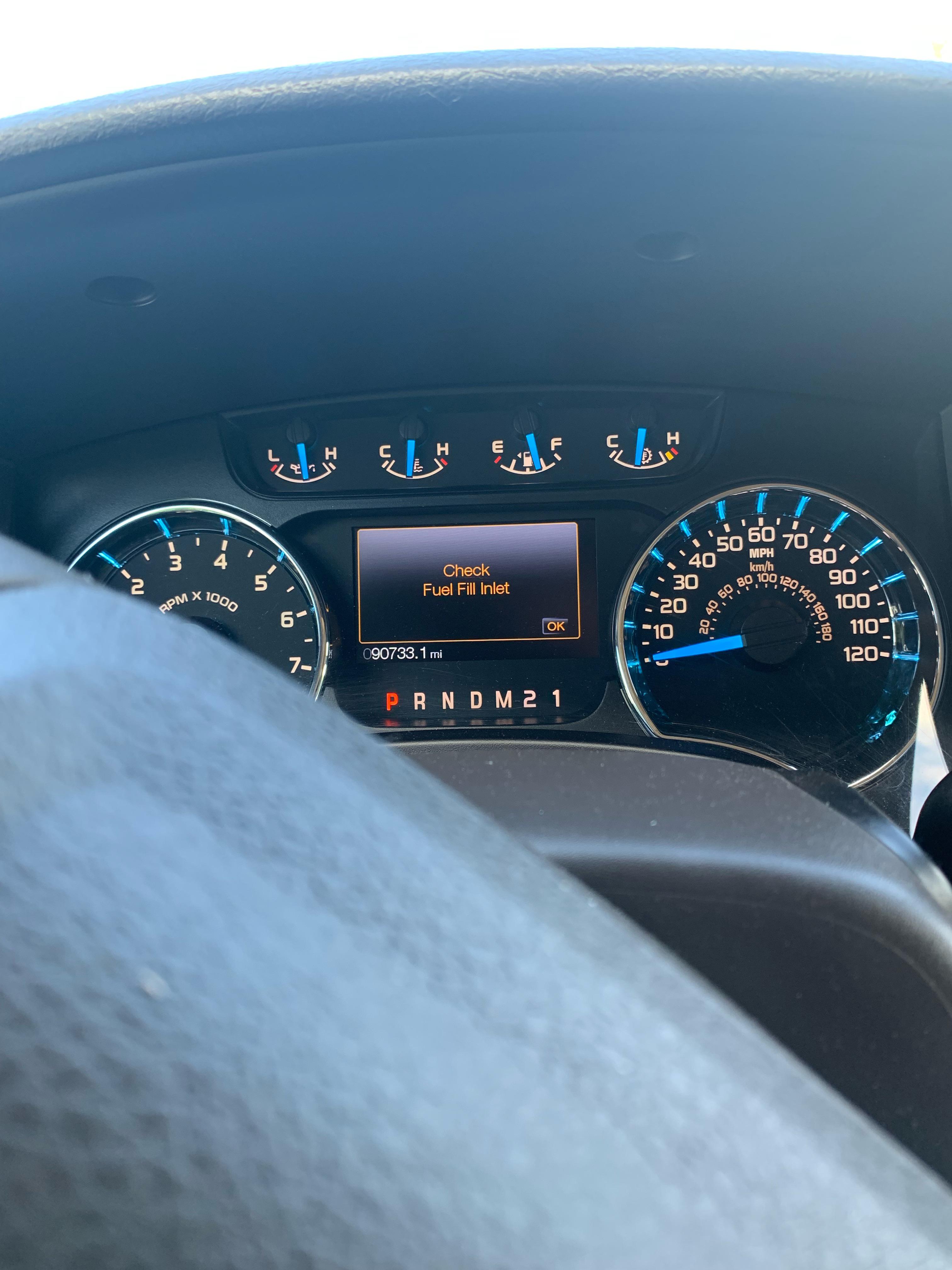
The “Check Fuel Fill Inlet” message on a Ford Explorer means the evaporative emissions (EVAP) system has detected a leak or blockage at or near the fuel filler neck. Most commonly, it is caused by a stuck or missing fuel filler cap, a damaged filler neck seal, a faulty fuel filler inlet check valve, or a loose/damaged EVAP canister purge valve. In many cases, you can fix it yourself by inspecting and cleaning the filler neck, replacing the cap, or resetting the code after tightening everything properly.
What Does “Check Fuel Fill Inlet” Mean on a Ford Explorer?
The “Check Fuel Fill Inlet” message is a Ford-specific dashboard warning that tells you the onboard EVAP system has detected a problem with the fuel inlet area. This is not the same as a generic “Check Engine” light. It is a targeted alert pointing directly at the filler neck, cap, or the small check valve inside the inlet.
Ford’s EVAP system runs a self-test after you shut the engine off. It pressurizes the fuel tank and checks for leaks.
If pressure drops faster than expected, the system flags the filler inlet as the likely culprit. The message appears on the instrument cluster display and may or may not trigger a check engine light simultaneously.
Which Ford Explorer Model Years Are Most Affected?
- 2011–2019 Ford Explorer (5th generation) — This is the most commonly reported generation for this warning. The capless fuel filler system Ford introduced during these years is a frequent source of problems.
- 2020–Present Ford Explorer (6th generation) — Still uses a similar capless filler design. Reports are fewer but still present, especially on early 2020 and 2021 models.
- 2006–2010 Ford Explorer (4th generation) — Uses a traditional capped filler neck. Issues here are usually related to worn cap seals or corroded filler necks rather than the capless mechanism.
What Causes the Check Fuel Fill Inlet Warning on a Ford Explorer?
There are several distinct causes, and in my experience diagnosing these in the shop, the problem is almost never what the customer first suspects. Here are the real-world causes ranked by how frequently I see them.
1. Capless Fuel Filler System Failure
Ford’s Easy Fuel capless filler system uses a spring-loaded flap instead of a traditional screw-on cap. Over time, the spring weakens, the flap gets stuck open or closed, or debris prevents a proper seal. This is the number one cause on 2011 and newer Explorers.
You can check this by opening the fuel door and pressing the flap with the included fuel filler funnel (stored in the rear cargo area under the floor mat). If the flap does not spring back or feels gritty, it needs cleaning or replacement.
2. Missing or Damaged Fuel Filler Cap (2006–2010 Models)
On older Explorers with a traditional cap, a worn-out rubber gasket on the cap is a silent killer. The gasket cracks, hardens, or warps from heat cycles.
The cap may click when you tighten it, but it no longer seals. Replace it with an OEM Motorcraft cap — aftermarket caps are notorious for not sealing correctly on Ford filler necks.
3. Cracked or Corroded Fuel Filler Neck
The filler neck itself can corrode, especially in northern climates where road salt is used. I have pulled filler necks off Explorers where the metal was so thin you could push a screwdriver through it. A cracked neck allows air into the EVAP system and triggers the warning.
4. Faulty EVAP Canister Purge Valve
The purge valve (also called the canister purge solenoid) controls vapor flow between the charcoal canister and the intake manifold. When it sticks open, the EVAP system cannot hold pressure, and the PCM blames the filler inlet. This is a common misdiagnosis — shops will replace the filler neck when the purge valve is the real problem.
5. Damaged or Disconnected EVAP Vapor Lines
Rubber vapor hoses running from the fuel tank to the charcoal canister can crack, split, or pop off their fittings. This is especially common on Explorers that have had fuel tank work done. A disconnected vapor line is a large leak and will trigger the warning almost immediately.
6. Faulty Fuel Tank Pressure Sensor
The fuel tank pressure sensor (FTPS) tells the PCM what the pressure inside the tank is. If this sensor gives false readings, the PCM may think there is a leak when there is not one. This is less common but worth checking if everything else looks good.
How to Fix the Check Fuel Fill Inlet Warning Yourself
Before you spend money at a dealership, work through these steps in order. I have seen owners save hundreds of dollars by starting with the simplest fixes first.
Step 1: Inspect and Clean the Capless Filler
- Open the fuel door on the driver’s side rear quarter panel.
- Locate the fuel filler funnel. On most Explorers, it is stored under the cargo area floor or in the spare tire compartment.
- Insert the funnel into the filler neck. This manually opens the spring-loaded flap.
- Inspect the flap for debris, corrosion, or a broken spring.
- Spray the mechanism with a small amount of electrical contact cleaner or silicone spray. Do not use WD-40 — it attracts dirt.
- Work the flap open and closed several times with the funnel to free it up.
- Remove the funnel and close the fuel door.
Step 2: Replace the Fuel Filler Cap (Capped Models)
If your Explorer has a traditional screw-on cap, buy a Motorcraft FC-423 or the OEM equivalent for your model year. Aftermarket caps from parts stores often do not meet Ford’s sealing specifications. Install the new cap, tighten it until it clicks three times, and drive for a few days to see if the message clears.
Step 3: Reset the Warning Message
After fixing the filler inlet, you may need to manually clear the code. You can do this with an OBD-II scanner that supports Ford-specific codes.
Look for codes P0455 (large EVAP leak), P0456 (small EVAP leak), or P0457 (EVAP leak — fuel cap). Clear the codes and drive through two to three complete warm-up cycles. If the message does not return, the fix worked.
Step 4: Check the EVAP Purge Valve
- The purge valve is located on the engine, typically near the intake manifold on the passenger side.
- With the engine off, disconnect the electrical connector and the two vapor hoses.
- Try to blow air through the valve. With no power applied, it should be closed (no air passes through).
- Apply 12V power to the valve terminals. It should click open and allow air through.
- If air passes through when the valve is unpowered, it is stuck open and must be replaced.
Step 5: Inspect the Filler Neck and EVAP Lines
Jack up the rear of the Explorer safely and look at the filler neck where it meets the fuel tank. Check for rust, cracks, or wet spots indicating a fuel seep.
Follow the rubber vapor hoses from the tank to the charcoal canister near the tank. Look for splits, disconnections, or dry-rotted rubber. Replace any damaged sections with fuel-rated hose.
How Much Does It Cost to Fix the Check Fuel Fill Inlet Problem?
| Repair | DIY Cost | Shop Cost |
|---|---|---|
| Capless filler cleaning | $0 – $8 (cleaner) | $50 – $100 |
| Fuel filler cap replacement | $10 – $25 | $40 – $75 |
| Capless filler inlet assembly | $40 – $80 | $150 – $300 |
| EVAP purge valve replacement | $25 – $60 | $120 – $250 |
| Fuel filler neck replacement | $60 – $150 | $200 – $450 |
| Fuel tank pressure sensor | $30 – $70 | $150 – $300 |
Will the Check Fuel Fill Inlet Warning Cause My Explorer to Fail Inspection?
Yes, in most states with emissions testing, an active EVAP code will cause an automatic failure. The warning itself is not a code — it is a message.
But the underlying EVAP fault that triggers it will set a diagnostic trouble code (DTC) in the PCM. That code will show up during an OBD-II emissions scan and result in a rejection.
Fix the problem and drive through the Ford-specific EVAP monitor drive cycle before your inspection appointment. The EVAP monitor is one of the last monitors to run and complete, so give it at least 100 to 150 miles of mixed driving after clearing codes.
Dealership vs. Independent Shop: Where Should You Go?
If you cannot fix this yourself, be cautious about where you take the vehicle. Dealerships often default to replacing the entire capless filler assembly and charging $300 or more, even when a simple cleaning would have solved the problem. I have seen dealership invoices for this job that include unnecessary parts and labor.
An independent shop with Ford IDS or Forscan diagnostic capability can run the EVAP system test manually and pinpoint the exact leak. Ask them to perform a smoke test on the EVAP system before authorizing any parts replacement. A smoke test costs $80 to $120 and will show you exactly where the leak is.
Frequently Asked Questions
Can I still drive my Ford Explorer with the Check Fuel Fill Inlet warning?
Yes, you can drive the vehicle safely. This warning is an emissions-related message, not a mechanical failure alert. However, you should fix it soon because it can lead to a check engine light, failed emissions inspection, and reduced fuel economy from vapor loss.
Does the Ford Explorer capless fuel filler need a cap in the car wash?
No. The capless system is designed to seal without a cap. The spring-loaded flap keeps fuel in and contaminants out.
If water enters during a car wash, it drains through a small channel and does not reach the fuel tank. However, if the flap is stuck open from the problem described above, water and debris can enter.
Why does the warning keep coming back after I clear the code?
If the message returns after clearing, the underlying leak has not been fixed. The EVAP system runs its self-test every drive cycle.
A persistent return means you have a real leak that needs physical repair, not just a code clear. Focus on the purge valve and filler neck seal first.
Is the Check Fuel Fill Inlet warning covered under Ford warranty?
If your Explorer is under the original 3-year/36,000-mile bumper-to-bumper warranty or the 8-year/80,000-mile federal emissions warranty, the repair may be covered. The EVAP system falls under federal emissions warranty in most cases. Contact your dealer with your VIN to verify coverage before paying out of pocket.
Can a loose gas cap trigger this on Explorers with a traditional cap?
Yes. On 2006 to 2010 Explorers with a screw-on cap, a loose or improperly tightened cap is the most common cause.
Always tighten the cap until you hear three clicks. If the cap is old, replace it regardless — rubber gaskets degrade over time and lose their sealing ability.
Final Thoughts: Fix It Right the First Time
The “Check Fuel Fill Inlet” warning on a Ford Explorer is one of those problems that looks minor but can snowball into expensive repairs if misdiagnosed. Start with the cheapest and simplest fixes — cleaning the capless mechanism or replacing a worn cap — before moving to purge valves and filler necks.
Do not let a dealership talk you into a $400 repair without a proper smoke test first. In most cases, this is a $0 to $60 fix that you can handle in your own driveway with basic tools and 30 minutes of your time.
Leave a Reply