
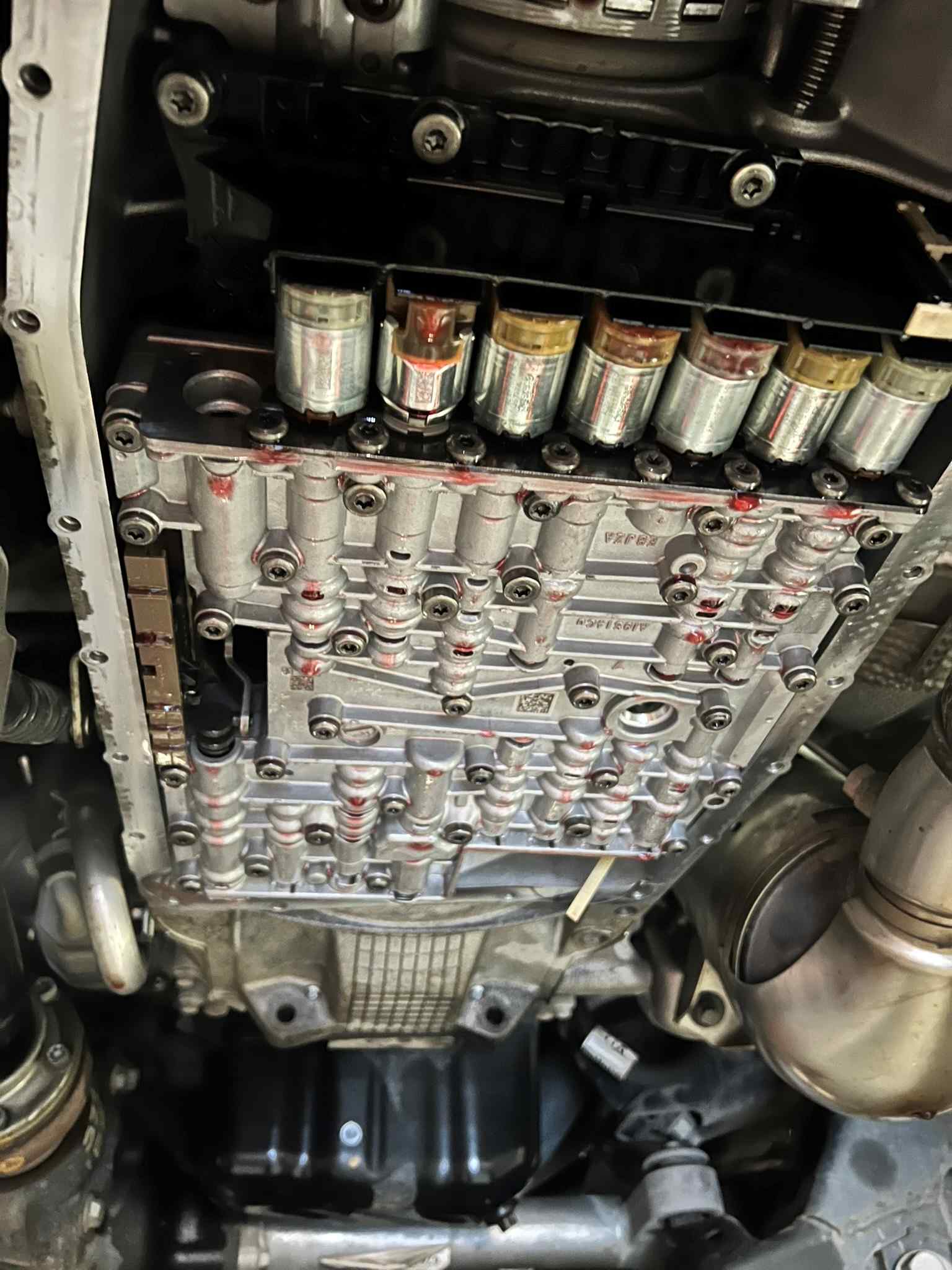
The most common Ford Ranger transmission problems include harsh or delayed shifting, torque converter shudder, transmission slipping, fluid leaks, and erratic gear engagement.
These issues affect both the older 5R55W/S/E automatics and the newer 10R80 10-speed found in 2019+ Rangers, and they typically stem from worn solenoids, degraded fluid, valve body wear, or software calibration faults.
What Transmission Does the Ford Ranger Use?
The Ford Ranger has used several transmissions depending on the generation: the 5R55W 5-speed automatic in 2001–2011 models, the 5R55E in earlier 1998–2000 versions, and the 10R80 10-speed automatic in 2019–present Rangers.
Knowing exactly which transmission sits in your Ranger matters because the failure points are completely different between generations.
Mechanics who treat them all the same will waste your money and miss the real problem.
The 5R55 series was Ford’s workhorse rear-wheel-drive automatic for over a decade. It is mechanically straightforward but plagued by valve body and solenoid pack failures.
The 10R80, co-developed with General Motors, is a far more complex unit with ten forward gears and a learning adaptive shift strategy that can cause its own unique headaches.
Transmission Identification by Model Year
- 1998–2000 Ranger: 5R55E 5-speed automatic or 5-speed manual (M5R1/M5R2)
- 2001–2011 Ranger: 5R55W or 5R55S 5-speed automatic, or manual options
- 2019–Present Ranger: 10R80 10-speed automatic (no manual option in North America)
What Are the Most Common Ford Ranger Transmission Problems?
The most common Ford Ranger transmission problems are harsh shifting, torque converter shudder, delayed engagement when shifting from Park to Drive, transmission slipping under load, erratic shift points, and external or internal fluid leaks.
After diagnosing hundreds of these trucks, the pattern is consistent. The older 5R55 units fail from mechanical wear and hydraulic breakdown inside the valve body.
The newer 10R80 units tend to suffer from software calibration issues, adaptive learning problems, and in some cases, a poorly designed CDF drum bushing that Ford quietly revised.
Full List of Reported Symptoms
- Harsh 1–2 or 2–3 upshifts, often with a noticeable clunk
- Torque converter shudder between 35–55 mph, feels like driving over rumble strips
- Delayed or sluggish engagement when placing the shifter in Drive or Reverse
- Transmission slipping during acceleration, especially under load or uphill
- Erratic or hunting shifts where the transmission cannot decide which gear to hold
- Check engine light with codes P0730, P0731–P0736 (incorrect gear ratio), P0740–P0744 (TCC solenoid), or P2700–P2704 (shift solenoid performance)
- Transmission fluid leak from the pan gasket, cooler lines, or output shaft seal
- Limp mode engagement, locking the transmission in a single gear
Why Does My Ford Ranger Transmission Shudder?
Torque converter shudder in the Ford Ranger is caused by worn clutch material inside the torque converter, degraded transmission fluid that has lost its friction modifier properties, or a malfunctioning torque converter clutch (TCC) solenoid.
This is the number-one complaint I hear from Ranger owners. It almost always presents as a vibration or shaking at steady highway speed between 35 and 55 mph.
Many shops misdiagnose this as a tire balance issue or a driveline problem. The dead giveaway is that the shudder disappears the moment you tap the accelerator or the brake slightly, which disengages the torque converter clutch.
Cause 1: Degraded Transmission Fluid
Old or overheated transmission fluid loses its anti-shudder additive package. This is the cheapest fix and the first thing you should try.
If the fluid has not been changed in over 60,000 miles, a full fluid and filter service with Mercon V or Mercon LV (depending on your model year) can sometimes eliminate the shudder entirely.
Cause 2: Worn Torque Converter Clutch
When the friction material on the TCC lining wears out, it cannot grip smoothly and causes the shudder. On the 5R55 series, the torque converter is a separate replacement part and can be swapped without removing the entire transmission from the vehicle if you have the right equipment.
Expect $300 to $600 for the converter itself plus four to six hours of labor.
Cause 3: TCC Solenoid or PWM Solenoid Failure
The pulse-width modulated solenoid that controls converter lockup can stick or fail internally. On the 5R55W and 5R55S, the solenoid pack sits inside the transmission pan and is accessible after dropping the pan.
Replacing the solenoid pack costs around $150 to $350 in parts.
Why Does My Ford Ranger Shift Hard or Have Delayed Engagement?
Hard shifting or delayed engagement in the Ford Ranger is typically caused by a worn valve body, faulty shift solenoids, low or contaminated transmission fluid, or on 2019+ models, a software calibration issue in the adaptive shift logic.
If you put the truck in Drive and there is a two-to-three-second pause before it actually engages, that is classic valve body or fluid pressure loss.
If the shifts themselves slam or bang, the pressure is too high or the solenoids are not modulating correctly.
For 1998–2011 Rangers (5R55W/S/E)
- Valve Body Wear: The bores inside the valve body wear over time, allowing fluid to bypass the valves. This creates erratic pressure regulation. A remanufactured valve body costs $200 to $500 and can be swapped with the transmission still in the truck.
- Solenoid Pack Failure: The 5R55 uses an integrated solenoid pack that is notorious for cracking or developing internal electrical faults. Replace the entire solenoid pack rather than individual solenoids for a reliable fix.
- Worn Servo Pistons: The intermediate and overdrive servo pistons can wear and leak hydraulic pressure, causing delayed or harsh shifts. Upgraded servo pistons are available aftermarket.
For 2019–Present Rangers (10R80)
- Adaptive Learning Gone Wrong: The 10R80 constantly learns your driving style and adjusts shift points. If the learned parameters drift, shifts become erratic. A dealer can perform a Transmission Adaptive Learning reset using Ford IDS or Forscan software.
- CDP/CDF Drum Bushing Failure: Ford revised the CDF (Cylinder Drums Friction) drum bushing in later production because early versions would walk out of position, causing harsh shifts and eventual failure. This requires partial disassembly of the transmission.
- Software Updates: Ford has released multiple TSBs and PCM/TCM software updates to address shift quality complaints on the 10R80. Always check for the latest calibration before condemning hardware.
Why Is My Ford Ranger Transmission Slipping?
Ford Ranger transmission slipping is most often caused by worn clutch packs, burned or low transmission fluid, a failing torque converter, or broken or stretched bands inside the transmission.
Slipping feels like the engine revs up but the truck does not accelerate proportionally. It may also present as a flare between gears where the RPMs spike momentarily during a shift.
This is a serious symptom that points to internal mechanical wear and will only get worse.
Diagnosing the Source of Slipping
- Check the Fluid First: Pull the dipstick (if equipped) and look at the fluid color. Dark brown or black fluid with a burnt smell indicates clutch pack damage. Pink or milky fluid means coolant contamination from a failed transmission cooler.
- Perform a Line Pressure Test: A shop can connect a pressure gauge to the transmission test port and check line pressure at idle and stall. Low pressure at stall confirms internal leakage from worn seals, clutch packs, or a failing pump.
- Stall Speed Test: A higher-than-spec stall speed indicates the torque converter or clutch packs are slipping. Be careful with this test as it puts extreme stress on the transmission.
Fix Options Based on Severity
- Fluid and Filter Service: Only a viable fix if the fluid is merely old and no internal damage has occurred yet.
- Valve Body Replacement: If slipping is caused by pressure regulation failure, a new valve body may solve it without a full rebuild.
- Full Rebuild: If clutch packs are burned, a complete teardown, inspection, and rebuild with new clutches, bands, seals, and a remanufactured torque converter is the proper repair. Expect $1,800 to $3,500 depending on your location and the shop.
- Remanufactured Transmission: A drop-in reman unit with warranty is often the most cost-effective path for high-mileage trucks. Prices range from $1,500 to $2,800 for the part alone.
How Much Does It Cost to Fix Ford Ranger Transmission Problems?
Fixing Ford Ranger transmission problems costs between $150 for a simple solenoid replacement and $4,000 or more for a complete rebuild or replacement, depending on the year, the specific fault, and whether you use a dealer or an independent shop.
Pro Tip: Dealerships almost always quote the highest option, which is a full replacement. Get a second opinion from a reputable independent transmission shop that will diagnose the specific failed component before recommending a full rebuild. Many Ranger transmission problems are fixable with targeted repairs.
Ford Ranger Transmission Problems by Model Year
Certain Ford Ranger model years have more frequent transmission complaints than others. The 2001–2005 5R55W trucks, the 2006–2008 5R55S trucks, and the first-year 2019 10R80 Rangers see the most reported issues.
2001–2005 Ford Ranger
The 5R55W used in these years is the most failure-prone Ranger transmission. The solenoid pack cracks, the valve body wears prematurely, and the bands stretch.
If you own one of these and it has over 100,000 miles with the original transmission, plan on at least a valve body and solenoid service.
2006–2011 Ford Ranger
Ford improved the solenoid pack design and the valve body in the 5R55S, but the fundamental architecture remained the same. These still suffer from the torque converter shudder and servo piston wear.
They are more durable overall than the earlier units but not bulletproof.
2019–2023 Ford Ranger
The 10R80 is a fundamentally better transmission when it works correctly, but early production units suffered from poor shift quality, adaptive learning frustrations, and the CDF drum bushing walking issue.
Many owners report that a dealer reflash of the TCM software dramatically improved shift quality. Always insist on the latest calibration update before agreeing to hardware replacement.
How to Prevent Ford Ranger Transmission Problems
The best way to prevent Ford Ranger transmission problems is to change the transmission fluid and filter every 30,000 to 40,000 miles, use the correct OEM-specified fluid, avoid overheating the transmission through heavy towing, and address any shift quality changes immediately before they cause internal damage.
- Change Fluid Regularly: Do not believe the “lifetime fluid” marketing. No transmission fluid lasts forever. Fresh fluid maintains the friction modifiers and anti-shudder additives that keep the torque converter and clutch packs operating smoothly.
- Use the Correct Fluid: Older 5R55 Rangers need Mercon V. The 10R80 requires Mercon ULV. Using the wrong fluid will cause shift quality problems and can damage internal components.
- Install an Auxiliary Cooler: If you tow or live in a hot climate, a supplemental transmission cooler is the single best investment to extend transmission life. Heat kills automatic transmissions faster than anything else.
- Fix Leaks Immediately: Even a slow leak can drop fluid levels enough to cause damage. Check under the truck regularly for red or brown drips.
- Reset Adaptive Learning on 10R80 Trucks: If your 2019+ Ranger starts shifting oddly, try disconnecting the battery for 15 minutes or use Forscan to reset the adaptive tables. This often resolves minor shift quality complaints.
Frequently Asked Questions About Ford Ranger Transmission Problems
Can I drive my Ford Ranger with a shuddering transmission?
You can, but you are accelerating internal damage every mile you drive with a shuddering torque converter. The friction material is shedding debris into the fluid, which circulates through the valve body and solenoids, causing secondary failures.
Fix it as soon as possible to avoid a much more expensive repair.
Is the Ford Ranger 10-speed transmission reliable?
The 10R80 is mechanically robust once the early calibration and CDF drum bushing issues are addressed. Later production models from 2021 onward have fewer complaints.
The transmission itself is capable of handling significant torque and mileage when maintained properly.
Should I rebuild or replace my Ranger transmission?
It depends on the failure and the shop. A quality rebuild by an experienced transmission specialist who replaces all wear items and uses upgraded components can be better than a reman unit.
However, a reman with a warranty from a reputable supplier offers peace of mind and a fixed cost. Get quotes for both and compare the warranty terms.
Does the Ford Ranger have a transmission recall?
There is no broad recall specifically for the transmission on most Ranger model years, but there have been TSBs issued for shift quality on the 10R80 and for the 5R55 solenoid pack on earlier trucks.
Check with your dealer using your VIN to see if any open TSBs or customer satisfaction programs apply to your truck.
What is the average lifespan of a Ford Ranger transmission?
With proper maintenance, a 5R55 series transmission typically lasts 150,000 to 200,000 miles. The 10R80 in newer Rangers is expected to exceed 200,000 miles with regular fluid changes.
Neglecting fluid service can cut these numbers in half.
Final Thoughts on Fixing Ford Ranger Transmission Problems
Ford Ranger transmission problems are frustrating but rarely a death sentence for the truck. The key is accurate diagnosis before spending money.
Do not let a shop sell you a $4,000 rebuild when a $400 solenoid pack or a $200 software reflash would solve the problem. Know your truck, know the symptoms, and get multiple opinions before authorizing major repairs.
A well-maintained Ranger transmission will outlast the truck itself.
Leave a Reply