
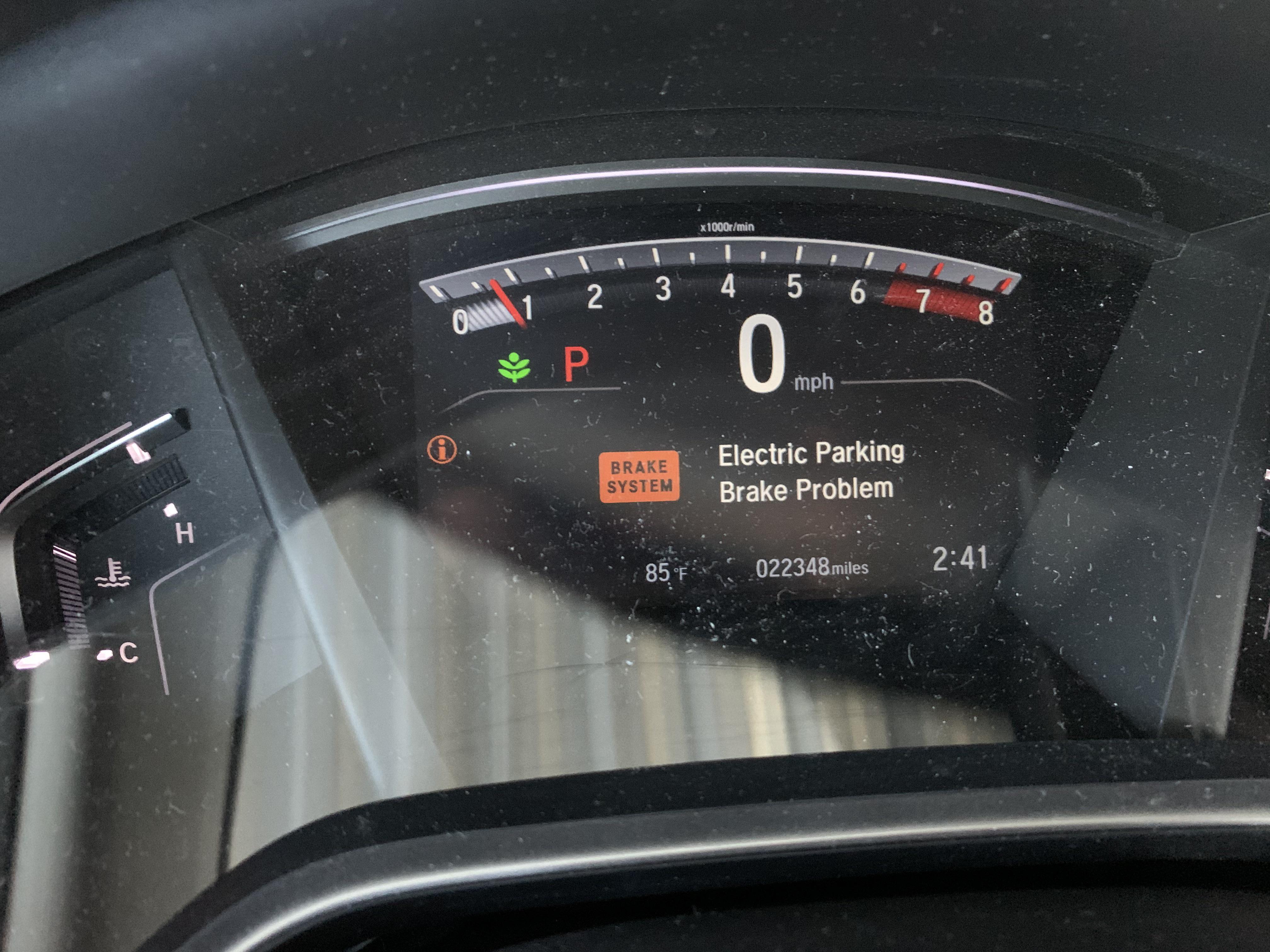
A Honda CRV parking brake gets stuck due to a seized rear caliper, corroded parking brake cable, failed electric parking brake (EPB) motor, or frozen brake shoes inside the rear rotor hat. The fastest fix is to gently rock the vehicle back and forth while toggling the parking brake switch, or manually release the EPB by accessing the rear caliper release bolt behind the rotor dust shield.
Why Is My Honda CRV Parking Brake Stuck and Won’t Release?
The parking brake on a Honda CRV can get stuck due to mechanical seizure, cable corrosion, or electronic failure depending on the model year. Older CRVs with a manual hand lever use a cable system that corrodes over time, while 2017 and newer models use an electric parking brake (EPB) that can fail electronically or mechanically.
In most cases, the root cause is moisture intrusion causing rust buildup on the parking brake cable, rear caliper slide pins, or the brake shoes inside the rotor hat. Dealerships often quote $400 to $800 for a full rear brake overhaul when the actual fix may only require a $15 cable or 30 minutes of cleaning and lubrication.
Common Symptoms of a Stuck Parking Brake on Honda CRV
- Parking brake warning light stays illuminated on the dashboard
- Vehicle will not move or struggles to roll forward or backward
- Grinding or dragging noise from the rear wheels when driving
- Parking brake lever feels loose or does not click into position
- EPB switch makes a buzzing or clicking sound but does not engage or release
- Rear wheels lock up or feel sluggish after the parking brake has been applied
Which Honda CRV Model Years Are Most Affected?
| Model Year Range | Parking Brake Type | Common Failure Point |
|---|---|---|
| 2007 to 2011 (3rd Gen) | Manual hand lever with cable | Cable corrosion and seized rear calipers |
| 2012 to 2016 (4th Gen) | Manual foot pedal with cable | Stretched cable and worn parking brake shoes |
| 2017 to 2022 (5th Gen) | Electric parking brake (EPB) | EPB motor failure and electronic module faults |
| 2023 and newer (6th Gen) | Electric parking brake (EPB) | Software glitches and actuator motor issues |
How to Release a Stuck Honda CRV Parking Brake Manually
You can manually release a stuck parking brake on a Honda CRV by accessing the rear caliper release mechanism or by using the EPB emergency release procedure. This works even when the electronic system has completely failed or the cable is seized.
Method 1: Manual Release for Cable-Style Parking Brake (2007 to 2016)
- Chock the front wheels securely and place the vehicle on a flat, level surface.
- Jack up the rear of the vehicle and support it on jack stands at the designated pinch weld points.
- Remove the rear wheels to access the brake assembly.
- Locate the parking brake cable where it connects to the rear caliper or backing plate.
- Spray penetrating oil such as PB Blaster on the cable end, lever pivot, and caliper slide pins.
- Wait 10 to 15 minutes for the penetrating oil to work into the corroded components.
- Use a pair of pliers or a pry bar to manually move the parking brake lever on the caliper back to the released position.
- Check if the cable moves freely by pulling it by hand. If it does not, the cable needs replacement.
Method 2: EPB Emergency Release for 2017 and Newer Honda CRV
- Turn the ignition to the ON position without starting the engine.
- Press and hold the EPB switch in the release (down) position for at least 10 seconds.
- If the EPB does not release, turn off the ignition and remove the key or press the start button to fully power down the vehicle.
- Wait 60 seconds, then restart the vehicle and try the EPB switch again.
- If the electronic release still fails, locate the EPB emergency release bolt behind the rear rotor dust shield on the driver side.
- Use a 10mm socket or wrench to turn the release bolt counterclockwise until the parking brake disengages.
- Do not drive the vehicle with the EPB disconnected. Have the system diagnosed and repaired before normal use.
Honda CRV Parking Brake Stuck Due to Seized Rear Caliper
A seized rear caliper is the most common mechanical cause of a stuck parking brake on Honda CRVs, especially in regions with heavy road salt or coastal humidity. The caliper slide pins and the parking brake lever pivot corrode and freeze in place, preventing the brake from releasing even when the cable or EPB motor functions correctly.
How to Diagnose a Seized Rear Caliper
- Jack up the rear and try to spin the affected wheel by hand. A seized caliper will prevent the wheel from spinning freely.
- Inspect the caliper slide pins by removing the caliper bracket bolts. If the pins do not slide smoothly, they are corroded.
- Check for uneven pad wear between the inner and outer brake pads, which indicates a stuck caliper piston or slide pin.
- Look for brake fluid leaks around the caliper piston boot, which can cause internal corrosion and seizure.
Fix: Clean, Lubricate, or Replace the Rear Caliper
- Remove the caliper and bracket from the knuckle.
- Remove the slide pins and clean them with brake cleaner and a wire brush.
- Apply ceramic brake grease to the slide pins and reinstall them. Verify they move freely.
- If the caliper piston is seized, attempt to compress it with a C-clamp or caliper piston tool. If it will not compress, replace the caliper.
- OEM Honda rear calipers cost approximately $120 to $180 each. Aftermarket options from brands like Cardone or Napa are available for $60 to $100.
- After reassembly, bleed the brake lines to remove any air introduced during the process.
Honda CRV Parking Brake Cable Stuck or Corroded
The parking brake cable on Honda CRVs runs from the hand lever or foot pedal to the rear brakes and is exposed to road debris, water, and salt. Over time, the outer cable sheath cracks and moisture enters, causing the inner cable to rust and seize inside the housing.
Signs the Parking Brake Cable Is the Problem
- The parking brake lever or pedal moves but the rear brakes do not respond.
- The lever feels extremely stiff or will not return to the up position after releasing.
- You can see visible rust, fraying, or kinks in the cable underneath the vehicle.
- One rear wheel is stuck while the other spins freely, indicating a single-side cable seizure.
How to Replace the Honda CRV Parking Brake Cable
- Disconnect the cable at the rear caliper or backing plate by removing the retaining clip or pin.
- Disconnect the cable at the equalizer bar near the center of the vehicle or at the hand lever assembly inside the cabin.
- Route the new cable along the same path as the old one, securing it with the original clips and brackets.
- Connect both ends and adjust the cable tension using the adjuster nut at the equalizer until the parking brake engages at 5 to 7 clicks of the lever.
- A new OEM parking brake cable costs between $25 and $50. Aftermarket cables are available for as low as $12.
- Test the parking brake on a slight incline to confirm it holds the vehicle securely.
Honda CRV Electric Parking Brake Stuck and Will Not Disengage
The electric parking brake on 2017 and newer Honda CRVs uses a motor-driven actuator on each rear caliper to apply and release the parking brake. When the EPB system malfunctions, the parking brake can become stuck in the applied position, leaving the vehicle unable to move.
Common Causes of EPB Failure on Honda CRV
- EPB actuator motor failure: The small electric motor on the caliper burns out or the internal gears strip, preventing the brake from releasing.
- EPB control module fault: The body control module or dedicated EPB module develops a software glitch or internal electrical fault.
- Low battery voltage: A weak or dead 12V battery cannot supply enough power to operate the EPB motors, causing them to stick in the applied position.
- Corroded wiring harness: The connector at the rear caliper can corrode, interrupting the signal between the module and the actuator motor.
How to Reset the Honda CRV Electric Parking Brake System
- Ensure the 12V battery is fully charged. Connect a battery charger or jump start the vehicle if needed.
- Turn the ignition to ON and press the brake pedal firmly.
- Push the EPB switch upward to apply, then pull it downward to release. Repeat this cycle three times.
- If the warning light remains on, use an OBD2 scanner with EPB reset capability to clear the fault codes.
- Disconnect the negative battery terminal for 15 minutes to perform a hard reset of the body control module.
- Reconnect the battery and attempt the EPB switch again.
- If the system still does not respond, the actuator motor or control module likely needs replacement.
EPB Actuator Motor Replacement Cost
| Repair Option | Parts Cost | Labor Cost | Total Estimated Cost |
|---|---|---|---|
| Dealership repair | $250 to $400 per caliper | $150 to $250 | $400 to $650 |
| Independent shop repair | $150 to $300 per caliper | $100 to $150 | $250 to $450 |
| DIY replacement | $80 to $200 per caliper | $0 | $80 to $200 |
Honda CRV Parking Brake Stuck in Winter or After Rain
Cold weather and moisture are the number one enemies of the Honda CRV parking brake system. When the parking brake is applied in wet or snowy conditions, the brake shoes or pads can freeze to the rotor surface overnight, causing the parking brake to become stuck the next morning.
How to Free a Frozen Parking Brake
- Start the engine and let it idle for 5 to 10 minutes to warm up the brake components.
- Gently shift between drive and reverse while lightly pressing the accelerator to rock the vehicle free.
- Pour warm (not boiling) water over the rear brake rotors to melt the ice bond. Avoid using hot water on extremely cold rotors to prevent thermal shock.
- After freeing the brakes, dry them by driving slowly and applying the foot brake several times to generate friction heat.
Prevention Tips for Cold Weather Parking Brake Issues
- Avoid using the parking brake in freezing conditions if parked on a flat surface. Leave the vehicle in Park instead.
- If you must use the parking brake on a slope, release and reapply it a few times before leaving the vehicle to break any moisture bond.
- Apply dielectric grease to the parking brake cable ends and caliper pivot points before winter.
- Ensure the rear brake dust shields are intact and properly seated to reduce water intrusion.
Frequently Asked Questions About Honda CRV Parking Brake Problems
Can I drive my Honda CRV with the parking brake light on?
You should not drive with the parking brake light on because it indicates the parking brake is partially or fully engaged, which causes excessive heat buildup, premature brake wear, and potential damage to the rear rotors and calipers. If the light stays on after releasing the parking brake, the switch may be faulty or the brake is not fully disengaged.
How much does it cost to fix a stuck parking brake on a Honda CRV?
The cost ranges from $12 for a DIY cable replacement to $650 for a dealership EPB actuator motor replacement. Most parking brake issues on the Honda CRV fall in the $100 to $300 range when handled by an independent shop, depending on whether the cable, caliper, or electronic actuator is the root cause.
Does the Honda CRV have a parking brake emergency release?
Yes, all Honda CRV models with an electric parking brake have an emergency release mechanism located behind the rear rotor dust shield. You can access it by removing the rear wheel and turning the release bolt with a 10mm wrench or socket to manually disengage the parking brake.
Why does my Honda CRV parking brake only stick on one side?
A single-side parking brake stick usually indicates a seized caliper or corroded cable on that specific side. The parking brake cable splits into two separate lines after the equalizer, and one side can corrode independently of the other. Inspect the affected side for seized slide pins, a stuck caliper piston, or a kinked cable.
How often should I replace the parking brake shoes on a Honda CRV?
Parking brake shoes on a Honda CRV typically last 80,000 to 120,000 miles under normal use. However, if the parking brake is used frequently or in harsh weather conditions, inspect the shoes every 40,000 miles. Worn shoes can cause the parking brake to engage poorly or stick due to uneven contact with the rotor hat.
Final Thoughts: Fixing Your Honda CRV Parking Brake the Right Way
A stuck parking brake on a Honda CRV is almost always a solvable problem without an expensive dealership visit. Start by identifying whether your model uses a cable-operated or electric parking brake, then systematically inspect the most common failure points: the cable, rear calipers, and EPB actuator.
Most fixes cost under $200 in parts and can be completed in a home garage with basic hand tools. Do not ignore a stuck parking brake, as driving with the rear brakes partially engaged will destroy your rotors, overheat your wheel bearings, and turn a simple repair into a costly one.
Leave a Reply