
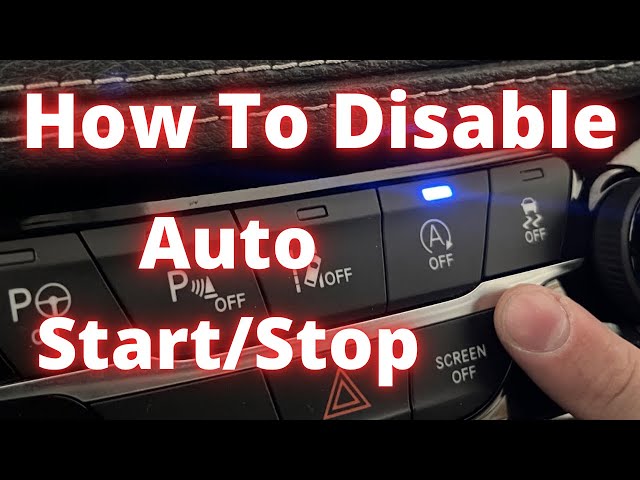
To permanently disable the Chevy Silverado auto start/stop system, the most reliable method is installing an aftermarket Auto Stop Eliminator module that plugs into the OBD-II port or the auto stop switch harness. This device remembers your preference and automatically disables the system every time you start the truck without any manual input. Other methods include using a handheld tuner to reprogram the ECU, wiring a resistor into the hood latch sensor circuit, or tapping into the stop/start button harness with a bypass module—each with different trade-offs in cost, complexity, and reversibility.
The GM auto start/stop system, officially called Engine Start/Stop (ESS), has been standard on Chevy Silverado 1500 models since the 2019 redesign. GM claims it saves fuel, but in real-world driving, the savings are negligible—often less than 1 MPG—while the constant engine cycling creates legitimate wear concerns.
If you are tired of pressing that disable button every single time you start your truck, you are not alone. Thousands of Silverado owners search for a permanent fix every month, and for good reason.
What Does Auto Start/Stop Do on a Chevy Silverado?
Auto start/stop automatically shuts off the engine when the truck comes to a complete stop—like at a red light or in traffic—and restarts it when you lift your foot off the brake pedal. GM engineered this system to meet increasingly strict CAFE fuel economy standards, not necessarily to improve your ownership experience.
How the System Works
The ESS system relies on a network of sensors and modules. A high-capacity AGM battery monitors voltage, a more robust starter motor handles the frequent cycling, and the body control module (BCM) decides when conditions are right to shut the engine down.
The system will not activate if the battery charge is too low, the cabin temperature demands heavy HVAC use, or if the engine has not reached operating temperature.
In theory, the system is seamless. In practice, many owners experience a noticeable shudder on restart, a delay when trying to pull into traffic, and long-term wear on the starter and battery that GM does not cover under standard warranty once you hit higher mileage.
Why GM Did Not Include a Permanent Off Switch
Federal emissions regulations require automakers to demonstrate fuel-saving technologies are active by default. GM can include a temporary disable button—which they do—but making it permanently off from the factory would violate those standards.
This is why the button resets every time you turn off the ignition. It is not a design oversight; it is a regulatory workaround.
How to Permanently Disable Auto Start Stop on a 2019-2023 Silverado
There are four proven methods that work reliably on 2019 through 2023 Silverado 1500 models. Each has different levels of complexity, cost, and reversibility.
Method 1: Aftermarket Auto Stop Eliminator Module
This is the most popular and cleanest solution for most owners. An Auto Stop Eliminator is a small electronic module that plugs directly into the wiring harness behind your auto stop/disable button on the dashboard.
It works by sending the “disable” signal automatically every time the truck powers on.
- Purchase a vehicle-specific Auto Stop Eliminator designed for the Silverado (brands like 4D Tech, SmartStopStart, or similar).
- Locate the auto start/stop button on your center console or dashboard.
- Carefully pry the button panel or bezel using a plastic trim removal tool to access the wiring connector behind it.
- Plug the eliminator module inline with the existing connector. Most modules are plug-and-play with no wire cutting required.
- Tuck the module behind the dash and reassemble the trim panel.
- Start the truck and verify the auto stop indicator on the dash shows the system is off.
This method is fully reversible—just unplug the module if you ever want to restore factory behavior. It does not throw codes, does not void your warranty in most cases, and does not interfere with any other system.
Expect to spend between $50 and $100 for the module.
✔ Best For: Most Silverado owners who want a clean, reversible, warranty-safe solution with minimal effort.
Method 2: Handheld Tuner or ECU Programmer
If you already own or plan to buy a handheld tuner like those from DiabloSport, Superchips, or HP Tuners, you can disable the auto start/stop at the ECU level. This is a true permanent software disable rather than a hardware trick.
- Connect the tuner to your OBD-II port under the dashboard.
- Select the option to disable Engine Start/Stop from the available parameter list.
- Flash the modified tune to your truck’s ECU.
- The system will be completely disabled with no button presses, no modules, and no dummy signals.
The downside is cost. A quality tuner runs $300 to $600, though it also unlocks other performance and efficiency adjustments.
Be aware that a dealer can overwrite your tune during a routine service flash, forcing you to re-apply it afterward. Also, some tuners may affect your powertrain warranty if GM detects the ECU has been modified.
Method 3: Hood Latch Sensor Bypass
The ESS system will not activate if the hood is open. Some owners exploit this by installing a simple resistor or switch in the hood latch sensor circuit to trick the BCM into thinking the hood is always open.
- Locate the hood latch sensor connector near the driver-side hood latch mechanism.
- Unplug the connector and identify the signal and ground wires using a wiring diagram specific to your Silverado’s model year.
- Install an inline resistor (typically a 2.2k ohm resistor) between the signal and ground wires to simulate an open-hood condition.
- Secure and weatherproof the connection with heat-shrink tubing or electrical tape.
This method is cheap—under $5 in parts—but it has drawbacks. The dashboard may display a persistent “hood open” warning, and it could interfere with remote start functionality or other hood-related safety interlocks.
It is not the cleanest approach, and most experienced technicians recommend Method 1 or Method 2 instead.
Method 4: Auto Stop Button Harness Tap
Similar in concept to the eliminator module but more DIY, this method involves wiring a small relay or timer circuit into the auto stop button harness to automatically ground the disable signal at key-on.
- Access the wiring behind the auto start/stop button.
- Identify the switch signal wire using a multimeter and your Silverado’s wiring schematic.
- Wire a 12V-activated relay or 555 timer circuit that momentarily triggers the disable signal for 500 milliseconds every time the ignition turns on.
- Connect the relay trigger wire to a switched 12V ignition source.
- Test the circuit and secure all connections.
This approach is for owners comfortable with basic automotive wiring. It costs under $20 in parts but requires confidence with a soldering iron and multimeter.
Done correctly, it functions identically to a commercial eliminator module.
Method Comparison for Silverado Auto Start Stop Delete
Does Disabling Auto Start Stop Save Your Starter and Battery?
Yes, disabling the system meaningfully reduces wear on both components. GM uses a heavier-duty starter motor and AGM battery in ESS-equipped trucks specifically to handle the increased cycling, but “heavy duty” does not mean “infinite life.”
Starter Motor Wear
A standard starter is rated for roughly 50,000 to 80,000 start cycles. ESS trucks can accumulate 30,000 or more additional starts per year depending on your driving pattern.
In stop-and-go urban commutes, you might trigger 30 to 50 auto stops per day. Over five years of ownership, that is an enormous number of extra cycles that would never happen on a non-ESS truck.
Disabling the system eliminates all of that additional wear.
Battery Degradation
AGM batteries in ESS trucks are designed for deep cycling, but they are also significantly more expensive to replace—typically $250 to $350 versus $150 to $200 for a standard battery. Frequent cycling accelerates capacity loss.
Owners in hot climates report premature battery failure as early as two to three years with ESS active. Disabling the system lets the battery operate in a conventional, gentler charge-discharge pattern.
Will Disabling Auto Start Stop Throw a Check Engine Light?
No, when done correctly with a quality eliminator module or tuner, disabling auto start/stop will not trigger a check engine light or store any diagnostic trouble codes. The auto stop illuminator on the dash will simply show the system as “off,” which is identical to pressing the factory disable button.
The hood latch bypass method is the exception—it may trigger a hood-ajar warning depending on your model year.
Silverado Auto Start Stop Disable by Model Year
2019-2021 Silverado 1500
These model years use the first-generation ESS implementation on the T1XX platform. All four methods described above work without issues.
The eliminator module plugs directly into the switch behind the center stack trim. The BCM programming is well-documented, and tuner support is mature and reliable.
2022-2023 Silverado 1500 (Refreshed Interior)
The refreshed 2022 and 2023 models relocated some dashboard components and updated the BCM software. Verify that any eliminator module you purchase is explicitly listed as compatible with the 2022-plus model year.
Some modules designed for 2019-2021 trucks used a different connector pinout. Tuners with updated firmware handle these years without problems.
2024 Silverado 1500
The 2024 model continues with ESS but GM introduced minor wiring revisions. Aftermarket module manufacturers have been releasing updated compatibility within weeks of each model year launch.
Always confirm product compatibility before purchasing for a 2024 truck.
Silverado 2500HD and 3500HD
Heavy-duty Silverado models do not use auto start/stop. If you own a 2500HD or 3500HD, you do not have this system and no disable is needed.
Frequently Asked Questions About Silverado Auto Start Stop
Does disabling auto start stop affect fuel economy?
The real-world fuel savings from ESS are minimal—typically between 0.5 and 1.5 MPG in mixed driving. Most owners report no noticeable difference in fuel economy after permanently disabling the system. The savings GM advertises are based on laboratory test cycles that do not reflect real traffic conditions accurately.
Can a dealer re-enable auto start stop after a service visit?
Yes. If you use a tuner to disable ESS at the ECU level, a dealer reflash during routine service will overwrite your tune and restore the system. An eliminator module, however, stays active regardless of dealer visits because it operates at the switch level, not the software level.
Is it legal to disable auto start stop?
Yes. There is no federal or state law that prohibits a vehicle owner from disabling the auto start/stop system on their personal vehicle. The regulations that mandate ESS apply to the manufacturer at the point of sale, not to the consumer after purchase.
Will disabling auto start stop void my GM warranty?
An eliminator module that simply replicates a button press will not void your warranty. A tuner-based ECU modification could give a dealer grounds to deny warranty claims related to engine or emissions systems if they detect the altered calibration. The Magnuson-Moss Warranty Act protects you for non-related warranty claims, but disputes can be burdensome to resolve.
Why does my auto start stop not work sometimes anyway?
The system monitors battery state of charge, cabin temperature demand, engine temperature, HVAC load, and steering angle. If any condition falls outside its parameters, the system remains inactive. A weak or aging AGM battery is the most common reason ESS stops working on its own—and ironically, the system itself is often what weakened the battery in the first place.
Final Recommendation: Best Method for Most Silverado Owners
For the vast majority of 2019 and newer Silverado owners, an aftermarket Auto Stop Eliminator module is the best solution. It is affordable, installs in under 15 minutes with no tools beyond a trim pry bar, causes zero diagnostic codes, is fully reversible, and does not touch your truck’s ECU software.
It is the closest thing to a factory permanent off switch that GM will not give you. If you want the system gone for good with the least risk and effort, this is the way to do it.
Leave a Reply