
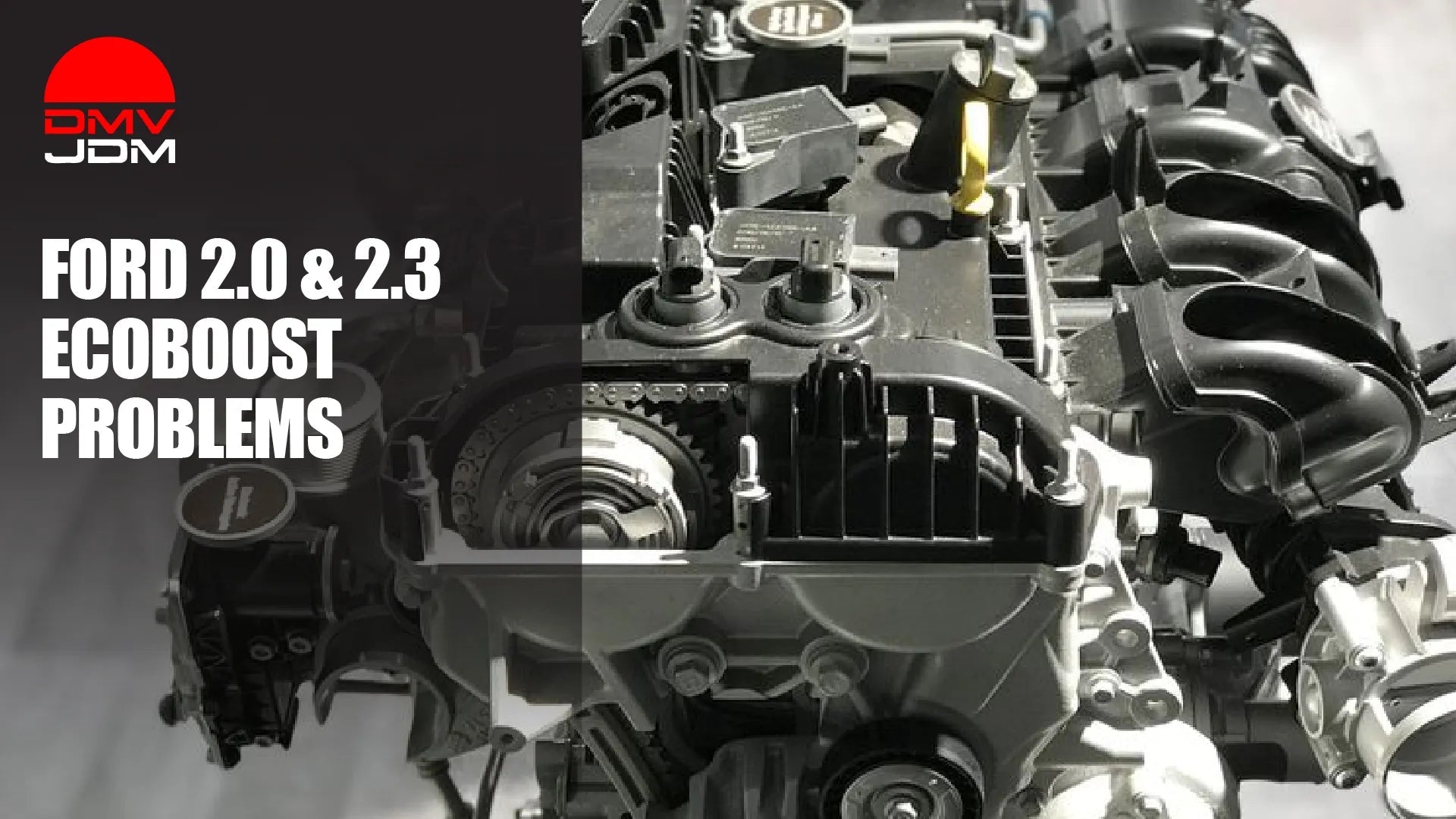
The most common 2.0 EcoBoost problems are coolant intrusion into the cylinders, excessive oil consumption, turbocharger failure, carbon buildup on intake valves, and timing chain stretch. The root cause of the infamous coolant intrusion issue is a flawed open-deck cylinder block design used in 2013–2019 models, where coolant seeps past the head gasket into the combustion chamber. Ford issued a TSB (TSB 19-2346) and eventually redesigned the short block with an improved casting and revised head gasket.
If you own a Ford Escape, Fusion, Edge, Lincoln MKC, or Bronco Sport with the 2.0L EcoBoost, you need to understand these failures before they leave you stranded—or before a shop overquotes you for an engine when a less expensive fix may work. This guide covers every known issue, the real causes, what Ford will and will not cover, and what you can realistically do yourself.
What Is the 2.0 EcoBoost Coolant Intrusion Problem?
Coolant intrusion occurs when engine coolant leaks past the cylinder head gasket into one or more combustion cylinders, typically cylinders 2 or 3. This is caused by a structural weakness in the open-deck block design that allows the cylinder walls to flex under combustion pressure, breaking the head gasket seal over time.
This is the single most devastating and widespread issue with the 2.0 EcoBoost. It affects 2013–2019 model year engines primarily, and Ford quietly redesigned the short block in later production runs to address the flaw. Many owners report white smoke from the exhaust, a sweet smell, misfires on cold starts, and a steadily dropping coolant reservoir with no visible external leak.
How to Diagnose Coolant Intrusion Yourself
Before paying a dealer $200+ for diagnostic time, you can verify this issue at home with a few simple checks.
- Check the coolant level over 2–3 weeks. Mark the reservoir with tape and monitor it daily after cold starts. A slow but consistent drop with no external puddle is the first red flag.
- Pull the spark plugs and inspect them. A coolant-washed plug will look unnaturally clean compared to the others—almost steam-blasted. Cylinders 2 and 3 are the usual victims.
- Perform a block test (chemical test). Use a combustion leak tester kit (available for about $30–$50). The blue fluid turns yellow or green if exhaust gases are entering the cooling system.
- Borescope the suspect cylinder. A cheap USB borescope ($25–$40) inserted through the spark plug hole will show coolant pooling on the piston crown or a washed piston top.
- Check for misfire codes. P0300, P0301, P0302, P0303, or P0304 on cold startup that clears after warming up is a textbook symptom.
Which Models and Years Are Affected?
| Vehicle | Model Years Affected | Severity |
|---|---|---|
| Ford Escape | 2013–2019 | High |
| Ford Fusion | 2013–2019 | High |
| Ford Edge | 2015–2018 | High |
| Lincoln MKC | 2015–2019 | High |
| Lincoln MKZ | 2013–2018 | High |
| Ford Focus ST | 2013–2018 | Moderate |
| Ford Bronco Sport | 2021+ | Low (revised block) |
| Ford Maverick | 2022+ | Low (revised block) |
Repair Options and Real Costs
Ford’s official fix is replacing the entire short block assembly. However, not all situations require a new block.
- Warranty repair (TSB 19-2346): If your vehicle is still under the powertrain warranty (5 years/60,000 miles) or the extended coverage Ford offered in some settlement cases, you pay nothing. Push hard—some dealers initially deny coverage.
- Short block replacement out of warranty: Expect $3,500–$6,500 depending on the shop. The dealer will quote $5,000–$8,000 for parts and labor. An independent shop familiar with EcoBoost can do it for significantly less.
- Head gasket replacement only (not recommended): Some owners try replacing just the head gasket at $800–$1,500. This is a temporary fix. The underlying block casting will flex again, and the gasket will fail again within 10,000–40,000 miles.
- Used engine swap: A used 2.0 EcoBoost engine costs $1,200–$2,500. Be cautious—many used engines come from the same flawed production run and will develop the same issue.
Why Does the 2.0 EcoBoost Use So Much Oil?
The 2.0 EcoBoost consumes oil due to a combination of turbocharger seal leakage, aggressive PCV (positive crankcase ventilation) system design that draws oil vapor into the intake, and thin piston ring specifications chosen by Ford to reduce friction and improve fuel economy.
Many owners report burning 1 quart every 2,000–3,000 miles. Ford considers up to 1 quart per 1,000 miles “acceptable” under their oil consumption guidelines, which is an absurdly generous threshold. If your dipstick reads low between oil changes, you are not alone.
Causes of Excessive Oil Consumption
- Turbo oil seal wear: The turbocharger spins at over 100,000 RPM. The internal seals degrade over time, especially if oil change intervals are stretched past 5,000 miles. Worn seals allow oil to pass into the intake or exhaust side of the turbo.
- PCV system pulling oil vapor: The factory PCV system is highly efficient at recycling crankcase gases—sometimes too efficient, carrying oil mist directly into the intake manifold and onto the intake valves.
- Low-tension piston rings: Ford used low-friction, low-tension piston rings to maximize fuel economy. The trade-off is reduced oil control, especially past 60,000 miles as rings wear.
- Turbo return line restriction: If the oil return line from the turbo to the pan kinks or cokes up, oil backs up into the turbo housing and gets pushed past the seals under boost.
How to Reduce Oil Consumption
- Switch to a high-quality full synthetic 5W-30. Ford recommends 5W-30 but many dealers fill with 0W-20 for CAFE compliance. The slightly heavier oil resists blowby better.
- Change oil every 4,000–5,000 miles maximum. Ignore Ford’s 10,000-mile OCI recommendation—it is designed to reduce dealership service costs, not protect your engine.
- Install a catch can. An oil catch can on the PCV line will intercept oil vapor before it reaches the intake. This is the single most popular mod in the EcoBoost community and it makes a measurable difference.
- Inspect the turbo return line. Have a shop check for kinks or carbon restriction in the oil drain tube.
What Causes 2.0 EcoBoost Turbo Failure?
Turbo failure on the 2.0 EcoBoost is most commonly caused by oil starvation from a clogged oil feed line, excessive heat cycling from short trips, and wastegate actuator rattle that progresses to wastegate failure and boost control issues.
The Borg-Warner K03 turbo used on the 2.0 EcoBoost is a reliable unit when properly maintained. But it fails early when oil is dirty, oil changes are delayed, or the vehicle is driven hard on a cold engine and then immediately shut off (heat soak).
Symptoms of a Failing Turbocharger
- Whining or siren-like noise under acceleration that increases with RPM
- Loss of boost pressure — the car feels sluggish or enters limp mode
- Blue or white smoke from the exhaust under acceleration (oil leaking past turbo seals into the exhaust housing)
- Oil in the intercooler pipes — disconnect the charge pipe from the intercooler and check for pooling oil
- Wastegate rattle at idle or on deceleration — a metallic ticking or rattling sound that goes away under throttle
Turbo Replacement Costs and Options
| Option | Cost Range | Notes |
|---|---|---|
| OEM replacement turbo | $800–$1,400 (parts only) | Direct bolt-on, no tuning needed |
| Aftermarket remanufactured turbo | $400–$700 | Quality varies significantly by brand |
| Shop labor for turbo swap | $400–$800 | 2.0 EcoBoost turbo is relatively accessible |
| Wastegate actuator only | $80–$200 | If caught early before turbo housing damage |
Why Does Carbon Build Up on 2.0 EcoBoost Intake Valves?
The 2.0 EcoBoost is a direct-injection engine, meaning fuel is sprayed directly into the cylinder and never washes over the back of the intake valves. Without fuel contact, oil vapor from the PCV system coats the valves with carbon deposits that harden over time and restrict airflow.
This is not unique to Ford—it affects all modern direct-injection engines from every manufacturer. However, the 2.0 EcoBoost’s PCV system tends to push more oil vapor toward the valves than some competitors, accelerating buildup.
Symptoms of Carbon-Caked Intake Valves
- Rough idle that worsens gradually over months
- Intermittent misfires, especially at cold start
- Noticeable loss of low-end torque and throttle response
- Decreased fuel economy by 2–4 MPG over baseline
- Failed emissions inspection due to high hydrocarbons
Methods to Clean Intake Valves
- Walnut blasting (most effective): A shop removes the intake manifold and uses crushed walnut shell media blasted at the valves with compressed air. This is the gold standard. Cost: $300–$600. Recommended every 40,000–60,000 miles.
- Chemical soak and brush cleaning: Some DIY owners remove the intake manifold, soak the valves in a carbon dissolving solvent, and manually scrub with brass brushes. Labor-intensive but effective for moderate buildup.
- Top-end cleaner spray (limited effectiveness): Products like CRC GDI IVD intake valve cleaner are sprayed into the intake while the engine runs. They help slow buildup but cannot remove heavy, hardened carbon deposits.
- Preventive: Install an oil catch can. This reduces the volume of oil vapor reaching the valves in the first place and is the best long-term prevention strategy.
Does the 2.0 EcoBoost Have Timing Chain Problems?
Yes, the 2.0 EcoBoost is known for timing chain stretch, particularly on 2013–2017 model year engines. The single-row timing chain used in early production engines elongates over time due to tensioner wear and insufficient oil pressure, leading to camshaft timing errors and potential engine damage.
Symptoms of a Stretched Timing Chain
- Check engine light with cam/crank correlation codes (P0016, P0017, P0018, P0019)
- Rattling noise from the front of the engine on cold startup
- Rough idle or hesitation
- Reduced power and poor acceleration
- Engine may fail to start in severe cases (chain has jumped teeth)
Timing Chain Replacement Details
- Cost: $800–$1,800 depending on whether the chain has caused additional damage to valves or pistons. This job requires removing the front cover and timing components.
- When to replace: If your engine has over 80,000 miles and shows any of the above symptoms, have the chain inspected immediately. Do not wait—chain failure on an interference engine means destroyed valves and pistons.
- Prevention: Use the correct oil weight and change it on time. Low or degraded oil accelerates chain tensioner wear.
What Are the Most Common 2.0 EcoBoost Engine Codes?
The most frequently reported 2.0 EcoBoost diagnostic trouble codes include P0300-series misfire codes from coolant intrusion, P0299 (underboost) from turbo wastegate issues, P0016–P0019 from timing chain stretch, and P0171/P0174 (lean codes) from boost leaks or failing diverter valves.
| Code | Meaning | Likely Cause |
|---|---|---|
| P0301–P0304 | Individual cylinder misfire | Coolant intrusion, bad spark plug, or ignition coil |
| P0300 | Random/multiple cylinder misfire | Coolant intrusion or carbon buildup |
| P0299 | Turbo underboost condition | Wastegate stuck open, boost leak, failing turbo |
| P0016–P0019 | Cam/crank position correlation | Stretched timing chain |
| P0171 / P0174 | System too lean | Boost leak, faulty diverter valve, vacuum leak |
| P051F | PCV system excessive flow | Clogged or failed PCV valve |
Frequently Asked Questions About 2.0 EcoBoost Problems
Is the 2.0 EcoBoost engine reliable after 2020?
Ford redesigned the 2.0 EcoBoost short block starting in the 2020–2021 production cycle with an improved cylinder wall casting that significantly reduces coolant intrusion risk. The Bronco Sport and Maverick versions use this revised block and have far fewer reports. However, carbon buildup, oil consumption, and turbo wear remain inherent to any direct-injection turbo engine and still require proactive maintenance.
What is the best oil to use in a 2.0 EcoBoost?
Use a full synthetic 5W-30 that meets Ford’s WSS-M2C961-A1 specification. Popular and well-proven choices include Motorcraft 5W-30 full synthetic, Pennzoil Platinum 5W-30, and Mobil 1 5W-30.
Avoid 0W-20 in high-mileage engines as it provides less film strength under high turbo pressures. Change every 4,000–5,000 miles regardless of Ford’s longer interval recommendation.
Can I still drive my 2.0 EcoBoost with coolant intrusion?
Driving with active coolant intrusion is risky. The coolant washing into the cylinder dilutes your engine oil, accelerates bearing and ring wear, and can cause catalytic converter damage from burning antifreeze.
In severe cases, hydrostatic lock from pooled coolant can bend connecting rods. Address it as soon as possible.
How long will a 2.0 EcoBoost turbo last?
With proper maintenance—timely oil changes, allowing the turbo to cool down before shutdown, and using quality oil—the K03 turbo on the 2.0 EcoBoost can last 100,000–150,000 miles. Neglected oil, extended change intervals, and frequent short trips without reaching full operating temperature can cut that to 50,000–70,000 miles.
Is a catch can worth installing on a 2.0 EcoBoost?
Yes, an oil catch can is one of the most cost-effective modifications for any 2.0 EcoBoost. It captures oil vapor from the PCV system before it coats your intake valves with carbon deposits.
A quality catch can costs $80–$150 and takes under an hour to install. It will not eliminate carbon buildup entirely but will significantly slow the rate of accumulation and reduce oil consumption slightly.
Final Word: Know Your 2.0 EcoBoost Before It Costs You
The 2.0 EcoBoost is not a bad engine—but it is an engine that punishes neglect and rewards owners who understand its known weaknesses. The coolant intrusion flaw on 2013–2019 models is a genuine manufacturing defect that Ford acknowledged internally through TSBs and settlements.
Carbon buildup is a byproduct of direct injection that every owner must manage proactively. Turbo and timing chain wear are maintenance items that many dealerships and shops will misdiagnose as catastrophic failures requiring full engine replacement when a targeted repair is the smarter path.
Stay ahead of these issues with shorter oil change intervals, an installed catch can, and a relationship with an independent shop that actually understands turbocharged GDI engines. Your 2.0 EcoBoost will reward you with strong power and respectable fuel economy—but only if you give it the attention Ford’s own service schedule does not adequately demand.
Leave a Reply